PW UPSC Prelims PYQ for 2026 Exam Preparation
A Strategic Basis for Achievement in 2026. The most reliable source for comprehending the examiner's perspective is the UPSC Prelims pyq (Previous Year Questions). Analyzing these papers is crucial for 2026 candidates to understand recurrent themes, determine subject-wise weighting, and Along with solving previous year papers, aspirants should also rely on quality UPSC Books that provide comprehensive coverage of the syllabus, conceptual clarity, and regular practice opportunities. A combination of standard UPSC study materials and PYQs helps candidates build a strong foundation, improve answer accuracy, and develop the analytical skills required to perform well in the Civil Services Examination.
Mastering the Game: UPSC Prelims PYQs and Topic-Wise Analysis
The Prelims, the initial round of the Civil Services Examination, are becoming more difficult and uncertain. Effective use of UPSC preliminary questions necessitates a thorough examination of the questions' structure and the development of themes, not just answering them.
Benefits of integrating PYQs into your daily routine include:
-
Understanding Exam Patterns: Beginners can align their study path by comprehending the structure of both GS Paper I and CSAT.
-
Trend Identification: While the syllabus is vast, an analysis of the upsc prelims pyq topic wise reveals that certain subjects like Polity, Economy, and Geography maintain steady prominence.
-
Skill Development: Solving actual questions helps candidates learn crucial tricks such as decision-making, time management, and the ability to handle the increasing difficulty of the exam.
The Power of Topic-Wise Preparation
Rather than solving papers year-by-year initially, experts recommend a upsc prelims pyq topic wise approach. For instance, after finishing the "Fundamental Rights" chapter in Polity, solving all related questions from the last 10–12 years ensures that your conceptual understanding matches the exam's requirements. This method helps in:
Finding High-Yield Themes: Recognizing subjects that are often brought up again and again, such as the Swadeshi Movement in history or inflation in the economy.
-
Filling in Knowledge Gaps: Understanding when current events or "unconventional" materials may need to be added to regular textbooks like NCERTs.
-
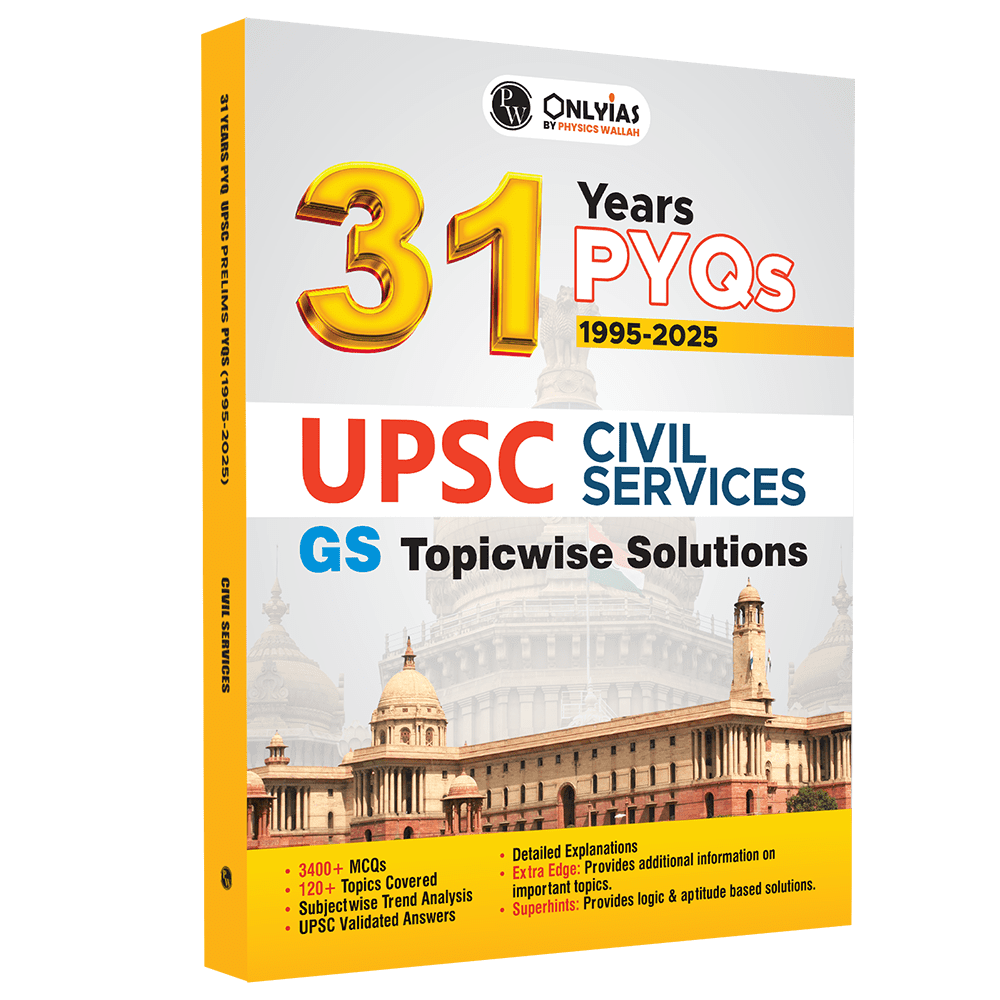
Important Sources: PDF compilations and the UPSC Prelims PYQ Book
Practical Takeaways for Solving PYQs
Elimination Technique: The way to solve UPSC Previous Years Questions is, by practicing to eliminate options that're clearly wrong. This helps to increase the chance of getting the answer. By doing this you can make a guess. The method of Previous Years Questions elimination is to rule out the options that're obviously incorrect in order to increase the probability of an accurate estimate of the Previous Years Questions.
Calculated Risk: Based on your preparation, decide when to take a chance on a question to avoid getting a zero (0.33) for a poor response.
Active Recall: After responding to a series of questions, create a succinct summary of the subjects to improve retention.
Read More: UPSC Modern India Previous Year Papers with downloaded PDF
UPSC Prelims PYQ FAQs
1. Are the UPSC Prelim PYQs sufficient to prepare for 2026?
No. UPSC preliminary questions are essential for understanding the structure and degree of difficulty, but they are not enough on their own. High-quality study resources, NCERTs, standard textbooks, and numerous mock exams are also necessary for applicants to stay up to date on current events.
2. How many years of PYQs should I solve?
Experts and UPSC toppers advise reviewing at least the previous ten years' worth of UPSC preliminary pyq. This period encompasses the significant pattern change that took place in 2013 and emphasizes the questions' contemporary "analytical" character.
3. Are questions from the UPSC repeated in the preliminary exam?
Questions are typically not repeated exactly by UPSC. But there is a lot of repetition of the concepts. Topics like "Minimum Support Price (MSP)" in Agriculture or "Constitutional Amendments" in Polity, for instance, are discussed to differing degrees in different years.
4. What makes the CSAT article crucial to this analysis?
Despite being qualifying (requiring 33%), CSAT (Paper II) has suddenly become a "deciding factor" because of its growing difficulty. Reading comprehension and logical reasoning can be mastered by using a UPSC preliminary pyq book designed especially for the CSAT.
5. How do I begin getting ready for 2026 from scratch?
Do a "baseline assessment" by working through an article from the previous year. After that, devote the first sixty days to laying the groundwork with NCERTs (Classes 6–12) before advancing to advanced literature and topic-by-topic practice for the UPSC preliminary exam