How to Revise UPSC Economy using Mind Maps in 7 Days before Prelims

The UPSC civil services preliminary examination demands a sharp memory and quick recall, especially for dynamic subjects like the Indian Economy. Many aspirants struggle to revise vast textbook chapters, economic concepts, and yearly updates during the final week.
Reading dense paragraphs at the last minute often leads to confusion and information overload. To overcome this hurdle, utilizing targeted UPSC economy mind maps helps you compress the entire syllabus into structured visual layouts. This allows you to revise efficiently, strengthen your conceptual clarity, and boost your confidence just days before the exam.
Overview of the UPSC Economy Mind Maps Book
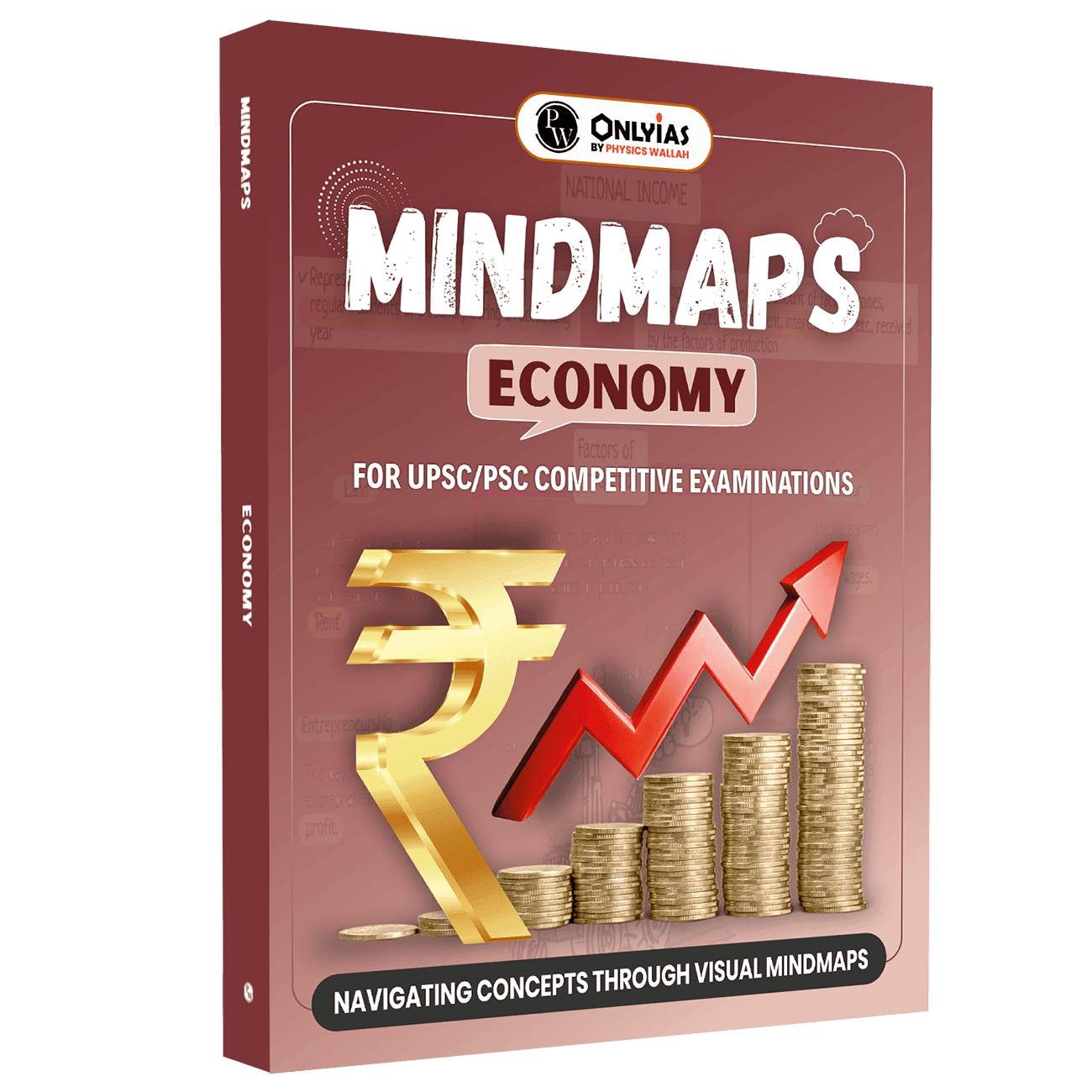
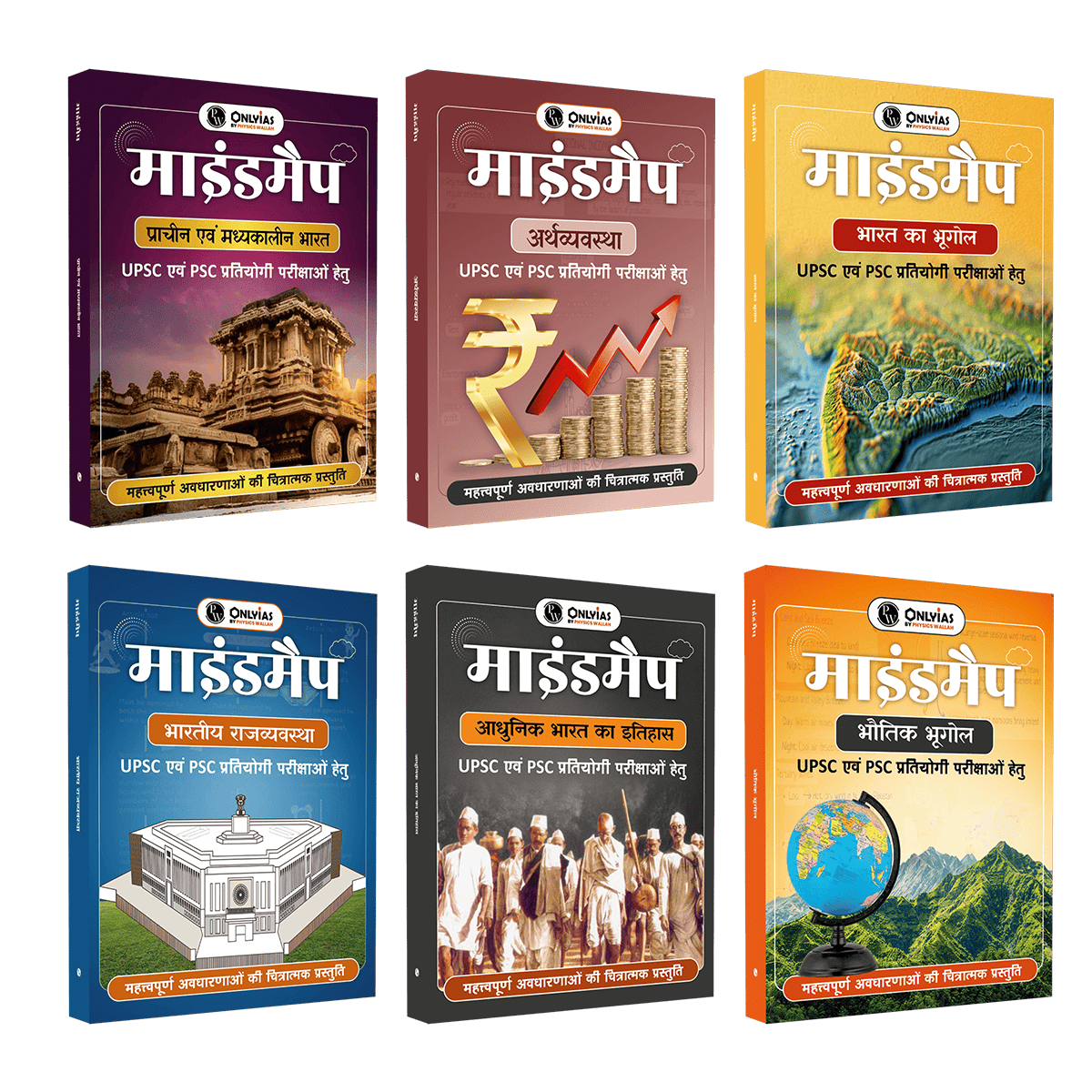
The 'UPSC Mindmaps Economy' publication serves as a dedicated UPSC revision book designed specifically to tackle the vast nature of the economics syllabus. Instead of long, theoretical explanations, this book converts complex data into highly structured, exam-oriented visual layouts. It targets serious civil services aspirants who need to recall critical data points, institutional frameworks, and policy interlinkages under high exam pressure.
Designed with an exam-oriented learning approach, the book covers major topics including the Indian Economy, Budget, Banking, Inflation, Fiscal Policy, Monetary Policy, Economic Growth, Agriculture, the External Sector, and Government Schemes.
By integrating core theoretical concepts with relevant current affairs, it ensures that your preparation aligns perfectly with the evolving demands of both the Prelims and Mains examinations.
Why Are UPSC Economy Mind Maps Useful for Last-Minute Revision?
During the final seven days before the Prelims, re-reading a comprehensive basic economics book for UPSC is practically impossible. The sheer volume of national income formulas, banking regulations, and international trade bodies can overwhelm even well-prepared candidates. Visual learning tools solve this issue by offering a clear, scannable overview of every topic on a single page.
Our brains process visual structures, flowcharts, and diagrams much faster than plain text blocks. By using dedicated UPSC economy mind maps, you bypass the fluff and focus purely on core definitions, trends, and interlinkages. This visual approach triggers better memory retention, ensuring that you can quickly eliminate wrong options when faced with tricky multiple-choice questions in the examination hall.
Benefits of using UPSC Economy Mind Maps
Using a structured UPSC economy book that relies on visual frameworks provides several distinct advantages for aspirants aiming to secure a high score in Prelims.
-
Simplified Visuals for Complex Concepts: Each infographic, diagram, and flowchart presents intricate economic topics in a highly structured format, making them easier to digest.
-
Holistic Coverage of the Syllabus: It provides a birds-eye view of essential areas like the Union Budget, inflation indices, and monetary instruments without missing out on critical factual details.
-
Faster Information Retrieval: When attempting questions on macroeconomics, your brain recalls the spatial arrangement of the mind map, allowing you to remember facts instantly.
-
Integrated Current Affairs: The layouts connect static conceptual foundations with recent dynamic developments, keeping your revision highly relevant to current exam trends.
-
Smarter Revision and Better Recall: Engaging layouts improve long-term memory retention, turning chaotic last-minute reading sessions into a streamlined, stress-free review process.
7-Day Revision Plan for UPSC Economy Mind Maps
To cover the entire syllabus systematically, you need a disciplined, day-wise approach. Here is a proven 7-day schedule to optimize your final preparation using UPSC mind maps.
|
Day |
Topics to Cover |
Primary Focus Areas |
|
Day 1 |
National Income & Economic Growth |
GDP, GNP, NDP, NNP, real vs nominal growth, and calculation methods. |
|
Day 2 |
Fiscal Policy & Union Budget |
Revenue and capital receipts, deficits, taxation structure, and budget highlights. |
|
Day 3 |
Monetary Policy & Banking System |
RBI instruments (Repo, Reverse Repo, SLR, CRR), NPA management, and banking reforms. |
|
Day 4 |
Inflation & Business Cycles |
WPI, CPI, types of inflation, remedies, and impact on different economic sectors. |
|
Day 5 |
Agriculture & Government Schemes |
Land reforms, MSP, agricultural subsidies, food processing, and flagship welfare schemes. |
|
Day 6 |
External Sector & International Bodies |
Balance of Payments (BoP), forex reserves, exchange rates, WTO, IMF, and World Bank. |
|
Day 7 |
Final Rapid Review & Mock Error Fixes |
Quickly scroll through all mind maps, focusing on weak areas and high-yield data points. |
How to Use UPSC Economy Mind Maps?
To get the highest return on investment from your visual study aids, you must look beyond just reading them passively. Follow these targeted UPSC preparation tips to engage actively with the study material:
First, start by looking at the central theme of the mind map to understand the main topic. Next, trace the branches outward to see how sub-topics connect to the main concept. For instance, when revising inflation, see how the central node connects directly to its measurement indices (CPI and WPI) and then branches further down into individual components and weightages.
Second, use active recall by covering a section of the page with your hand. Try to mentally recreate the branches, sub-points, and associated statutory bodies before looking at the answers. This practice strengthens neural pathways, ensuring that the information remains fresh and accessible on exam day.
Study Plan for Using UPSC Economy Mind Maps
Integrating visual diagrams into your broader daily schedule requires a smart balance between theory review and practical application. Combine your visual learning with these actionable UPSC revision tips. To make revision more exam-oriented, combine this process with UPSC Previous Year Papers to understand how economy concepts are framed and repeatedly tested in the actual examination.
-
Coordinate with Mock Exams: Whenever you finish a full-length mock test and spot an error in an economy question, open the corresponding mind map immediately to correct your understanding.
-
Focus on High-Yield Segments: Prioritize high-priority chapters like Banking, Monetary Policy, and Government Schemes, as these historically yield the highest number of questions every year.
-
Cross-Reference with Budget Documents: Use the mind maps as an anchor framework and overlay them with the latest factual figures from the current economic survey and budget announcements.
-
Keep Study Sessions Short and Focused: Spend 25 to 30 minutes focusing intensely on a specific set of visual layouts, followed by a short break to prevent mental fatigue.
Common Mistakes to Avoid While Using UPSC Economy Mind Maps
Even with high-quality visual aids, certain study habits can reduce your overall learning speed. Avoid these common pitfalls during your final week of preparation:
-
Treating Mind Maps Like Textbooks: Do not spend hours staring at a single layout. They are meant for rapid scanning, quick keyword identification, and immediate revision.
-
Ignoring the Static Foundation: Mind maps work best when you already have a basic understanding of economics. Skipping your fundamental readings completely will make it difficult to grasp the brief pointers.
-
Neglecting Trend Analysis: Do not just memorize static definitions. Pay close attention to the arrows, flow direction, and logical linkages that show whether an economic indicator is rising or falling over time.
-
Overcrowding Your Brain with Too Many Sources: Stick to one reliable, structured visual resource rather than switching between multiple books, which only creates visual clutter and unnecessary confusion.
Read More: UPSC Economy Important Questions for Prelims and Mains Exams
UPSC Economy Mind Maps FAQs
1. How do UPSC economy mind maps help in clearing the Prelims exam?
They compress the extensive economics syllabus into concise visual layouts. This structure allows fast tracking of core data points, improves memory retention, and helps you quickly eliminate incorrect options during the test.
2. Can I rely entirely on an UPSC economy book based on mind maps for my preparation?
Visual books are excellent for fast revision, tracking trends, and consolidating information. However, you should use them alongside your fundamental readings to ensure you fully understand the underlying concepts.
3. Is it possible to revise the entire economics syllabus in just 7 days?
Yes, by following a structured day-wise plan and using visual frameworks, you can systematically review all major sectors—including banking, budget, and inflation—within a week.