Tips to Avoid Negative Marks in UPSC Prelims
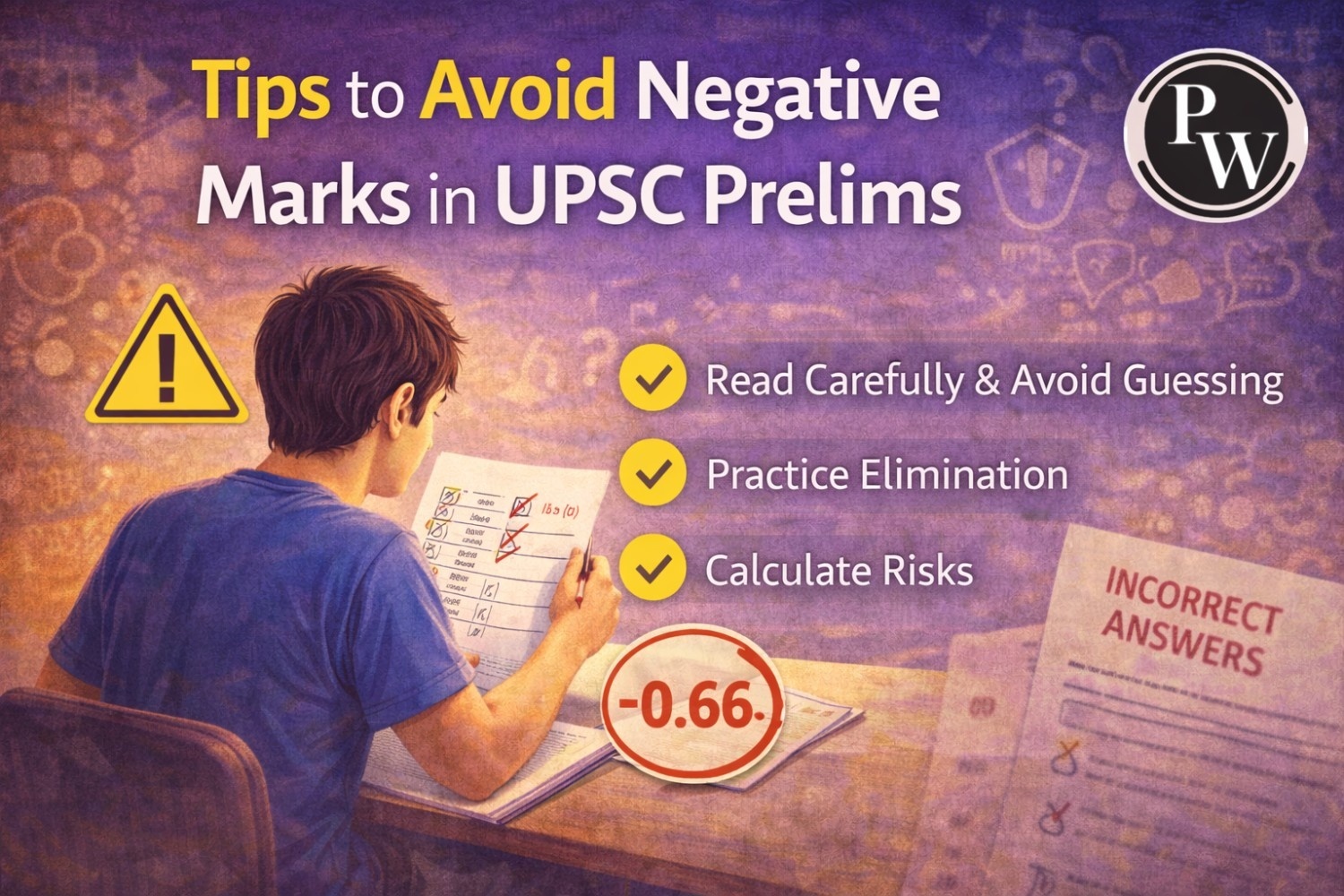
The UPSC exam is a big test for people who want to help run the country. It is not just about what you know. It is also about being very careful. Negative marking in UPSC can lower your score even if you know many things. For every wrong answer, you lose some points. Learning how to handle this is the right way to make sure you do well.
Check Out - UPSC Books
How Do Negative Marks in UPSC Prelims Work?
Learning about negative marking in UPSC prelims is the first step to a good score. In the big test, you get points for a right answer, but you lose points for a wrong one.
-
The 1/3 Rule: If you pick a wrong answer, the test takes away points equal to one-third of what that question was worth.
-
No Points Lost for Blank: If you do not know the answer and leave it blank, you do not lose any points.
-
Two Answers: If you pick two answers for one question, it counts as wrong, and you still lose points.
-
Other Tests: The same rules for negative marking in UPSC epfo are used, so you must always be careful.
Simple Ways to Save UPSC Prelims Marks
Many students lose points because they guess too much. Following a smart negative marking in UPSC prelims plan will help you stay safe. Top students say that "Blind Guessing" is the main reason for low scores. Only pick an answer if you have a good reason.
-
The Three-Round Plan: In the first round, only answer questions you are 100% sure about. In the second round, try the ones where you can throw away two wrong choices.
-
Read Twice: Many mistakes happen because students do not see words like "NOT" or "WRONG" in the question.
-
Cross Out the Bad Ones: Instead of looking for the right answer, look for the ones you know are definitely wrong.
-
Stop Guessing: Only pick an answer if you have removed at least two bad choices. Guessing between four choices usually leads to losing points.
Check out: UPSC Current Affairs Magazine
UPSC Study Material to Practice
To beat negative marking in UPSC, you need to practice with the right books.
Previous Year Questions (PYQs)
UPSC PYQs help you understand the real UPSC exam pattern and question trends. They show how concepts are repeatedly tested.
Question Banks
A good UPSC question bank offers topic-wise practice. It helps strengthen weak areas and improve accuracy.
Practice Modules
UPSC modules provide structured practice with mixed-level questions. They build problem-solving skills step by step.
Revision Notes
Concise UPSC Revision notes help revise important facts and concepts quickly, supporting better performance in practice tests.
Simple UPSC Prelims Preparation Tips for Success
To do well in your exams, you should focus on the main ideas in your practice books. Start by solving old test papers to see which subjects make you make the most slips. Write down your "silly slips" in a small notebook so you can see your own habits. This helps you remember not to do them again. Practice filling in the circles neatly every day. It is good to solve ten questions every night to see if you can pick the right one without guessing. Using a good study guide can show you how to spot "trap words" like "Only" or "All" which are often part of a wrong answer. Stay calm and remember that leaving a hard question blank is sometimes the smartest thing to do.
Success Secrets for Your Test Study
To be a winner, you must follow a plan that keeps you safe during the test. First, always keep your cool. If you feel nervous, you might pick the wrong circle by mistake. Never leave filling the circles for the last minute. Many students wait until the end and then rush, which leads to many wrong marks. Fill your circles after every 10 or 20 questions. Second, check your "Accuracy Rate" at home. This means counting how many questions you get right compared to how many you try. If you see that you get many wrong, try to answer fewer questions but with more care. Finally, learn to walk away from very hard questions. It is better to have zero points for a blank question than to lose points for a guess.
Avoid Negative marking in UPSC Prelims
-
Success Secrets for Your Test Study
To be a winner, you must follow a plan that keeps you safe during the test. First, always keep your cool. If you feel nervous, you might pick the wrong circle by mistake. Never leave filling the circles for the last minute. Many students wait until the end and then rush, which leads to many wrong marks. Fill your circles after every 10 or 20 questions. -
Monitoring Your Accuracy Rate
Check your "Accuracy Rate" at home frequently. This means counting how many questions you get right compared to how many you try. If you see that you get many wrong, try to answer fewer questions but with more care. Finally, learn to walk away from very hard questions. It is better to have zero points for a blank question than to lose points for a guess. -
The Power of Intuition
To win, you must know how fast you can go. Do not try to answer all 100 questions if you are not sure. Top students say that answering 80 to 85 questions very carefully is better than trying 100 by guessing. Keep an eye on the clock to manage your time. If a question takes too long, leave it and move on. Finally, trust your first thought. Often, your brain knows the right answer the first time you read it. Don't change your answer at the last second unless you find a big mistake. -
Final Review Before Submission
In the last ten minutes, don't try to solve new questions. Use this time to check if you marked the circles correctly. Sometimes we mean to mark 'B' but accidentally fill 'C'. This small error is a vital part of why many students fail by just one or two marks. A quick review of your OMR sheet can save you from these heartbreaking mistakes
Read More: UPSC Previous Year Question Papers PDF
Tips to Avoid Negative Marks in UPSC Prelims FAQs
-
What is the negative marking in UPSC?
It takes away one-third of the marks for each wrong answer.
-
Is there negative marking in UPSC CSAT?
Yes, it uses the same 1/3 rule for math and logic questions. -
Does leaving a question blank hurt my score?
No, you lose zero points for blank questions. -
How many questions should I try to answer?
Usually, trying 75-85 questions very carefully is a safe plan. -
Is there negative marking in the writing part (Mains)?
No, there is no negative marking when you write long answers.