When UPSC Aspirants should Cover the Economy Mind Maps in their Revision Cycle

Many civil services aspirants find themselves lost in lengthy textbooks, struggling to connect complex topics like monetary policy transmission with fiscal deficit patterns. This is where UPSC economy mind maps serve as an essential visual learning tool.
Designed to break down dense topics into scannable snapshots, these charts transform how you absorb information. Understanding exactly when to introduce these visual tools into your study schedule can make your retention much faster and your exam preparation far more structured.
What are UPSC Economy Mind Maps?
An economic framework cannot be memorised through plain text alone; it requires understanding structural interlinkages.
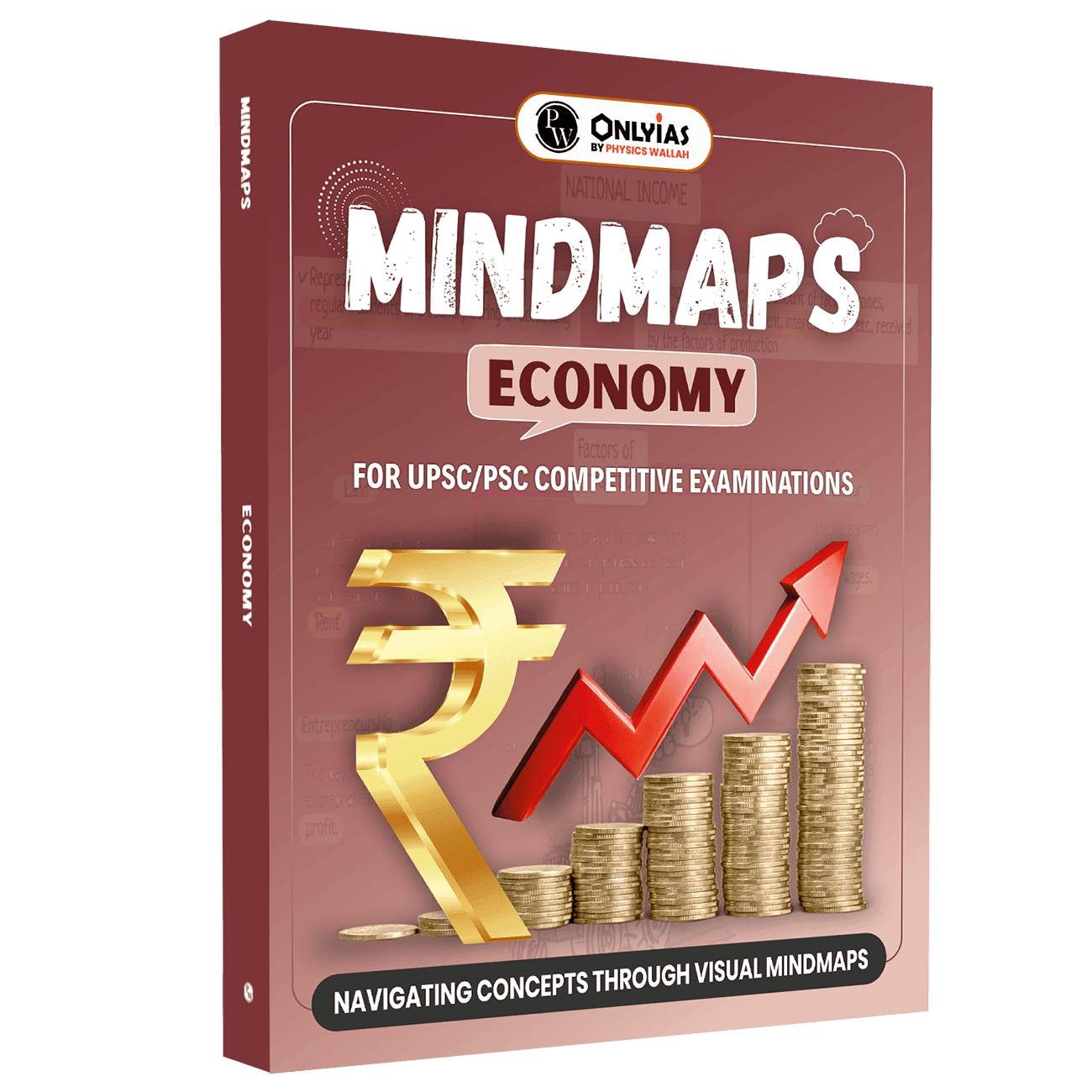
Visual summaries like UPSC economy mind maps offer an exam-oriented, structured layout that presents important economy topics in a visually organized format. Instead of reading dozens of pages on banking reforms or inflation indices, these tools present a comprehensive snapshot of a topic on a single page.
These resources cover major syllabus areas, including:
-
Macroeconomics foundation: National Income metrics like Gross Domestic Product (GDP), Gross Value Added (GVA), and Net National Product (NNP).
-
Monetary and Fiscal Systems: Banking frameworks, Monetary Policy Committee instruments, inflation indices (WPI vs. CPI), and taxation.
-
Real Sectors: Agriculture marketing models, Land Reforms, minimum support price mechanisms, and industrial growth policies.
-
External Sector: Balance of Payments (BoP), foreign exchange reserves, and trade agreements.
-
Developmental Parameters: Inclusive growth strategies, resource mobilisation, government schemes, and the Union Budget.
Why UPSC Economy Mind Maps Are Important for Revision?
Traditional note-taking during civil services preparation can take up hundreds of hours of manual labor. During the stressful weeks before the exam, reading through bulky notebooks becomes highly impractical. Visual layouts resolve this issue by offering a ready-made analytical structure that accelerates your revision cycles. Pairing this approach with concise UPSC Revision Books further improves efficiency by helping aspirants revise important concepts quickly, retain information better, and complete multiple revision rounds in less time.
|
Revision Attribute |
Traditional Textbook Notes |
Visual Economy Mind Maps |
|
Review Speed |
High time consumption per chapter |
Comprehensive snapshot in minutes |
|
Memory Recall |
Lower retention due to dense text |
Highly active recall via visual cues and paths |
|
Structural Interlinkages |
Hard to track across multiple pages |
Clearly shown via arrows and relational nodes |
|
Last-Mile Utility |
Difficult to scan in the final 15 days |
Ideal for rapid structural mental scans |
When Should UPSC Aspirants Start Using UPSC Economy Mind Maps?
Timing your resource usage is crucial to making your preparation effective. Using visual summaries too early without structural context can lead to rote memorization, while introducing them too late might leave you without enough practice. You should balance these tools across three distinct phases of your preparation timeline.
Phase 1: The Initial Foundation Scan
Before diving into a detailed chapter of your standard UPSC economy book, spend five minutes reviewing the corresponding visual diagram. This serves as a preliminary scan that reveals the basic skeleton of the topic. Knowing the overall structural hierarchy in advance makes it much easier to organize details when you read the comprehensive text.
Phase 2: Post-Mock Test Assessment
As you shift your focus toward solving practice questions, keep your visual tools nearby. Whenever you answer a question incorrectly on a mock test—whether it relates to public-private partnership models or fiscal consolidation steps—revisit the specific map section. This helps you quickly find exactly where your logical reasoning failed.
Phase 3: The Last-Mile Review
The final fifteen days before both the Preliminary and Mains exams are critical. This is the optimal window to rely entirely on visual layouts. Use these final days to keep structural connections fresh in your mind, ensuring you can quickly organize your thoughts on your exam sheet.
Benefits of Using UPSC Economy Mind Maps
Incorporating structured diagrams into your routine changes how you approach complex data, changing your study habits from passive reading to active learning. Using a well-designed UPSC Mind Map Books approach makes revision more visual, connected, and easier to retain across multiple subjects.
-
Saves Hundreds of Study Hours: You no longer need to spend days drafting personal revision notes. These ready-made visual frameworks give you an immediate, structured layout of the entire syllabus.
-
Improves Data and Trend Retention: Economic trends, such as shifting GDP contributions or changes in agricultural credit, are easier to remember when connected directly to relevant subject branches.
-
Enhanced Mains Answer Structure: The structured branches of a visual chart provide a natural outline for exam answers, helping you present a clear introduction, body points, and balanced forward-looking points.
-
Simplifies Complex Conceptual Links: Complex processes like how inflation affects exchange rates or how fiscal deficits lead to crowding out private investments become transparent through directional nodes.
How to Use UPSC Economy Mind Maps?
Simply reading through a chart will not yield maximum results; you need to engage with the material actively. Use these practical steps to get the most out of your visual study resources.
-
The First Scan Method
Before opening a text layer, look at the central theme of your chart and follow its primary branches. Note how the topic is broken down into sub-themes. This builds a mental framework that helps you absorb details smoothly when you read your standard textbook.
-
Practice Active Recall
After studying an economic policy or a banking structure, cover the outer branches of your diagram. Try to explain the details or redraw the outer connections from memory. Check your version against the original chart to find any gaps in your understanding, building reliable long-term retention.
-
Add Custom Annotations
The economic landscape evolves constantly with new policy updates, annual Union Budgets, and the Economic Survey. Use the margins and white spaces around your charts to write down new data points, such as the latest current account deficit percentages or recently launched government schemes. This updates your static foundation with real-world context.
Study Plan for Using UPSC Economy Mind Maps
To get the good results, incorporate these visual tools into a comprehensive, step-by-step study strategy.
Step 1: Establish Your Conceptual Groundwork
Start your preparation by building clear definitions. Read through standard resources like NCERT foundational texts or a basic economics book for UPSC to understand terms like inflation, open market operations, and national income.
Step 2: Transition into Visual Frameworks
Once you understand the basic definitions, open your chart book. If you have just learned what a fiscal deficit means, review the corresponding map to see its varied causes, systemic effects, and the past committee recommendations related to it.
Step 3: Connect Across Subjects
Economic developments are closely tied to other parts of the syllabus. Connect your economic diagrams with other subjects, such as linking agriculture charts with geography resources or trade agreement maps with international relations topics.
Step 4: Practice with Previous Year Papers
Open a compilation of UPSC previous year questions and practice locating the core answer points within your visual maps. This exercise trains you to apply your knowledge directly to the specific question styles favored by the exam.
Common Mistakes to Avoid While Using UPSC Economy Mind Maps
Avoid these frequent mistakes to ensure your visual study tools remain effective assets throughout your preparation.
-
Replacing Comprehensive Textbooks Entirely: Visual charts are designed to streamline your review process, but they cannot replace standard books. Skipping a thorough initial reading can leave you with superficial knowledge.
-
Failing to Update Content: Economy questions depend heavily on changing real-world data. If you use your charts without adding updates from the latest Economic Survey, you might use outdated information on the exam.
-
Passive Scanning Without Active Thinking: Simply looking at a diagram like a picture will not build deep memory. You must actively explain the connections out loud or redraw the nodes to build real recall.
-
Studying Topics in Isolation: Do not treat sectors as disconnected elements. Failing to trace arrows from monetary policies over to industrial outputs limits your performance on analytical questions.
Read More: UPSC Indian Economy Previous Year Papers with Downloaded PDF
UPSC Economy Mind Maps FAQs
Q1: Can a beginner start their preparation directly with UPSC economy mind maps?
A1: No, beginners should first build their conceptual foundation using foundational NCERTs or a basic economics book for UPSC. Visual maps work best for reviewing and organizing information once you understand the core ideas.
Q2: How do visual charts help with current affairs updates?
A2: You can update your static visual maps by adding notes on new economic trends, Union Budget numbers, and recent policies directly onto the margins of the relevant topic branches.
Q3: Are these visual revision tips useful for both the Prelims and Mains exams?
A3: Yes, these UPSC revision tips help with both stages. They improve your factual recall for Prelims and give you a clear, structured framework for writing well-organized answers in the Mains exam.