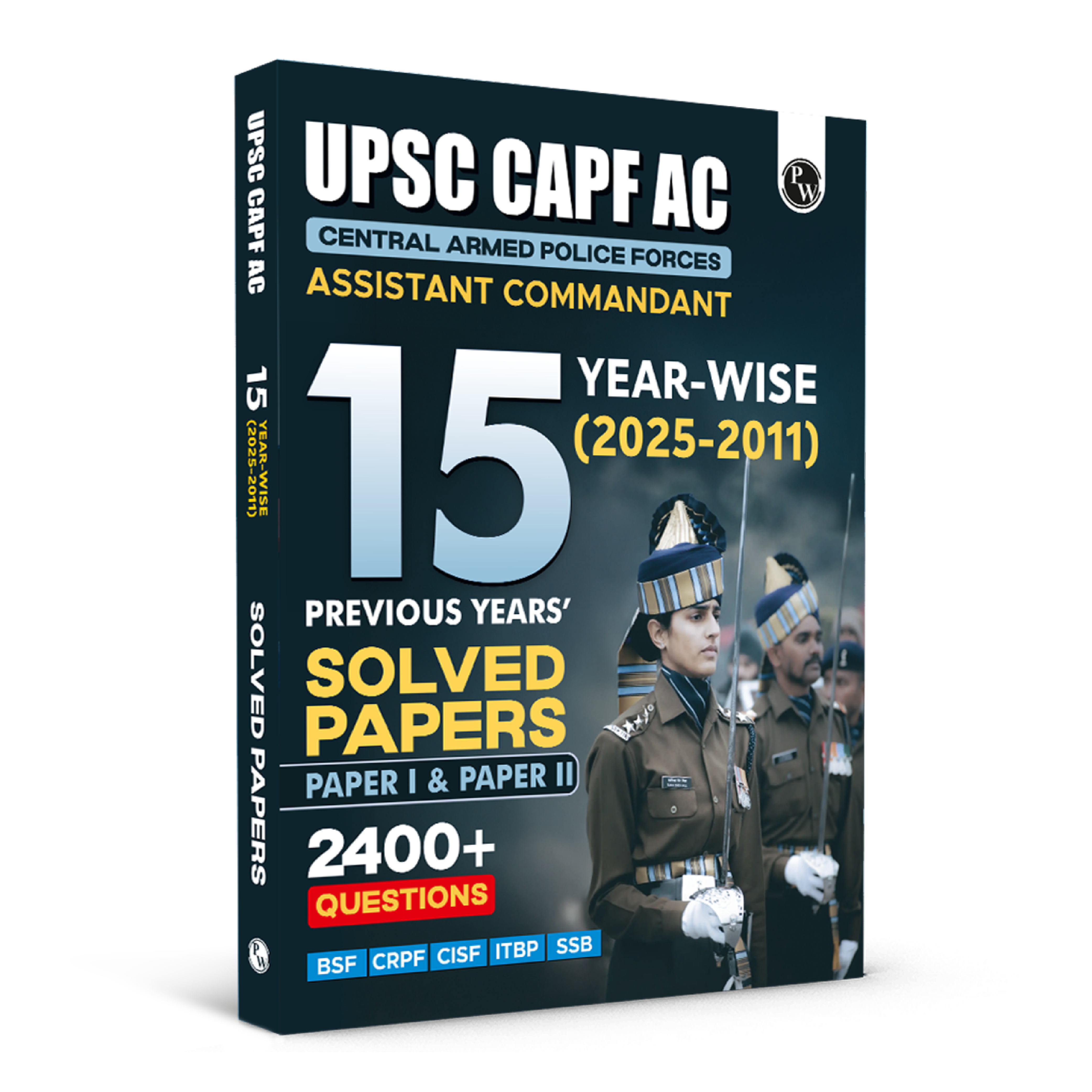
Who is the CAPF AC Exam Designed for and who should buy this PYQ Book

Cracking the Central Armed Police Forces (Assistant Commandant) exam requires an accurate understanding of the exam pattern. Many aspirants struggle to balance the objective General Ability test with the conventional descriptive paper.
Without looking at actual exam trends, your preparation can easily go off track. Studying the UPSC CAPF PYQ is the most practical way to bridge the gap between theory and actual exam requirements, helping you focus on high-yield topics.
Importance of UPSC CAPF PYQ
Reviewing past exam papers is the single most effective way to understand the mind of the paper-setter. The exam does not just test rote memorisation; it evaluates analytical thinking, mental alertness, and clear expression. By analysing old question papers, you get immediate clarity on which areas of history, geography, science, and current affairs carry the maximum weight.
It also eliminates guesswork. Instead of blindly reading massive reference textbooks, looking at actual questions helps you filter out irrelevant topics. This saves hundreds of hours of study time and ensures your efforts align perfectly with what the Union Public Service Commission actually demands.
Who Is the UPSC CAPF AC Exam Designed For?
The UPSC CAPF AC exam is specifically designed for individuals who possess a strong sense of patriotism, leadership traits, and a desire to serve the nation in uniform.
It is meant for graduates who want to join the premium paramilitary forces of India as Group A Gazetted Officers.
-
Aspiring Leaders: The role requires leading jawans in challenging terrains. The exam is meant for those who can handle high-pressure situations and maintain public order.
-
Defence Enthusiasts: If you are passionate about internal security, border guarding, and counter-insurgency operations, this exam is tailored for you.
-
Graduates Seeking Gazetted Posts: It is a direct route to becoming a commanding officer in forces like the BSF, CRPF, CISF, ITBP, and SSB without undergoing multiple promotional stages.
-
Physically and Mentally Fit Candidates: Since the selection process includes stringent physical and medical tests along with a personality interview, it suits well-rounded personalities.
- Candidates Who Prefer Exam-Oriented Preparation: Aspirants who regularly practice UPSC Previous Year Questions can gain a clearer understanding of the exam pattern, recurring themes, difficulty level, and question style. Solving previous year questions also helps improve accuracy, strengthen concepts, and build confidence for both Paper 1 and Paper 2.
Why is UPSC CAPF PYQ Important for CAPF Aspirants?
Aspirants often fail to clear the cutoff because they treat Paper I and Paper II as isolated exams. Practising the CAPF AC PYQ helps you see the interconnectedness of the syllabus. For example, a political issue asked as a multiple-choice question in Paper I can easily become a 20-mark essay topic in Paper II.
Understanding the Evolving Exam Trends
The difficulty level of the exam shifts every few years. By evaluating papers from 2011 to 2025, you can observe how questions have transitioned from direct factual queries to deeper conceptual statements.
Mastering Time Management
Paper I contains 125 objective questions that must be solved in 2 hours, which demands quick calculation and elimination skills. On the other hand, Paper II gives you 3 hours to write long essays, arguments, and reports. Working through real question sets trains your brain to switch between rapid decision-making and structured long-form writing.
Who Should Buy the UPSC CAPF PYQ Book?
Not every book in the market caters to the specific demands of this dual-paper exam. A dedicated UPSC CAPF PYQ book is an essential investment for specific categories of students who want an organised, error-free preparation tool.
|
Candidate Type |
How the Book Helps Them |
|
Complete Beginners |
Gives a realistic view of the actual exam difficulty right at the start, preventing them from reading irrelevant study material. |
|
Self-Study Students |
Acts as a personal guide by providing structured, step-by-step explanations for self-assessment without external coaching. |
|
Repeater Candidates |
Helps identify hidden weak spots, conceptual blind spots, and gaps in answer-writing style that prevented them from clearing previous cutoffs. |
|
Working Professionals |
Saves massive amounts of time by providing ready-made, trend-mapped solved papers for quick revision during weekends. |
If you fit into any of these categories, relying on a verified CAPF previous year question paper book will streamline your revision and boost your confidence during the final weeks. To make your preparation even more effective, pair your PYQ practice with UPSC Revision Books, which help you quickly revise important concepts, strengthen retention, and cover high-priority topics in a structured manner before the exam. This combination can improve both preparation quality and exam readiness.
When to Start Solving UPSC CAPF PYQ
Timing your preparation is critical. Standard practice dictates that you should not wait until the final month before the exam to open past papers.
-
Phase 1 (The Beginning): Read through 2 or 3 past papers before even picking up standard reference textbooks. This introduces you to the actual exam language and tone.
-
Phase 2 (During Sub-Topic Completion): As soon as you finish a major subject like Indian Polity or Modern History, solve all the relevant questions asked from that subject over the last 15 years.
-
Phase 3 (The Final 3 Months): Treat the complete papers as full-length mock tests. Sit down in an isolated room, set a timer for 2 hours for Paper I and 3 hours for Paper II, and solve them in real-time.
How to Use UPSC CAPF PYQ?
Simply reading through questions and looking at the answers will not improve your score. You need a systematic method to extract the maximum learning value out of every single question.
-
Analyse the Options: For Paper I, do not just look at why the correct option is right. Investigate the other three incorrect options, as the commission frequently frames future questions around those alternate topics.
-
Evaluate Against Word Limits: For Paper II, cross-check your sample answers with standard format guidelines. Ensure your essays, reports, and arguments are tightly structured and fit neatly into the prescribed word counts.
-
Track Your Error Patterns: Maintain a mistake log. Note down whether your wrong answers are due to a lack of conceptual clarity, silly reading mistakes, or wild guessing.
-
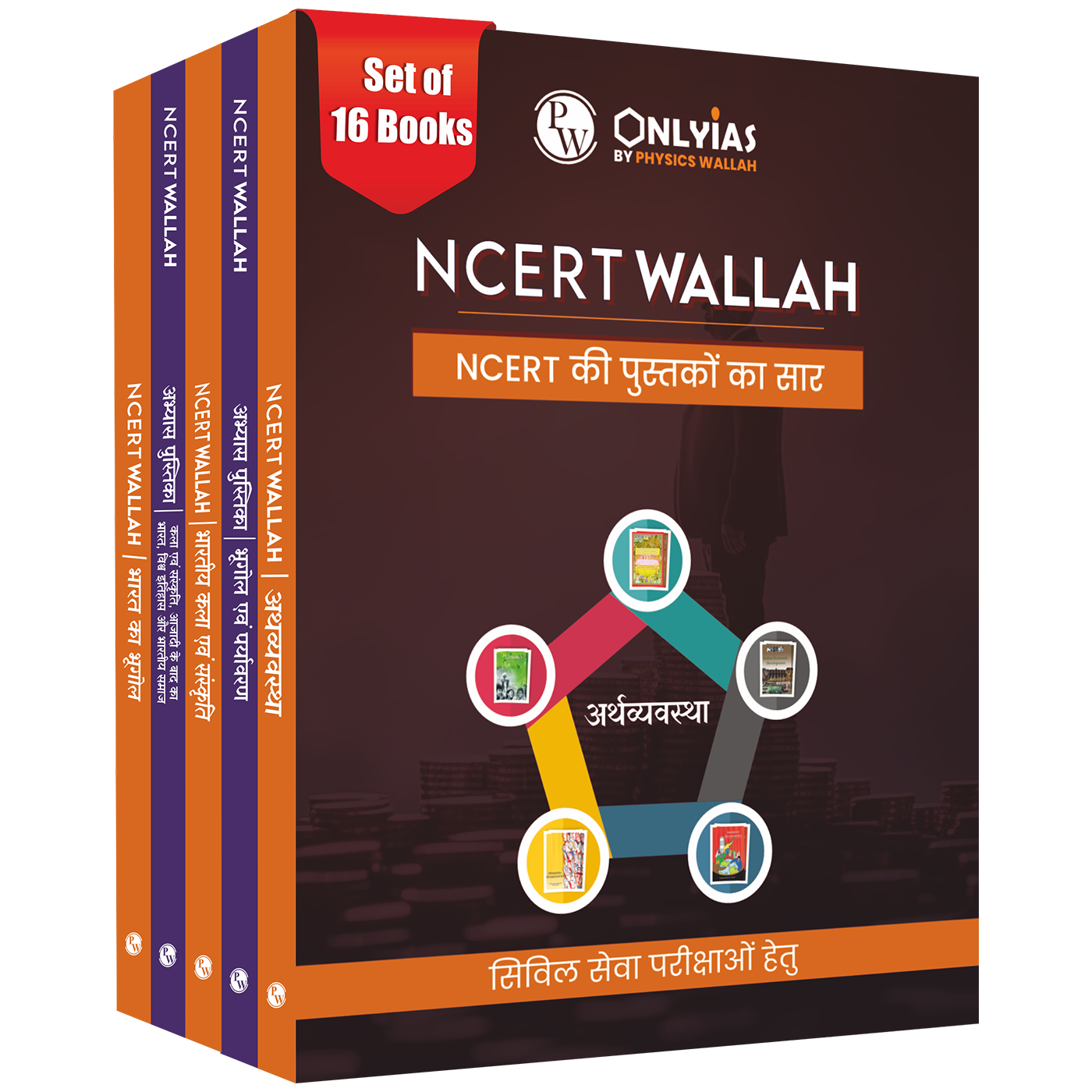
Use Step-by-Step Explanations: When you get an answer wrong, immediately open the detailed explanation section to fix your conceptual understanding before moving to the next question. To strengthen revision alongside PYQ analysis, you can also use the NCERT UPSC Summary Book Hindi Combo for quick concept revision and better retention of important topics.
Study Plan for Using UPSC CAPF PYQ
To clear this highly competitive exam, you need a balanced strategy that gives equal weight to both objective analysis and descriptive writing practice. Here is a structured plan to utilise your past papers over a 24-week timeline.
Weeks 1 to 8: Subject-Wise Integration
Divide your syllabus into major components: Polity, History, Geography, and General Science. Dedicate 2 weeks to each subject. After completing a unit, open your question bank and solve every single related objective question from the 2011–2025 timeline. This ensures your fundamentals are anchored in actual exam realities.
Weeks 9 to 16: Paper II Writing Drill
Dedicated answer-writing practice should begin here. Take the CAPF AC paper 2 previous year question paper sections and select past essay topics, counter-arguments, and report briefs. Write them down on plain A4 sheets. Focus strictly on content organisation, clear presentation, and neutral analytical tones. Compare your drafts with expert-level descriptive solutions to check your expression quality.
Weeks 17 to 24: Full-Length Exam Simulations
Treat the final 2 months as simulated exam zones. Dedicate your weekends to writing full papers.
-
Morning Session (10:00 AM – 12:00 PM): Solve Paper I. Focus on accuracy, intelligent guessing through elimination, and managing your speed.
-
Afternoon Session (2:00 PM – 5:00 PM): Solve Paper II. Train your hand muscles to write continuously for 3 hours without compromising your handwriting or structural flow.
Use the final days to review your compiled mistake log and read through the step-by-step solutions of the toughest questions to keep the core concepts fresh in your mind.
Read More: UPSC Previous Year Question Papers PYQ PDF
UPSC CAPF PYQ FAQs
How many years of past papers are sufficient for the exam?
Practising 15 years of past papers covering the 2011 to 2025 period is ideal. This comprehensive timeframe gives you full exposure to changing question patterns, varying difficulty levels, and evolving current affairs trends.
Can I prepare for Paper II using past papers alone?
Past papers are indispensable for understanding the exact essay formats, report structures, and argument lengths required by the commission. Combining them with daily newspaper reading will give you enough content to handle any current topic.
How does this book help with Paper I preparation?
The book contains over 2400 high-quality questions with comprehensive, step-by-step explanations. This large practice base helps build strong conceptual clarity and teaches you how to eliminate incorrect options during the objective test.