UPSC GS Syllabus and Exam Pattern
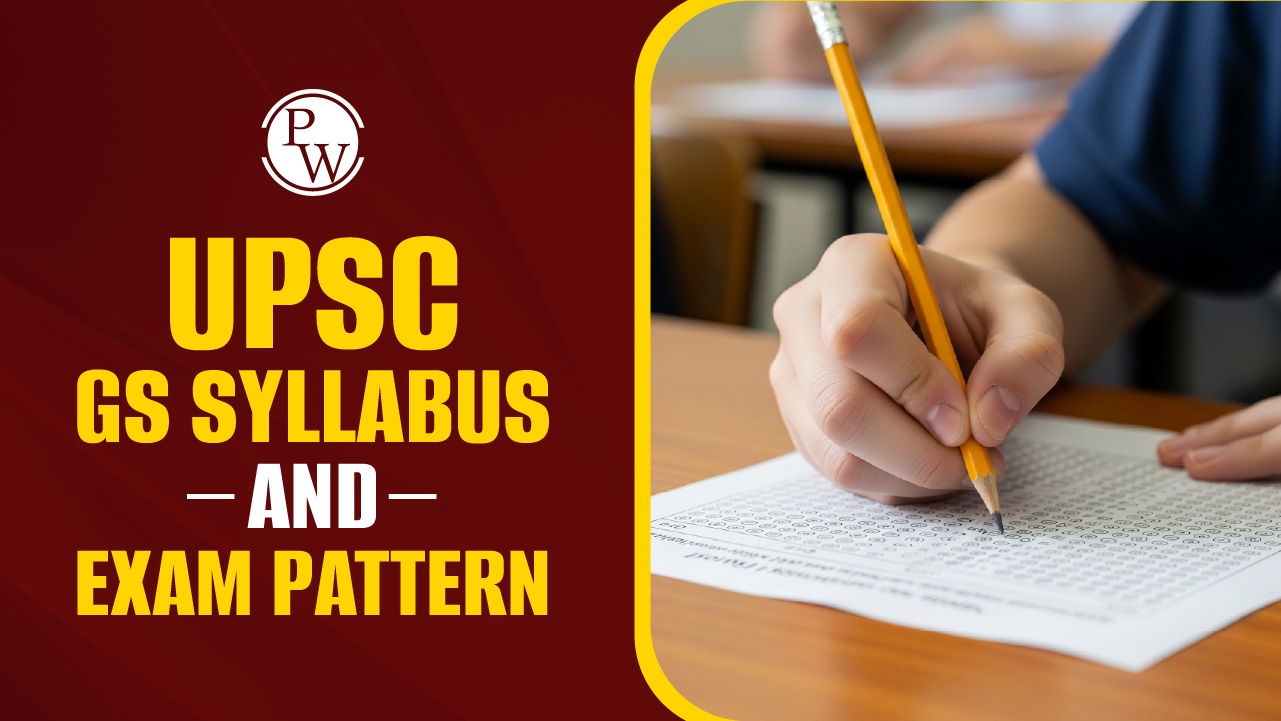
UPSC GS Syllabus covers all important topics from subjects like history, geography, polity, economy, environment, science, and current affairs. The Civil Services Exam has three main stages: Prelims, Mains, and Interview. Each stage of the Civil Service Examination tests your different skills.
For the Prelims stage, the syllabus includes General Studies Paper I and Paper II (CSAT). The General Studies Paper I Syllabus is based on general knowledge, while Paper II tests aptitude and reasoning. For the Mains stage, the general studies syllabus for UPSC is divided into four papers (GS 1, GS 2, GS 3, and GS 4), where:
-
GS 1 Mains Syllabus is based on History, Geography, Society, Culture, and Indian Heritage.
-
GS 2 Syllabus UPSC covers topics like Governance, polity, social justice, and international relations.
-
General Studies Mains Syllabus for GS 3 and GS 4 includes topics like Economy, Science and Technology, Environment, Ethics, and Integrity.
UPSC GS syllabus aims to assess your understanding, analytical skills, and ability to apply knowledge in real-life situations. Keep reading to learn the detailed General Studies Syllabus for UPSC.
Check Out: UPSC Books
UPSC GS Syllabus for Prelims
UPSC GS syllabus for Prelims is important to cover if you are aiming to qualify the first stage of the Civil Services Exam. The Prelims stage is just a screening test to shortlist candidates for the Mains Exam. Though marks scored in Prelims are not counted in the final selection, they are important to become eligible for taking Mains.
The Prelims have two papers: General Studies Paper I and General Studies Paper II. Both are compulsory. Therefore, covering the General Studies Syllabus for UPSC Prelims is necessary. Check the detailed UPSC GS Syllabus for Prelims below.
|
UPSC GS Syllabus for Prelims |
|
|
Paper |
Topics Covered |
|
General Studies Paper-I |
Important current events (national & international) History of India & Freedom Movement Geography of India & the world (physical, social, economic) Indian polity, governance, and rights issues Economy, social development, government initiatives Environment, biodiversity, and climate change basics General science |
|
General Studies Paper-II (CSAT) |
Reading comprehension & communication skills Logical reasoning & analytical ability Decision making & problem-solving General mental ability Basic numeracy & data interpretation (Class 10 level) Qualifying paper – minimum 33% marks required |
Check Out: UPSC Previous Year Papers
UPSC Prelims Exam Pattern
UPSC Prelims is a screening stage that shortlists eligible candidates for the Mains Exam. As per the UPSC exam pattern for Prelims, it has two papers, both objective in nature and carry a total of 400 marks. Paper 1 tests your knowledge of general studies, while Paper 2 (CSAT) checks your reasoning and analytical skills. Check the detailed UPSC Prelims Exam Pattern here:
|
UPSC Prelims Exam Pattern |
|
|
Number of Papers |
2 (Compulsory Papers) |
|
Name of Papers |
General Studies Paper-I and Civil Services Aptitude Test (CSAT) |
|
Type of Questions |
Objective (MCQ) type |
|
Maximum Marks |
400 (200 each paper) |
|
Negative Marking |
1/3rd of the marks for a wrong answer |
|
Duration |
2 hours per paper (extra time for eligible differently-abled candidates) |
|
Medium of Exam |
Bilingual (Hindi and English) |
UPSC GS Syllabus for Mains
UPSC Mains is for the second stage of the Civil Services Exam and is very important because the marks scored here decide if you will move forward to the interview stage. Unlike Prelims, the UPSC GS syllabus for Mains is based on subjects that test your in-depth knowledge, understanding, and analytical skills.
The General Studies syllabus for UPSC Mains is divided into four papers (GS 1 to GS 4), covering subjects like history, culture, geography, polity, economy, science, ethics, and governance. Let's go through the detailed UPSC General Studies Mains Syllabus.
UPSC GS 1 Mains Syllabus
UPSC GS 1 Mains Syllabus is made up of topics like Indian heritage, culture, history, geography, and society. This paper tests your understanding of India’s past, its cultural richness, and the social and geographical aspects of the country and the world.
Studying the general studies paper 1 syllabus deeply will help you build a strong foundation for other GS papers as well.
|
GS 1 Syllabus for UPSC Mains |
|
|
Topic |
Details |
|
Indian Culture |
Salient aspects of art forms, literature, and architecture from ancient to modern times |
|
Modern Indian History |
Events from the mid-18th century to the present, significant personalities, and major issues |
|
Freedom Struggle |
Various stages, important contributors, and regional contributions |
|
Post-Independence India |
Consolidation, reorganization, and nation-building efforts |
|
World History |
Events from the 18th century, such as the industrial revolution, world wars, colonization, decolonization, political philosophies like communism, capitalism, socialism, and their societal effects |
|
Indian Society |
Salient features, diversity, role of women and organizations, population issues, poverty, urbanization, and their solutions |
|
Social Issues |
Effects of globalization, social empowerment, communalism, regionalism, secularism |
|
World Geography |
Physical geography, distribution of key natural resources, and factors influencing the location of industries |
|
Geophysical Phenomena |
Earthquakes, tsunamis, volcanic activity, cyclones, changes in water bodies, ice caps, flora and fauna, and their impacts |
Also, Check: UPSC PYQ General Studies Book
UPSC GS 2 Mains Syllabus
GS 2 Mains Syllabus for UPSC focuses on governance, polity, constitution, social justice, and international relations. This paper aims to test your understanding of how India’s political and administrative system works, the rights and responsibilities of citizens, and India’s role in global affairs.
Covering the GS 2 syllabus UPSC Mains deeply will help you answer questions on policies, laws, and governance properly.
|
UPSC GS 2 Mains Syllabus |
|
Indian Constitution: historical background, evolution, features, amendments, significant provisions, basic structure |
|
Functions and responsibilities of the Union and State governments, federal structure, devolution of powers and finances, and related challenges |
|
Separation of powers between various organs and dispute redressal mechanisms |
|
Parliament and State legislatures: structure, functioning, powers, privileges, and related issues |
|
Organization and functioning of the Executive and Judiciary; Ministries, Departments, pressure groups, constitutional, statutory, and regulatory bodies |
|
Salient features of the Representation of the People’s Act, appointments, powers, and responsibilities |
|
Government policies and interventions in various sectors, and issues in design and implementation |
|
Development processes: role of NGOs, SHGs, charities, government schemes for vulnerable sections, and performance of these schemes |
|
Social sector issues: health, education, human resources, poverty, and hunger |
|
Governance, transparency, accountability, e-governance applications, citizens’ charters, role of civil services |
|
India and its neighborhood, bilateral, regional, and global groupings, international agreements, impact on India’s interests, and diaspora |
General Studies Mains Syllabus For GS 3
General Studies Mains Syllabus for GS 3 is based on Technology, Economic Development, Biodiversity, Environment, Security, and Disaster Management. Questions from here test your understanding of the economy, agriculture, industry, science and technology, the environment, and internal security. Check the detailed General Studies Mains Syllabus for GS 3 here:
|
General Studies Mains Syllabus For GS 3 |
|
Indian Economy: planning, resource mobilization, growth, development, employment, inclusive growth |
|
Government Budgeting and Economic Policies |
|
Agriculture: major crops, cropping patterns, irrigation systems, storage, transport, marketing, farm subsidies, minimum support prices, Public Distribution System, food security, technology for farmers |
|
Food processing and related industries: scope, significance, supply chain management |
|
Land reforms in India |
|
Industrial policy: effects of liberalization on the economy and industrial growth |
|
Infrastructure: energy, ports, roads, airports, railways, investment models |
|
Science and Technology: developments, applications in daily life, achievements, indigenization, IT, space, computers, robotics, nanotechnology, biotechnology, intellectual property rights |
|
Environment & Biodiversity: conservation, pollution, degradation, environmental impact assessment |
|
Disaster management and disaster preparedness |
|
Internal security: extremism, role of external actors, communication networks, cyber security, money-laundering, organized crime and terrorism, border security, security forces and their mandate |
Check Out: UPSC Revision Books
General Studies Syllabus for UPSC Mains GS 4
General Studies Syllabus for UPSC Mains GS 4 covers topics on Ethics, Integrity, and Aptitude. This paper tests how you approach the questions related to ethical issues, values, and problem-solving abilities in real-life situations. Here's the complete General Studies Syllabus for UPSC Mains GS 4:
|
General Studies Syllabus for UPSC Mains GS 4 |
|
Ethics and Human Interface: Essence, determinants, consequences of ethics in human actions; ethics in personal and public relationships |
|
Human Values: lessons from leaders, reformers, and administrators; role of family, society, and education in teaching values |
|
Attitude: content, structure, function; moral and political attitudes; influence on thought and behaviour |
|
Aptitude and Foundational Values for Civil Services: integrity, impartiality, objectivity, dedication to public service, empathy, tolerance, compassion |
|
Emotional Intelligence: concepts and application in administration and governance |
|
Contributions of moral thinkers and philosophers from India and the world |
|
Public/Civil Service Values and Ethics in Public Administration: ethical concerns, dilemmas, laws, accountability, ethical governance, corporate governance, international ethics |
|
Probity in Governance: transparency, Right to Information, codes of ethics and conduct, citizen charters, work culture, utilization of public funds, challenges of corruption |
|
Case Studies: scenarios covering ethics, values, integrity, and problem-solving in governance |
UPSC Exam Pattern for Mains
After qualifying the Prelims, the UPSC Mains serves as the main evaluation stage of the Civil Services Examination. As per the UPSC exam pattern for Mains, it consists of a total of nine papers.
Out of which, two papers are qualifying in nature, and marks from the remaining papers, along with the interview are used to prepare the final merit list. To better understand this, check the detailed UPSC Mains Exam Pattern here:
|
UPSC Exam Pattern for Mains |
|||
|
Paper |
Time Duration |
Total Marks |
Nature of Paper |
|
Paper A – Compulsory Indian Language |
3 hours |
300 |
Qualifying |
|
Paper B – English Language |
3 hours |
300 |
Qualifying |
|
Paper I – Essay |
3 hours |
250 |
Merit |
|
Paper II – General Studies I |
3 hours |
250 |
Merit |
|
Paper III – General Studies II |
3 hours |
250 |
Merit |
|
Paper IV – General Studies III |
3 hours |
250 |
Merit |
|
Paper V – General Studies IV |
3 hours |
250 |
Merit |
|
Paper VI – Optional Paper I |
3 hours |
250 |
Merit |
|
Paper VII – Optional Paper II |
3 hours |
250 |
Merit |
|
Total |
1750 |
||
|
Interview / Personality Test |
NA |
275 |
NA |
|
Grand Total |
2025 |
||
How to Cover the UPSC GS Syllabus Effectively?
UPSC GS Syllabus is vast and very important to qualify in different papers of the Civil Services Exam. Therefore, here are some tips that will help you cover the UPSC GS Syllabus effectively:
-
Get the Latest UPSC GS Syllabus and Exam Pattern: Always refer to the official UPSC GS syllabus. Understand what topics are included and how the papers are structured. This helps you create your study plan.
-
Use NCERT Books: Start with NCERT books from classes 6 to 12 for subjects like History, Geography, Polity, and Economy. Using the NCERT Summary Books by PW will help you strengthen your basics.
-
Take Mock Tests: Practice mock tests to check your speed and accuracy. It also shows where you need improvement.
-
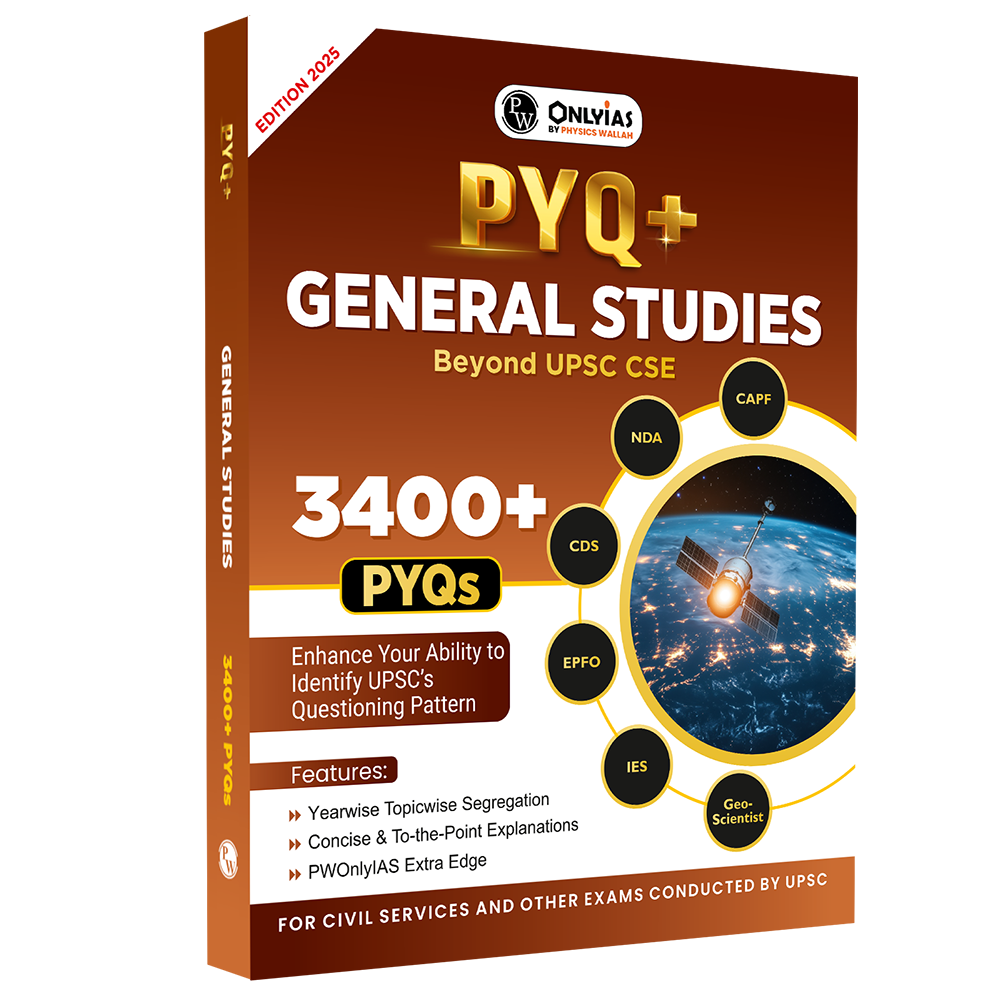
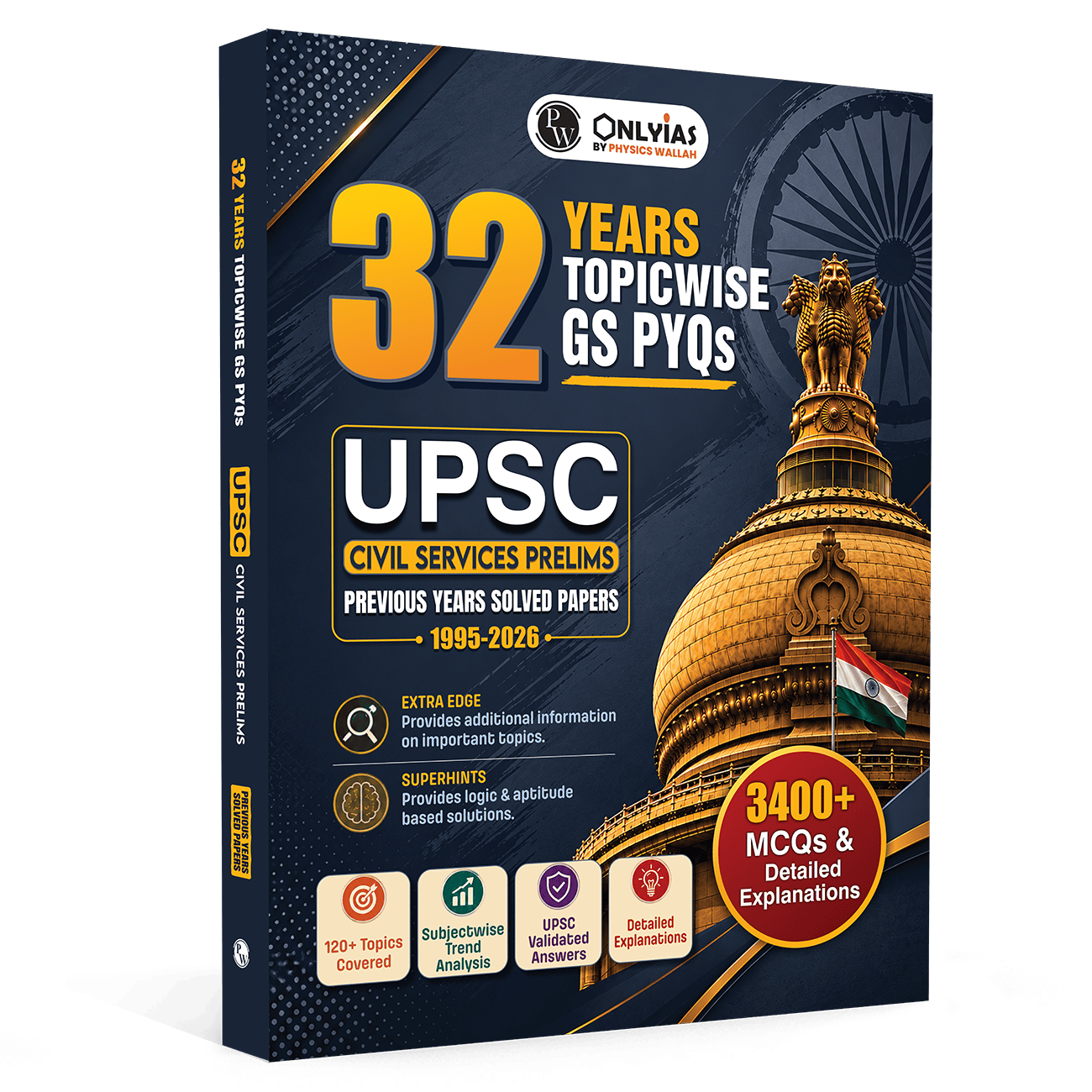
Check Previous Year Questions: Check the UPSC PYQ Book for General Studies. This will help you know the type of questions asked and which topics are important.
-
Make a Proper Study Plan: Divide time for each subject and follow it. Include time for learning, practicing, and revising.
-
Practice Answer Writing: Write answers daily by focusing on points, logic, and short examples. This improves writing speed and presentation.
-
Stay Updated with Current Affairs: Read newspapers and magazines every day. Relate current events with subjects like Polity, Economy, and other general studies topics. Utilize UPSC Current Affairs books by PW to enhance your exam preparation.
Read More: UPSC Geography Previous Year Papers with Downloaded PDF
UPSC GS Syllabus and Exam Pattern FAQs
Q.1. What is the General Studies Paper 1 syllabus?
Ans. The General Studies Paper 1 syllabus covers Indian Heritage and Culture, History, and Geography of the World and Society.
Q.2. What does the GS 2 syllabus UPSC cover?
Ans. The GS 2 syllabus UPSC is based on topics like Governance, Constitution, Polity, Social Justice, and International Relations, among others.
Q.3. How many papers are there in UPSC Mains?
Ans. There are 9 papers in UPSC Mains. Out of these, 2 papers are qualifying, and the remaining 7 papers are counted for merit.
Q.4. Is there negative marking in UPSC Prelims?
Ans. Yes, there is negative marking in UPSC Prelims. For every wrong answer, 1/3rd of the marks will be deducted. This applies to both General Studies Paper 1 and CSAT Paper 2.