What are UPSC textbooks and When should Aspirants use Them Over Standard References
The syllabus is huge for the Civil Services Examination, so a structured approach to comprehensively study it becomes important. The aspirants often find themselves confused about which study materials they should follow. A choice between the basic UPSC textbooks and other reference material is a crucial fork in an aspirant's study path.
This article discusses the differences between these resources and shows what each tool offers at specific preparation stages.
What are UPSC Textbooks?
UPSC textbooks are principally preparatory texts, serving as the foundation for concepts necessary to tackle the Civil Services Examination. These books are designed to present the basic topics in a reader-friendly, sequential way. The focus is much more on clarity of fundamentals than on ultra-academic research.
The first category is textbooks such as the National Council of Educational Research and Training (NCERT) books.
-
History: Civil services, polity, Sociology. Both the ancient Indian and world history themes will be from a humanities perspective.
-
Geography: The Landscape of Physical Geography and Human & Economic Geography.
-
Polity: Indian Constitution at Work and Political Theory.
-
Economy: Indian economy and basic macroeconomics.
-
Science: General science textbooks that cover the fundamentals of gravity.
In addition to the regular non-generic school-level books, specialized foundation/concept-building volumes function similarly to textbooks. They convert the intricate academic ideas into a structured, comprehensive, and exam-oriented format specifically meant for the civil services syllabus. They present the basic definitions and foundational historical timelines and provide introductory overviews that clear your mind for extensive analysis.
Importance of UPSC Textbooks
Building a good preparation framework is absolutely not possible without having in-depth knowledge of the relevant study text, or rather, textbook. Especially in the preliminary exam, questions are often designed by the Union Public Service Commission to test conceptual clarity from among thousands of obscure facts.
The UPSC textbooks are foundational because they rely entirely on four main operational pillars:
-
Simplification of Complex Concepts: Examples of macroeconomics or physical geography concepts with complex processes. Textbooks capture these ideas well, using clear language, simple diagrams, and illustrative examples to ensure a gentle initial learning curve.
-
Direct Source for Exam Questions: Based on the examination trend of the past several years, many questions asked in prelims and mains come directly from basic textbook explanations.
-
Establishment of Uniform Standard Facts: Being authenticated by official bodies or expert educational publishers, these resources are a fact-checked record of highly reliable and well-verified data, and hence save you time to unlearn misplaced facts.
-
Development of Answer-Writing Basics: These textbooks are written in a narrative style and serve to introduce students to how to approach topics, what the important core components are, and how to close logically.
UPSC Textbooks vs Standard Reference Books
Among new aspirants, a major confusion arises in differentiating between textbooks and standard references. Although both resources are important for UPSC preparation, each serves a different functional role in a daily study tracker.
Core Characteristics of UPSC Textbooks
-
Primary Objective: These are UPSC books meant purely for basic concept clearing and definition of the most fundamental terms
-
Target Audience: These books are designed specifically with beginners/intermediates in mind who want to establish a strong foundation.
-
Writing Style: The tone is highly narrative, explanatory, and student-friendly, avoiding overly dense academic prose.
-
Syllabus Depth: They cover broad, thematic areas of the overall syllabus instead of exam-specific sub-topics.
-
Data Layout: They offer mostly established concepts, infrastructure facts, and historical sequences of timelines, but not real-time data updates.
Core Characteristics of Standard Reference Books
-
Primary Objective: These volumes offer comprehensive topic coverage, in-depth analysis, and large amounts of data for specific general studies papers.
-
Target Audience: These are for advanced students who have already covered all the basics and find high-quality notes to derive points ready-made for exams.
-
Writing Style: The style is analytical, precise, and heavily condensed into facts, pointers, and policy discussions.
-
Syllabus Depth: Books such as Indian Polity, Indian Economy, or Indian Art and Culture serve a smaller unit in the exam.
-
Data Layout: It contains information about current policy issues, important schemes by the central government, and administrative systems, which are very useful in the recent economic survey.
Blind memorisation occurs when you try to read complex reference books without having firmly grasped your basic textbooks. So, for example, reading constitutional mechanisms is futile unless one already knows why the constitution was even framed in the first place.
Benefits of UPSC Textbooks
Choosing a methodical UPSC textbook at the foundational stage of one's preparation cycle acts strategically to streamline an aspirant's whole workflow. This will have an impact on your performance in all the stages of any exam you undertake.
1. Superior Time Management
Most academic books are a mine of very brilliant commentary that is indispensable for research scholars, but can be completely useless for civil service aspirants. Dedicated textbooks filter out this academic fluff. They provide information that is specific to the syllabus, protecting students from spending months reading unnecessary material.
2. Streamlined Notes Formulation
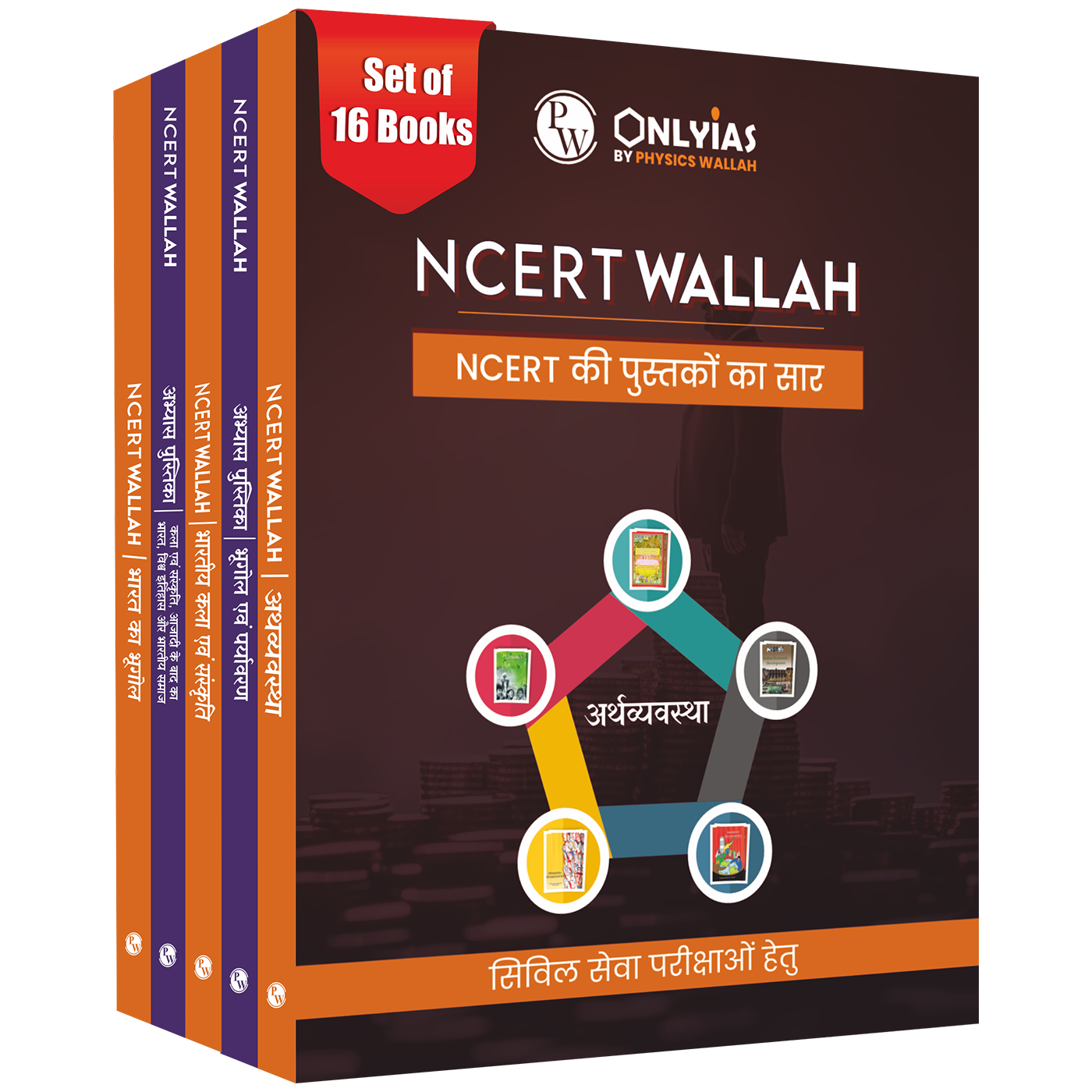
Books or specialized NCERT Summary compilations are pre-structured format-based books. This design simplifies revision. Students can skim through and highlight critical phrases, converting them into concise revision notes rather than manually boiling an extreme amount down to a few pages.
3. Balanced Preparation of Static and Analytical Areas
A successful candidate needs to balance permanent static facts with constantly evolving current affairs. UPSC GS Books. With this core locked in place, shaping the daily news through newspaper headlines or current affairs compendiums becomes automatic and seamless.
4. Integration of Visual Learning Aids in UPSC Modules
UPSC textbooks rely heavily on structured visual tools like timelines, flowcharts, maps, diagrams, and mind maps to simplify complex topics. These visual elements help in breaking down difficult concepts such as natural processes, administrative structures, or economic cycles into easy-to-understand formats.
More importantly, these visuals improve retention and recall during revision. They also serve as ready-made frameworks that aspirants can reproduce in Mains answers, helping present information in a structured and high-scoring format.
5. Seamless Transition to Answer Enrichment in UPSC Modules
Once aspirants complete core conceptual learning through UPSC books, they can smoothly transition into answer enrichment practice using the same structured content base.
UPSC modules are designed in a way that foundational understanding naturally evolves into analytical writing skills. This helps aspirants convert static knowledge into well-structured, exam-ready answers with better clarity, relevance, and presentation quality.
Read More: Most Important Topics for UPSC Prelims and Mains Exam
UPSC Textbooks FAQs
1. Can I clear the civil services exam by reading only UPSC textbooks?
No, while foundational textbooks like NCERTs are indispensable for building conceptual clarity, they are not enough on their own. You must complement them with advanced reference books for UPSC to gain the depth required for Mains answer writing and track current affairs through daily newspapers and targeted magazines.
2. When is the right time to transition from basic textbooks to standard reference books for UPSC?
After finishing two comprehensive readings of your fundamental textbooks, you should ideally move on to advanced UPSC study materials. If you understand the first principles and shrug off tabulated numbers, you can transition to standard reference books more comfortably with greater ease.
3. Which core subjects do basic UPSC textbooks cover best?
Basic UPSC textbooks provide maximum value for static subjects such as history, geography, Indian polity, and economy. In these areas, resources such as NCERTs or well-structured foundational series create the basic context on which advanced analytical reading proves its effective utility.
4. How do specialised UPSC GS books help manage the vast civil services syllabus?
These UPSC GS books filter out unimportant academic details, simplifying the preparation process. They encapsulate large historical, geographical, and political ideas into useful aids to making the subject accessible for students, such as charts and timelines, making it an efficient method for syllabus coverage.
5. Where can I find integrated UPSC preparation resources that combine textbooks and summaries?
Apart from that, you can also get several subjects of preparation materials, including the specialized subject-wise foundation combos such as NCERT summaries or specially designed workbook modules, directly from online educational stores to support your systematic preparations.