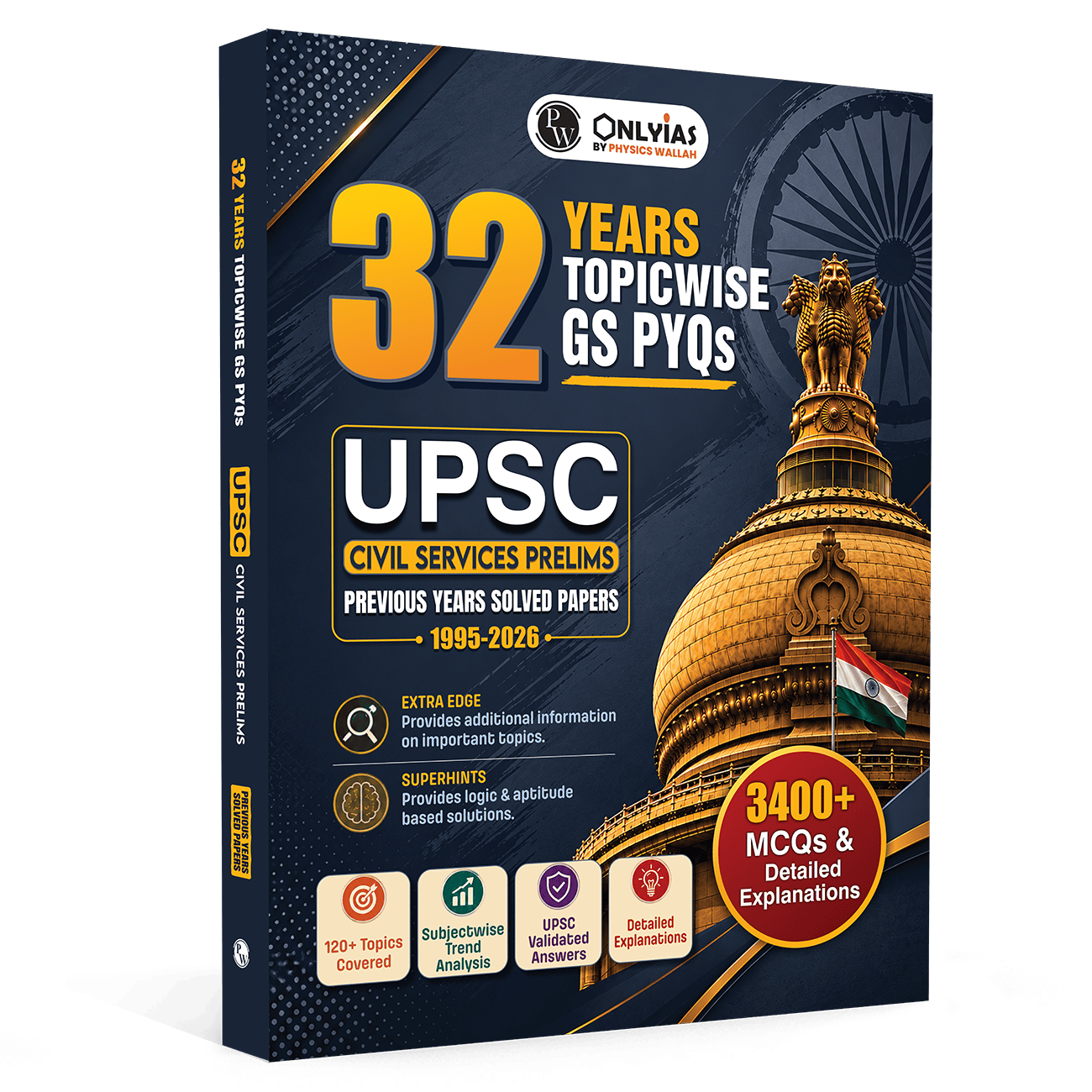
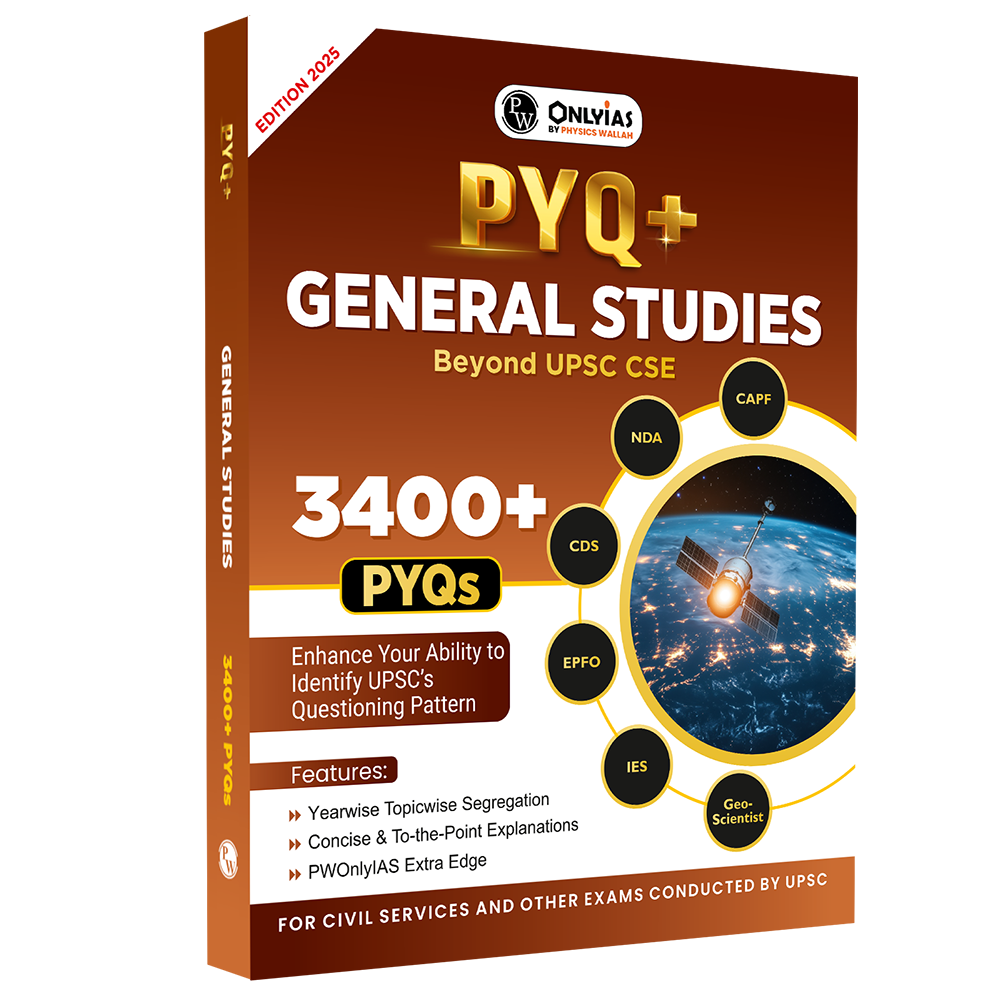
What is the PW ONLYIAS 32 Years UPSC PYQ and What Makes it Unique Among GS Books

Preparing for the UPSC Civil Services Examination can feel difficult because the syllabus is very large and covers many subjects. Many students spend months reading books, making notes, and memorizing facts, but still struggle to understand what UPSC actually asks in the Prelims exam.
Without knowing the real exam pattern, aspirants often spend time on topics that have very little importance in the final paper. This is where a well-structured UPSC Previous Year Papers becomes extremely useful.
Why is the UPSC GS PYQ Book Important?
Many UPSC aspirants spend most of their time reading textbooks, notes, and current affairs materials, but often ignore previous year questions. While studying theory is important, understanding how UPSC asks questions is equally important. Previous year questions provide direct insight into the exam's style, difficulty level, and focus areas.
A good PYQ book helps students understand UPSC question patterns in a practical way. By solving previous year questions regularly, aspirants can identify the types of questions that appear frequently and the topics that UPSC considers important. Previous year questions also help students recognize recurring themes across different subjects. Many concepts are tested repeatedly in different formats, and PYQs help aspirants identify these important areas during preparation.
Another major benefit of using a PYQ book is improving elimination techniques. Aspirants learn how to remove incorrect options, make logical decisions, and increase their chances of selecting the correct answer even when they are not completely sure. Regular practice with PYQs also builds exam confidence. As students become familiar with the UPSC question style, they feel more comfortable while attempting mock tests and the actual examination.
Features of UPSC GS PYQ Book
Below are the main features of the book that you should know:
-
32 Years UPSC PYQs (2025–1995): This book contains more than 3400 solved UPSC General Studies Previous Year Questions from 1995 to 2025. It helps aspirants understand the UPSC exam pattern, important topics, recurring themes, and the type of questions asked over the years.
-
Topic-Wise Question Arrangement: All questions are organized topic-wise for easy study and revision. Topics include Analytical Reasoning, Decision Making, Quantitative Aptitude, General Mental Ability, History, Geography, Polity, Economy, Environment, Current Affairs, and other important UPSC subjects.
-
Detailed Option-Wise Explanations: Every question comes with clear option-wise explanations. This helps students understand why the correct answer is right and why the other options are incorrect, improving conceptual clarity and elimination skills.
-
7-Year UPSC Trend Analysis: The book includes a detailed analysis of the last seven years of UPSC Prelims papers. It helps aspirants identify high-weightage topics, frequently repeated concepts, and important question trends for focused preparation.
-
Concise and Exam-Focused Solutions: Explanations are written in a simple and easy-to-understand format. The solutions focus on concept building, logical thinking, and analytical understanding without unnecessary details.
-
Visual Learning Support: The book includes maps, diagrams, tables, flowcharts, and infographics to make learning easier. These visual tools help improve understanding, revision speed, and long-term retention of important concepts.
-
PWOnlyIAS Extra Edge: Special sections provide additional insights, background information, and concept connections that help aspirants understand important UPSC themes more deeply and effectively.
-
PWOnlyIAS Super Hint: Exclusive tips and tricks help students improve their question-solving approach. These include intelligent guessing methods, elimination techniques, and practical strategies that can increase accuracy in UPSC Prelims.
-
Perfect for Revision and Practice: The book serves as a complete UPSC PYQ practice resource for revision, self-assessment, and exam preparation. Regular practice with previous year questions helps aspirants build confidence and become familiar with the actual UPSC exam pattern.
-
Improves Question-Solving Skills: By solving a large number of previous year questions, students can strengthen their analytical ability, improve decision-making skills, and develop a better understanding of UPSC question trends.
How the UPSC GS PYQ Helps?
Most previous year question compilations arrange papers year-wise. This forces students to move from one subject to another repeatedly, making revision difficult.
The PW UPSC PYQ book follows a different approach. It organizes more than 3400 questions topic-wise, allowing students to study one subject completely before moving to the next.
Topic-Wise Learning
Students can complete a chapter from a standard textbook and immediately solve related questions from the last 32 years.
For example:
-
Study Parliament from Polity.
-
Solve all Parliament-related UPSC questions from 1995 onwards.
This creates stronger conceptual clarity.
Better Progress Tracking
Topic-wise organization helps students quickly identify:
-
Strong areas
-
Weak areas
-
Frequently asked topics
-
Subjects requiring revision
Faster Revision
The UPSC prelims PYQ book allows aspirants to revise important concepts without wasting time searching through multiple years of papers.
This saves valuable time during the final months before the examination.
What Subjects are Covered in UPSC GS PYQ?
The PYQ GS 1 UPSC section covers all major General Studies subjects that appear in UPSC Prelims.
History
History coverage includes:
-
Ancient India
-
Medieval India
-
Modern India
-
Art and Culture
Students can see how UPSC has changed its focus across different periods over the years.
Indian Polity
The Polity section covers:
-
Constitution
-
Fundamental Rights
-
Parliament
-
Judiciary
-
Governance
This helps students understand important constitutional topics frequently asked in UPSC.
Geography
The Geography section includes:
-
Physical Geography
-
Indian Geography
-
World Geography
-
Mapping-based questions
Maps help improve understanding and memory.
Economy
Economy questions cover:
-
Banking
-
Inflation
-
Budget
-
Fiscal Policy
-
Economic Development
The explanations simplify complex economic concepts.
Environment and Ecology
The Environment section covers:
-
Biodiversity
-
National Parks
-
Climate Change
-
International Conventions
-
Environmental Laws
This section is especially important because environmental questions have increased in recent years.
Science and Technology
The Science section includes:
-
Space Technology
-
Biotechnology
-
Physics Concepts
-
Chemistry Applications
-
Current Science Developments
This helps students prepare for evolving UPSC trends.
How to Use UPSC GS PYQ?
Simply reading previous year questions is not enough. Students need a proper strategy.
The UPSC GS paper 1 PYQ book should be used systematically.
Step 1: Complete the Topic
Read the topic from your textbook or notes.
Understand the basic concepts first.
Step 2: Solve Topic-wise Questions
Open the relevant section in the PYQ book.
Solve all related questions under timed conditions.
Step 3: Study the Explanations
Do not stop after checking the answer.
Read:
-
Why is the correct option correct?
-
Why are the other options wrong?
This builds deeper understanding.
Step 4: Learn UPSC Language
Pay attention to words such as:
-
Only
-
All
-
Correct
-
Incorrect
-
Not
-
Always
UPSC often uses these words to create tricky questions.
Step 5: Maintain an Error Notebook
Write down:
-
Frequently repeated mistakes.
-
Weak topics.
-
Confusing concepts.
Regular revision of this notebook can improve mock test scores significantly.
Benefits of Using UPSC GS PYQ Book
Regular use of a UPSC prelims PYQ book offers many benefits for UPSC aspirants. Previous Year Questions help students understand the exam better and prepare in a more focused and effective way. Instead of studying everything randomly, aspirants can concentrate on topics that are more important from the exam point of view. Pairing PYQ practice with well-structured UPSC Revision Books makes preparation even more effective by supporting faster revision and stronger retention of important concepts.
-
Better Understanding of UPSC Trends: Solving previous year questions helps students identify topics and concepts that UPSC frequently asks. This provides a clear understanding of important areas and changing exam trends.
-
Improved Accuracy: Regular practice helps reduce common mistakes and improves question-solving skills. As students become more familiar with different question types, their confidence and accuracy also increase.
-
Faster Revision: Since questions are arranged topic-wise, aspirants can quickly revise specific subjects before the examination. This saves time and makes revision more organized.
-
Stronger Conceptual Clarity: Detailed explanations help students understand the logic behind each answer. This improves conceptual understanding and helps in solving similar questions in the future.
-
Better Mock Test Performance: Practicing PYQs helps students become comfortable with the UPSC style of questioning. This improves performance in mock tests and develops better exam temperament.
-
Smarter Preparation: A UPSC prelims PYQ book helps aspirants focus on important topics instead of spending time on less relevant areas. This makes preparation more strategic and exam-oriented.
-
Improved Elimination Skills: By regularly solving PYQs, students learn how to eliminate incorrect options and choose the most accurate answer. This is an important skill for scoring well in UPSC Prelims.
-
Better Time Management: Continuous practice helps aspirants solve questions more quickly and efficiently. This improves speed and allows better time management during the actual examination.
-
Higher Confidence Before the Exam: Familiarity with previous UPSC questions reduces exam fear and builds confidence. Students feel more prepared because they understand the pattern, difficulty level, and expectations of the examination.
Common Mistakes to Avoid While Using UPSC GS PYQ
Many aspirants do not use previous year questions properly. Avoid these mistakes:
Reading Answers Without Solving
Always attempt the question first.
Ignoring Explanations
The explanation is often more important than the answer itself.
Not Revising PYQs
One reading is not enough.
Revise important PYQs multiple times.
Solving Without Time Limits
Practice under exam conditions whenever possible.
Ignoring Weak Areas
Spend extra time on subjects where mistakes occur frequently.
Read More: UPSC Prelims and Mains Exam Preparation with Previous Year Question Paper
UPSC PYQ FAQs
How does the PYQ Book help improve elimination techniques?
The PYQ book includes a special Superhints section that teaches logical elimination methods. Students learn how to remove wrong options and improve accuracy even when they are unsure of the exact answer.
Are the answers in the PW UPSC PYQ Book verified?
Yes. All solutions in the PW UPSC PYQ book are checked according to official UPSC answer keys and reviewed by experienced subject experts.
Does this UPSC Prelims PYQ Book include recent question trends?
Yes. The latest edition includes recent UPSC papers and modern question formats, helping students understand current examination trends.
What subjects are covered in the PYQ GS 1 UPSC section?
The PYQ GS 1 UPSC section covers History, Art and Culture, Polity, Geography, Economy, Environment, Ecology, and Science & Technology.
Why should I choose this UPSC GS Paper 1 PYQ Book?
The UPSC GS paper 1 PYQ book offers topic-wise organization, detailed explanations, visual learning support, trend analysis, and smart-solving techniques. These features make it one of the most useful resources for UPSC Prelims preparation.