What is the UPSC Economy Mind Maps Book and What Topics does it Cover for Prelims
Many candidates struggle to retain complex financial data, policy relationships, and banking structures, which makes traditional textbooks feel overwhelming. The UPSC economy mind maps book addresses this challenge by converting dense texts into structured, visual learning frameworks.
This resource helps civil services aspirants simplify difficult economic concepts, enabling faster retention and efficient revision during their preparation journey.
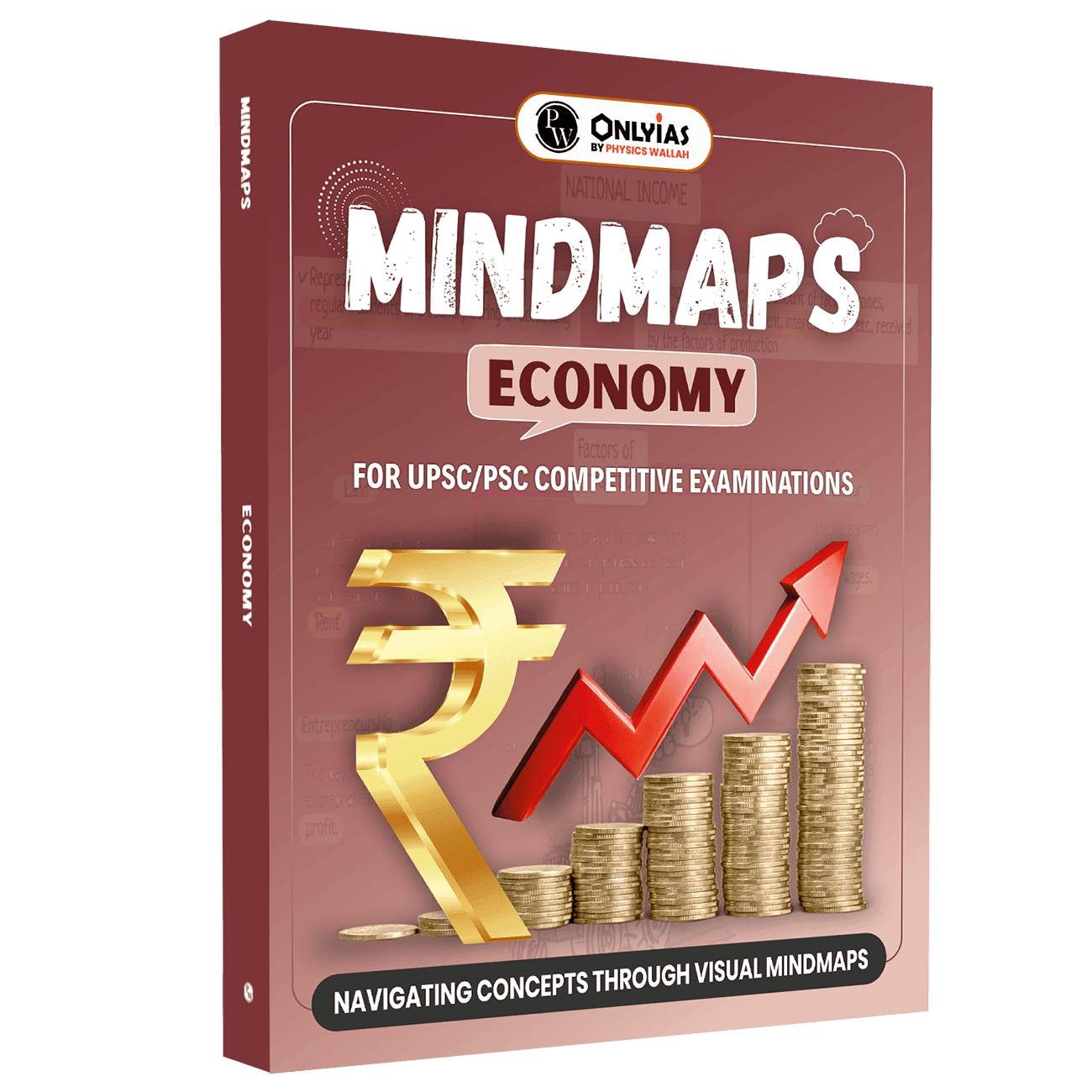
Overview of the UPSC Economy Mind Maps Book
The UPSC economy mind maps publication is a specialized study aid designed for Civil Services Examination (CSE) and State Public Service Commission (PSC) competitive tests.
This structured manual translates lengthy narrative chapters into a layout of diagrams, charts, and flowcharts. It specifically assists candidates who want to skip the tedious process of manual note-making while preserving the depth required for the examination.
The content layout prioritizes a highly organized framework, serving as an effective exam-oriented tool. Rather than replacing comprehensive reference material, it operates alongside standard guides to consolidate information. It bridges the gap between understanding a fundamental economic theory and tracking how it connects across different national sectors.
Features of the UPSC Economy Mind Maps Book
This specialized text includes design features aimed at enhancing memory retention and cognitive mapping. Pairing these features with concise UPSC Revision Books further improves revision efficiency by helping aspirants revisit important concepts quickly, strengthen recall, and organise preparation more effectively.
|
Feature Element |
Structural Benefit for Candidates |
|
Visually Structured Layouts |
Converts complex paragraphs into clean, linked diagrams and flowcharts for easy tracking. |
|
Infographics & Charts |
Simplifies data-heavy sectors like the Union Budget or Economic Survey into clear graphics. |
|
Unified Topic Interlinkages |
Connects static constitutional rules with dynamic market updates on a single page. |
|
Exam-Oriented Framework |
Organizes layouts specifically around historical Civil Services question trends. |
|
Concise Concept Snapshots |
distils multi-page policy papers into brief, high-impact review summaries. |
What Topics Are Covered in UPSC Economy Mind Maps?
The curriculum framework of this resource provides complete, holistic coverage of the Civil Services syllabus. It outlines macro and micro concepts, ensuring that dynamic data points mesh well with baseline statutory rules. Integrating UPSC Mind Map resources into this process further helps aspirants connect interrelated topics visually, improve retention, and revise complex concepts in a more structured and efficient manner..
The major areas mapped within this compilation include:
-
National Income Accounting: Structured breakdowns of Gross Domestic Product (GDP), Net Domestic Product (NDP), Gross National Product (GNP), and Net National Product (NNP), alongside Gross Value Added (GVA) comparisons.
-
Monetary Policy and Banking: Visual paths detailing Reserve Bank of India (RBI) instruments such as Cash Reserve Ratio (CRR), Statutory Liquidity Ratio (SLR), Repo Rate, Reverse Repo Rate, alongside digital banking structures and the Insolvency and Bankruptcy Code (IBC).
-
Fiscal Policy and Public Finance: Direct breakdowns of the Union Budget, taxation structures, fiscal deficits, revenue deficits, and the structural recommendations of the Finance Commission.
-
Inflation and Business Cycles: Interlinked layouts explaining demand-pull and cost-push inflation, Stagflation, Skewflation, the Wholesale Price Index (WPI), and the Consumer Price Index (CPI).
-
Agriculture and Food Management: Flowcharts on Minimum Support Price (MSP), cropping systems, agri-credit, irrigation schemes, and World Trade Organization (WTO) domestic subsidies.
-
Industry and Infrastructure: Visual paths covering Micro, Small, and Medium Enterprises (MSMEs), industrial policies, Public-Private Partnership (PPP) investment models, and national transport pipelines.
-
External Sector: Clear representations of the Balance of Payments (BoP), current and capital account convertibility, foreign exchange reserves, and exchange rate dynamics.
-
Government Schemes: Comprehensive tracking of welfare programs, inclusive growth initiatives, and financial inclusion campaigns like the PM Jan Dhan Yojana.
Benefits of Using UPSC Economy Mind Maps
Utilizing a visual-first framework provides several learning advantages for candidates dealing with the unpredictable nature of economics papers.
-
Saves Note-Making Time: Aspirants do not need to invest hundreds of hours drawing personal summaries since the manual provides high-quality, pre-made layouts out of the box.
-
Accelerates Visual Recall: Human brains register diagrams faster than text blocks, which aids immediate memory recall during high-pressure test situations.
-
Enhances Analytical Understanding: By showing direct cause-and-effect lines, the material helps students deduce how a change in one parameter, like an RBI policy rate, influences currency valuation.
-
Facilitates Last-Minute Review: The condensed layout allows candidates to review the entire economic syllabus in a single afternoon prior to the examination date.
How to Use UPSC Economy Mind Maps for Prelims Preparation?
To extract the highest value from the UPSC economy mind maps book during Prelims preparation, candidates must combine it with their objective question-solving schedules. The Civil Services preliminary stage tests the application of concepts rather than direct text definitions.
First, identify the weightage of the topic area. Prelims typically contain fifteen to twenty economic questions, balancing static laws with current developments. When reviewing a layout on banking, do not simply memorize definitions.
Follow the diagrammatic connections to see how raising the cash reserve impacts commercial loan availability. Use the visual summaries immediately after finishing a chapter in a standard reference guide to ground your understanding.
When to Use UPSC Economy Mind Maps?
Timing determines how effectively this visual guide boosts an aspirant's score performance. Using it at improper intervals might lead to rote memorization without establishing core insights.
-
During Concurrent Chapter Readings: Refer to the corresponding chart directly after reviewing a detailed topic from a basic economics book for UPSC to lock down the structure.
-
During Weekly Self-Assessment Windows: Utilize the diagrams every weekend to self-test your knowledge retention without opening bulky reference texts.
-
During the Mock Test Phase: When identifying weak subject areas via test series errors, open the maps for targeted, rapid conceptual correction.
-
The Final Month Before Prelims: Transition your reading entirely away from text-heavy sources and rely purely on these visual structures to preserve mental clarity.
Study Plan for Using UPSC Economy Mind Maps
Integrating visual charts requires an organized workflow that aligns your study timeline with proven memory techniques.
Begin by establishing your foundational theories using primary texts or standard lecture modules. Once you grasp the fundamental mechanisms, open the corresponding visual chart to organize those ideas hierarchically. Spend ten minutes tracing the lines out loud to build your cognitive path.
After finishing a thematic block, transition to your sectional question bank. If you encounter a unique question angle or an updated current affairs report, write that specific point directly onto the margin of your mind map sheet. This personalized approach transforms the book into a single, comprehensive master revision guide tailored to your needs.
To make this process more exam-oriented, regularly solve UPSC PYQs alongside your mind map revision. Previous Year Questions help you identify how economic concepts are framed in the actual exam and improve your ability to connect theory with application.
Common Mistakes to Avoid While Using UPSC Economy Mind Maps
Even with high-quality study resources, incorrect study patterns can minimize your final performance gains.
-
Treating it as an Absolute Replacement: Trying to use these charts without reading foundational texts first will prevent you from understanding the deeper logic behind the connections.
-
Passive Scanning Without Active Recall: Simply staring at the charts like a picture book will not build active memory; candidates must actively test themselves by hiding sections of the diagram.
-
Ignoring Current Affairs Links: Economics is highly dynamic. Failing to add updated budget numbers or new economic policies to the static charts makes the study process incomplete.
-
Juggling Multiple Revision Sources: Combining an influx of distinct visual guides breaks down spatial memory alignment. Stick strictly to a single UPSC revision book format to ensure your brain recalls the exact layout positions during the exam.
Read More: UPSC Economy Important Questions for Prelims and Mains Exams
UPSC Economy Mind Maps Book FAQs
Can a beginner start their preparation directly with the UPSC economy mind maps book?
No, beginners should first build their conceptual foundations using standard reference texts or an introductory basic economics book for UPSC. The visual diagrams work best as tools to summarize, organize, and revise concepts you have already studied.
Does this revision manual contain updates regarding the Union Budget and Economic Survey?
Yes, the compilation incorporates essential data points and policy structures from the latest financial reports, arranging them into clear infographics to ensure candidates learn exam-relevant details.
How does this publication help with general UPSC preparation tips for managing study time?
The book eliminates the need to create personal short notes from scratch. By offering pre-structured visual layouts, it saves hours of writing time, allowing candidates to follow key UPSC revision tips that emphasize multiple reviews over excessive note-taking.