Why 31 Years UPSC PYQs Are a Game Changer

Preparing for the Civil Services Examination often feels like navigating a vast ocean without a compass. Students frequently find themselves overwhelmed by the sheer volume of study material, unsure of which topics carry the most weight. This is where the importance of a UPSC PYQ comes into play. By looking at three decades of questions, you aren’t just looking at old tests; you are decoding the DNA of the exam itself. The primary challenge for any learner is distinguishing between "important" and "essential" information. Without a deep dive into the UPSC previous year paper, students risk wasting months on peripheral topics.
This article explores why a 31-year perspective on previous questions is the ultimate tool for cracking one of the world’s toughest competitive exams.
Check Out - UPSC Books
Importance of a 31-Year UPSC PYQ Analysis
When you look at a UPSC last year question paper, you see the most recent trends. However, when you expand that view to 31 years, you see the evolution of India’s administrative priorities. The Union Public Service Commission (UPSC) often revisits core concepts in History, Polity, and Geography that were asked decades ago, albeit with a modern twist.
Identifying High-Yield Themes
Not all chapters in your textbooks are created equal. Analysis of PYQ for UPSC reveals that certain areas, such as Fundamental Rights in Polity or the Indian National Movement in History, are perennial favourites. By studying these patterns, you can:
-
Prioritize your schedule to focus 70% of your energy on the 30% of topics that appear most frequently.
-
Predict potential focus areas for the upcoming year based on cyclical patterns.
-
Avoid over-studying niche topics that have only appeared once in thirty years.
How to Use UPSC PYQ Prelims for Strategy
The Prelims stage is as much about psychological warfare as it is about knowledge. Using the PYQ of UPSC prelims helps you build the mental stamina required for the two-hour grind.
Mastering the Art of Elimination
Rarely does an aspirant know the answers to all 100 questions. The difference between qualifying and failing often lies in the ability to eliminate incorrect options. By practicing with UPSC previous year question paper sets, you learn the "traps" set by the commission. These often include:
-
Extreme statements using words like "only," "all," or "drastically."
-
Swapped facts where dates or names of ministries are interchanged.
-
Contextual clues that link a current event to a static concept.
Building Familiarity with Language
The phrasing used by the UPSC is unique. It is formal, precise, and sometimes intentionally ambiguous. Regular exposure to UPSC PYQ ensures that you don't feel "culture shock" when you open the actual booklet on exam day. You become accustomed to the vocabulary and the way questions are structured.
UPSC PYQ: A Structured Approach
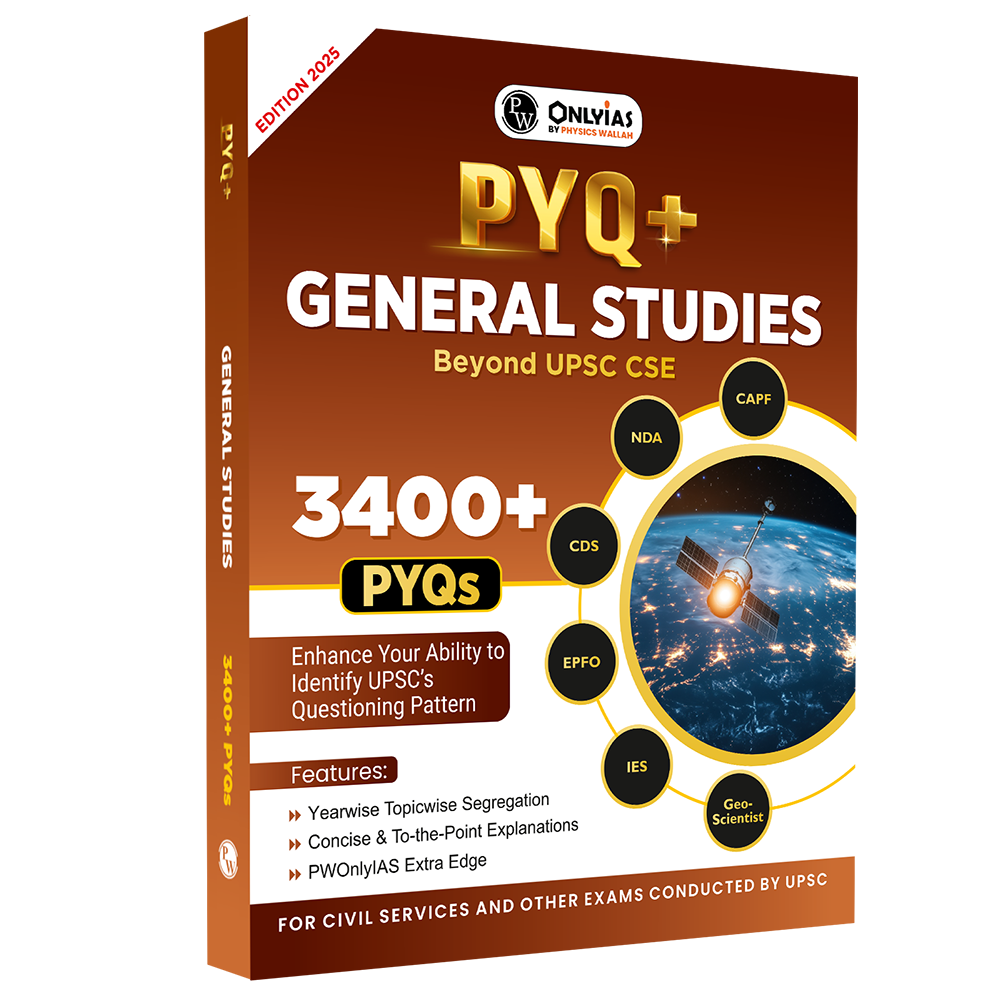
At Physics Wallah, we understand that just having the papers isn't enough; you need them organized. The pw UPSC PYQ resources are designed to categorise these 31 years of data into manageable segments.
Topic-Wise Segregation
Instead of solving a full UPSC previous year paper from 1995, which might contain outdated current affairs, we help you focus on static subjects. If you are studying "Parliament," you can solve all questions related to that topic from the last 31 years in one go. This reinforces your learning and highlights your weak spots immediately.
Detailed Explanations
A UPSC PYQ module doesn't just give you the answer key. It explains the "why" behind the correct option and provides context for the incorrect ones. This holistic view ensures that even if the question is slightly modified in the future, you have the conceptual clarity to solve it.
UPSC PYQ Recent Trends vs Legacy Questions
There is a common misconception that questions from the 90s are too simple for today’s standards. While the difficulty level has certainly increased, the core logic remains consistent.
-
The 1990s-2000s: Focused heavily on factual depth and direct identification.
-
The 2010s: Shifted toward conceptual interlinking and multi-statement questions.
-
The 2020s: Emphasised "only one pair," "only two pairs" style options to eliminate easy guesswork.
By studying the full 31-year spectrum of PYQ for UPSC, you prepare yourself for any "surprise" the commission might throw at you. You aren't just prepared for last year's trend; you are prepared for the UPSC's entire range of testing styles.
Use UPSC PYQ into Daily Routine
Consistency is key when dealing with UPSC PYQ. It should not be a task you leave for the end of your preparation.
-
Daily Practice: Solve at least 5-10 questions from a UPSC previous year paper every morning. This warms up your brain for analytical thinking.
-
Reverse Learning: If you get a question wrong, don't just look at the answer. Go back to your textbook and read that entire sub-topic. This is the most effective way to plug gaps in your knowledge.
-
Mock Environment: Once a week, take a full-length UPSC last year question paper and solve it within the strict 2-hour limit. This builds the necessary time-management skills.
Role of Technology in Analyzing UPSC PYQ
In the past, students had to carry bulky books of previous papers. Today, the pw UPSC PYQ digital resources allow you to filter questions by difficulty level, subject, or year. This digital-first approach means you can practice while commuting or during short breaks, making your preparation truly mobile.
Using a UPSC previous year question paper database effectively means you are no longer studying in the dark. You are following a trail left by successful candidates and examiners alike. Whether you are a first-time aspirant or a veteran, the 31-year archive is the most honest mentor you will ever find in your journey.
Read More: UPSC Previous Year Question Papers PDF, Prelims & Mains PYQ's PDF
UPSC PYQ FAQs
How many years of UPSC PYQ should I solve?
While many suggest the last 10 years, analyzing 31 years of UPSC PYQ provides a much broader understanding of core static topics that do not change over time, giving you a competitive edge.
Is solving PYQ for UPSC enough to pass Prelims?
No, solving PYQ for UPSC must be combined with a thorough study of standard textbooks and current affairs. However, it is essential for understanding how to apply your knowledge.
Where can I find reliable pw UPSC PYQ materials?
You can access structured and explained pw UPSC PYQ resources through the Physics Wallah official website or the PW app, specifically designed for topic-wise mastery.
Does UPSC repeat questions from the UPSC previous year paper?
While direct word-for-word repetitions are rare, the themes and concepts from a UPSC previous year paper are frequently repeated or reframed in new ways.
How often should I practice with a UPSC last year question paper?
You should engage with a UPSC last year question paper or older sets at least twice a week during the initial stages and daily as the exam approaches.