How to Prepare for CUET After Class 12 Board Exams
The change from Board exams to CUET is an important "sprint" phase. To get ready for the cuet in 2026, students need to switch from writing extensive, subjective essays to thinking in terms of multiple-choice questions. After the boards, the main way to prepare for the cuet is to study NCERT in depth for domain subjects, practise a lot for the General Test and do a "Mock Test Marathon" to get faster and more accurate. The CUET UG 2026 exam is usually held in May, therefore the best time to get into prestigious colleges like DU, BHU, or JNU is between 4 and 6 weeks after your 12th examinations.
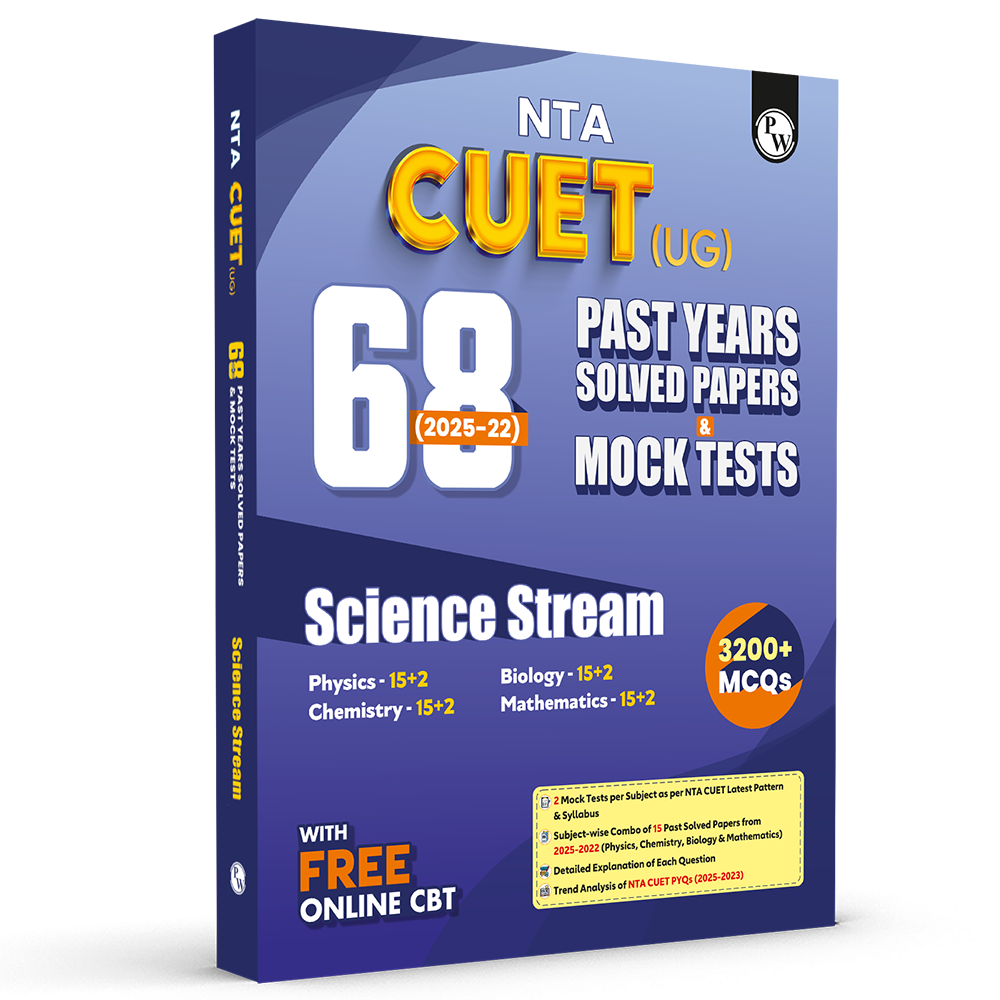
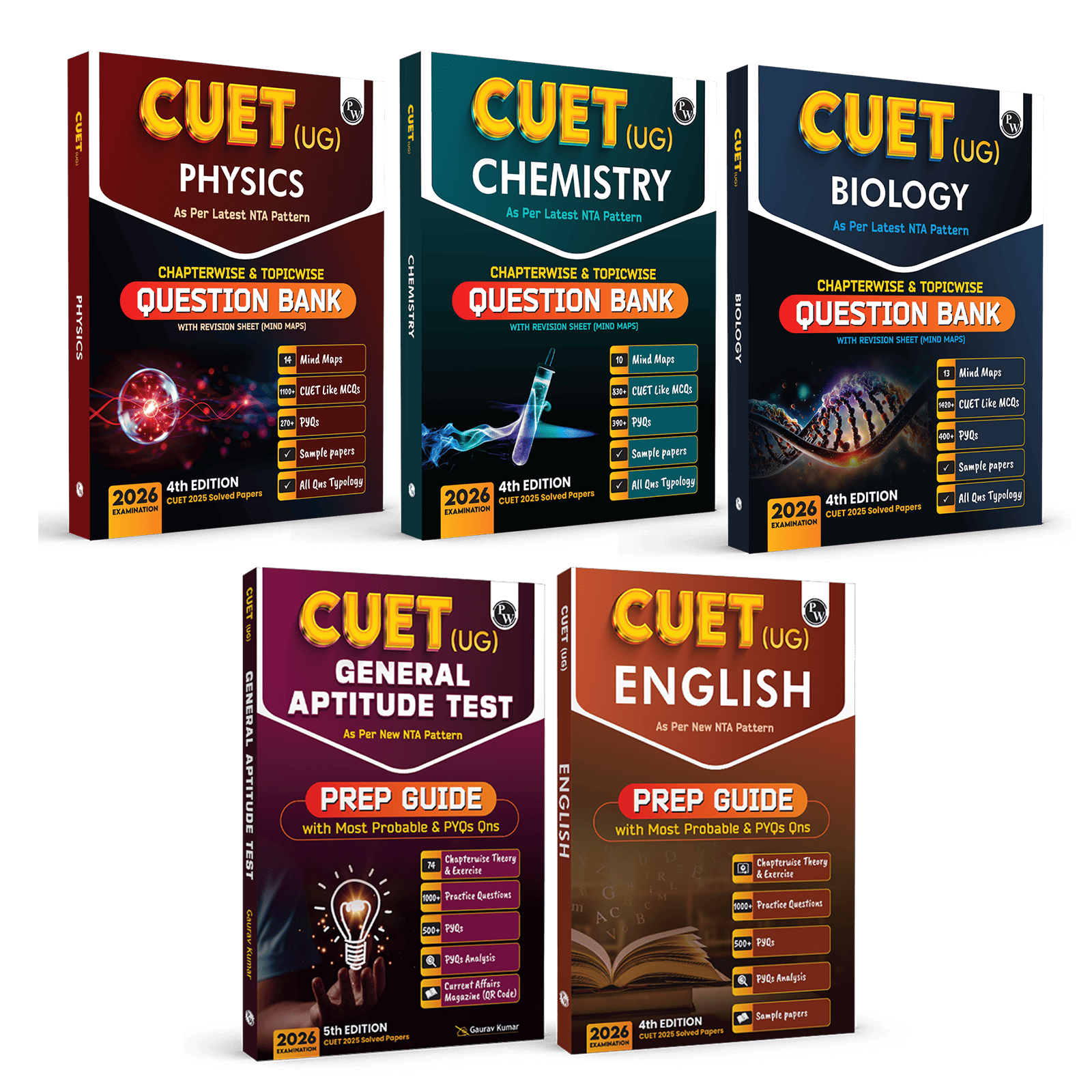
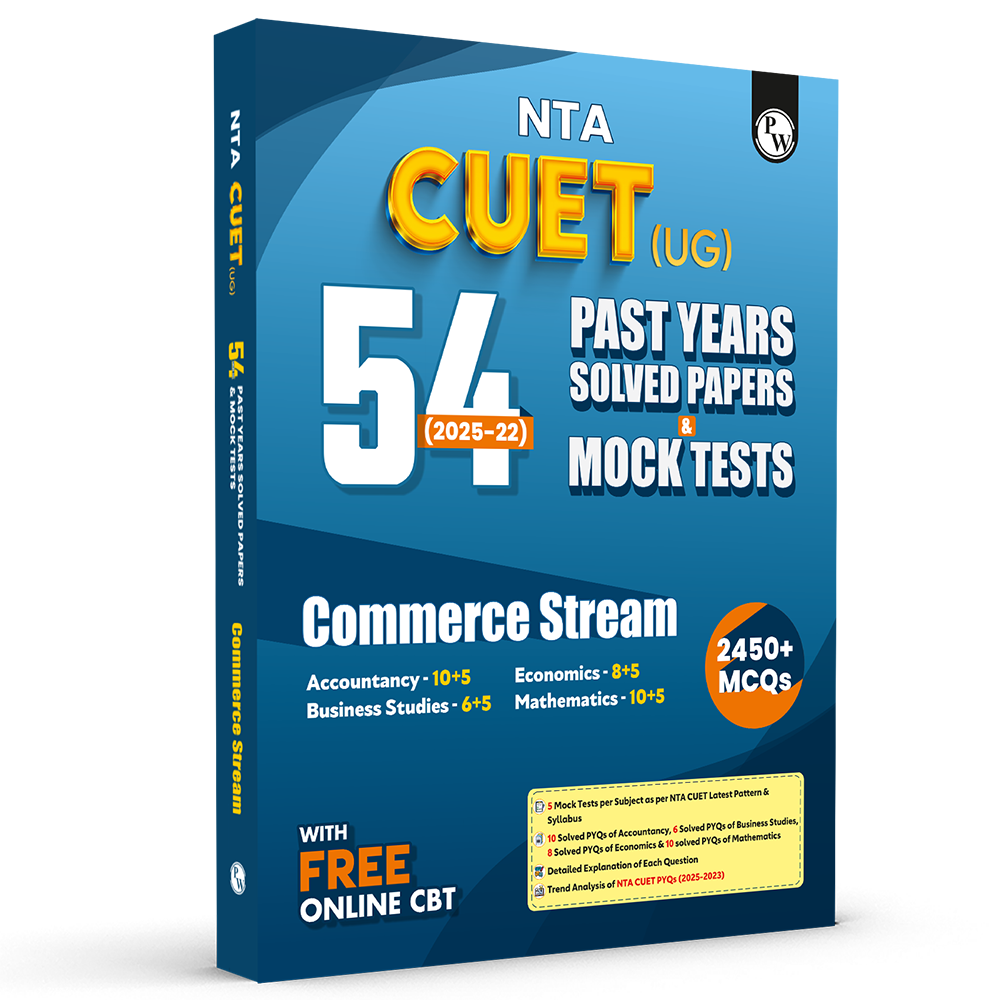
For a lot of students, the end of the Board examinations is the end of the race, but for those who want to go to central universities, it's the start of the race. Your Boards taught you the "What," but CUET tests the "How" and "Why." We specialise in this transition at the PW Store. We have the NCERT-Punched modules and objective question banks you need to turn your board knowledge into a high CUET percentile.
Why CUET Preparation Peaks After Boards
The weeks immediately following your last Board exam are the most valuable for cuet 2026 preparation.
-
Fresh Memory: Your domain subjects (Physics, History, Accounts, etc.) are fresh in your mind. You don't need to relearn the concepts; you only need to practice applying them to MCQs.
-
Full-Time Dedication: Now that school is over and you don't have any more classes or practicals, you may spend 8 to 10 hours a day getting ready for the CUET exam.
-
Momentum: You're already in "study mode." It's far easier to keep this momentum going than to try to start over after a long break.
CUET Study Plan After 12th Exams
A successful CUET study plan after 12th exams should be divided into three distinct phases to ensure 100% syllabus coverage and maximum revision.
Phase 1: The Domain Pivot (Days 1–15)
Since you’ve already studied these for your Boards, focus on the "MCQ perspective."
-
NCERT Line-by-Line: Read the NCERT textbooks again, focusing on "boxed" content, tables, and captions. NTA frequently picks questions from these overlooked sections.
-
Topic-wise MCQs: Solve at least 50–100 MCQs per chapter. Use the PW Store domain-specific practice books to identify the "trap" options commonly set by NTA.
Phase 2: The Aptitude Accelerator (Days 16–30)
This is where most pupils have trouble because the school doesn't teach the General Test (GT) or Language parts.
-
General Test: Spend three hours per day on Logical Reasoning and Quantitative Aptitude. Concentrate on fast math methods like squares, cubes, and percent fractions.
-
Language (Section IA): Read 2–3 Reading Comprehension (RC) passages per day. Use lists of synonyms and antonyms and root words to help you learn new words.
Phase 3: The Mock Test Marathon (Days 31–45)
This phase is all about the "CBT" (Computer Based Test) experience.
-
Full-Length Mocks: Take one full-length mock test every alternate day. Simulate the actual exam environment—no distractions, fixed timings.
-
Error Analysis: Spend more time analyzing the mock than taking it. If you got a question wrong, was it a conceptual error or a time-management issue?
Check out: CUET Previous Year Papers
CUET Subject-wise Preparation Strategy
The cuet domain subject preparation strategy is about shifting from "Explanation" to "Elimination." In Boards, you get marks for steps; in CUET, you only get marks for the final choice.
|
Subject Category |
Focus Area |
Resource |
|
Numerical (Phy/Math/Acc) |
Formulas, Shortcuts, Unit Conversions |
Formula Cheat Sheets |
|
Theory (Bio/His/Pol Sc) |
Dates, Names, Sequences, Boxed Info |
NCERT Highlighters |
|
Application (Eco/Chem) |
Graphs, Exceptions, Case Studies |
PYQ (Previous Year Questions) |
Pro Tip: Use the "Elimination Technique." If you aren't sure of the right answer, look for the options that are definitely wrong. Reducing your choices from 4 to 2 significantly increases your odds of a correct guess.
CUET General Test Preparation for Beginners
For many, this is the first time facing competitive aptitude. CUET exam preparation for beginners in the General Test section requires a "back-to-basics" approach.
-
Current Affairs: Don't try to read a whole year's news. Use monthly "Current Affairs Compilations" from the PW Store to cover the last 6–8 months.
-
Static GK: Focus on high-yield topics like Indian Polity (Articles/Amendments), Geography (Rivers/Parks), and Science (Vitamins/Inventions).
-
Reasoning: Master "Coding-Decoding," "Blood Relations," and "Syllogisms." These are fixed-pattern questions that guarantee marks once understood.
Common Mistakes to Avoid After Boards for CUET Exam
Even the brightest students can fail to prepare for cuet correctly if they fall into these traps:
-
Over-relying on Board Notes: Board notes are subjective. CUET requires objective-specific notes that highlight keywords and definitions.
-
Neglecting Language: Many students think "I'm good at English" and skip practice. RC passages in CUET can be tricky and time-consuming; they require consistent practice.
-
Ignoring Negative Marking: Unlike Boards, every wrong answer in CUET costs you -1 mark. Guessing blindly can destroy your percentile.
-
Avoiding Computer-Based Practice: CUET is an online exam. Practicing on paper won't help you manage the screen timer or the toggle between questions.
Check Out: CUET Question Banks
CUET 2026 Preparation Tips
Here is the checklist for CUET preparation strategy after board exams:
-
The 1-Hour Revision Rule: Start every day by revising what you studied the previous day. This builds long-term retention.
-
NCERT is the Bible: 95% of domain questions are directly or indirectly from NCERT. Don't waste time on overly complex reference books.
-
Sectional Timing: During mocks, track how much time you spend on each question. In the actual exam, if a question takes more than 1 minute, skip and move on.
-
Health and Mental Balance: The gap between Boards and CUET is stressful. Ensure 7 hours of sleep and short breaks to avoid burnout before the May exam.
Conclusion
The time you spend getting ready for CUET after your 12th grade board examinations is the time between school and your desired college. You need to change your strategy from "learning" to "practicing." You can get a 99+ percentile by following a structured cuet study plan after your 12th exams, focusing on NCERT-based MCQs, and passing the General Test.
We at the PW Store are dedicated to giving you the tools you need to make this change go smoothly. Make the most of this period, keep on track, and remember that Boards get you the degree, but CUET gets you the destination!
Read More: CUET Weightage Chapter Wise 2026
Prepare for CUET After Class 12 Board Exams FAQs
1. Is 45 days enough to prepare for cuet after Boards?
Yes, provided you are disciplined. Since your domain subjects are already prepared, 45 days is ample time to master the MCQ format and the General Test.
2. Can I skip the General Test if my course doesn't require it?
Look at the "Course Mapping" for the university. Some B.A. or B.Sc. courses don't require it, but most major colleges (like BHU) or professional courses (like BBA/BMS) do.
3. How to prepare for cuet after class 12 board exams if I am a Science student changing to Arts?
Focus heavily on your chosen Humanities domains. Read the NCERTs for History or Pol Science from scratch, as the NTA paper is strictly based on them.
4. Where can I find the best mock tests for CUET 2026?
The full-length CBT mocks at the PW Store look just like the NTA interface, which will help you get faster and more accurate.
5. Does CUET follow the deleted syllabus of NCERT?
CUET usually follows the whole Class 12 NCERT syllabus in 2026. If a chapter was taken out of your Board exams, it can still be in the CUET syllabus. Always look at the official NTA notice.