GATE 1 Year Study Plan for 2027 Exam
GATE 1 year study plan can help you do well. This guide divides the syllabus into small chunks and gives you a strategic timeline, recommendations on where to find the best resources, and revision tactics to help you get a top score on the GATE 2027 exam.
You are in the right place if you want to know how to prepare for GATE in one year. A year is the "sweet spot" for getting ready; it's long enough to learn everything from scratch yet short enough to keep the intensity high. If you stick to a committed GATE 1 year study plan, you may go from being a beginner to an expert in your field. This will help you remain ahead of the competition and learn the math skills you need for the 2027 exam.
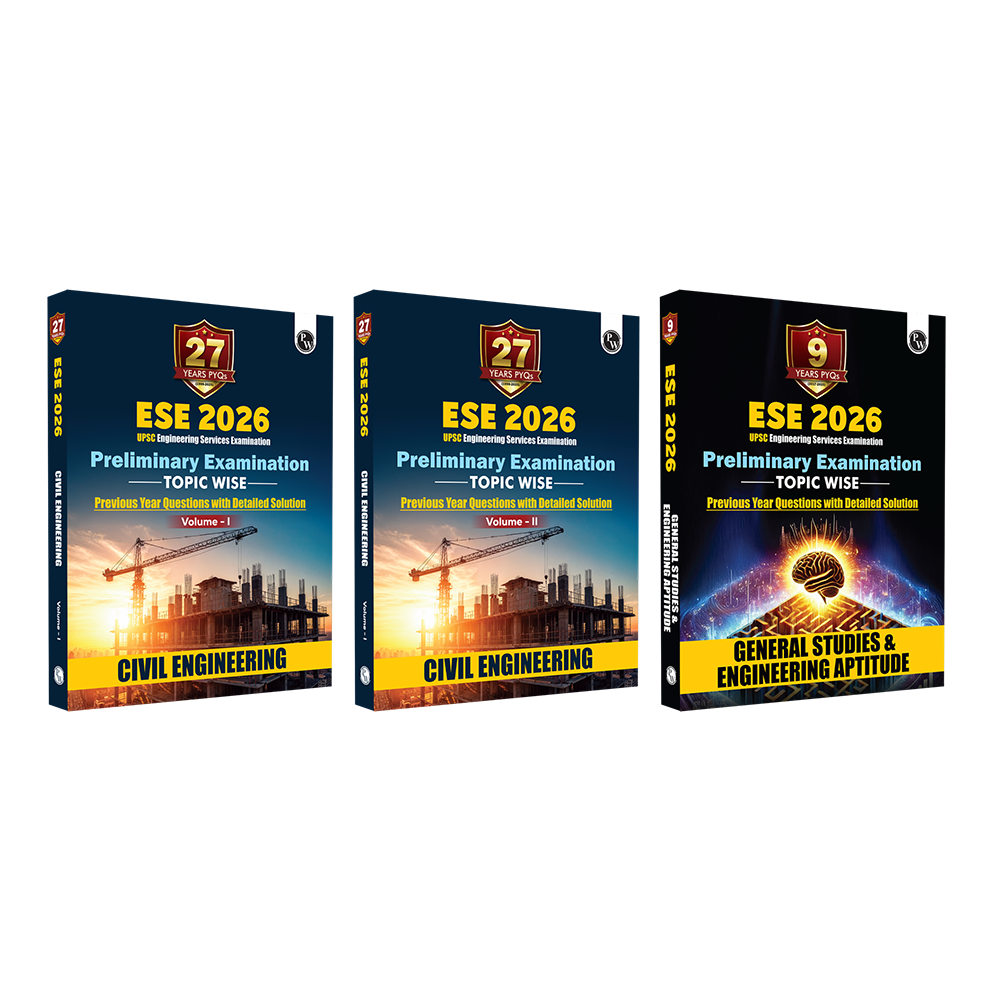
Check Out: GATE Books
GATE 2027 Exam Pattern and Syllabus Overview
You need to know the area well before you start reading. The Graduate Aptitude Test in Engineering (GATE) doesn't just test your memory; it also tests how well you understand the basic concepts of undergraduate engineering.
To make a good plan for studying, the first thing you need to do is get the syllabus for your branch. The exam consists of General Aptitude (15 marks), Engineering Mathematics (around 13-15 marks), and Core Discipline subjects (70-72 marks). Knowing this weightage helps you prioritise topics that offer the highest return on investment for your time.
GATE 1 Year Study Plan
If you are beginning your GATE 1 year study plan with little or no prior preparation, the key is to focus on clarity before speed. A lot of people who want to learn how to solve problems make the error of doing it right away without first learning the basics.
Choose the correct GATE study material for your branch and only use one main source for each subject. Instead of memorizing formulas, start by grasping ideas line by line. Instead than just "how" to tackle a problem, think about "why" it works.
Start with one technical subject and engineering math instead of trying to study a lot of different courses at once. This gives them confidence early on and gives them a firm foundation for more difficult subjects.
Avoid rushing through topics in the initial months. A strong start will make the subsequent parts of your preparation approach go more smoothly and work better.
Phase 1: Build Strong Basics (Months 1 to 4)
The first four months are about building a base. During this period, your goal is to finish at least 40% of the core syllabus along with engineering mathematics.
Focus on Mathematics and General Aptitude
Almost every technical document is based on engineering maths. If you master this early, you will find core subjects like signal processing, fluid mechanics, or theory of computation much easier to grasp.
-
Set aside an hour every day for general aptitude. It is an easy way to bag 15 marks.
-
Use standard textbooks or verified GATE study material to ensure your concepts are accurate.
-
Don't rush. It is better to understand one concept deeply than to skim through three chapters.
Select two subjects at a time: one heavy technical subject and one lighter or mathematical subject. This variety prevents boredom and keeps your brain engaged. For example, a civil engineering student might pair structural analysis with mathematics.
Phase 2: Complete Core Subjects (Months 5 to 8)
By now, you should be in a rhythm. This phase is the "heavy lifting" part of your GATE 1 year study plan.
Focus on Technical Papers
During these months, aim to complete the remaining 60% of your technical syllabus. This is often where students lose momentum. To stay on track:
-
Make short notes: As you read, jot down formulas and unique "trick" questions. These will be gold during the final months.
-
Solve Topic-wise Questions: Immediately after finishing a chapter, solve at least 20-30 previous year questions (PYQs) related to that specific topic.
-
Consistency over Intensity: Studying 4 hours every single day is far more effective than studying 14 hours only on weekends.
Ensure you are using updated resources. The exam pattern evolves, and your study material should reflect the latest trends, such as Multiple Select Questions (MSQs), which have no negative marking but require 100% accuracy in identifying all correct options.
Phase 3: Revision and PYQs Practice (Months 9 to 10)
You have finished the syllabus. Now, the real battle begins. Most students fail not because they didn’t study, but because they forgot what they studied in Month 2.
Solving Previous Year Questions (PYQs)
A successful preparation strategy relies on cyclic revision. Dedicate the first two hours of your day to revising a previously completed subject. Use your short notes to quickly scan through formulas.
If you want to know how to crack GATE in one year, the answer lies in PYQs. Solve at least the last 15 years of papers. This helps you identify important topics. You will start noticing patterns in how questions are framed, especially in subjects like thermodynamics or data structures.
Phase 4: Mock Tests and Final Preparation (Months 11 to 12)
The final two months are dedicated to "Full-Length Mock Tests". This is where you simulate the exam environment.
-
Take tests at the same time as your actual GATE slot (either 9:00 AM or 2:30 PM).
-
Analyse your mistakes: If you lose marks, identify if it was a calculation error, a conceptual gap, or a "silly mistake".
-
Improve your speed: Learn to use the virtual calculator efficiently, as physical calculators are not allowed.
GATE 1 Year Study Plan Timeline
Use this schedule as a guide to help you balance your GATE study time between concepts, practice, and review:
|
Time Period |
Focus Area |
Goal |
|
Months 1-2 |
Engg. Mathematics & Aptitude |
Build 25-30% marks base |
|
Months 3-5 |
Core Subject Group 1 |
Finish 2-3 high-weightage subjects |
|
Months 6-8 |
Core Subject Group 2 |
Complete the entire syllabus |
|
Month 9 |
Subject-wise Revision |
Solve all PYQs for each subject |
|
Month 10 |
Subject-wise Mock Tests |
Identify and fix weak areas |
|
Months 11-12 |
Full-Length Mock Tests |
Build stamina and time management |
GATE Study Material 2026
Which Subjects to Study First for GATE 2027?
Start your preparation with engineering mathematics and general aptitude, as they are common across all branches and contribute significantly to your score.
After that, go on to the core subjects based on how much they depend on each other. For instance:
-
Start with basic topics like basic electronics, data structures, or engineering mechanics, depending on your field.
-
After that, go on to intermediate topics that expand on what you've learned.
-
Finally, talk about advanced or application-based topics.
Prioritise high-weightage topics first, as they play a major role in improving your score.
Following the right subject order not only improves understanding but also strengthens your overall GATE preparation strategy.
Top GATE Exam Preparation Tips
To keep your preparation sharp, keep these preparation tips in mind:
-
Avoid Multiple Sources: Stick to one primary resource for each subject.
-
Health Matters: You cannot study effectively if you are sleep-deprived. Aim for 7 hours of sleep to ensure your memory retention is at its peak.
-
Virtual Calculator Practice: Many students lose time because they aren't used to the on-screen calculator. Start using a mobile app version of the GATE calculator during your practice sessions.
-
Join a Community: Being part of a study group or an online forum can provide moral support and quick doubt resolution.
-
Focus on MSQs: Multiple Select Questions require deep conceptual clarity. Don't just learn the "how," understand the "why" behind every theorem.
Read More: Top Career Opportunities after GATE Exam
GATE 1 Year Study Plan FAQs
Is one year enough for GATE 2027 preparation?
Yes, a GATE 1 year study plan is ideal. It allows you to cover the syllabus thoroughly while leaving enough time for multiple rounds of revision and mock tests without feeling rushed.
Can I crack GATE in one year while working a full-time job?
Absolutely. Many aspirants learn how to prepare for GATE in one year while working. The key is to dedicate 3-4 hours on weekdays and 8-10 hours on weekends, focusing heavily on high-weightage topics.
Which subject should I start with in my GATE preparation strategy?
It is highly recommended to start with engineering mathematics and general aptitude. These subjects are common across all papers and provide a significant boost to your confidence and score early on.
How many mock tests should I take before the final exam?
For a robust GATE 1 year study plan, aim for at least 10 to 12 full-length mock tests in the final two months. Additionally, take subject-specific tests as you finish each unit.
What is the most important part of how to prepare for GATE in 1 year?
The most critical factor is consistency in revision. Solving PYQs and revisiting your short notes regularly ensures that you retain complex engineering concepts until the exam day.