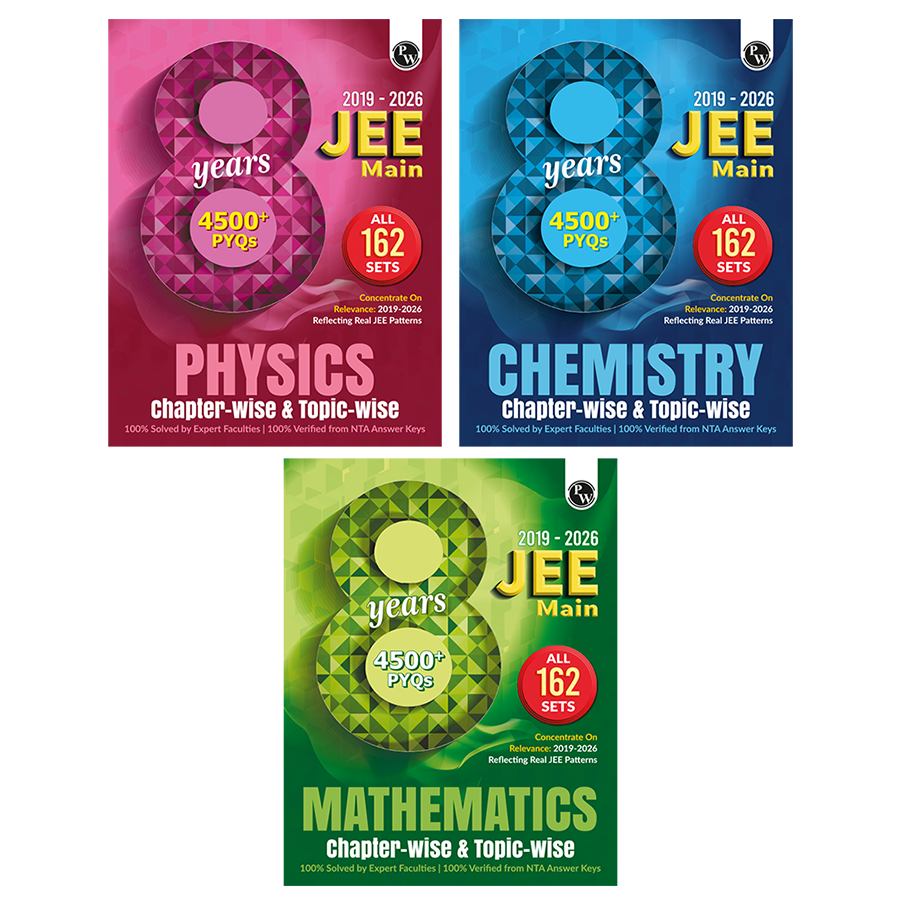
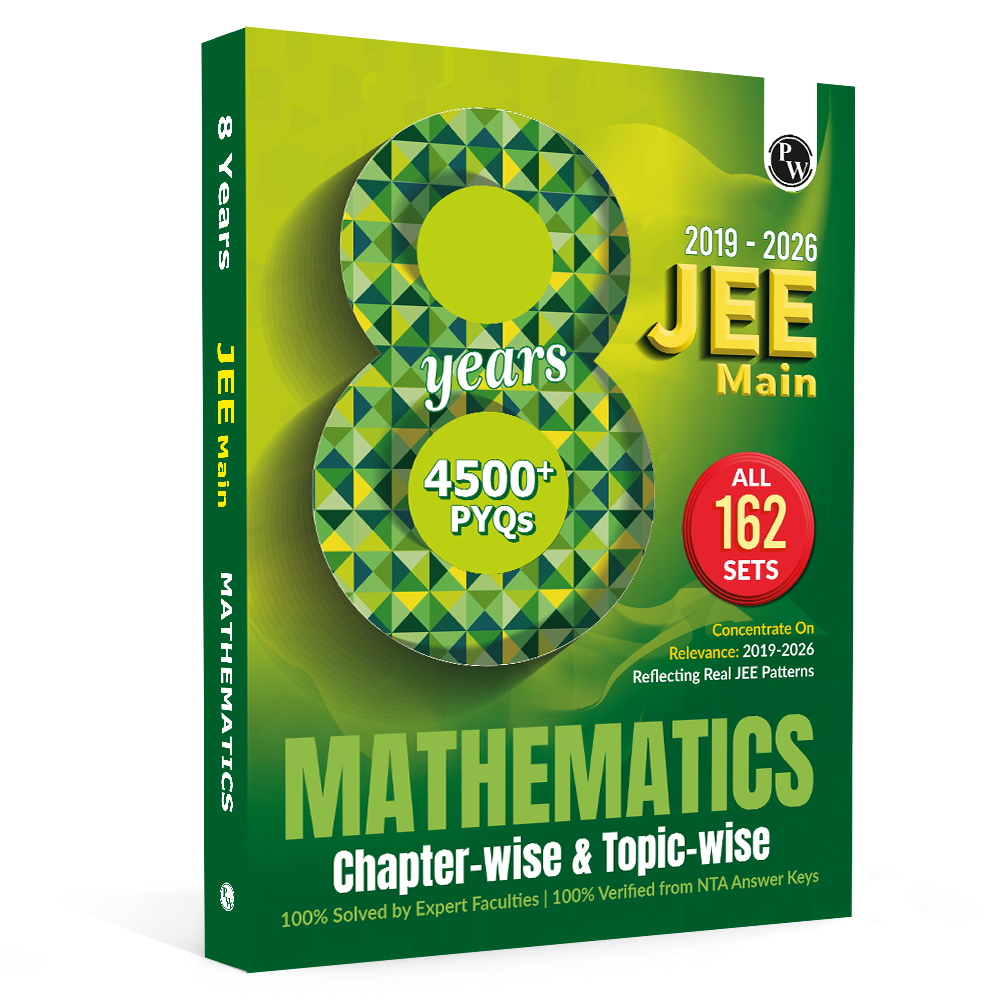
Are 8 Years JEE PYQs Enough for Maths Preparation?
Many students struggle to decide how many years of past papers are sufficient to cover the vast syllabus effectively. While some suggest going back two decades, the shifting patterns of the NTA make recent years much more relevant. If you are preparing for the Joint Entrance Examination, you likely know that the JEE Main Maths PYQ is the most valuable resource in your arsenal.
This article explores whether focusing on JEE Maths PYQ can help you secure a top percentile or if you need to look further back.
Check Out: IIT JEE Books
Importance of JEE Main Maths PYQ
The mathematics section is often considered the most challenging part of the engineering entrance exam due to its lengthy calculations and complex concepts. Using a JEE Maths PYQ collection allows you to understand the specific language used by examiners. It helps identify which chapters carry the most weight and which topics are most frequently repeated.
When students ask if 8 years of Maths PYQ JEE mains are enough, the answer generally depends on how you use them. Eight years of papers actually encompass a massive number of questions because the exam is now conducted in multiple shifts and sessions throughout the year.
Total Question Volume in 8 Years:
Between 2017 and 2024, the number of shifts has increased significantly. Practising these years provides you with over 100 sets of papers. This is often more than enough to cover every possible variation of a concept.
Exam Pattern of JEE Main Maths
Since the National Testing Agency (NTA) took over conducting the exam, the style of questions has evolved. Earlier papers focused more on the direct application of formulas, but current trends show a mix of multiple concepts in a single problem. By focusing on recent Maths JEE Main PYQs, you align your practice with the current difficulty level.
-
Logic-based problems: Increased frequency of questions from Vector Algebra and 3D Geometry.
-
Numerical Value Questions: A newer format that requires precise calculation without the help of options.
-
Time Management: Practising recent papers helps in gauging the actual time required for modern-day complexity.
Benefits of Using JEE Main Maths PYQ
Below are some of the main benefits of using the PYQ for your exam preparations:
-
Relevance to Current Syllabus: The syllabus has undergone minor tweaks over the years. Recent JEE main math PYQ sets reflect the current reduced or modified syllabus more accurately than papers from 2005.
-
High-Quality Solutions: Resources like PYQs provide comprehensive 8-year compilations that offer step-by-step methods, helping you learn the shortest way to solve a problem.
-
Trend Analysis: You can see which sub-topics within Calculus or Algebra have become "hot topics" in the last three to four years.
High-Weightage Chapters in JEE Main Maths PYQ
To make the most of your Maths JEE mains PYQ practice, you should categorise chapters based on their frequency in the last 8 years. Some chapters are "low effort, high yield," while others require consistent practice.
Algebra and Coordinate Geometry
Algebra usually forms the backbone of the paper. Within the PYQ of Maths JEE mains, you will find that Quadratic Equations, Sequence and Series, and Matrices and Determinants appear in almost every shift. Coordinate Geometry, specifically Circles and Parabolas, also holds a significant share.
|
Chapter Name |
Priority Level |
Frequency (Estimated) |
|
Matrices and Determinants |
High |
2 Questions |
|
Sequence and Series |
High |
1-2 Questions |
|
Vector and 3D |
Very High |
3-4 Questions |
|
Probability |
Medium |
1 Question |
Calculus
Calculus can be intimidating, but looking at math JEE PYQ shows that Definite Integration and Differential Equations follow specific patterns. If you master the properties of definite integrals found in the last 8 years of papers, you can solve most questions in the upcoming exam.
How to Practice JEE Main Maths PYQ
Simply solving a question and checking the answer is not enough. To truly benefit from JEE Maths PYQ, you must follow a structured approach.
-
Timed Practice: Sit for three hours and solve a full Maths section from a previous shift. This builds the stamina needed for the actual exam day.
-
Error Analysis: After solving, mark the questions you got wrong. Categorise them into "Silly Mistake," "Conceptual Gap," or "Time Out."
-
Reverse Learning: If you cannot solve a Maths JEE main PYQ, go back to the theory of that specific sub-topic rather than just reading the solution.
-
Multiple Revisions: Solve the most difficult questions from the last 8 years at least three times before the final exam.
Why Recent JEE Main Maths PYQ Is Better Than Older Papers
It is better to solve 500 questions from the last 8 years with full understanding than to rush through 2000 questions from the last 20 years. The math JEE PYQ from the NTA era (2019 onwards) is much more representative of what you will face. JEE PYQ often have a different "vibe" and difficulty scale that might give you a false sense of security or unnecessary panic.
|
Feature |
Papers (2002-2016) |
Papers (2017-2024) |
|
Conducting Body |
CBSE |
NTA |
|
Format |
Offline/Single Shift |
Online/Multiple Shifts |
|
Maths Difficulty |
Moderate |
High/Lengthy |
|
Question Variety |
Limited |
Extremely Diverse |
Using the PYQ of Maths JEE mains from the NTA period ensures you are ready for the "lengthy" nature of modern Maths papers, which is the most common complaint among aspirants today.
Why 8 Years of JEE Main Maths PYQ Is the Ideal Range
Focusing on an 8-year window for your Maths PYQ JEE mains preparation is considered the sweet spot for several reasons. Firstly, it covers the transition period from CBSE to NTA, giving you a taste of both styles. Secondly, the sheer volume of questions provided by multiple shifts in these years is enough to ensure you don't run out of practice material. Finally, it allows you enough time to revise each question thoroughly rather than being overwhelmed by decades of data.
To excel, ensure you are using a reliable source for these papers. Books that provide categorized math JEE PYQ—divided by chapter and topic—are far more effective than chronological sets. This allows you to finish a chapter in your coaching or self-study and immediately test yourself against the last 8 years of exam questions for that specific topic.
What to Do After Completing JEE Main Maths PYQ?
If you have completed the PYQ of Maths JEE mains for the last 8 years, do not simply move to older papers. Instead:
-
Re-solve the 2023 and 2024 papers: Treat them as fresh mock tests.
-
Focus on Speed: Try to reduce the time you take per question by 10-15%.
-
Deep Dive into Weakness: If Probability still haunts you after solving the math JEE PYQ, go back to basic NCERT or reference books.
-
Simulate Exam Pressure: Use a digital platform to solve JEE Maths PYQ to get used to the computer-based testing (CBT) environment.
Success in JEE Main Mathematics is a marathon, not a sprint. By consistently working through the Maths JEE main PYQ, you develop the pattern recognition skills required to identify solvable questions instantly. This 8-year approach is a proven strategy for students aiming for the 99th percentile.
Tips for Scoring 60+ Using JEE Main Maths PYQ
Scoring high in Maths is about selection rather than attempting everything. By analysing the Maths PYQ JEE mains, you can learn to pick the right questions.
-
Identify the Easy Pickings: Start with Mathematical Reasoning (if in syllabus), Statistics, and Height and Distance. These are almost always direct.
-
Master Vector and 3D: These chapters have the highest weightage-to-difficulty ratio in recent JEE Maths PYQ.
-
Avoid Long Calculations Initially: If a Coordinate Geometry question looks like it will take two pages of work, skip it and come back later.
-
Use Shortcuts: Learn the specific tricks for Limits and Integration that frequently appear in math JEE PYQ.
Also Check, JEE Test series
Mistakes to Avoid While Solving JEE Main Maths PYQ
Many students fail to see an improvement in their scores despite solving years of papers. Avoid these common pitfalls:
-
Memorising Solutions: Mathematics is about logic. If you find yourself memorising the steps of a Maths JEE main PYQ, you are not gaining any skills.
-
Ignoring Numerical Questions: Students often focus only on MCQs. However, the numerical section in the PYQ of Maths JEE mains is where you can score without the risk of negative marking (in some versions) or where you need the most precision.
-
Not Using a Formula Sheet: Keep a concise formula sheet next to you while solving Maths JEE mains PYQ initially, but gradually move away from it to test your memory.
Read More: JEE Important Question Maths With Solutions
JEE Main Maths PYQ FAQs
Are 8 years of JEE Main Maths PYQ enough for a 99th percentile?
Yes, 8 years of JEE Maths PYQs cover a wide range of questions across multiple shifts. Since the NTA pattern is well represented in this timeframe, mastering these papers is usually sufficient to achieve a high percentile.
Should I solve the Math JEE PYQ chapter-wise or year-wise?
Initially, solve the math JEE PYQ chapter-wise to build confidence in specific topics. As the exam approaches, switch to year-wise papers to practice time management and learn how to jump between different concepts.
Is it necessary to solve PYQ of Maths JEE Mains from before 2010?
While not harmful, it is not strictly necessary. The syllabus and difficulty level of PYQs for JEE Main Maths from that era are quite different from the current NTA standards. Focusing on the last 8-10 years is more productive.
How many times should I revise Maths JEE Main PYQ?
You should aim to solve the Maths JEE Main PYQ at least twice. The first time is for learning the concepts, and the second time is to ensure you can solve them independently within the time limit.
Where can I find the right solutions for JEE Main Maths PYQs?
Reliable solutions for Maths PYQ JEE mains can be found in specialized prep books like those available at the best platforms, which focus on student-friendly methods and clear explanations.