How to Identify Weak Maths Topics Using JEE Lakshya Modules
Scoring well in JEE Maths is not just about solving more questions — it’s about solving the right questions and knowing exactly where you are weak.
Many students preparing for JEE Main preparation and JEE Advanced preparation often say:
-
“I study Maths daily, but my mock test marks fluctuate.”
-
“I don’t know which chapter is actually weak.”
-
“Sometimes Calculus feels strong, but in exams I lose marks.”
If you relate to this, the issue is not effort — it’s lack of structured evaluation.
Let’s understand why this problem happens and how you can systematically identify weak Maths topics using a structured academic approach like PW JEE Module.
Why Students Struggle to Identify Weak Maths Topics
Vast and Layered Syllabus
JEE Maths includes:
-
Calculus (Limits, Continuity, Differentiation, Integration)
-
Algebra (Complex Numbers, PnC, Probability)
-
Coordinate Geometry
-
Vectors & 3D
-
Trigonometry
Each chapter has multiple subtopics. Without chapter wise tests and performance tracking, everything feels “moderate” — but in reality, some areas are clearly weaker.
No Progressive Difficulty System
Many students either:
-
Solve only easy questions → false confidence
-
Directly jump to advanced level → unnecessary panic
Without gradual exposure from JEE Main level to JEE Advanced level, you cannot properly measure concept clarity for JEE.
Random Practice Without Evaluation
Solving random PYQs or Daily Practice Problems (DPP) without tracking:
-
Accuracy %
-
Time taken per chapter
-
Mistake patterns
makes it impossible to identify real weaknesses.
To solve this, you need structured exam oriented JEE study material that automatically reveals weak areas through testing.
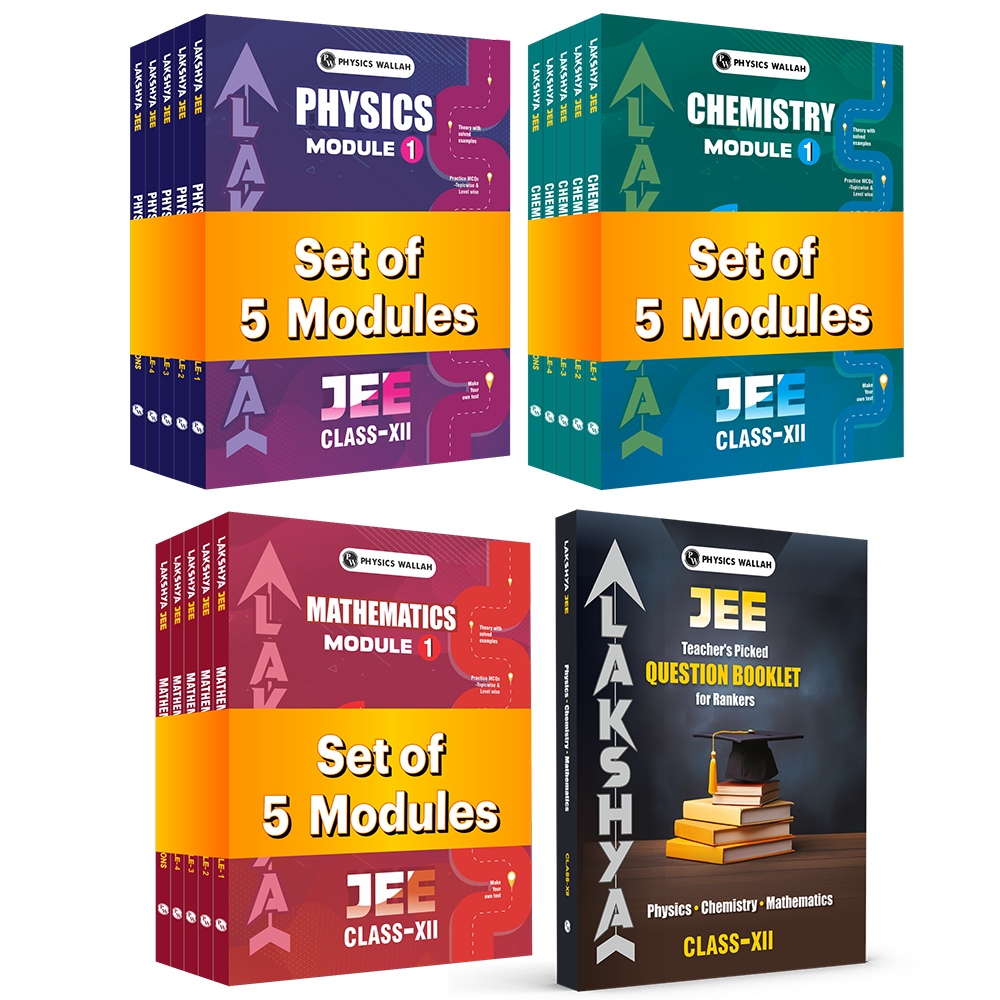
If you are facing this issue, there is one structured solution available — PW Module 2.0 by Physics Wallah — designed to help students track performance chapter-wise and improve systematically.
|
Lakshya JEE Class 12 Maths Determinants Module |
|
|
Lakshya JEE Class 12 Maths Limit Continuity and Differentiability Module |
|
|
Lakshya JEE Class 12 Maths Indefinite Integration Module |
How PW Module 2.0 Helps You Identify Weak Maths Topics
Questions Booklet – Initial Weakness Detection
Every chapter begins with:
-
100–150 high-probability chapter-wise questions
-
PYQ based practice patterns
-
One-page formula sheet + short notes
How it helps:
When you solve these questions:
-
If you struggle with concept-based questions → Concept gap.
-
If you make calculation mistakes → Practice gap.
-
If you forget formulas → Revision gap.
This becomes your first diagnostic tool during JEE Main preparation Using JEE Lakshya Modules.
Check Your Understanding (CYU) – Topic-Wise Clarity Check
After lectures, you get:
-
Topic-wise practice sets
-
10–15 questions per topic
-
Similar to Daily Practice Problems (DPP)
How it helps:
Instead of saying “Calculus is weak”, you can identify:
-
Chain Rule weak
-
Definite Integration weak
-
Differential Equations weak
This improves concept clarity for JEE at micro-level.
QR – Make Your Own Test (Major Highlight)
This is where real identification happens.
-
Pick any 3 chapters
-
120 questions
-
180 minutes
-
Based on JEE Main pattern
How it helps:
Suppose you select:
-
Limits
-
Matrices
-
Coordinate Geometry
After attempting:
-
Low score in Limits → conceptual weakness
-
Good accuracy but slow in Matrices → speed issue
-
High mistakes in Coordinate → careless errors
This simulates real JEE mock tests and gives data-driven clarity.
Chapter-End Tests – Single Chapter Evaluation
Each chapter has:
-
40 questions
-
1-hour test
How it helps:
You can test:
-
Only Probability
-
Only Conic Sections
-
Only Indefinite Integration
If your score is below 60–65%, that chapter needs revision.
This structured evaluation makes your JEE Main preparation more targeted.
SETU / Conceptual Exercise – Main to Advanced Bridge
For JEE students:
-
30–50 medium-level questions
-
Bridges JEE Main → Advanced
How it helps:
Many students think they are ready for Advanced but struggle with depth.
SETU reveals:
-
Conceptual depth gaps
-
Multi-concept integration issues
-
Logical reasoning weakness
This is extremely useful for JEE Advanced preparation.
Challenger 2.0 (JEE Only) – Advanced Reality Check
-
Pure JEE Advanced replica questions
-
Exam-aligned difficulty
How it helps:
If you cannot solve Challenger questions:
-
Your fundamentals need strengthening
-
Or your problem-solving speed is low
This gives you honest feedback — not false confidence.
Check Out: JEE Test series
How This Improves Your JEE Exam Readiness
Using this structured system:
Confidence Improves
You know exactly which chapter is weak — no guessing.
Accuracy Increases
Regular chapter wise tests reduce silly mistakes.
Time Management Gets Better
QR tests simulate real exam pressure.
Backlogs Reduce
Instead of revising everything, you revise weak chapters only.
This approach transforms random studying into exam oriented study material based preparation.
Read More: Lakshya JEE Class 12 Modules PDF for 2026 Preparation
Identify Weak Maths Topics Using JEE Lakshya Modules FAQs
Is Module 2.0 enough for JEE Main and JEE Advanced preparation?
If used properly with lectures and revision, it provides structured PYQ based practice, chapter wise tests, and advanced-level exposure. The key is disciplined usage and consistent analysis of mistakes.
How is it different from normal modules?
Most materials give questions.
This system gives:
-
Progressive difficulty
-
Built-in evaluation
-
Self-test options
-
Advanced bridge exercises
It helps in diagnosing weaknesses, not just practicing questions.
How should I use it daily for Maths?
A simple structure:
-
Solve CYU after lecture (30–45 mins)
-
Practice 20–30 questions from Best Questions Booklet
-
Attempt one Chapter-End Test weekly
-
Use QR test every 2–3 weeks
-
Attempt SETU & Challenger after syllabus completion
Can this help in revision phase?
Yes. Instead of rereading theory, you:
-
Solve high-probability questions
-
Take chapter wise tests
-
Attempt custom QR mock tests