JEE Main Chemistry Syllabus for 2026 exam
JEE Main Chemistry Syllabus gives you a clear idea of what to study in Chemistry for the upcoming Joint Entrance Examination (Main). It covers topics from Physical, Organic, and Inorganic Chemistry, all based on the 11th and 12th class NCERT books. Knowing the complete JEE Chemistry syllabus helps you prepare in an organized way.
Chemistry plays an important role in JEE Main because many questions are direct and less time-consuming. With a good understanding of this subject, you can score well and improve your rank. That is why going through the chemistry JEE Main Syllabus 2026 in detail becomes very vital before starting your exam preparation. Keep reading to learn about the detailed syllabus along with Chemistry important chapters for JEE Mains.
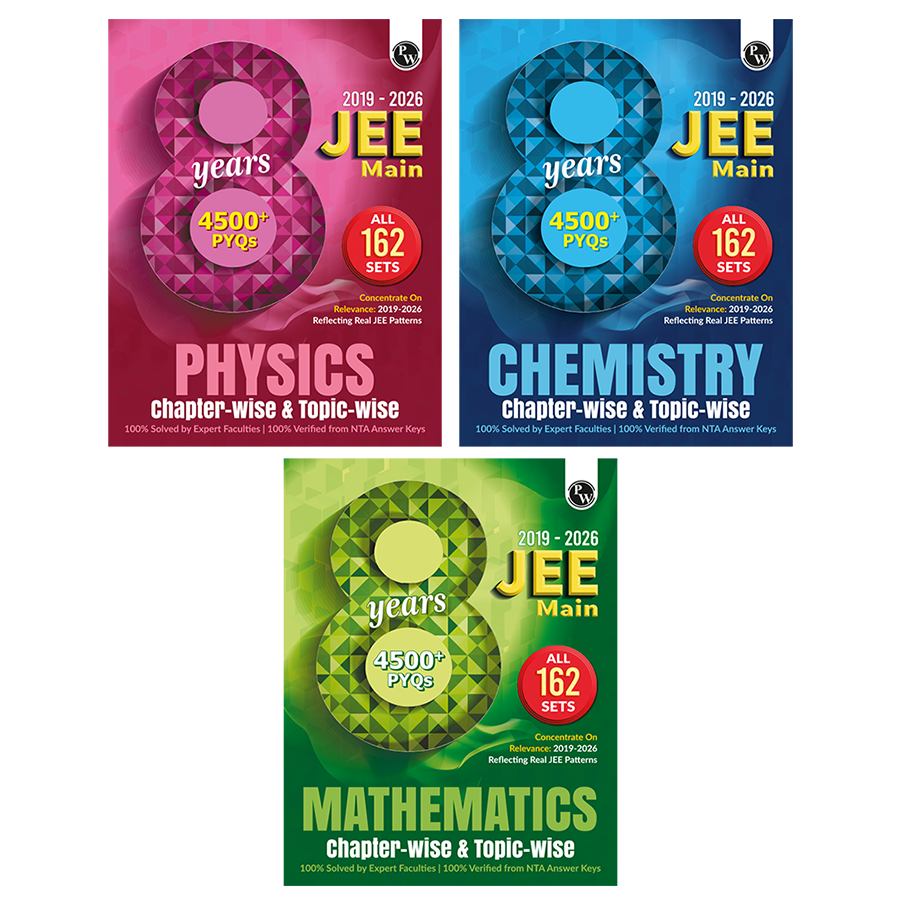
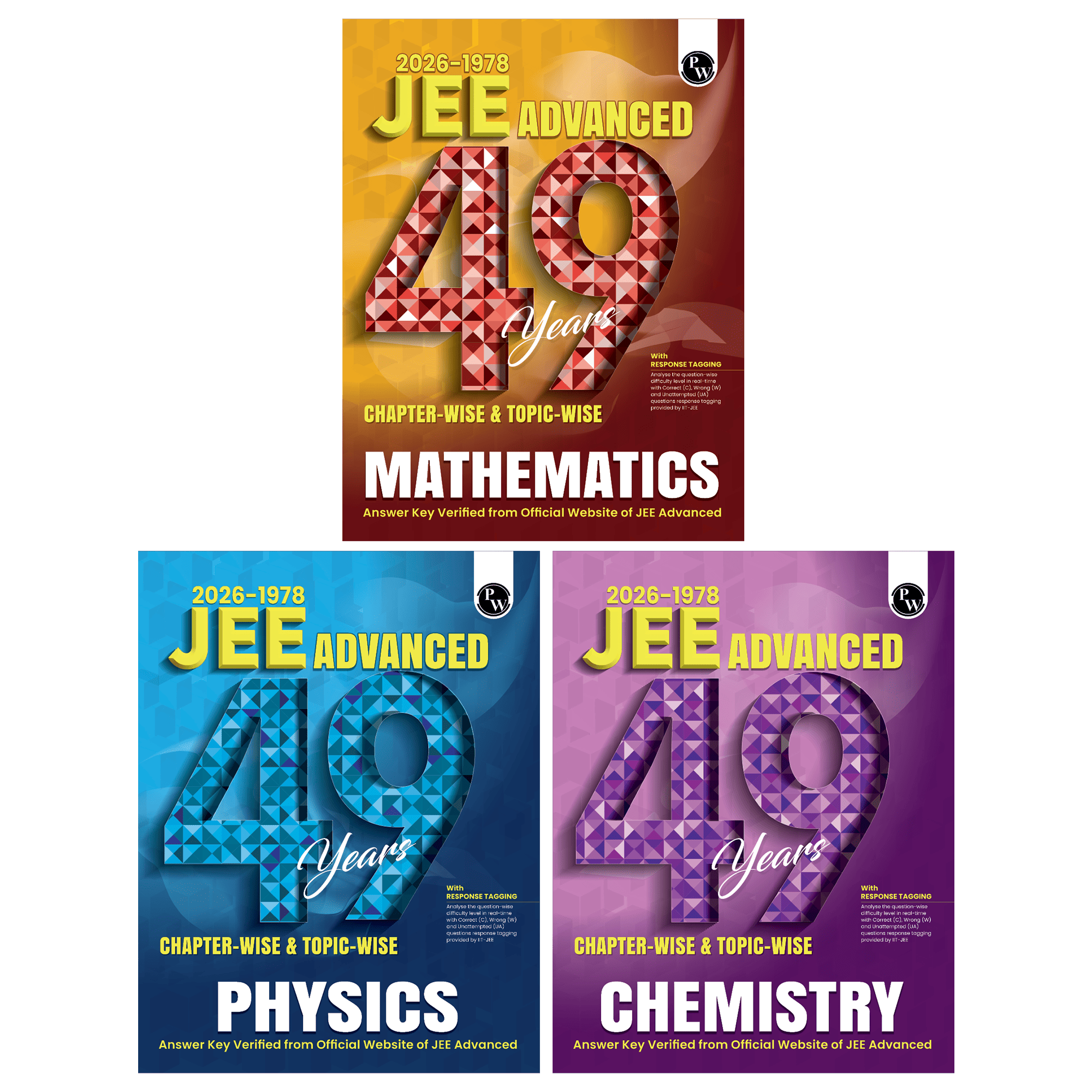
Check Out: PW JEE Books
JEE Main Chemistry Syllabus
The NTA releases the JEE Main Chemistry Syllabus every year. The syllabus is divided into three main branches: Physical Chemistry, Inorganic Chemistry, and Organic Chemistry. There are a total of 20 chapters in the Chemistry JEE Main syllabus, taken directly from Class 11 and Class 12 NCERT textbooks.
Checking the section-wise JEE Chemistry syllabus helps while making a proper study plan and covering all the chemistry important chapters for JEE Mains. Find the detailed syllabus for each section here.
Physical Chemistry JEE Main Syllabus
Physical Chemistry in JEE Main is very important to build a base for various concepts in Chemistry. The Physical Chemistry JEE Main Syllabus mainly focuses on fundamental topics like Atomic Structure, Thermodynamics, Chemical Bonding, Equilibrium, Solutions, and Chemical Kinetics.
Questions from Physical chemistry are often numerical-based, so you need to practice formulas, calculations, and problem-solving regularly. Check out the detailed Physical Chemistry JEE Main Syllabus here:
|
Physical Chemistry JEE Main Syllabus |
|
|
Units |
Topics |
|
SOME BASIC CONCEPTS IN CHEMISTRY |
Matter and its nature, Dalton's atomic theory, Concept of atom, molecule, element, and compound, Laws of chemical combination, Atomic and molecular masses, mole concept, molar mass, percentage composition, empirical and molecular formulae, Chemical equations, and stoichiometry. |
|
ATOMIC STRUCTURE |
Nature of electromagnetic radiation, photoelectric effect, spectrum of the hydrogen atom, Bohr model of a hydrogen atom - its postulates, derivation of the relations for the energy of the electron and radii of the different orbits, limitations of Bohr's model, dual nature of matter, de Broglie's relationship, Heisenberg uncertainty principle, elementary ideas of quantum mechanics, the quantum mechanical model of the atom and its important features, concept of atomic orbitals as one-electron wave functions, variation of ψ and ψ 2 with r for 1s and 2s orbitals, various quantum numbers (principal, angular momentum and magnetic quantum numbers) and their significance, shapes of s, p and d - orbitals, electron spin and spin quantum number, rules for filling electrons in orbitals – Aufbau principle, Pauli's exclusion principle andHund'srule, electronic configuration of elements and extra stability of half-filled and completely filled orbitals. |
|
CHEMICAL BONDING AND MOLECULAR STRUCTURE |
Kossel-Lewis approach to chemical bond formation, the concept of ionic and covalent bonds. Ionic Bonding: Formation of ionic bonds, factors affecting the formation of ionic bonds; calculation of lattice enthalpy. Covalent Bonding: Concept of electronegativity, Fajan’s rule, dipole moment, Valence Shell Electron Pair Repulsion (VSEPR ) theory, and shapes of simple molecules. Quantum mechanical approach to covalent bonding: Valence bond theory - its important features, the concept of hybridization involving s, p, and d orbitals, and resonance. Molecular Orbital Theory - Its important features, LCAOs, types of molecular orbitals (bonding, antibonding), sigma and pi-bonds, molecular orbital electronic configurations of homonuclear diatomic molecules, the concept of bond order, bond length, and bond energy. An elementary idea of metallic bonding, hydrogen bonding, and their applications. |
|
CHEMICAL THERMODYNAMICS |
Fundamentals of thermodynamics: System and surroundings, extensive and intensive properties, state functions, entropy, types of processes. The first law of thermodynamics - Concept of work, heat, internal energy and enthalpy, heat capacity, molar heat capacity, Hess’s law of constant heat summation, Enthalpies of bond dissociation, combustion, formation, atomization, sublimation, phase transition, hydration, ionization, and solution. The second law of thermodynamics - Spontaneity of processes, ΔS of the universe, and ΔGof the system as criteria for spontaneity. ΔG°(Standard Gibbs energy change) and equilibrium constant. |
|
SOLUTIONS |
Different methods for expressing the concentration of solution - molality, molarity, mole fraction, percentage (by volume and mass both), the vapour pressure of solutions and Raoult's Law- Ideal and nonideal solutions, vapour pressure - composition, plots for ideal and non- ideal solutions, Colligative properties of dilute solutions - a relative lowering of vapour pressure, depression of freezing point, the elevation of boiling point and osmotic pressure, determination of molecular mass using colligative properties, abnormal value of molar mass, van’t Hoff factor and its significance |
|
EQUILIBRIUM |
The meaning of equilibrium is the concept of dynamic equilibrium. Equilibria involving physical processes: Solid-liquid, liquid-gas, gas-gas, and solid-gas equilibria, Henry's law. General characteristics of equilibrium involving physical processes. Equilibrium involving chemical processes: Law of chemical equilibrium, equilibrium constants (Kp and Kc) and their significance, the significance of ΔG and ΔG° in chemical equilibrium, factors affecting equilibrium concentration, pressure, temperature, the effect of a catalyst, Le Chatelier’s principle. Ionic equilibrium: Weak and strong electrolytes, ionization of electrolytes, various concepts of acids and bases (Arrhenius, Bronsted - Lowry and Lewis) and their ionization, acid-base equilibria (including multistage ionization) and ionization constants, ionization of water, pH scale, common effect, hydrolysis of salts and pH of their solutions, the solubility of sparingly soluble salts, solubility products and buffer solutions. |
|
REDOX REACTIONS AND ELECTROCHEMISTRY |
Electronic concepts of oxidation and reduction, redox reactions, oxidation number, rules for assigning oxidation number and balancing of redox reactions. Electrolytic and metallic conduction, conductance in electrolytic solutions, molar conductivities and their variation with concentration, Kohlrausch’s law and its applications. Electrochemical cells - Electrolytic and Galvanic cells, different types of electrodes, electrode potentials including standard electrode potential, half-cell and cell reactions, emf of a Galvanic cell and its measurement, Nernst equation and its applications, relationship between cell potential and Gibbs' energy change, dry cell and lead accumulator, fuel cells. |
|
CHEMICAL KINETICS |
Rate of a chemical reaction, factors affecting the rate of reactions: concentration, temperature, pressure and catalyst, elementary and complex reactions, order and molecularity of reactions, rate law, rate constant and its units, differential and integral forms of zero and first-order reactions, their characteristics and half-lives, the effect of temperature on the rate of reactions, Arrhenius theory, activation energy and its calculation, collision theory of bi-molecular gaseous reactions (no derivation). |
Check Out: JEE Previous Year Papers
Organic Chemistry JEE Main Syllabus
Organic Chemistry in JEE Main may look tough at first because of the many reactions, mechanisms, and different types of compounds. But if you learn the basics properly and understand how reactions happen, it becomes easy. This section is more about logic and clearing concepts rather than memorizing everything. The Organic Chemistry JEE Main syllabus covers topics like Some Basic Principles (GOC), Isomerism, Hydrocarbons, Alkyl Halides, Alcohols, and Practical Organic Chemistry, among others.
It is important for you to first build strong basics in GOC, like electronic effects, intermediates, and reaction mechanisms. After that, prepare the functional groups and their reactions. Find the detailed Organic Chemistry JEE Main Syllabus below.
|
JEE Main Chemistry Syllabus for Organic Section |
|
|
Units |
Topics |
PURIFICATION AND CHARACTERISATION OF ORGANIC COMPOUNDS |
Purification - Crystallization, sublimation, distillation, differential extraction, and chromatography-principles and their applications. Qualitative analysis - Detection of nitrogen, sulphur, phosphorus, and halogens. Quantitative analysis (basic principles only) - Estimation of carbon, hydrogen, nitrogen, halogens, sulfur, and phosphorus. Calculations of empirical formulae and molecular formulae, numerical problems in organic quantitative analysis, |
SOME BASIC PRINCIPLES OF ORGANIC CHEMISTRY |
Tetravalency of carbon, shapes of simple molecules - hybridization (s and p): classification of organic compounds based on functional groups and those containing halogens, oxygen, nitrogen, and sulphur, homologous series: Isomerism - structural and stereoisomerism. Nomenclature (Trivial and IUPAC) Covalent bond fission - Homolytic and heterolytic, free radicals, carbocations and carbanions, stability of carbocations and free radicals, electrophiles and nucleophiles. Electronic displacement in a covalent bond - Inductive effect, electromeric effect, resonance and hyperconjugation. Common types of organic reactions- Substitution, addition, elimination and rearrangement. |
HYDROCARBONS |
Classification, isomerism, IUPAC nomenclature, general methods of preparation, properties, and reactions. Alkanes - Conformations: Sawhorse and Newman projections (of ethane), mechanism of halogenation of alkanes. Alkenes - Geometrical isomerism, mechanism of electrophilic addition, addition of hydrogen, halogens, water, hydrogen halides (Markownikoffs and peroxide effect), Ozonolysis, and polymerization. Alkynes - Acidic character, addition of hydrogen, halogens, water, and hydrogen halides, polymerization. Aromatic hydrocarbons - Nomenclature, benzene - structure and aromaticity, mechanism of electrophilic substitution, halogenation, nitration. Friedel-Craft's alkylation and acylation, the directive influence of the functional group in mono-substituted benzene. |
ORGANIC COMPOUNDS CONTAINING HALOGENS |
General methods of preparation, properties, and reactions, nature of C-X bond, mechanisms of substitution reactions. Uses, environmental effects of chloroform, iodoform, freons, and DDT. |
ORGANIC COMPOUNDS CONTAINING OXYGEN |
General methods of preparation, properties, reactions, and uses. ALCOHOLS, PHENOLS, AND ETHERS Alcohols: Identification of primary, secondary, and tertiary alcohols, mechanism of dehydration. Phenols: Acidic nature, electrophilic substitution reactions, halogenation, nitration, and sulphonation, Reimer-Tiemann reaction. Ethers: Structure. Aldehyde and Ketones: Nature of carbonyl group, nucleophilic addition to > C=O group, relative reactivities of aldehydes and ketones, important reactions such as - Nucleophilic addition reactions(addition of HCN, NH3 and its derivatives), Grignard reagent, oxidation, reduction (Wolf Kishner andClemmensen), the acidity of α-hydrogen. Aldol condensation, Cannizzaro reaction, Haloform reaction, chemical tests to distinguish between aldehydes and ketones. Carboxylic Acids: Acidic strength and factors affecting it |
ORGANIC COMPOUNDS CONTAINING NITROGEN |
General methods of preparation, properties, reactions and uses. Amines: Nomenclature, classification, structure, basic character, and identification of primary, secondary and tertiary amines and their basic character. Diazonium Salts: Importance in Synthetic Organic Chemistry. UNIT 19: BIOMOLECULES General introduction and importance of biomolecules. CARBOHYDRATES – Classification, aldoses and ketoses, monosaccharides (glucose and fructose), and constituent monosaccharides of oligosaccharides (sucrose, lactose and maltose). PROTEINS - Elementary idea of α -amino acids, peptide bond, polypeptides, proteins: primary, secondary, tertiary and quaternary structure (qualitative idea only), denaturation of proteins, enzymes. VITAMINS – Classification and functions. NUCLEIC ACIDS – Chemical constitution of DNA and RNA, biological functions of nucleic acids. Hormones (General introduction) |
PRINCIPLES RELATED TO PRACTICAL CHEMISTRY |
Detection of extra elements (Nitrogen, sulphur, halogens) in organic compounds, detection of the following functional groups: hydroxyl (alcoholic and phenolic), carbonyl (aldehyde and ketones), carboxyl, and amino groups in organic compounds. The chemistry involved in the preparation of the following: Inorganic compounds, Mohr’s salt, potash alum. Organic compounds: Acetanilide, p-nitro acetanilide, aniline yellow, and iodoform. The chemistry involved in the titrimetric exercises – acids, bases, and the use of indicators, oxalic acid vs KMnO4, Mohr’s salt vs KMnO4. Chemical principles involved in the qualitative salt analysis: Cations – Pb²⁺, Cu²⁺, Al³⁺, Fe³⁺, Zn²⁺, Ni²⁺, Ca²⁺, Ba²⁺, Mg²⁺, NH₄⁺ Anions – CO₃²⁻, S²⁻, SO₄²⁻, NO₃⁻, NO₂⁻, Cl⁻, Br⁻, I⁻ ( Insoluble salts excluded). Chemical principles involved in the following experiments: 1. Enthalpy of solution of CuSO4 2. Enthalpy of neutralization of a strong acid and a strong base. 3. Preparation of lyophilic and lyophobic sols. 4. Kinetic study of the reaction of iodide ions with hydrogen peroxide at room temperature. |
Check Out: JEE Revision Books
JEE Main Chemistry Syllabus for Inorganic Chemistry
The inorganic section is an important part of the JEE Main Chemistry syllabus. This subject is easier compared to others because many questions are direct from the NCERT. You need to remember facts, trends in the Periodic Table, and properties of different elements. With proper revision, this part can give you good marks in less time.
The JEE Main Chemistry Syllabus for the Inorganic section includes the Periodic Table, s-block, p-block, d-block, and f-block elements, Extraction of Metals, and Coordination Compounds. Among these, p-block elements are asked more in the exam. Check out the complete Inorganic Chemistry JEE Main Syllabus here:
|
JEE Main Inorganic Chemistry Syllabus 2026 |
|
|
Units |
Topics |
|
CLASSIFICATION OF ELEMENTS AND PERIODICITY IN PROPERTIES |
Modern periodic law and present form of the periodic table, s, p, d, and f block elements, periodic trends in properties of elements of atomic and ionic radii, ionization enthalpy, electron gain enthalpy, valence, oxidation states, and chemical reactivity. |
p- BLOCK ELEMENTS |
Group -13 to Group 18 Elements General Introduction: Electronic configuration and general trends in physical and chemical properties of elements across the periods and down the groups, unique behaviour of the first element in each group. |
d - and f- BLOCK ELEMENTS |
Transition Elements - General introduction, electronic configuration, occurrence and characteristics, general trends in properties of the first-row transition elements - physical properties, ionization enthalpy, oxidation states, atomic radii, colour, catalytic behaviour, magnetic properties, complex formation, interstitial compounds, alloy formation, preparation, properties and uses of K2Cr2O7 and KMnO4. Inner Transition Elements Lanthanoids - Electronic configuration, oxidation states, and Lanthanoid contraction. Actinoids - Electronic configuration and oxidation states. |
COORDINATION COMPOUNDS |
Introduction to coordination compounds. Werner's theory, ligands, coordination number, denticity, chelation, IUPAC nomenclature of mononuclear coordination compounds, isomerism, Bonding: Valencebond approach and basic ideas of Crystal field theory, colour and magnetic properties, importance of coordination compounds (in qualitative analysis, extraction of metals, and in biological systems). |
For the upcoming year, NTA will release the official JEE Main Chemistry syllabus. However, it is expected to remain the same as the JEE Main Chemistry Syllabus 2025. So, if you are preparing for JEE Main, you can make your study plan according to the syllabus given above. Starting early with proper planning will help you cover all topics on time and practice well before the exam.
Chemistry Important Chapters for JEE Mains
As per the analysis of JEE Main previous year papers, some Chemistry chapters are asked more frequently and carry higher weightage. By giving more time to these topics, you can improve your chances of scoring well in the exam. Check out the list of Chemistry Important Chapters for JEE Mains here:
High-Weightage Chapters From the JEE Main Chemistry Syllabus
These Chemistry chapters are very important, and you must prepare them carefully:
-
Atomic Structure
-
Chemical Bonding
-
Mole Concept
-
Thermodynamics
-
Chemical Equilibrium
-
Ionic Equilibrium
-
Electrochemistry
-
Chemical Kinetics
-
Solid State
-
Solutions
-
Coordination Compounds
-
d-Block Elements
-
p-Block Elements
-
Hydrocarbons
-
General Organic Chemistry
-
Isomerism
-
Aldehydes and Ketones
-
Carboxylic Acids and Derivatives
-
Alcohols and Ethers
-
Nitrogen Compounds & Amines
Low-Weightage Chapters From the JEE Main Chemistry Syllabus
While these Chemistry chapters are less asked in the exam, you should still not skip them, as sometimes direct and easy questions can come from them:
-
Gaseous & Liquid State
-
Redox Reactions and Volumetric Analysis
-
Metallurgy
-
Nuclear Chemistry & Surface Chemistry
-
Qualitative Analysis
-
s-Block Elements
-
Periodic Classification
-
Classification & Nomenclature
-
Aromatic Compounds
-
Biomolecules & Polymers
Study Material For JEE Main Chemistry Syllabus
Your chances of scoring well increase when you add well-organized and structured IIT JEE Books to your study routine during preparation. Apart from NCERT, these JEE study materials by PW explain concepts simply and provide plenty of solved questions. Using quality notes and solved papers, you enhance your revision and also improve problem-solving speed.
Check out the exam-focused study material to cover the JEE Main Chemistry syllabus effectively here: 8 Years JEE Mains Chemistry PYQ along with the JEE Handwritten Notes Chemistry Inorganic Physical Organic , which provide structured theory, practice questions, and PYQs for complete syllabus coverage and better revision.
JEE Main Chemistry Syllabus FAQs
Q.1. Has NTA released the JEE Main Chemistry Syllabus for the 2026 exams?
Ans. The official JEE Main syllabus for 2026 is yet to be released. But it is expected to remain the same as the JEE Main Chemistry Syllabus 2025. So, you can prepare as per the 2025 syllabus for now.
Q.2. Which section of the JEE Main Chemistry Syllabus is tough?
Ans. Organic Chemistry is mostly considered the toughest part of the JEE Main Chemistry syllabus because of the many reactions and mechanisms.
Q.3. How much time should I give to the Chemistry JEE Main syllabus?
Ans. While there is no fixed time, at the start of your preparation, you can give 2–3 hours daily. After some time, focus more on revision, practice high-weightage topics first, and improve weak topics.
Q.4. Which chapters from the JEE Main Chemistry syllabus can I skip?
Ans. No chapters from the JEE Main Chemistry syllabus should be skipped, because questions can come from anywhere in the syllabus. Even less weightage topics can help you score extra marks.
![JEE Advanced EaJEE Handwritten Notes For Inorganic Chemistry By Om Pandey | Chapterwise and Topicwise Questions | Complete JEE Main & Advanced Syllabus | Handpicked PYQs [Paperback] Om Pandey](https://static.pw.live/7ad2ddc0-3b23-4e89-bce9-64275f276aa2.png)