Organic Chemistry Notes Preparation Strategy for JEE Exams
Preparing for the Joint Entrance Examination requires a strategic balance between deep conceptual understanding and rapid memory recall.
Many engineering aspirants struggle to retain complex mechanisms, shifting reagent functions, and structural rearrangements, making their study sessions stressful and unproductive.
Crafting comprehensive JEE organic chemistry notes bridges this gap, transforming a vast syllabus into highly structured, accessible reference points.
Check Out: IIT JEE Books
Importance of JEE Organic Chemistry Notes
A disorganized notebook creates confusion during critical revision phases. Having an optimised, structured set of notes serves as a mental roadmap, helping you connect reactions across separate chapters and store complex details clearly.
-
Saves Hours: Avoid flipping through massive reference textbooks days before the examination.
-
Instant Information Retrieval: Well-organized notes let you scan functional groups, conditions, and exceptions in seconds.
-
Reduces Cognitive Load: Condensing chapters into key pointers prevents mental exhaustion.
-
Visualizes Pathway Flows: Breaking down step-by-step molecular shifts clarifies how products form.
-
Tracks Anomalies: Placing unexpected acidic strengths or unexpected steric hindrances in dedicated boxes ensures they stand out.
-
Connects Reagents: Helps track how a single reagent behaves differently across distinct functional groups under varying temperatures.
-
Quick Errors Review: Scanning weak areas right before mock tests prevents repeating past mistakes.
-
Builds Structural Familiarity: Writing out structures regularly trains your eyes to spot positional variations instantly.
-
Boosts Retrieval Speed: Regular exposure to concise formats trains the brain to recall multi-step pathways swiftly under timed pressure.
How to Revise Using JEE Organic Chemistry Notes
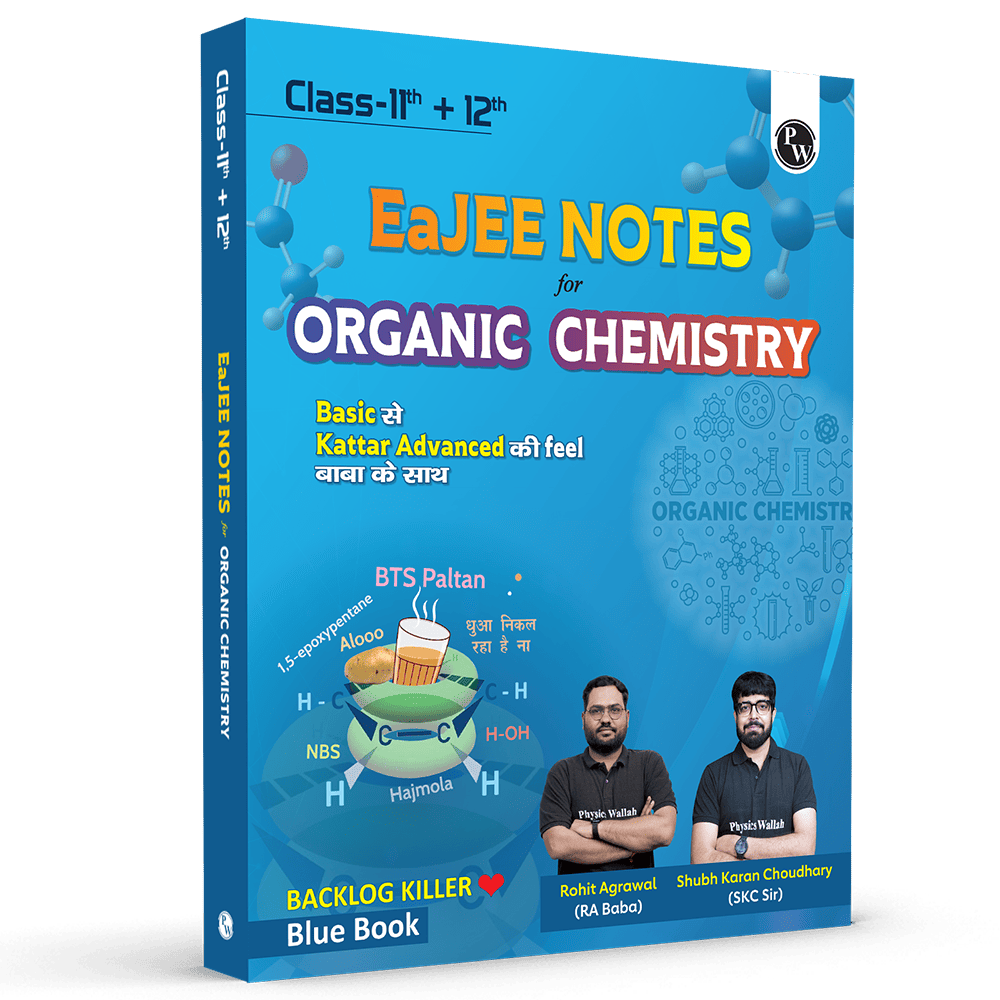
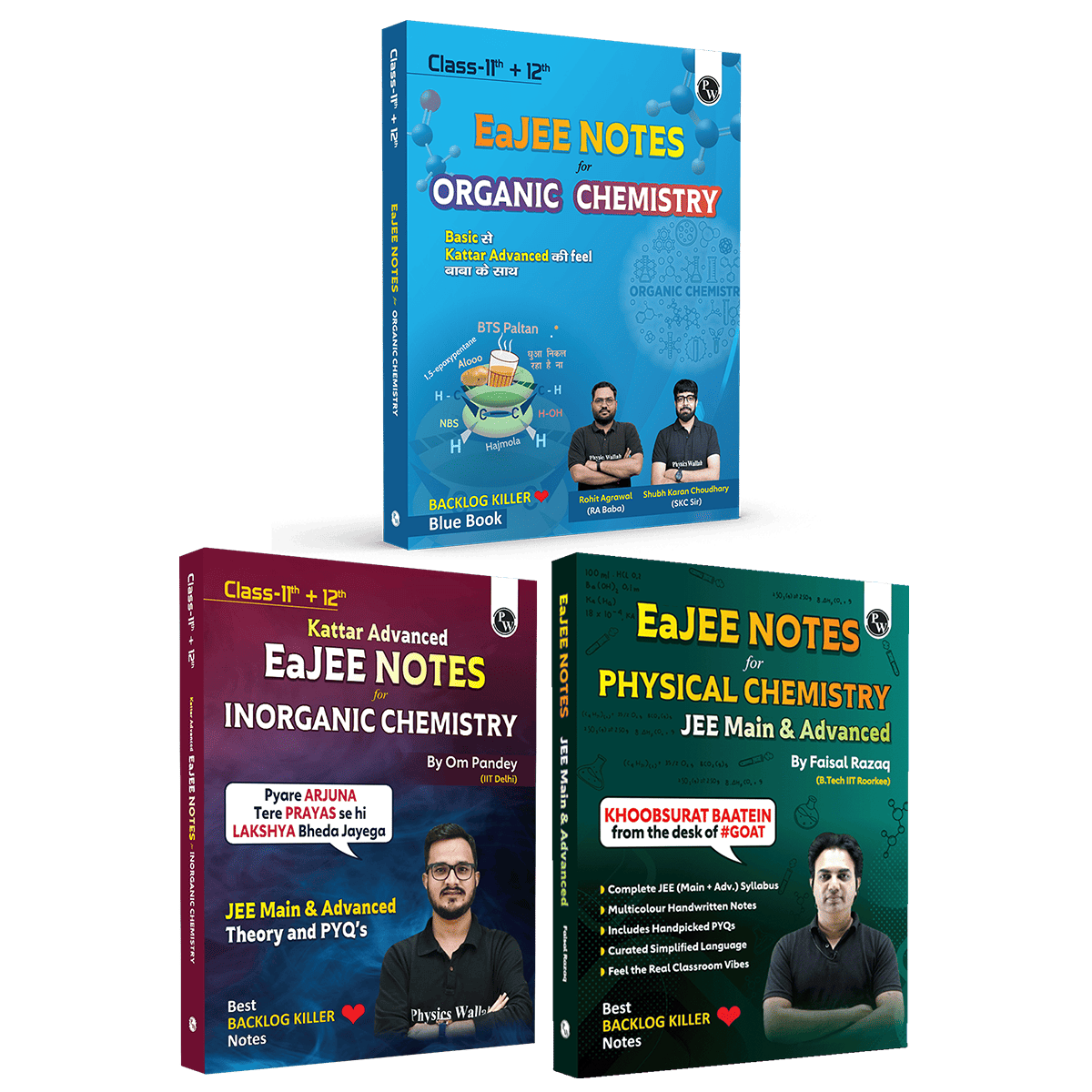
While making your own notes is irreplaceable, aligning your materials with curated resources helps prevent dangerous content gaps. Integrating the JEE organic chemistry book ecosystem ensures your personal preparation matches current examination trends.
Pre-Curated Class Resources
Using comprehensive, professionally prepared notes provides a solid structure that saves you from writing down every single word from scratch. This resource enhances your preparation in several ways:
-
Multicoloured Visual Frameworks: Uses color-coded layouts that distinguish attacking nucleophiles, shifting bonds, and leaving groups, making complex pages easy to read.
-
Classroom-Tested Explanations: Replicates natural classroom teaching logic, making self-study intuitive.
-
Direct Revision Appendix: Features a practical reference appendix built specifically for quick, systematic review sessions before major examinations.
Targeted Practice and PYQs
Notes shouldn't just contain theoretical facts; they need to show how to solve actual problems.
-
3000 Practice Questions: The notes provide over 3000 selected practice problems alongside previous years' questions (PYQs).
-
Behind-The-Scenes (BTS) Breakdown: Every single equation features a dedicated analysis detailing the unique behavioral characteristics of the reactions involved.
-
Error Logs: Use the margins of these guides to build a personal error journal, documenting exactly where you misidentified a major product during practice.
How to Make JEE Organic Chemistry Notes?
To ensure your general organic chemistry iit JEE notes contain high-yield information, follow this structured four-step construction method.
Step 1: Document Isomerism Frameworks
Follow the below things:
-
Structural Isomerism: Set up a quick checklist for chain, positional, functional, metamerism, and tautomerism. Include keto-enol conditions and percentage compositions at equilibrium.
-
Geometrical Isomerism: Write out clear rules for cis/trans and E/Z systems, noting how physical attributes like dipole moments, boiling points, and solubility vary between forms.
-
Optical Isomerism: Detail chirality criteria, asymmetric centers, enantiomers, diastereomers, and meso compounds. Clearly explain how to calculate total stereoisomers for symmetrical and asymmetrical molecules.
Step 2: Establish the Reaction Intermediates Section
Follow the below things:
-
Carbocations: Chart their structural configurations, stability trends driven by electronic effects, and their tendency to undergo hydride, methyl, or phenyl shifts to achieve greater stability.
-
Carbanions: Define their geometry and show how hybridization and adjacent electron-withdrawing groups affect their stability.
-
Free Radicals and Carbenes: Map out radical stability using bond dissociation energies, and detail singlet versus triplet carbene electronic distributions.
Step 3: Map Out Nucleophilic and Electrophilic Pathways
Follow the below things:
-
Substitution Reactions (SN1 vs SN2): Create clear comparison tables covering reaction kinetics, solvent preferences (polar protic vs polar aprotic), substrate order, stereochemical outcomes (racemisation vs inversion), and the possibility of carbocation rearrangements.
-
Elimination Reactions (E1 vs E2 vs E1cB): Outline the conditions that favour elimination over substitution, including temperature effects, base strength, and product orientation rules such as Saytzeff's and Hofmann's rules.
-
Addition Responses: Diagram step-by-step electrophilic additions to alkenes and alkynes, explicitly marking Markovnikov and anti-Markovnikov regioselectivity rules.
Step 4: Include Practical Organic Chemistry (POC)
Follow the below things:
-
Qualitative Element Testing: Outline the chemical steps for Lassaigne’s Test to detect Nitrogen, Sulphur, and Halogens.
-
Functional Group Identification Tests: Create clear, visual summaries for distinguishing tests like the Lucas Test, Tollen’s Reagent, Fehling’s Solution, Iodoform Test, and Victor Meyer’s Test.
Check Out: JEE Revision Book
JEE Organic Chemistry Notes for GOC and Molecular Stability
The foundational blocks of entire reaction pathways rest upon General Organic Chemistry (GOC). Attempting to memorize advanced transformations without solidifying GOC principles leads to rote learning, which falls short against the analytical demands of JEE Advanced.
Electronic Effects and Molecular Stability
Your general organic chemistry JEE notes must clearly prioritize the core electronic displacement factors. Arrange your pages to show how these effects interact to determine molecular stability.
-
Inductive Effect: Map out electron-withdrawing (-I) and electron-donating (+I) groups, noting how their influence decreases with distance.
-
Resonance and Mesomeric Effects: Document the rules for drawing valid canonical structures, highlighting how complete octets and negative charges on electronegative atoms maximize stability.
-
Hyperconjugation: Clearly links the number of alpha-hydrogens directly to the relative stability of carbocations, carbon radicals, and alkenes.
-
Aromaticity: Create a checklist based on Hückel’s Rule to identify aromatic compounds, focusing on cyclic, planar, fully conjugated systems containing (4n+2)π(4n+2)\pi(4n+2)π electrons. Also include the criteria for classifying compounds as anti-aromatic (4n)π(4n)\pi(4n)π systems and non-aromatic systems.
Acidic and Basic Strength Evaluation
A major portion of GOC questions tests your ability to rank compounds by their relative acidity or basicity.
-
Carboxylic Acids and Phenols: Show how electron-withdrawing groups increase acid strength by stabilizing the conjugate base, and emphasize ortho-effects.
-
Nitrogenous Bases: Compare aliphatic amines, aromatic amines, and amides, detailing how lone pair availability affects basicity rankings.
-
Solvation and Steric Hindrance: Use comparative tables to show how different solvent environments alter basicity rankings for primary, secondary, and tertiary amines.
|
Compound Category |
Primary Structural Enhancer |
Common JEE Pitfall / Exception |
Notes Status |
|
Substituted Phenols |
Strong Electron-Withdrawing Groups (-M/-I) at Ortho/Para |
Ortho-Nitrophenol exhibits Intramolecular Hydrogen Bonding, lowering boiling point and acidity relative to Para-Nitrophenol. |
Add to Flashcard |
|
Aliphatic Amines |
Electron-Donating Alkyl Groups (+I) increasing lone pair availability |
Steric hindrance and solvation effects alter order in aqueous phases ($2^\circ > 3^\circ > 1^\circ$ for methyl). |
Include in Core Table |
|
Aromatic Amines |
Resonance-delocalized lone pairs (decreased availability) |
Ortho-substituted anilines are generally weaker bases due to steric inhibitions of protonation. |
Highlight in Red |
Check Out: JEE Previous Year Papers
JEE Organic Chemistry Notes for Reagents and Named Reactions
As you transition into chapter-specific mechanisms, your main notes will expand significantly. To prevent information overload, you must simultaneously build a condensed companion guide containing organic chemistry JEE short notes for daily review.
[Full Chapter Notes (Detailed Mechanisms + Theory)]
│
▼ (Filter & Extract)
[Short Notes (Reagent Maps + Core Exception Boxes)]
│
▼ (Final Polish)
[Exam-Day Revision Checklist (Named Reactions + PYQs)]
Reagent-Centric Approach
Instead of organizing short summaries strictly by chapter names, try restructuring parts of your brief sheets around specific chemical reagents.
-
Oxidising Agents: Compare common oxidising agents such as KMnO4, K2Cr2O7, PCC, and MnO2, highlighting their reaction scope and the products they form under different conditions.
-
Reducing Agents: Compare LiAlH4 and NaBH4, focusing on the functional groups they reduce and their relative reactivity.
-
Organometallic Reagents: Create dedicated notes for Grignard reagents (RMgX ), covering their preparation, properties, and applications as strong nucleophiles and bases.
Named Reactions
Named transformations form the framework of conversational synthesis pathways in JEE question papers. Ensure your brief references extract four critical parameters for every named reaction:
-
Reactant and Product Framework: The precise starting structures and final functional configurations.
-
Active Intermediates: Document whether the reaction proceeds via a carbocation, carbanion, free radical, carbene, or nitrene.
-
Driving Forces: Note key driving factors, such as gaseous product evolution, ring-strain release, or stable precipitate formation.
-
Stereochemical Outcomes: Explicitly mention if the process yields a racemic mixture, undergoes Walden inversion, or forms specific syn/anti-addition products.
Read More: JEE Important Questions Chemistry 2026 with Solutions
Organic Chemistry JEE Notes FAQs
1. How often should I review my general organic chemistry JEE notes?
Review your core foundational frameworks at least once every week. General Organic Chemistry principles directly influence every subsequent chapter, from hydrocarbons to amines. Keeping these concepts fresh ensures you understand reaction mechanisms instead of relying on rote memorization.
2. Can I clear JEE Advanced by memorizing organic chemistry JEE short notes alone?
Short notes are designed for rapid memory recall and quick revision, not for initial learning. You must first develop a deep, conceptual understanding using comprehensive study materials like the PW Organic Chemistry book or complete classroom notes. Once you master the mechanisms, you can safely use short summaries for daily maintenance.
3. Why are reaction mechanisms emphasized so heavily in JEE organic chemistry notes?
JEE Advanced regularly features unique, non-standard molecules with multiple functional groups. Memorizing raw products will not help if the question involves internal rearrangements, steric hindrance, or competing pathways. Documenting detailed mechanisms helps you accurately predict products by following step-by-step molecular transformations.
4. How do I incorporate errors from mock tests into my general organic chemistry IIT JEE notes?
When you misidentify a major product or miss a crucial exception during a mock test, open your core notes to that specific topic. Use red ink to write down the mistake, the correct mechanism, and why your initial choice was incorrect. This transforms your notes into a personalized guide tailored to fix your weak areas.
5. Should I buy a ready-made PW organic chemistry book or make my own notes?
The ideal strategy combines both approaches. Creating your own handwritten notes builds muscle memory and helps organize your thoughts. At the same time, using pre-curated resources ensures you do not miss critical examination points, while providing access to high-yield questions, PYQs, and organized reference charts.