How to Solve JEE Maths PYQs to Spot Integral and Coordinate Geometry Patterns
Mastering integral calculus and coordinate geometry requires identifying recurring question trends. Solving a JEE Main Maths PYQ allows students to recognize how complex formulas repeat in predictable patterns, helping them save time and boost accuracy during the exam.
How to Identify Repeated Questions in JEE Main Maths PYQ?
Integral calculus and coordinate geometry contribute a major portion of marks to the mathematics section. Students often struggle because these topics seem vast and unpredictable. However, analyzing a Maths PYQ JEE mains reveals that the exam papers follow specific structural templates year after year.
Finding these blueprints changes your perspective on your revision. You stop approaching each question as if it were a brand new puzzle, and you begin to see the framework underneath. This change in perspective reduces anxiety and increases the speed of problem-solving in exam conditions.
How to Analyze Integral Calculus Patterns Using JEE Main Maths PYQ?
Integral calculus often looks intimidating due to the sheer volume of properties and substitution methods. You can break down these complexities by categorizing past questions systematically. Regular practice with JEE Previous Year Papers further helps students identify recurring integration patterns and understand how concepts are tested in actual exams.
Demystifying definite integration properties
Definite integration questions frequently rely on a few core properties. When reviewing a maths JEE Mains PYQ, you will notice that the "King’s Property" is incredibly common.
-
Look for symmetric limits: If the limits run from 0 to a, or from a to b, try applying the conversion property immediately.
-
Identify periodic functions: When fractional parts or trigonometric functions repeat, determine the period to simplify the upper and lower limits.
-
Check for odd and even functions: If the boundaries are symmetric around zero, evaluate the function type to potentially eliminate half the calculation.
Spotting standard substitutions in indefinite integrals
It is useful to know what algebraic expressions are likely to suggest which trigonometric substitutions . The indefinite integration becomes simpler.
-
Expressions involving quadratic roots often require substituting variables with sine or tangent functions.
-
Check if the derivative of a complex term is already sitting elsewhere in the numerator. This layout is a clear signal for basic substitution.
How to Identify Coordinate Geometry Trends Using JEE Main Maths PYQ?
Coordinate geometry is highly visual, but the exam tests your algebraic application. A regular review of math JEE PYQ papers shows that questions focus heavily on points of intersection, tangents, and normals.
Conic sections and common tangents
Questions involving a parabola, ellipse, or hyperbola often ask for a common tangent.
-
Write standard equations: Always write down the condition of tangency for both curves using slope form.
-
Equate the constants: Compare the constant terms from both equations to solve for the unknown slope value quickly.
Geometry locus problems
Locus problems can feel abstract until you establish a fixed starting routine.
|
Step |
Action Required |
Objective |
|
1 |
Assume the moving point |
Label the point as (h, k) |
|
2 |
Apply given conditions |
Write algebraic equations using the coordinate data |
|
3 |
Eliminate extra variables |
Simplify the relation until only h, k, and constants remain |
|
4 |
Final substitution |
Replace h with x and k with y to find the locus |
Modern exam papers frequently merge multiple chapters into a single problem. A deeper look at a maths JEE main PYQ reveals that examiners love blending coordinate geometry with integral calculus, particularly through area under curves.
-
Find boundary intersections: Use your coordinate geometry knowledge to locate where lines, parabolas, or circles intersect.
-
Set up the integral limits: Treat these intersection points as your lower and upper boundaries for the definite integral.
-
Sketch the curves: Draw a quick, rough sketch to identify which curve sits above the other, ensuring you subtract the functions in the correct order.
How to Practice JEE Main Math PYQs?
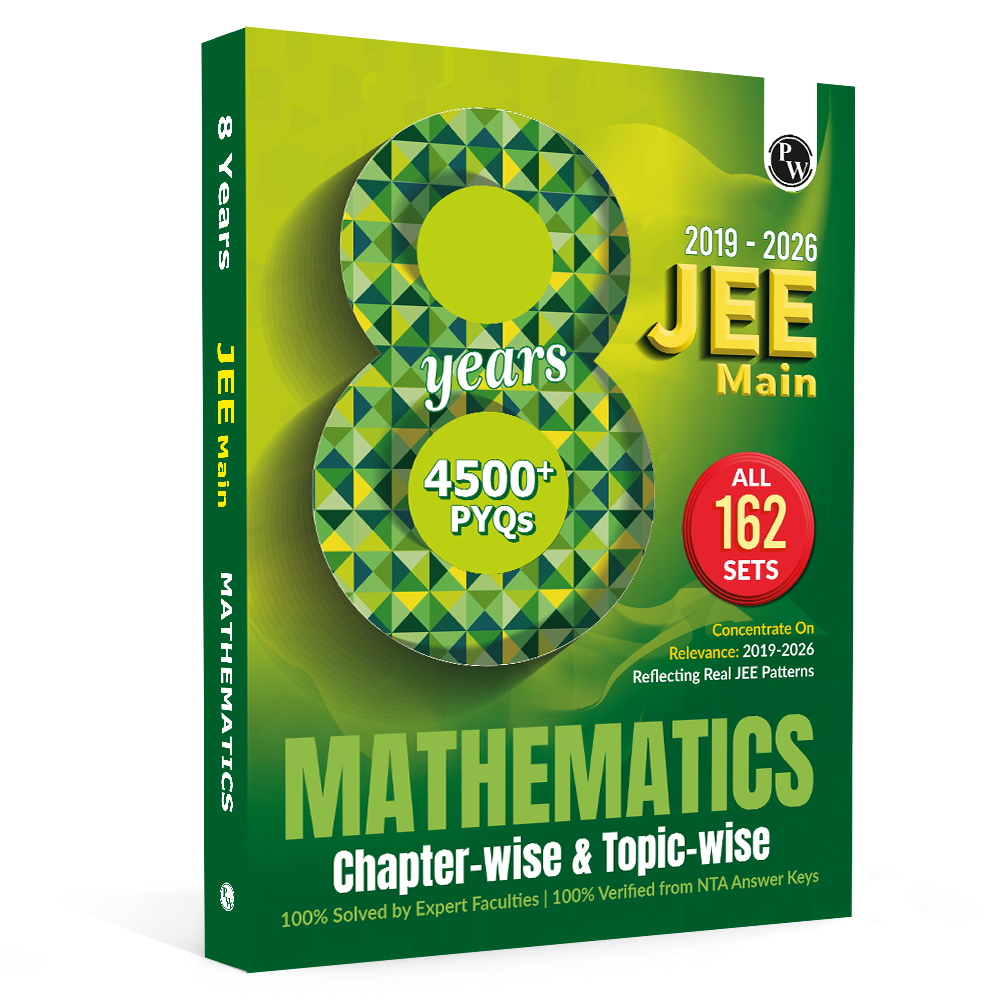
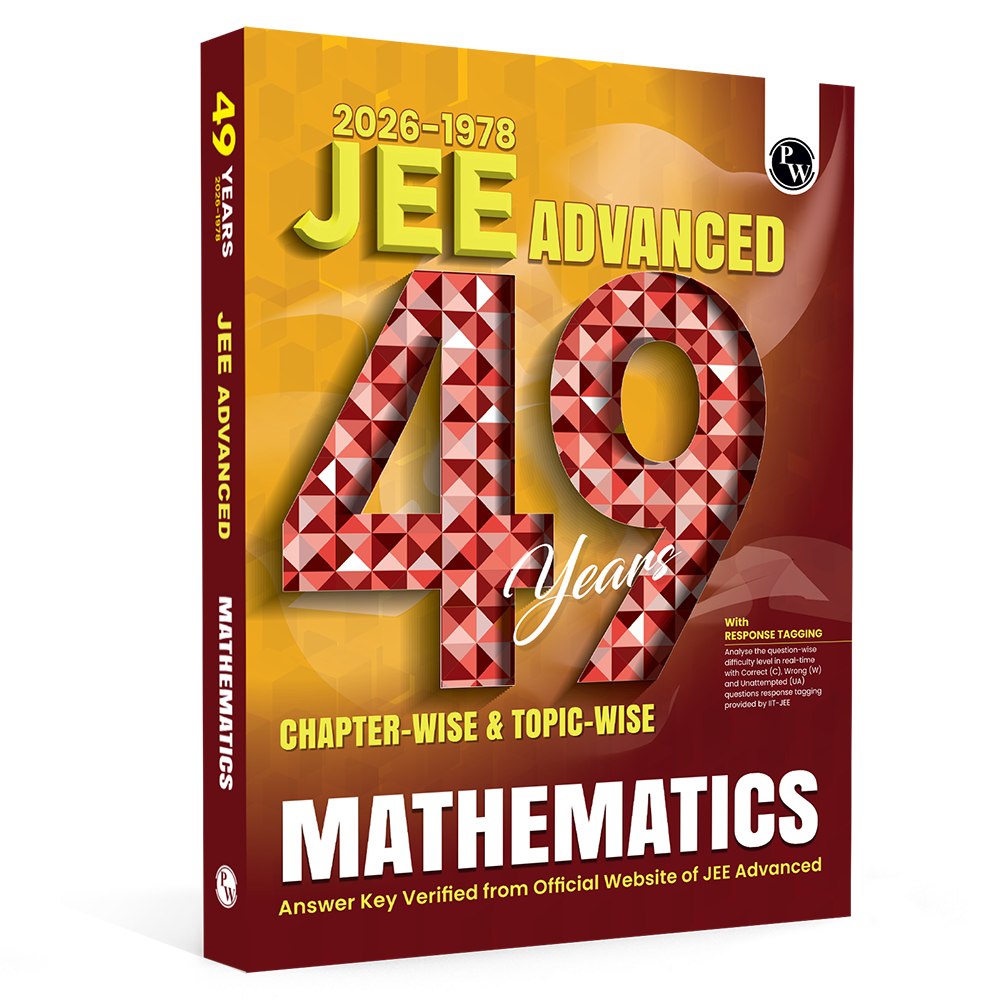
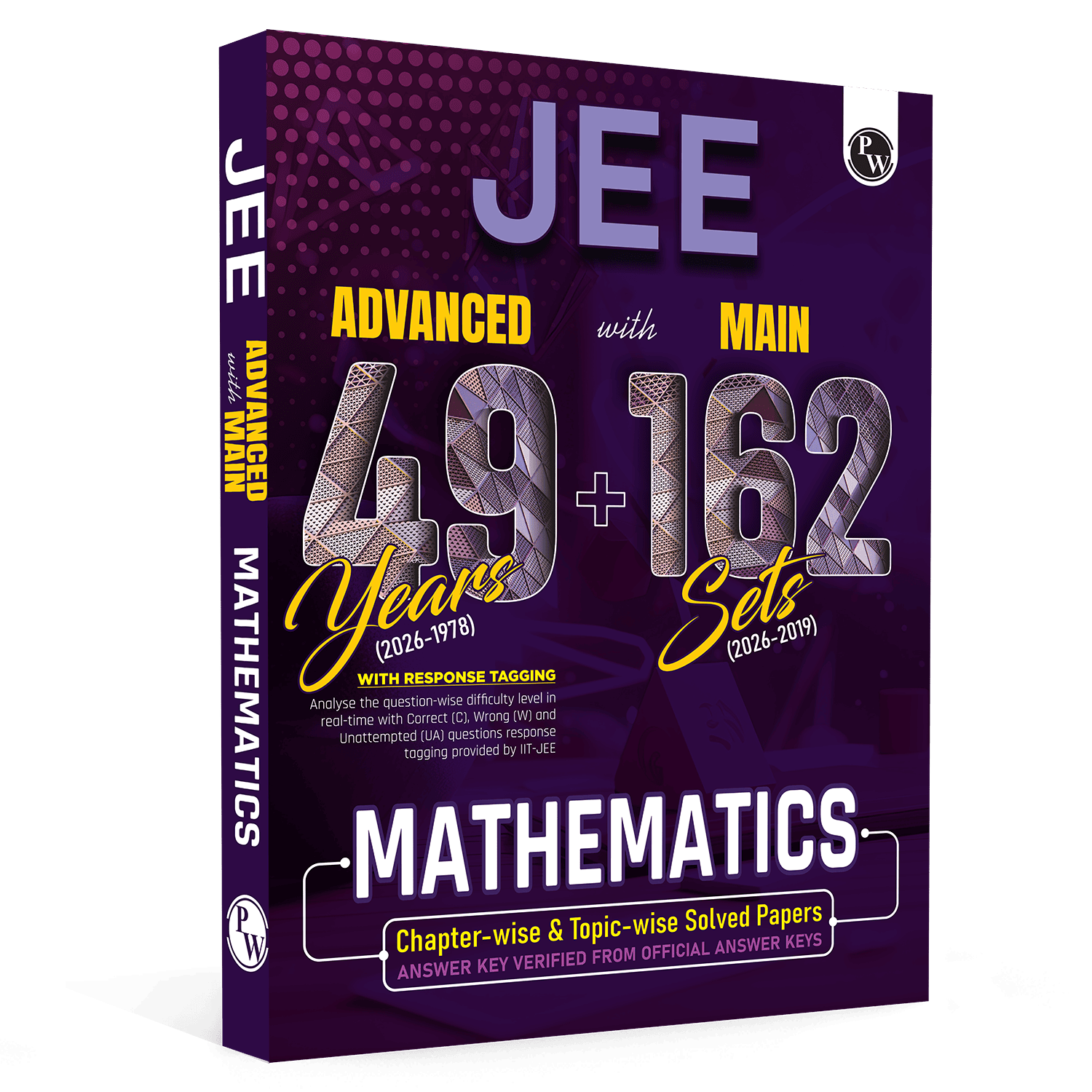
Simply reading through past solutions will not build exam-day intuition. You need an active framework to make your practice sessions productive. Resources like the JEE Main + Advanced Maths PYQ 2027 can support structured practice by providing organized previous-year questions for targeted preparation.
Categorise questions by concept type
Avoid solving papers randomly from start to finish. Instead, isolate calculus and geometry sections from your math JEE PYQ sets. Group the problems based on themes like area under curves, differential equations, circles, or parabolas. This concentrated exposure helps your brain map the similarities between questions asked in different years.
Maintain a dedicated pattern journal
Whenever you get stuck on a maths JEE main PYQ and look up the solution, note down the specific trigger that you missed.
-
Write down the structural look of the problem.
-
Highlight the exact step or identity that unlocked the solution.
-
Review this notebook weekly to reinforce your recognition skills.
Practice with strict time constraints
Spotting a pattern is only helpful if you can execute the calculation quickly. Set a timer when working through a PYQ of maths JEE mains. Aim to finish individual questions within around three minutes to replicate the actual pressure of the test room.
How to Choose the Right Resources for JEE Main Maths PYQ Preparation?
Having a structured collection of past papers is essential for spotting recurring trends. A disorganized JEE book can waste time and lead to confusion.
Using a curated resource helps streamline this entire process. It systematically compiles previous questions, making it easier to see how coordinate geometry and calculus patterns evolve over time. This targeted material allows you to test your pattern-recognition skills on authentic exam problems.
Read More: JEE Important Question Maths With Solutions
JEE Main Maths PYQ FAQs
How many years of maths PYQ JEE mains should I solve to see patterns?
You should focus on solving at least the past 8 to 10 years of exam papers. This time frame gives you a comprehensive view of how pattern trends in calculus and geometry have stabilized and repeated over recent sessions.
Why do coordinate geometry questions look different every year in the exam?
The core properties of parabolas, ellipses, and circles never change. The exam often combines two shapes or asks for a locus to make the problem look unique, but the basic conditions of tangency and intersection remain completely identical.
Should I practice indefinite integrals or definite integrals first?
It is best to master indefinite integrals first to learn basic substitution techniques. Once you are comfortable with finding antiderivatives, you can easily apply limits and study the specific properties required for definite integration patterns.
How can I reduce calculation errors when solving integral equations?
Break your work down into clear, neat steps. Avoid skipping steps mentally, especially when substituting limits or dealing with negative signs, as these are the areas where most algebraic mistakes happen.
Can I clear the mathematics section by studying only geometry and calculus?
While these two topics form a major part of the weightage, it is wiser to maintain a balanced preparation. Combining these sections with algebra ensures you have enough options to score well if a specific calculus question turns out to be exceptionally difficult.