When to start full-length JEE mock tests in your final preparation phase

Cracking the Joint Entrance Examination requires more than just reading books and memorising formulas. Many bright students study for hours but freeze during the actual exam because they lack real-time practice. Facing a three-hour paper without prior training creates immense pressure.
Choosing a structured JEE test series is the ultimate way to bridge the gap between learning concepts and solving questions under constraints. In this comprehensive guide, we will break down exactly when to begin your full-length practice, how to assess your papers, and how to avoid critical mistakes during your mid-term preparation phase.
Importance of Full-Length JEE Test Series
A full-length JEE test series serves as a complete rehearsal for the actual examination day. It tests your endurance, knowledge, and psychological readiness across Physics, Chemistry, and Mathematics simultaneously. Relying only on singular topic practice can leave you unprepared for the rapid shifting of mindsets required during the official exam.
-
Complete Syllabus Coverage: Taking a full paper ensures you encounter questions from all topics, prompting your brain to recall diverse concepts rapidly.
-
True Exam Simulation: It accurately replicates the actual format, question distribution, and marking schemes.
-
Building Physical Endurance: Sitting in one place for three hours with high concentration requires stamina that only regular practice provides.
-
Testing Paper Strategy: It allows you to experiment with which subject to attempt first to clear your cutoffs comfortably.
When Should You Prepare for a Full-Length JEE Test Series?
Timing your entry into full mock testing is critical. Starting too early can damage your confidence if the syllabus is incomplete, while starting too late leaves zero room for rectification. The mid-term preparation phase is the ideal window to transition from partial exams to complete mock papers.
-
Syllabus Benchmarks: You should ideally begin full papers when your overall syllabus completion stands around 70% to 80%.
-
Mid-Term Transition: Use your mid-term preparation phase to shift away from isolated chapter preparation and move into mixed-topic testing.
-
Foundation via Part Tests: Before jumping into a 3-hour comprehensive paper, ensure you have taken theme-based or chapter-specific assessments, like a JEE mock test chapter wise to secure your fundamentals.
-
The Final Countdown: Full-scale practice must peak at least two to three months before the actual exam date to allow thorough adjustments.
How To Use the JEE Test Series Each Week?
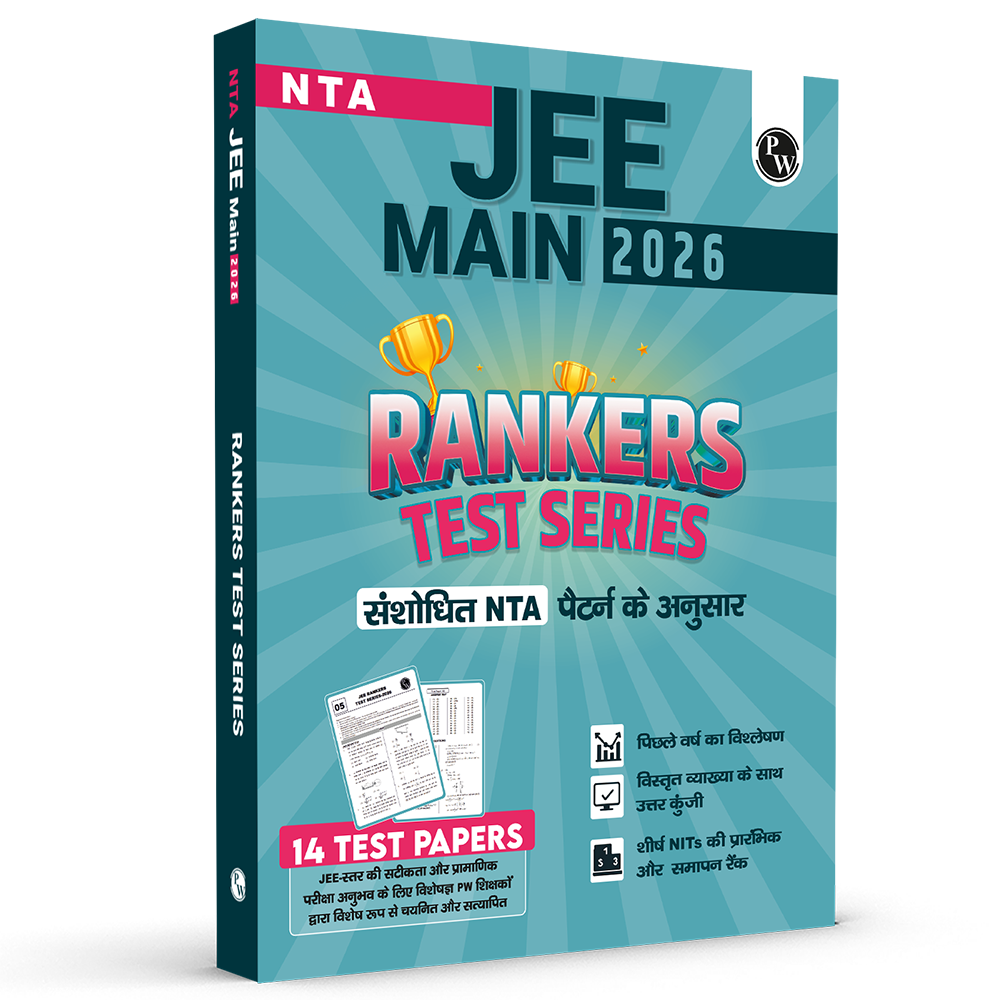
Consistency always beats intensity when preparing for engineering entrance exams. Forcing yourself to write a paper every single day can lead to severe exhaustion and declining performance scores. Resources such as the JEE Main Ranker Test Series support a more balanced preparation approach by helping students maintain regular practice, track progress systematically, and improve exam temperament without creating unnecessary burnout.
|
Phase of Preparation |
Recommended Papers Per Week |
Primary Objective |
|
Early Mid-Term Phase |
1 Mock Paper |
Focus on coverage, accuracy, and building basic time management. |
|
Peak Final Phase |
2 to 3 Mock Papers |
Focus on high speed, minimizing guesswork, and handling pressure. |
-
The Rule of Seven Days: In a standard week, do not attempt more than two full-length papers during your routine mid-term schedule.
-
Balance Revision: Ensure you allocate separate days for regular self-study, flashcard reviews, and clearing lingering doubts.
-
Simulate Actual Slots: Always attempt your papers during the official shifting hours (9:00 AM to 12:00 PM or 3:00 PM to 6:00 PM) to align your biological clock.
How to Improve Your JEE Test Series Performance?
Writing a paper is only half the battle won; the actual growth happens during the evaluation phase. Simply looking at your final aggregate score and moving on to the next chapter is a futile exercise. Resources such as the JEE Advanced Ranker Test Series 2026 support this process through structured practice and performance tracking.
-
Track the Three Categories: Divide your incorrect responses into conceptual blind spots, calculation blunders, and time management errors.
-
Leverage Analytics: Use comprehensive score reports to check your subject-wise standing and accuracy percentages.
-
Review Detailed Explanations: Dive deep into the official answer keys to explore alternative, faster solution methods.
-
Maintain an Error Notebook: Write down every single mistake, unique formula discovery, or tricky question to create a personalized revision guide.
How JEE Test Series Helps in the Final Preparation Phase?
A comprehensive testing schedule changes your perspective from a casual learner to a calculated test-taker. It helps remove the elements of surprise and anxiety that ruin a student's prospects on exam day.
-
Enhanced Active Recall: Forcing your brain to extract information under tight time constraints improves long-term knowledge retention far better than passive reading.
-
Minimizing Guesswork: Regular practice trains your mind to skip highly uncertain questions, saving you from heavy negative marking.
-
Stress Control: Repeated exposure to the exam format lowers adrenaline spikes and neutralizes performance anxiety.
-
Sharper Time Management: You learn exactly how many minutes to dedicate to multiple-choice questions versus integer-based problems.
To achieve a balanced preparation, you can evaluate your progress by reviewing the structured book covers and features which showcase various targeted paper options for different exam tiers.
Common Mistakes Students Make with JEE Test Series
Recognizing what to avoid is just as valuable as knowing what actions to take. Many aspirants waste excellent resource materials by incorporating them incorrectly into their daily schedules.
-
Postponing Papers Continuously: Waiting to finish 100% of the syllabus perfectly before writing a mock paper is a trap that leads to zero practice.
-
Ignoring the Analysis Process: Spending three hours writing a paper, but failing to spend even thirty minutes reviewing the mistakes.
-
Altering Strategies Excessively: Changing your entire subject order or dropping your baseline methods right before the final week.
-
Losing Motivation Over Mock Scores: Forgetting that mock exams are diagnostic tools designed to reveal weaknesses, not definitive final report cards.
Read More: How to Analyse JEE Advanced Test Series to Improve Score
JEE Test Series FAQs
Q1: Can I rely purely on a JEE Mains mock test during my final revision months?
Ans: While a JEE Mains mock test is ideal for speed and accuracy parameters, you must integrate comprehensive full-length papers to build overall endurance for handling complex, mixed-subject problems smoothly.
Q2: How does a specialized JEE advanced test series differ from standard practice tools?
Ans: A JEE advanced test series specifically focuses on complex multi-correct options, matrix matchings, and deeper conceptual integration across sub-topics to test analytical depth rather than straightforward formula application.
Q3: Is it necessary to solve a JEE Mains test series if my primary focus is Advanced?
Ans: Yes, attempting a JEE Mains test series is crucial because it helps secure your fundamental speed, clears basic cutoff confidence, and ensures your core accuracy levels are immaculate before tackling tougher tiers.
Q4: Should I pick chapterwise tests or full mock exams during the mid-term phase?
Ans: You should use a JEE mock test chapter wise to fix weak individual chapters first. Once your topic accuracy hits a consistent level, transition immediately into full papers to practice mixed-profile questions.
Q5: What should I do if my mock scores stall or decrease over consecutive weeks?
Ans: Do not panic. Take a step back, pause new tests for three days, and carefully analyze your error notebook. Focus on fixing repeating conceptual errors before resume testing.