How Activity Kits Help Kids Stay Active in Winter Vacation
Activity kits are comprehensive educational tools designed to engage children in hands-on learning through interactive projects and experiments. These Activity kits contain all necessary materials and detailed instructions to explore subjects like physics, chemistry, and biology safely at home. By turning complex theories into fun activities, they spark curiosity and help students understand scientific concepts effectively.
Why Activity Kits for Kids are Your Best Winter Companion
Winter break often means more time spent indoors, but it doesn't have to mean more screen time for your little ones. We believe activity kits offer a vital part of a productive holiday by transforming your living room into a mini-laboratory. These kits encourage children to stay physically and mentally active through "learning by doing," which is a far more effective approach than just reading textbooks. You’ll find that when students engage with activity kits, they retain 75% more information compared to passive learning.
We’ve designed these resources to bridge the gap between classroom theory and real-world application. Instead of just hearing about weather patterns, you can help your child create a "Snowstorm in a Jar" or a "DIY Snow in a Bag" using simple household items and kit materials. It’s not just about passing time; it's about building a foundation for future success. We don't want kids to just sit around when they could be building something incredible.
Exploring Science Experiment Kits During the Holidays
Winter is the perfect season to dive into science experiment kits that focus on seasonal phenomena. You can use these kits to learn about condensation and frost by using metal cans, ice cubes, and salt. We also suggest the "Ice Cube Magic Trick" where kids use yarn and salt to lift ice, teaching them how salt lowers the freezing point. These activities aren't just fun—they’re educational milestones that keep the brain sharp while school is out.
For students who enjoy a bit of spectacle, our science experiment kits include classic activities like making an erupting volcano with baking soda and vinegar. These experiments are perfect for keeping 6-year-olds and older students engaged because they provide instant, visual results. You don't need a professional lab to see chemistry in action; you just need the right tools and a spark of curiosity. If you've got a curious mind in the house, these tools are game-changers.
The Benefits of STEM Project Kits for Students
If you want to prepare your child for a future in technology or engineering, stem project kits are an excellent choice. These kits integrate science, technology, engineering, and mathematics into cohesive projects that boost problem-solving skills. Whether it’s building a solar-powered windmill or a working LED circuit, students learn to troubleshoot and think critically. We see so many students struggle with abstract concepts because they haven't touched the actual components.
-
Hands-On Learning: Children move beyond abstract diagrams to touch and build real models.
-
Independence: Clear, colorful manuals allow kids to conduct experiments with minimal supervision, building their confidence.
-
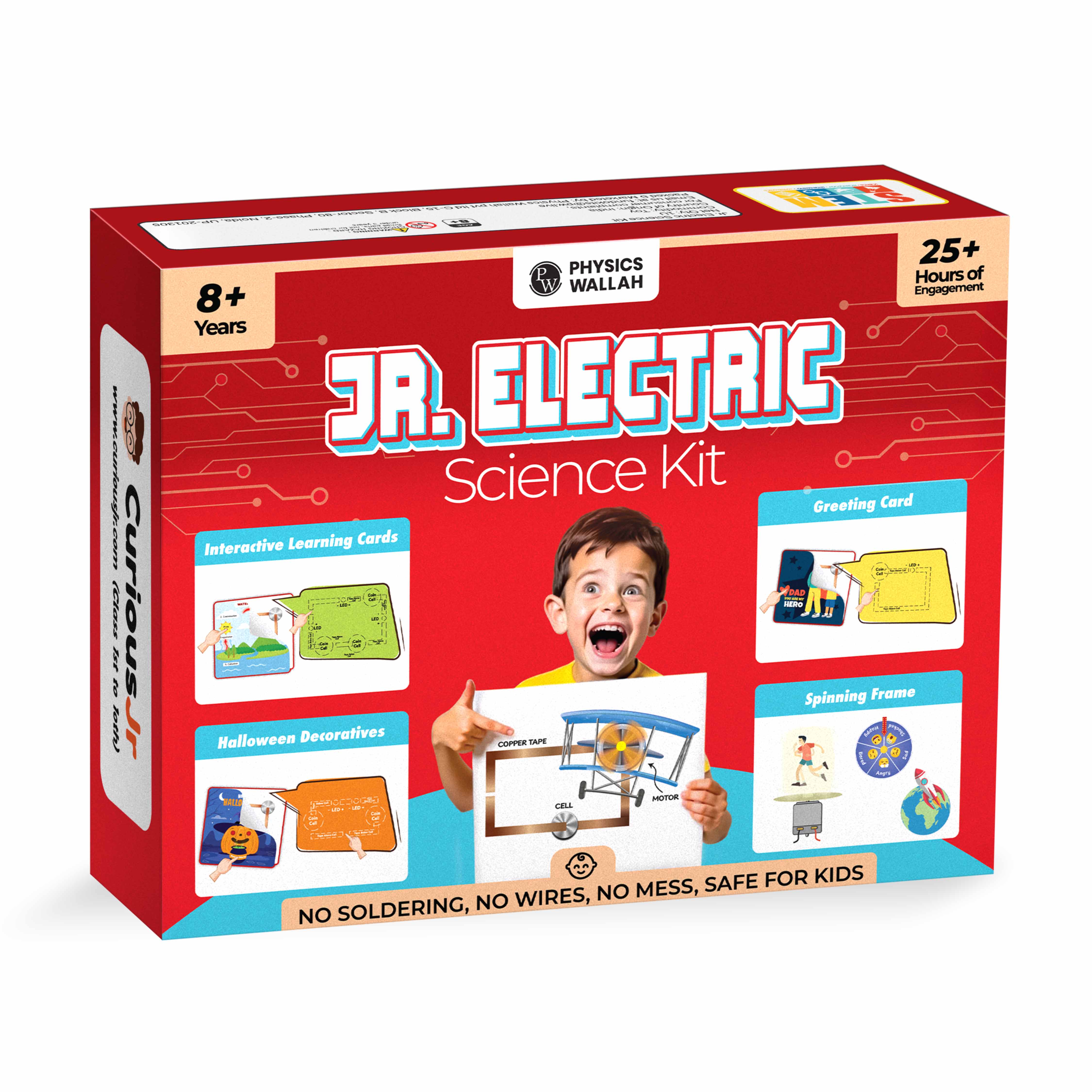
Motor Skills: Precise actions like connecting copper tape or measuring liquids help improve hand-eye coordination.
-
Curriculum Alignment: Many of our kits are aligned with CBSE and NCERT topics, making them a great resource for school projects.
Fun with Activity Kits for 3 Year Olds and Above
Younger learners, such as 3-year-olds, need simple yet captivating tasks. We offer specialized activity kits for 3 year olds that use bright colors and easy-to-follow steps. They can try the "Floating Fish Experiment" using a dry-erase marker and water, or explore sound by creating a "Milk Bottle Xylophone." These simple tasks ensure that even the youngest students stay active and excited about learning during the winter months. It’s amazing how a simple bottle can teach a child about frequency and pitch.
Advanced Activity Kits for Children in Middle School
Older students can tackle more complex challenges with our activity kits for students in classes 6 to 10. These include more than 50 experiments covering electronics, biology, and chemistry. You can build a rain alarm, create a touch sensor, or even test food for Vitamin C and starch. These projects are not only great for winter break but also serve as excellent preparation for school science fairs and practical exams. At the end of the day, these kits make tough subjects like physics and chemistry feel like a fun game.
Check Out: PW Science Kit for School Projects Kits
Creating a Science Corner with Activity Kits
We recommend setting up a dedicated "Science Corner" in your home to get the most out of your activity kits for kids. Lay down some newspaper to catch spills and ensure the area is well-lit. Doing experiments together is a fantastic way for parents and kids to bond while exploring how the world works. It keeps the holiday spirit alive through shared discovery and meaningful conversation. You shouldn't worry about the mess; focus on the "Aha!" moment your child will have.
-
Portable Fun: Most kits are lightweight, making them perfect for travel if you're visiting family during the break.
-
No Screens Needed: These kits provide hours of engagement without the need for gadgets or video games.
-
Safe Materials: All components are tested, non-toxic, and child-safe for your peace of mind.
Why Hands-on Experience Trumps Digital Gaming
When we look at how activity kits function, we see they provide tactile feedback that a screen simply can't match. When a student builds a bridge or mixes a solution, they're using multiple senses. This sensory input is what cements memory. You can't learn the weight of a magnet or the resistance of a wire by tapping a glass screen. By using activity kits for children, you're giving them the gift of physical interaction with the laws of nature.
Furthermore, activity kits for students foster a sense of accomplishment. Finishing a level in a video game is fleeting. However, holding a working machine you built with your own two hands creates a lasting sense of pride. This winter, we want to help you shift that focus from consumption to creation. It’s about building a mindset that sees problems as puzzles waiting to be solved.
Making Science Social with Activity Kits
One of the best ways to use activity kits for kids is to invite friends or cousins over for a "Science Party." You can set up different stations for different science experiment kits. One group can work on the "Rainbow in a Glass" using different sugar densities, while another explores magnetism. This social aspect teaches teamwork and communication. We've found that when kids explain an experiment to their peers, their own understanding of the topic deepens significantly.
For the older crowd, stem project kits can be used to host mini-competitions. Who can build the sturdiest structure? Whose solar car travels the furthest? These friendly challenges keep the energy high and the boredom away. Winter break is long, and keeping that momentum going is what helps students return to school with a fresh, motivated perspective. We don't want them to feel "rusty" when January rolls around.
Read More: New Science Project Ideas for Class 6 to 10
How Activity Kits Help Kids Stay Active in Winter Vacation FAQs
1. What is included in a PW science kit?
A PW science kit includes materials like vials, wires, magnets, and a detailed instruction manual for various experiments.
2. Are activity kits safe for children to use at home?
Yes, our kits use non-toxic, child-safe materials, though we recommend adult supervision for certain experiments involving small parts.
3. Which age groups can use these activity kits?
We offer kits for various ages, ranging from 3-year-olds to advanced students in Class 10 (ages 8-15).
4. Do these kits follow the school syllabus?
Yes, our experiment kits are designed to align with CBSE and NCERT topics to support school learning.
5. Can these kits be used for school projects?
Absolutely, they are perfect for creating models and presentations for school science fairs and practical exams.