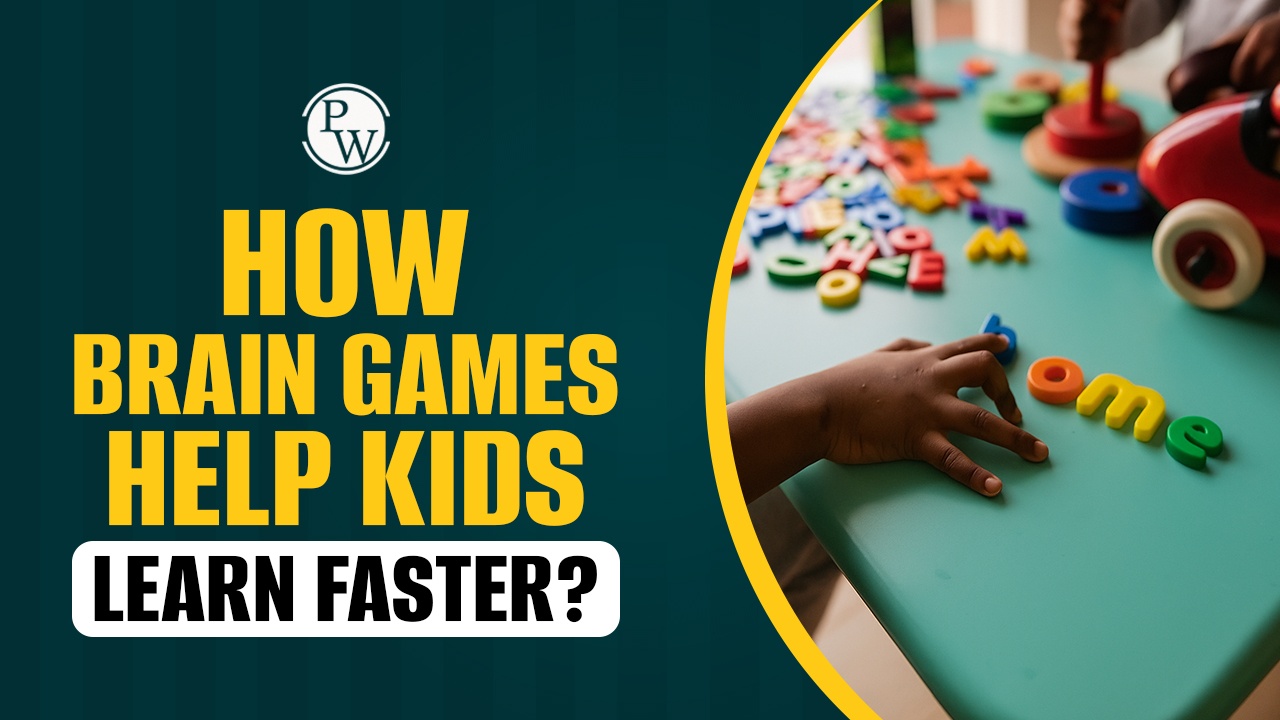
How Brain Games Help Kids Learn Faster?
How brain games help kids learn faster is a topic gaining attention among parents, teachers, and child development experts. Brain Games are also known to make kids learn more quickly, as they enhance their memory, concentration and problem-solving ability. In a world where focus and thinking skills are key to success, brain games offer a fun and effective way to support children’s learning.
Instead of traditional rote learning, brain games encourage active thinking, creativity, and faster understanding. They help young brains to sharpen and gain confidence both at the classroom and beyond. It may be a puzzle, memory test or a simple logical exercise, either way each game can contribute to improving better learning habits.
Students, parents, and teachers can explore how brain games help kids learn faster, along with their types, age-wise benefits, and easy ways to use them, below.
Check Out: PW Kids' Books
What are Brain Games For Kids?
Brain games are a type of organized activity aimed at activating the mind such as memory, attention, logic, and problem-solving. These include:
-
Logical puzzles (e.g., Sudoku, pattern recognition)
-
Learning problems (e.g., matching cards, recall task)
-
Math games (e.g. sequencing numbers, arithmetic riddles)
-
Visual activities (e.g. mazes, spot-the-difference, etc.)
-
Brain teasers (e.g. lateral thinking)
Brain games are entertaining games that benefit kids in enhancing essential thinking skills such as memory, focus, logic, and problem-solving. The purpose of these games is to offer cognitive development through play, and can make learning fun and efficient.
Check Out: Kids Activity Books
How Brain Games Help Kids Learn Faster?
Brain games are entertaining and learning processes that enhance crucial brain functions such as memory, concentration, and problem solving. Through these games, children learn to remember and utilize information better to facilitate quicker learning.
1. Strengthening Thinking Skills
Brain games boost core skills that help kids learn better:
-
Memory games improve how kids remember facts for reading and math.
-
Focus games like puzzles train attention and reduce distractions.
-
Speed-based games help kids think and respond more quickly.
-
Strategy games build planning, decision-making, and flexible thinking.
2. Helping with School Subjects
Brain games support school learning in an enjoyable way:
-
Math games build logic and number sense.
-
Language games grow vocabulary and grammar skills.
-
Science-based games improve observation and reasoning.
3. Encouraging Hands-On Learning
Brain games keep kids actively involved. They promote curiosity, problem-solving, and learning through trial and error. Because they’re fun, kids stay motivated and learn without feeling tired or bored.
4. Building Social and Emotional Skills
When played in groups, brain activity games teach teamwork, patience, and communication. They also help build confidence through small wins and achievements.
5. Age-Appropriate Stimulation
Brain games can be adjusted to match different developmental stages:
|
Age Group |
Games |
Benefits |
|
Toddlers (1–3) |
Sorting, matching |
Memory, attention, coordination |
|
Preschoolers (ages 3–5) |
Puzzles, rhyming, narration |
Language, logic, sequencing |
|
School-age (ages 6 and up) |
Math games, coding, strategy |
Attention, problem-solving, planning |
Check Out: Science Activity Book For Kids
List of 6 Brain Games to Help Kids Learn Faster
Brain games are learning materials as well as entertaining that help in the development of the brain and help kids learn within a shorter duration. The following six brain games can stimulate more and quicker learning among children.
1. Tangram Puzzles
-
Skill Focus: Creative problem solving, spatial reasoning.
-
Recommended Age: 5–8 years
-
How It Helps: Geometric shapes are used to create pictures or patterns by the children. This enhances visual-spatial skills, early learning of math and creative thinking.
2. I Spy With My Eye
-
Skill Focus: Observation, deductive reasoning
-
Recommended Age: 3–7 years
-
How It Helps: Kids identify objects based on clues. The game helps develop attention to detail and verbal reasoning, which is why it is appropriate to young learners.
3. Memory Matching Cards
-
Skill Focus: Short-term and long-term memory
-
Recommended Age: 4–10 years
-
How It Helps: Children flip cards to find matching pairs. This enhances memory, concentration, and improved retention of visual and verbal information.
4. Sudoku (Junior Versions)
-
Skill Focus: Logical reasoning, number sense
-
Recommended Age: 7+ years
-
How It Helps: Children solve puzzles by spotting numbers or picture patterns. This develops logic, problem-solving skills, and strategic thinking.
5. One Word Story
-
Skill Focus: Creativity, language development, teamwork
-
Recommended Age: 6+ years
-
How It Helps: Players are required to make a story in turns of adding one word. This enhances vocabulary and imagination and collaborative communicative skills.
6. Jigsaw Puzzles
-
Skill Focus: Visual perception, patience, coordination
-
Recommended Age: 3+ years
-
How It Helps: Completing puzzles teaches children to recognize patterns, solve problems step-by-step, and strengthen hand-eye coordination and focus.
Check Out: Kids Reading Books
10 Benefits of Brain Games For Kids
Brain games are not something just to have fun; they are effective learning tools that help to train the brain, emotional growth, and school achievement. According to studies that have been conducted in the field of neuroscience and child psychology, ten key benefits of brain development games in children are as follows:
1. Improve Working Memory
Games such as memory matching and recall activities assist children in storing and retrieving information in their memories. This supports skills like reading comprehension and mental math.
2. Increase Attention Span
Puzzles and logic-based games train children to focus longer and avoid distractions. This helps improve concentration in the classroom.
3. Strengthen Executive Function
Strategy games such as chess help kids plan ahead, control impulses, and think flexibly, skills needed for both learning and social situations.
4. Develop Problem-Solving Skills
Games that require analysis or finding patterns teach children to think critically and solve problems step by step.
5. Boost Language Development
Word puzzles, rhyming games, and storytelling help kids grow their vocabulary, improve grammar, and build verbal reasoning skills.
6. Support Math and Logic Skills
Math riddles and number games strengthen logic, counting, and reasoning. These skills make learning math easier and more fun.
7. Encourage Creativity
Creative games like storytelling or visual puzzles help kids think in new ways, build imagination, and express themselves better.
8. Build Social and Emotional Skills
When played with others, brain games teach teamwork, communication, patience, and empathy, important life and classroom skills.
9. Increase Processing Speed
Timed games and fast-paced puzzles train kids to respond quickly and accurately, helping them in timed school tasks and real-life situations.
10. Make Learning Fun and Active
Brain games turn learning into a fun and engaging experience. When kids enjoy learning, they stay motivated and remember more.
Read More: World Map for Kids: Fun and Easy Way to Learn Geography
How Brain Games Help Kids Learn Faster FAQs
What are brain training game advantages?
Brain training games enhance memory, attention, problem solving, and critical thinking abilities. They assist children to learn more quickly and acquire good cognitive skills required at school and in everyday life.
What game will best develop the brains of kids?
Brain development is best with games such as puzzles, matching memory and strategy games. These activities improve memory, concentration, and rational thinking among children.
Do games help children learn?
Yes, brain games are fun and interactive to learn. They contribute to such skills as language, math and reasoning, allowing kids to better understand and remember information.
Does Brain gym work with every kid?
Brain Gym has the potential to help a large number of children to perform better coordination and concentration, although the effectiveness of this technique is diverse in connection with the needs and learning styles of each person.
What is the benefit of brain games among students?
Student brain games enhance memory, attention and problem solving skills, which enable students to learn the lesson better, and pass exams and classroom activities.