Science Experiments for Middle School Students

Science Experiments for Middle School Students:- Science is a subject where practical learning helps a lot. It is not just about reading and memorising facts. Science is about real life and understanding how things work around us. When students try Science experiments kits on their own, they understand the concepts in a better way. It also makes learning fun and exciting because they can see the results right in front of them.
For students in classes 6 to 10, doing simple experiments is very helpful. These activities will make their basics strong and make them feel confident while studying science. Many times, students also get projects and practical work in school, especially in higher classes like Class 9 and Class 10. They may need to do practical exams, make working models, charts or small science projects.
In such cases, having easy and interesting and good science fair projects are very useful. These experiments can be done at home or in school, and they do not need very difficult materials. With these simple hands-on activities, students can enjoy learning and also do well in their science projects and exams. Get some STEM activities for students from the article here.
Science Experiments for School Students
The experiments below are perfect for students who want to build curiosity, explore ideas, and prepare for small school projects or even simple science fair projects. These activities are safe and require basic materials that we usually find at home or in class. You will also learn small ideas about physics, chemistry, and everyday science in a very easy way. Here are 10 STEM activities for students:-
1. Floating Orange
Steps:
-
Take a bowl or a big glass and fill it with clean water. Make sure there is enough water for an orange to float.
-
Place one orange with its peel in the water and gently drop it. Let it stay still for a few seconds.
-
Now peel another orange fully. Remove all the skin and keep only the fruit. Put the peeled orange in the water in the same way.
Result: The orange with the peel will float on the water, but the orange without the peel will sink. The peel has tiny air pockets inside it, so it keeps the orange light and helps it float. When we remove the peel, the fruit becomes heavier and sinks. This simple activity will help students learn about density and buoyancy in a fun and easy way, just like many other simple science fair projects done in school.
2. Balloon Baking Soda Rocket
Steps:
-
Take one small empty bottle and fill it halfway with white vinegar.
-
Put one spoon of baking soda inside a balloon using a funnel or a rolled paper cone.
-
Carefully fix the balloon mouth onto the bottle opening without spilling the baking soda inside yet.
-
Lift the balloon gently so the baking soda falls into the vinegar.
Result: In a few seconds, the balloon will start filling up on its own. This happens because vinegar and baking soda react to make carbon dioxide gas. The gas has no place to go, so it fills the balloon. This exciting junior high science experiment will show students how gas forms during a chemical reaction.
3. Invisible Ink Lemon Message
Steps:
-
Squeeze half a lemon in a small bowl and mix a spoon of water in it.
-
Dip a cotton bud (or earbud) in the lemon juice and write a message on white paper. Let it dry fully.
-
Once it dries, hold the paper near a warm bulb, candle, or iron (ask an adult for safety).
Result: The hidden message will slowly appear in brown colour. Lemon juice burns slightly when heated, so the writing becomes visible. Students will learn how oxidation works in a very easy and safe way. It is a great idea for simple science fair projects for beginners.
4. Walking Water
Steps:
-
Take three glasses and place them in a straight line.
-
Fill the first and third glasses with coloured water while keeping the middle glass empty.
-
Roll tissue paper strips and place one strip between the first and second glass and another between the second and third glass. Wait for 1–2 hours.
Result: The coloured water will slowly move through the tissue paper and drop into the empty glass, creating mixed colours. This shows how capillary action works; water will move up tiny spaces on its own. This is a fun STEM activity for students and helps them see how plants take water from the soil.
5. Pepper and Soap Trick
Steps:
-
Pour some water into a plate and sprinkle black pepper evenly over the surface.
-
Dip one finger in soap or liquid handwash.
-
Slowly touch the surface of the water with your soapy finger.
Result: The pepper will suddenly move away from your finger and spread to the sides. Soap breaks the surface tension of water, so everything on top spreads out. This easy activity will help children understand surface tension in a very simple way. It works well in science experiments for middle school science classes.
Check Out: STEM Kits
6. Vinegar and Egg Shell Experiment
Steps:
-
Place a raw egg gently inside a glass.
-
Pour white vinegar over the egg until it is fully covered.
-
Leave it untouched for one to two days, checking slowly in between.
Result: After one or two days, the egg shell will dissolve and the egg will feel soft like rubber. The vinegar will slowly react with the calcium in the eggshell and remove it. Students will see how acids react with calcium. This experiment is simple and fun, and also teaches real chemistry in a light way.
7. Paper Towel Plant Growth
Steps:
-
Take a clear glass jar and place a few rolled paper towels inside.
-
Put a few dried beans or green gram seeds between the towel and the jar wall.
-
Add a little water daily and keep the jar near sunlight.
Result: The seeds will slowly sprout, and small roots and leaves will grow. This shows how plants grow with water, air, and sunlight. Students will enjoy watching a plant grow day by day. It works as a great school science project that explains germination in a very simple form.
8. Magnet Fishing Game
Steps:
-
Fill a bowl with plastic paper clips or small pins.
-
Tie a small magnet to a string and make a “magnet fishing rod.”
-
Move the magnet over the pins and lift it slowly.
Result: The magnet will pick up the paper clips and pins easily. Students can try using different objects and see which materials stick to magnets. This experiment teaches magnetism and is fun like a small game. It is a great idea for junior high science experiments involving physics.
9. Homemade Lava Lamp
Steps:
-
Fill half a bottle with vegetable oil and add coloured water on top.
-
Add a spoon of salt or half an effervescent tablet (like Eno).
-
Watch the bubbles move like colourful lava.
Result: The colourful bubbles will start rising and falling, looking like a small lava lamp. Oil and water do not mix, and the bubbles rise as gas forms. This experiment is bright, fun, and very exciting for students of all ages.
10. Static Electricity Balloon
Steps:
-
Blow a balloon and tie it.
-
Rub the balloon on your dry hair or a wool cloth for a few seconds.
-
Bring it close to tiny bits of paper.
Result: The paper bits will jump up and stick to the balloon. Rubbing the balloon makes it collect an electric charge, and the paper gets attracted to it. This is a simple way to show static electricity using daily objects at home or school.
11. Dancing Raisins
Steps:
-
Take a glass and fill it with soda or any fizzy drink.
-
Drop 4–5 raisins into the glass.
-
Wait and watch for a few minutes.
Result: The raisins will start moving up and down in the glass, like they are dancing. This happens because gas bubbles stick to the raisins and carry them up. When the bubbles pop, the raisins drop again. This helps students understand gas bubbles and density in a fun way.
12. Magic Pepper and Soap
Steps:
-
Take a bowl of water and sprinkle black pepper on top.
-
Dip your finger into the water, nothing happens.
-
Now, put a drop of liquid soap on your finger and touch the water again.
Result: The pepper will quickly move away from your finger and spread to the sides. This shows how soap breaks surface tension and pushes the pepper away. It also teaches why soap helps clean things easily.
Check Out: Activity Kits
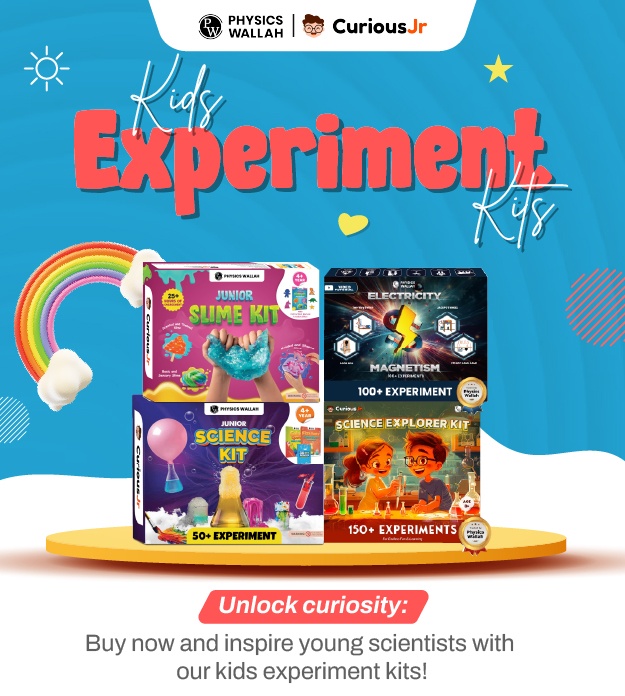
Why Choose PW Science Experiment Kits?
Science will become easy and interesting when children get a chance to see and try things themselves instead of only reading about books. PW Science Experiment Kits help students learn in a very simple and fun way at home. Kids can perform real experiments, understand how things work, and enjoy science instead of feeling scared or bored:
-
The kits follow the school syllabus, so what children practise at home will support their classroom learning.
-
All the required materials come in the box, which means students can start experimenting right away without searching for extra items.
-
When students perform experiments themselves, they understand the topic more clearly and can remember it for a longer time.
-
These kits can also help children create neat and interesting projects for school science fairs and class activities.
-
Every kit includes safe tools and a simple guide, so students can follow each step easily, and parents do not need to worry.
|
Science KIT |
Links |
|
PW Science Kit for School |
|
|
Junior Science Kit for Girls and Boys, Science Kit for Kids for Birthday Gifts, 50+ Experiments of Color, Craft & Science |
|
|
Curious Jr. Electricity & Magnetism Science Project Kit for Boys & Girls |
|
|
Slime Kit for Girls and Boys |
Precautions to Be Taken
When we do science experiments, safety is very important. It helps us learn properly and also keeps us safe from any harm.
-
Always read the experiment steps carefully before starting.
-
Wear safety gear like gloves or goggles if needed.
-
Do not touch chemicals or lab tools without permission or guidance.
-
Keep your workspace clean and organised to avoid accidents.
-
Handle glass items and sharp tools very carefully.
-
Never taste or smell any chemical or unknown substance during experiments.
-
Wash your hands properly after finishing the experiment.
-
Follow your teacher’s or guardian’s instructions at all times.
Read More: 15 New Science Project Ideas for Class 6 to 10
Science Experiments for Middle School FAQs
1. Are these experiments safe for students in classes 6 to 10?
Yes, most school-level experiments are safe when done with guidance. Students should always follow safety rules and take help from a teacher or parent.
2. Do I need special lab equipment for these experiments?
Not always. Many simple school science projects can be done using basic things at home like water, bottles, vinegar, balloons, paper, and magnets.
3. Can I use these experiments for a science fair or school project?
Yes, many middle-school experiments can become good science fair projects. You can add charts, results, and explanations to make them more creative.
4. What should I do if I do not understand an experiment?
Do not worry. Read the steps again slowly, watch a video if needed, or ask your teacher or parent for help.
5. Can I do these activities alone?
You can do many STEM activities alone, but it is better to have adult supervision, especially when using heat, scissors, or chemicals.