Using Kids Books & Kits to Build Good Habits: Reading, Writing, Curiosity
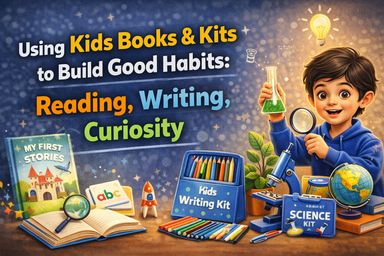
Kids books serve as the fundamental building blocks for a child's cognitive development and emotional intelligence during their early learning years. These resources go beyond simple storytelling by encouraging literacy, sparking creative imagination, and fostering lifelong curiosity. Parents can help their young learners develop important habits by combining high-quality reading resources with interactive learning resource.
Check out: PW Activity Kits
Why Choosing the Right Kids Books and Kits Matters for Habit Building
A child's future success depends on the habits they build. When you give kids books to read at a young age, you're not just teaching them letters; you're also teaching them how to be disciplined. A lot of parents look for kids' books online to obtain organised material that meets current educational standards. This move to digital helps find specialised themes that fit a child's individual interests, which makes learning feel more like fun than work.
The environment plays a massive role in this habit-forming journey. A dedicated kids bookshelf creates a visual reminder of the world of knowledge waiting for them. It encourages the "pick up and read" habit. Kids feel like they own their education when they see their favourite stories nicely organised. Combining these physical books with experiment kits gives you a multi-sensory experience that helps you remember what you've learnt by doing.
Check Out: Kids' Books
Cultivating Curiosity Through Interactive Experiment Kits
Curiosity is the engine of learning. While kids books provide the necessary vocabulary, activity kits provide the "why" and "how" behind the facts.
Engaging with Science and Nature
Experiment kits allow children to step into the shoes of a scientist. You don't just read about chemical reactions; you witness them. This active participation ensures that the information sticks. When a child uses a kit to build a simple circuit or observe plant growth, they're applying the logic found in their favorite educational texts. It's about turning passive readers into active thinkers who aren't afraid to ask difficult questions.
Developing Skills for Solving Problems
Every experiment is like a puzzle. When a child tries a kit and it doesn't work, they learn how to be strong. Like they would look back at a chapter in a book, they go back to their instructions to figure out what they did incorrectly. This practice of repeating is very important for brain growth. It teaches students that failing is merely a step towards finding a solution, which will help them in their future studies.future academic pursuits.
Check out: PW Experiment Kits
The Evolution of Reading: From Kids Books from the 2000s to Modern Kits
Looking back at kids books from the 2000s, we see a significant shift in how information is delivered. While those classics laid the groundwork, today's integrated kits offer a more comprehensive approach.
Transitioning to Hands-On Learning
Modern kits bridge the gap between abstract theories and physical reality. In the past, a child might read about gravity and simply imagine it. Now, they can use a gravity-based experiment kit to see the force in action. This transition from purely text-based learning to experiential learning helps in better retention. It makes the transition from a kids bookshelf to a laboratory table seamless and exciting for the young mind.
Integrating Technology and Tradition
We live in a hybrid world. Using kids books online allows for quick access to a vast library of knowledge. However, the physical act of using an experiment kit provides the tactile stimulation that screens cannot offer. By balancing these two mediums, we ensure the child develops both digital literacy and manual dexterity. This holistic approach is what we strive for at the PW Store, ensuring every kit complements the reading journey.
Steps to Build a Daily Reading and Experimenting Routine
-
Set a Consistent Time: Choose a specific hour for "Discovery Time."
-
Organize the Space: Keep the kids bookshelf and kits in a reachable area.
-
Mix and Match: Read a story, then find an experiment that relates to its theme.
-
Discuss the Results: Ask your child what they learned from both the book and the kit.
-
Reward Effort: Celebrate the completion of an experiment to build positive associations.
Improving Writing Skills by Watching
Reading and writing are two sides of the same coin. When children engage with kids books, they absorb sentence structures and storytelling rhythms. By using experiment kits, they gain something to write about. Encouraging them to keep a "Scientist's Journal" where they record their observations from the kits helps in developing technical writing skills. They learn to describe processes clearly and concisely, which is a vital part of their overall literacy development.
The Role of Parent Participation
You are your child's first teacher. When you sit down with them to explore kids books to read, you're modeling the behavior you want them to adopt. Your enthusiasm for a science experiment or a new story is contagious. We've seen that children whose parents actively participate in their "kit time" show a 40% higher engagement rate. It’s not about having all the answers; it’s about exploring the questions together and showing them how to find information.
Check Out: Reading Books
Kids Books & Kits to Build Good Habits FAQs
-
How do I choose the best kids books for my child?
-
Focus on age-appropriate themes that match your child's current interests and reading level. Look for books that offer a mix of vibrant illustrations and engaging narratives to keep them interested.
-
Can experiment kits replace traditional kids books?
-
No, they should complement each other. Books provide the theoretical foundation and vocabulary, while kits offer the practical application that reinforces what they've read in their favorite stories.
-
Where should I place a kids bookshelf for better habits?
-
Keep it in a well-lit, quiet area that is easily accessible to the child. When books are within their reach, they are much more likely to pick them up spontaneously.
-
Are kids books online as effective as physical books?
-
Both have benefits. Online books offer variety and portability, while physical books help with focus and reduce screen time. Using a combination of both is usually the best strategy.
-
What should kids read?
-
It is a great way to build imagination and increase knowledge.