How Many PYQs Should You Solve Daily for NEET Chemistry?

Aspiring medical students often find themselves buried under a mountain of textbooks, wondering if they are doing enough to secure a top rank. While reading theory is vital, the real challenge lies in applying that knowledge under pressure. Many candidates struggle with time management or fail to recognize which chapters carry the most weight. This is where focusing on NEET chemistry PYQ becomes a game-changer. By solving previous year questions, you bridge the gap between knowing a formula and using it correctly.
Check Out: NEET Books
Why NEET Chemistry PYQ Are Important
Practicing with a NEET PYQ strategy is not just about testing your knowledge; it is about understanding the mindset of the paper setters. Chemistry in NEET is often considered a scoring subject if approached systematically.
Important Chapters in NEET
Not all chapters are created equal. By going through a NEET chemistry previous year question paper, you will notice that certain topics like Chemical Bonding, Thermodynamics, and Organic Name Reactions appear every single year. Solving these daily helps you prioritize your revision.
NEET Chemistry Question Patterns
The NTA often repeats the logic behind questions, even if the values change. Regular practice helps you identify these patterns. For instance, questions on coordination compounds or p-block elements often follow a specific trend that becomes obvious once you have solved at least ten years of papers.
Daily NEET Chemistry PYQ Practice Plan
The number of questions you should tackle depends on your current stage of preparation. However, a balanced approach is key to avoiding burnout while ensuring progress.
For Beginners (Phase 1)
If you are a beginner, focus on 15-20 questions a day. At this point accuracy is more crucial than speed. Spend some time understanding why one answer is the right answer and the others are erroneous. You can go for a dedicated PYQ book as they are mostly providing step-by-step explanations.
For Mid-Level Learners (Phase 2)
Finish 50% of syllabus and then raise your objective to 30 questions. Set your timer. Try to complete 30 questions in 35 to 40 minutes. This builds up the stamina required for the three hour exam environment.
For Advanced Revision (Phase 3)
In the final months, you should aim for 45 to 50 questions daily. This mimics the actual NEET Chemistry section. At this point, you should be using a NEET PYQ book chemistry that categorises questions by year to give you a feel for the full paper.
Section Wise NEET Chemistry PYQ Strategy
Chemistry is divided into three distinct parts, and your NEET chemistry PYQ practice should reflect this diversity.
Physical Chemistry
This section is calculation-heavy. When solving these, do not just look at the answer. Work out the full calculation to improve your mental math.
-
Target: 10-12 questions daily.
-
Focus: Formula application and unit conversions.
Organic Chemistry
This is all about mechanisms and name reactions. Repeatedly solving NEET PYQ ensures you remember reagents and catalysts.
-
Target: 15 questions daily.
-
Focus: Reaction intermediates and acidity/basicity orders.
Inorganic Chemistry
This is largely memory-based. Solving these questions daily acts as a form of active recall.
-
Target: 15 questions daily.
-
Focus: Exceptional cases in the periodic table and chemical bonding shapes.
Right Books for NEET Chemistry PYQ Practice
Having the right resources makes a significant difference in your preparation efficiency. Relying on scattered PDFs can be distracting and often leads to practicing outdated patterns.
How to Choose the Right Chemistry PYQ NEET Book
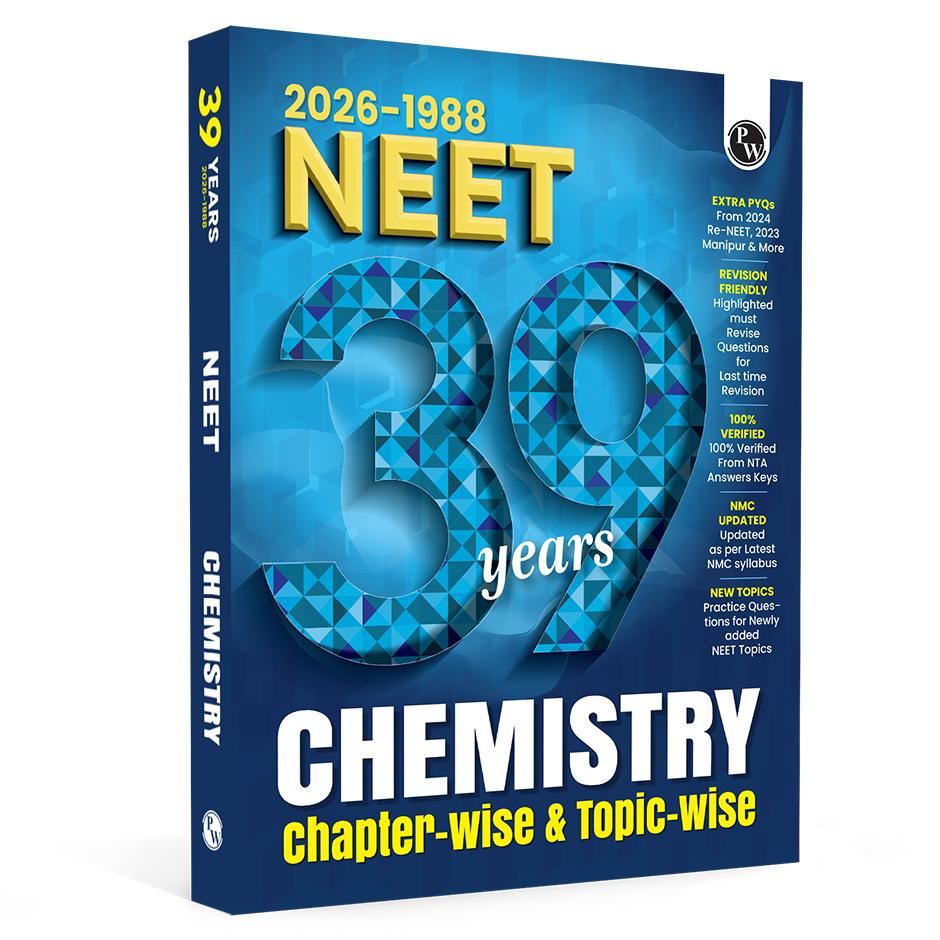
A good resource, such as the 39 Years NEET PYQ Chemistry book, provides a massive question bank. Using a physical book helps reduce screen fatigue and allows you to highlight difficult questions for later review.
Benefits of Topic-Wise Categorisation
The right way to use a NEET PYQ book chemistry is to solve questions immediately after finishing a chapter. If you just completed 'Equilibrium', solve all the PYQs from that chapter. This reinforces the concepts you just learned and builds immediate confidence.
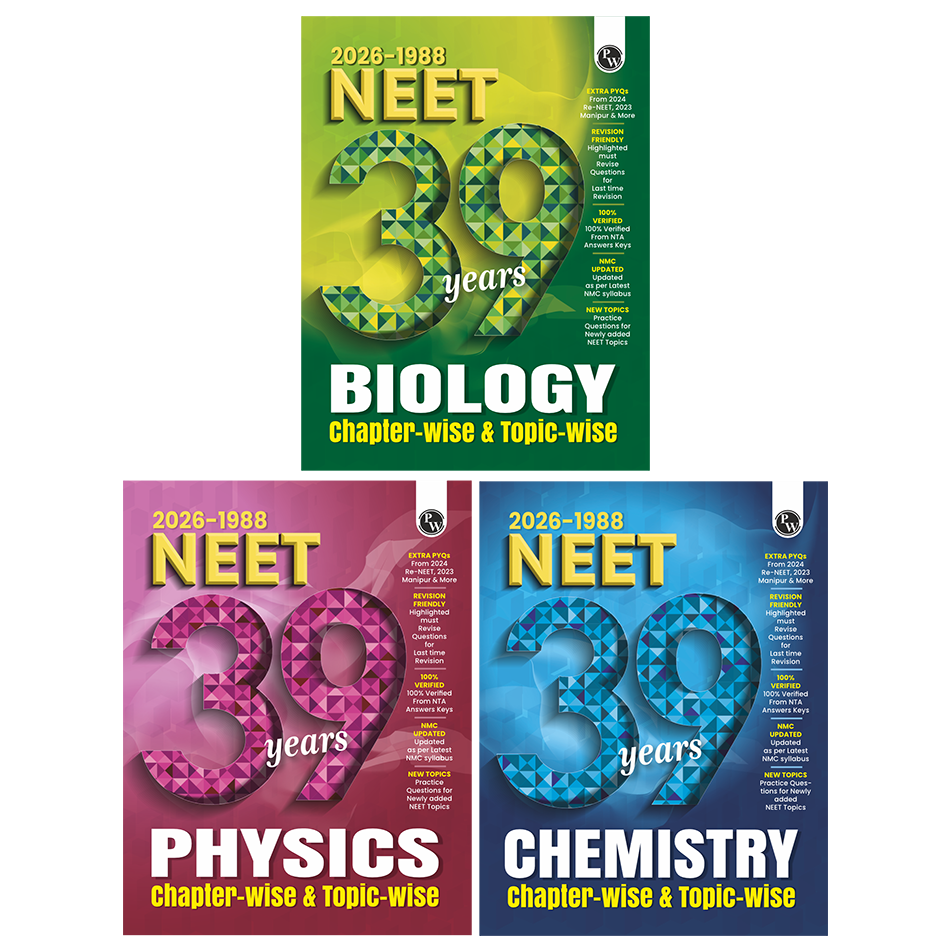
Check Out: NEET PYQ 39 Years Combo Set of 3 Books
Common Mistakes During NEET Chemistry PYQ Practice
Many students solve hundreds of questions but do not see an improvement in their mock test scores. This usually happens due to a few common errors.
-
Ignoring the Analysis: Solving a question and moving on is a waste of time. Spend at least 2 minutes analysing every mistake.
-
Checking Answers Prematurely: Do not look at the solution the moment you get stuck. Struggle with the problem for at least 3 minutes before seeking help.
-
Neglecting NCERT: Always remember that NEET Chemistry questions are almost always rooted in NCERT. If you miss a question, go back to the specific NCERT page and read that section again.
How to Track NEET Chemistry PYQ Progress
Keep a dedicated logbook for your daily sessions. Note down the date, the number of questions attempted, and the number of correct answers.
|
Week |
Daily Target |
Avg. Accuracy |
Focus Area |
|
Week 1 |
20 Questions |
70% |
Physical |
|
Week 2 |
25 Questions |
75% |
Organic |
|
Week 3 |
30 Questions |
82% |
Inorganic |
|
Week 4 |
40 Questions |
88% |
Mixed Bag |
Time Management Tips for NEET Chemistry PYQ
While focusing on NEET Chemistry PYQs, do not ignore Biology or Physics. A common mistake is spending five hours on Chemistry and leaving no time for the others.
-
Morning Session: Dedicate 1.5 hours to Biology (high volume of questions).
-
Afternoon Session: Dedicate 2 hours to Chemistry PYQs and analysis.
-
Evening Session: Dedicate 2.5 hours to Physics (problem-solving and theory).
Using a structured PYQ NEET routine ensures that you are consistently moving toward your goal without neglecting the breadth of the syllabus.
Read More: NEET Chemistry Chapter Wise Weightage
NEET Chemistry PYQs FAQs
How many years of Chemistry PYQs for NEET are enough?
While the last 10 years are crucial for understanding the current pattern, solving at least 30 to 35 years of questions is recommended for a top rank. This provides a wider variety of difficulty levels and covers almost every possible way a concept can be tested.
Which is the right Chemistry PYQ NEET book for beginners?
A book that offers chapter-wise and topic-wise distributions is right. The 39 Years NEET PYQ Chemistry is highly recommended as it aligns with the latest NTA syllabus and provides detailed explanations that help build a strong foundation.
Can I clear NEET by only solving NEET previous year question paper chemistry?
PYQs are essential for practice, but you must read the NCERT theory first. Think of the theory as the foundation, and the PYQ as the finishing touches that make your preparation exam-ready.
Is it better to solve NEET PYQ book chemistry daily or weekly?
Daily practice is far more effective. Solving 30 questions every day keeps your mind sharp and ensures you retain information better than doing a marathon session of 200 questions once a week.
How should I analyze a PYQ NEET session?
Divide your mistakes into three categories: Silly Errors, Conceptual Gaps, and Time Pressure. For conceptual gaps, revisit your notes. For silly errors, practice more calculations. For time issues, use a stopwatch for your next session.