How Chapterwise Chemistry PYQs Help You Identify NEET Weak Topics Faster

Many students spend hours reading textbooks cover to cover, yet they struggle to pick up marks during mock tests because they cannot see where their understanding breaks down. This is where a targeted strategy makes all the difference.
Focusing on NEET PYQ chemistry questions shifts your preparation from passive reading to active diagnostic testing. Instead of guessing which chapters need more work, you get immediate proof of what you know and what you do not. This article explains how to use past papers to transform your preparation speed.
What is NEET PYQ Chemistry?
When we talk about NEET PYQ chemistry, we mean the compiled archive of previous years' questions that have appeared in the actual medical entrance test. These are not random practice questions or predicted sample problems. They are the exact challenges set by the official exam-conducting authorities over the last three to four decades.
Using authentic papers ensures you train with the precise standard of difficulty you will face on exam day. It reveals the specific vocabulary, shifting trends, and conceptual patterns that examiners prefer. By studying these papers, you stop studying blindly and start aligning your routine directly with real exam metrics.
NEET books help aspirants develop strong concepts, enhance subject understanding, practise exam-oriented questions, revise effectively, and gain the confidence needed to perform well in the NEET examination.
Why NEET PYQ Chemistry is the Smartest Way to Identify Weak Topics?
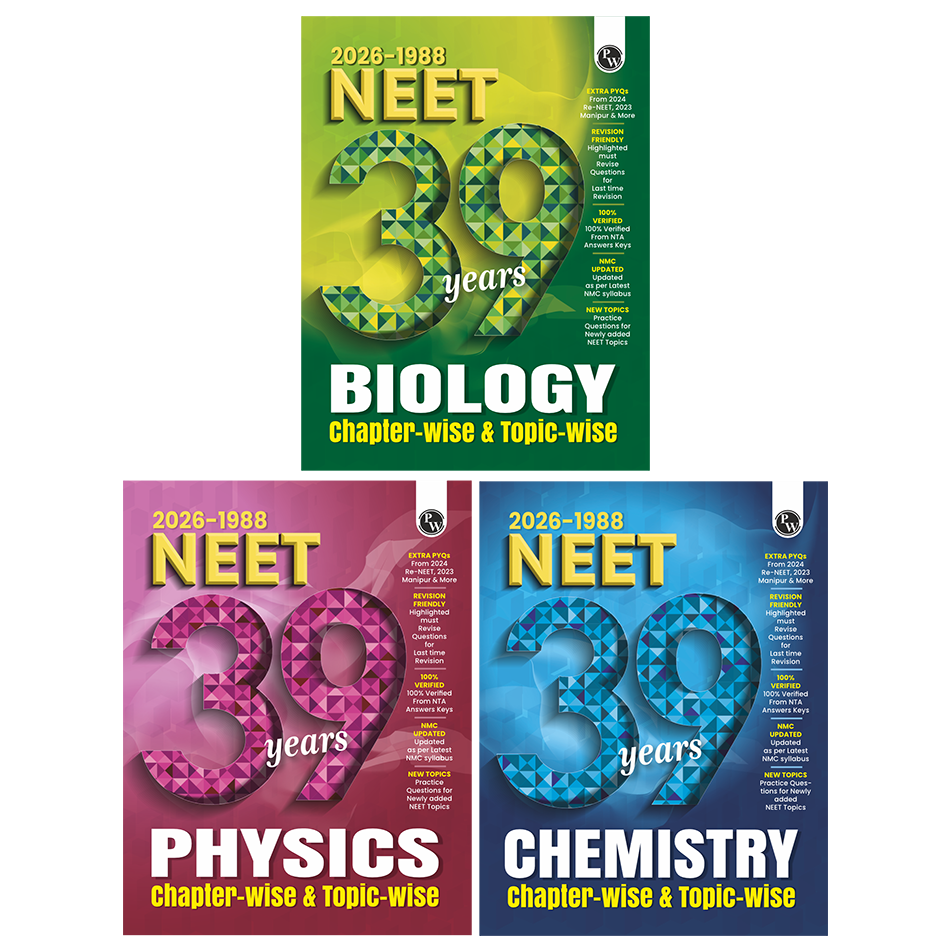
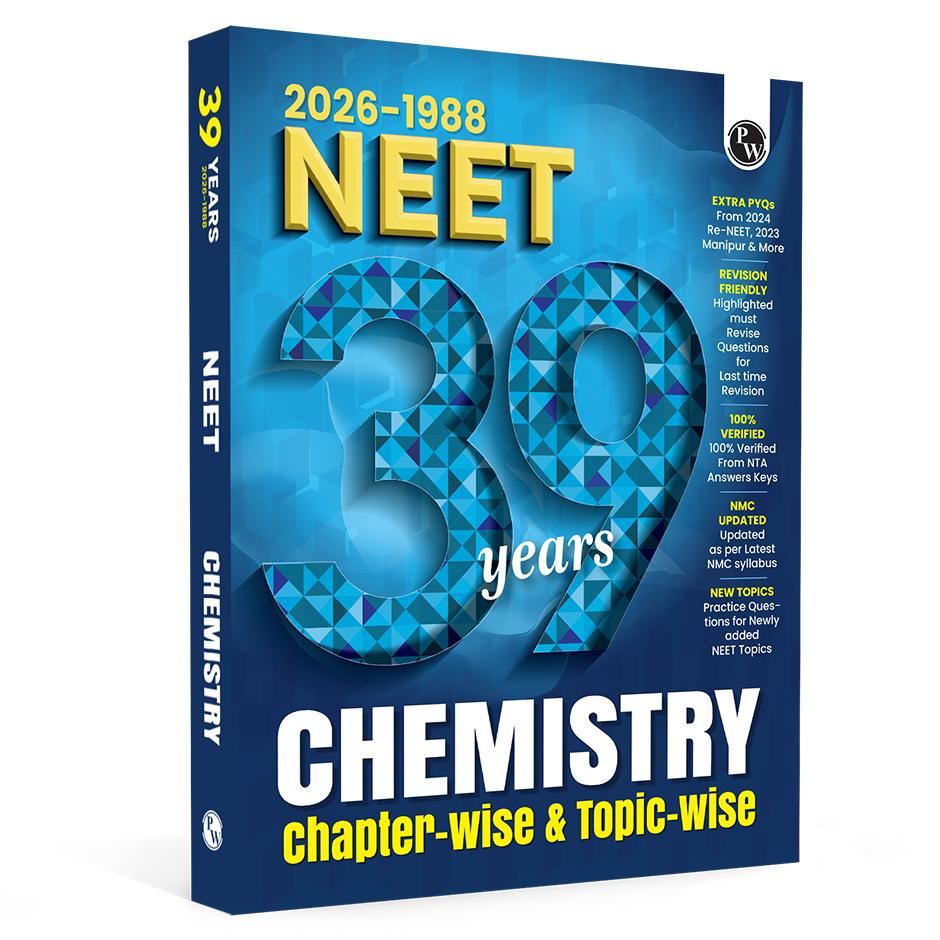
Reading through notes often gives you a false sense of security. You may feel confident about a concept until a question requires you to apply it under exam conditions. Solving NEET Chemistry PYQs serves as an instant diagnostic tool for identifying weak areas. For more comprehensive preparation, students can also use the 39 Years NEET PYQ Combo Books, which provide extensive previous year questions across Physics, Chemistry, and Biology to strengthen conceptual clarity and exam readiness.
- Exposes Hidden Gaps: You might remember a chemical formula but struggle to explain exceptions or apply concepts correctly when faced with actual NEET-style options.
- Tests Practical Application: Physical Chemistry requires numerical accuracy, and previous year papers reveal where your calculations or conceptual understanding need improvement.
- Highlights Time Management Issues: Regular PYQ practice helps identify chapters and question types that consume more time, allowing you to improve speed and efficiency before the exam.
How NEET PYQ Chemistry Helps Prioritise High-Weightage Chapters?
Not every chapter in the textbook carries the same weight in the final mark distribution. Trying to give equal time to every single page is a recipe for exhaustion. Organizing your workflow around NEET chemistry chapterwise PYQs allows you to spot recurring trends instantly.
1. Identifying Trends
When you look at past trends, you notice that certain areas form the backbone of the exam paper. For instance, organic chemistry mechanisms, chemical bonding principles, and equilibrium equations appear consistently every year.
2. Allocating Your Study Hours
By realizing which chapters show up most frequently, you can plan your daily calendar better. You can dedicate longer study blocks to heavy topics while keeping smaller windows for chapters that only yield one question. This data-driven strategy ensures you get the highest possible return on your study hours.
Benefits of Using NEET PYQ Chemistry
Using a dedicated collection of past papers changes how you absorb information. Here are the clear benefits of making these questions a core part of your revision:
-
Real Exam Trends: It helps you understand the real exam pattern and historical trends clearly.
-
Solved Explanations: It boosts your accuracy with fully solved, highly reliable answers for quick doubt clearance.
-
Time Conservation: It saves precious hours by giving you a structured and focused preparation route.
-
Targeted Revision: It improves revision efficiency by highlighting the specific questions that need multiple attempts.
-
Syllabus Updates: It covers both older trends and the latest syllabus changes systematically.
-
Conceptual Depth: It strengthens your overall concept clarity through repeated, deliberate practice.
How to Use NEET PYQ Chemistry?
Simply buying a book of NEET Previous year paper will not improve your score unless you use it correctly. You need an active methodology to get the best results.
Step 1: Work Chapter by Chapter
Do not try to solve full three-hour papers when you are still finishing the syllabus. As soon as you complete a topic in class, open your chemistry practice questions for that specific section. This links the theory to actual application immediately.
Step 2: Track Your Errors Logically
Keep a separate notebook just for your mistakes. When you get a past question wrong, do not just read the correct answer and move on. Write down the core reason for the error. Was it a calculation mistake, a misread question, or a complete lack of conceptual understanding?
Step 3: Re-Visit Difficult Questions
Mark the questions you found difficult with a highlighter or a star symbol. When you conduct your next revision session, skip the easy questions and attempt these flagged problems again to see if your understanding has improved.
Study Plan with NEET PYQ Chemistry
A disciplined plan ensures you cover all your bases before stepping into the exam hall. Here is a structural breakdown you can follow.
-
The Initial Phase
Focus heavily on building your foundations. Read your text chapters thoroughly, attend your main lectures, and use individual chemistry concepts to solve basic questions. Do not worry about speed at this point; focus entirely on accuracy.
-
The Diagnostic Phase
This is where you integrate regular past paper sessions. Spend at least three days a week solving past problems under strict exam conditions. Use these sessions to rank your chapters from strongest to weakest based on your actual scores.
-
The Final Polish
In the final months, pivot your strategy entirely toward your weaker areas. Use your error log to revise the specific formulas and reactions that caused you trouble in the past. Combine this with timed mixed-question sets to build your exam endurance.
Also Check, NEET Question Banks
Tips for Using NEET PYQ Chemistry
Practice NEET Chemistry PYQs chapter-wise to strengthen conceptual understanding and identify frequently tested topics. Analyse your mistakes, revise important reactions and formulas regularly, and solve questions within a time limit to improve speed and accuracy.
-
Avoid Looking at Answers Too Quickly: Give yourself at least two honest attempts before checking the solution key.
-
Study All Four Options: Do not just find the correct answer; understand why the other three choices are incorrect.
-
Cross-Reference With Your Textbooks: When you get a question wrong, open your primary text notes immediately to read the surrounding theory.
-
Maintain Absolute Regularity: Solving ten past questions every single day is far better than solving seventy questions once a week.
Read More: NEET Sample Papers PDFs with Solutions
NEET PYQ Chemistry FAQs
How does using NEET PYQ chemistry papers help locate weak topics?
Practicing past papers acts as a direct diagnostic test. When you solve questions from a specific chapter and consistently get them wrong, it provides immediate proof of a conceptual gap, making weak topic analysis much faster and highly accurate.
Why should I choose chemistry chapterwise PYQs over mixed mock tests early on?
Using a chemistry chapterwise PYQs structure allows you to focus on one topic at a time. This ensures your chapter-wise preparation is thorough, helping you fix specific issues before you attempt full-length mixed papers.
Can practicing chemistry practice questions improve my exam speed?
Yes, regular practice with real exam questions trains your brain to recognize patterns quickly. This familiarity cuts down the time you spend interpreting questions, which naturally improves your speed and accuracy during the actual test.
How often should I include NEET chemistry revision in my schedule?
You should dedicate time to revision every single week. Instead of just rereading your text notes, use past questions to test your active recall, ensuring you retain difficult formulas and reaction mechanisms long-term.