When Chemistry MCQ practice from Question Banks should be Introduced in NEET Prep
Balancing deep theoretical readings with intense problem-solving sessions can completely change your final rank. Entering the question-solving phase too early often leads to confusion and anxiety, while delaying it until the syllabus is nearly complete leaves you completely underprepared for the actual exam format.
Incorporating the objective NCERT punch chemistry book at the correct time ensures you transition seamlessly from passive reading to active application, locking down every vital trend, reaction mechanism, and numerical formula when it matters most.
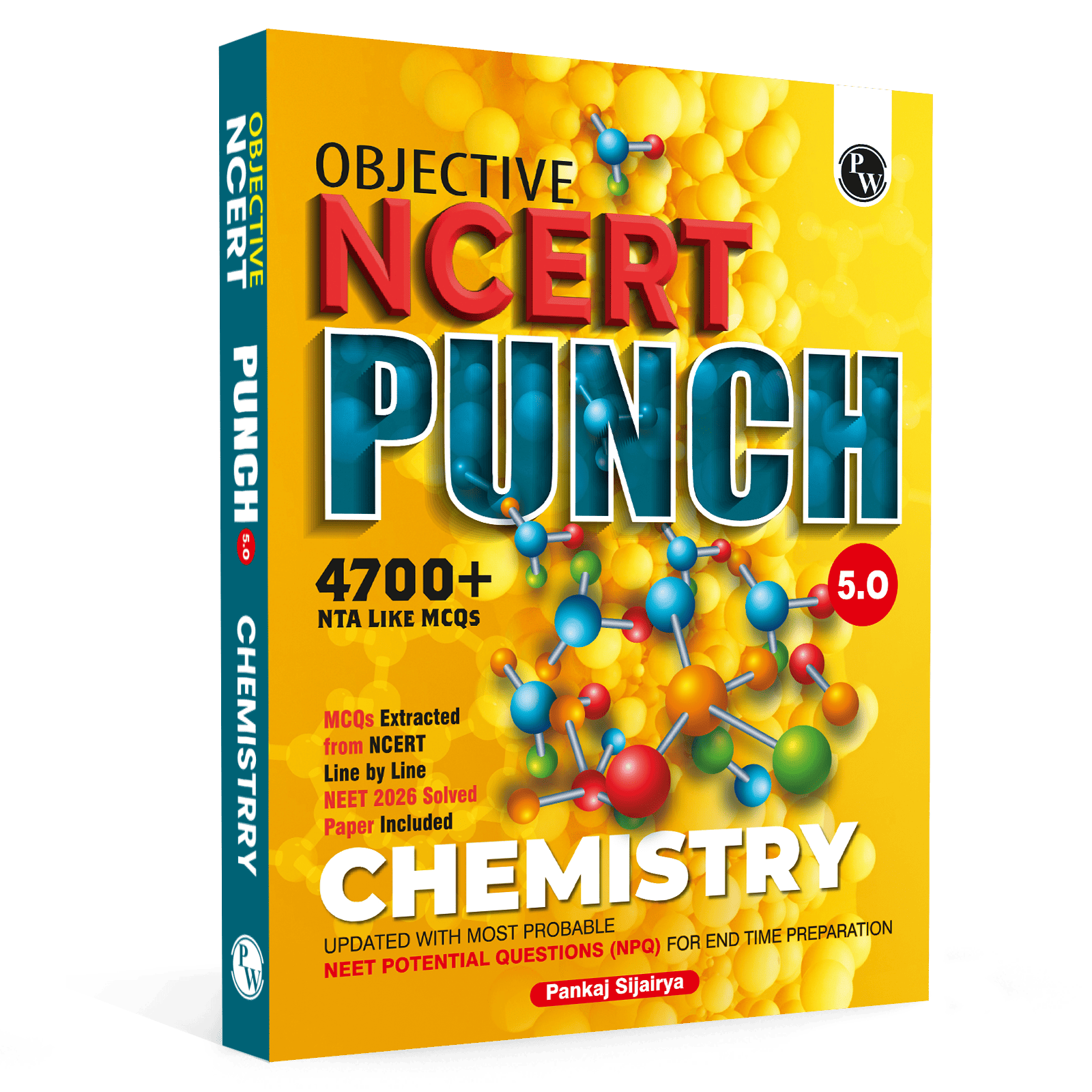
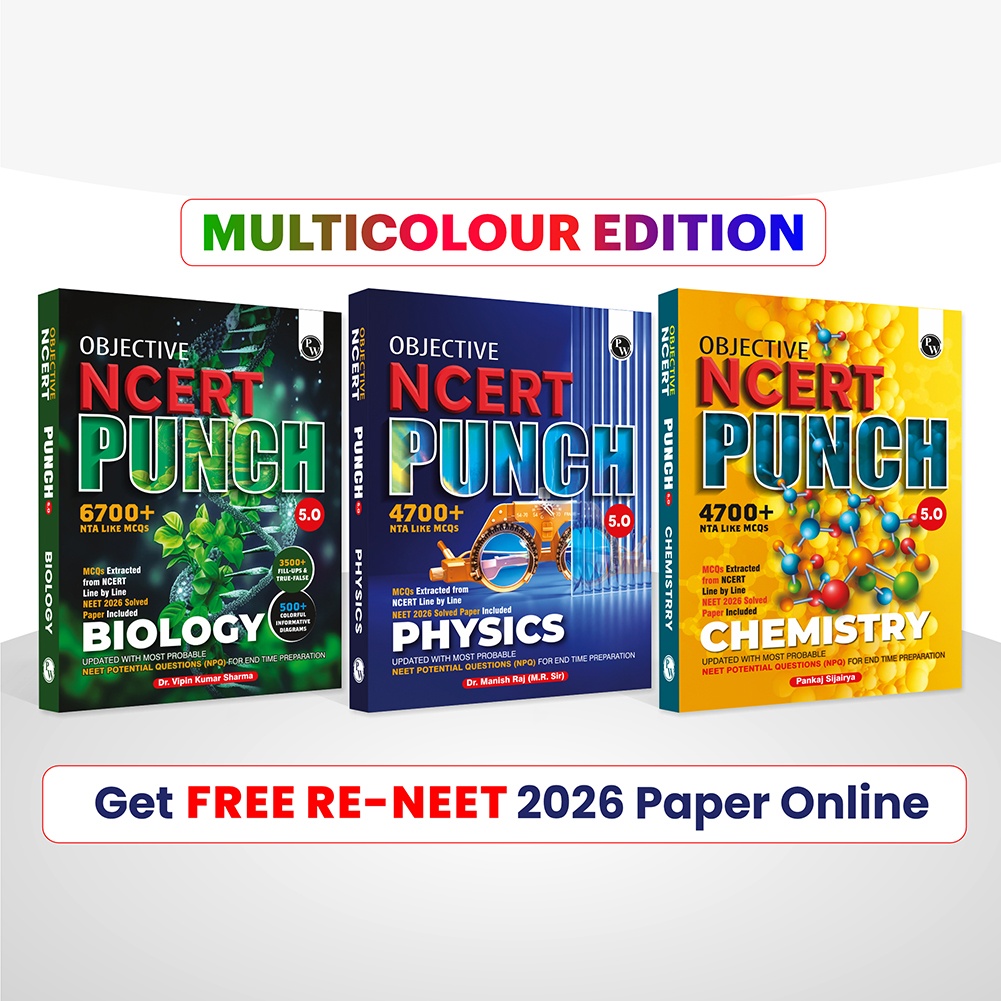
What Is Objective NCERT Punch Chemistry?
Objective NCERT Punch Chemistry is a comprehensive, exam-oriented practice book designed specifically for medical aspirants. The resource serves as a structured bridge between reading theoretical concepts and solving complex exam questions. It aligns directly with the official curriculum guidelines, breaking down the syllabus into manageable, high-yield segments.
The primary focus of this guide is to provide comprehensive coverage of Physical, Organic, and Inorganic fields. By converting standard textbook chapters into objective challenges, it ensures that students do not just memorise facts but actively learn how to apply them under exam conditions. This resource acts as a standalone practice platform that supports systematic revision and continuous self-assessment.
Features of Objective NCERT Punch Chemistry
Understanding the structured framework of Objective NCERT Punch book helps medical aspirants plan their daily studies effectively. The workbook incorporates several unique preparation tools designed to test different cognitive levels.
-
NCERT-Picks: Every chapter opens with a concise, simplified summary of core theories. It uses colourful diagrams, flowcharts, and visual learning aids to boost long-term retention.
-
Line-by-Line Fill-Up and True & False: These practice-based questions ensure an intimate familiarity with the textbook language. They are engineered to solidify conceptual understanding and board-level baseline knowledge.
-
Topic-wise MCQs: Structured question sets fully aligned with the latest curriculum boundaries and the contemporary NEET UG testing patterns.
-
High-Order Time Intensive MCQs: Advanced, challenging problems accompanied by thorough solutions. These help sharpen analytical speed and critical elimination skills during mock drills.
-
1500+ Question Typology: A vast, diverse question pool covering Statement-based queries, Assertion & Reason, Matching Types, and Correct/Incorrect identification items.
-
NCERT Exemplar MCQs: Curated collections from the official Exemplar volumes, complete with step-by-step explanations to enhance problem-solving agility.
-
Rationalised Content Indicators: Explicit markers showing updated and rationalised syllabus boundaries, keeping preparation fully synced with current testing criteria.
Benefits of Using Objective NCERT Punch Chemistry
Integrating a dedicated NEET question bank into your study calendar provides multiple advantages over standard text revision. The layout of this workbook transforms passive reading into active processing.
-
Eliminates Conceptual Blind Spots: Reading a text can create a false sense of security. Attempting systematic chemistry NCERT punch questions forces you to recall specific exceptions, reaction conditions, and numerical formulas, immediately highlighting areas that need a re-read.
-
Builds High Speed and Accuracy: The dedicated high-order and time-intensive sections accustom your brain to processing tricky data rapidly. This reduces exam anxiety and minimizes careless errors during actual test sessions.
-
Provides Comprehensive Typology Exposure: Since modern competitive exams have shifted towards analytical patterns, regular exposure to Match-the-following and Assertion-Reason formats ensures no surprises on test day.
-
Facilitates Streamlined Revision: Instead of re-reading entire theoretical sections before weekly tests, solving selected objective problems serves as a highly efficient, fast-track revision method.
Why Objective NCERT Punch Chemistry Is Best for 180-Target Aspirants?
Securing a perfect score of 180 in the scientific segment requires absolute perfection across Organic, Inorganic, and Physical sections. General practice tools often miss the nuanced transitions between these distinct areas, but this resource addresses them precisely.
Physical Chemistry Mastery
Physical problems require strong mathematical implementation and clear conceptual clarity. The workbook categorises numerical problems by specific topics, allowing students to practice formula applications systematically. It contains multi-step calculation items that train your mind to handle complex variables smoothly.
Organic Chemistry Perfection
Organic chemistry is heavily dependent on reaction mechanisms, reagents, and named transformations. Through structured line-by-line questions and comprehensive typologies, the book tests every fundamental mechanism. It trains your brain to track shifting functional groups and identify structural anomalies effortlessly.
Inorganic Chemistry Retention
Inorganic topics are notorious for exceptions and trend variations. The workbook uses intensive Fill-ups, True/False exercises, and specific NEET chemistry question modules to lock down periodic trends, chemical properties, and anomalous behaviors directly from the source syllabus.
How to Use Objective NCERT Punch Chemistry Alongside PYQs?
A strategic blend of targeted problem-solving and authentic past papers creates a highly resilient preparation framework. Balancing these two components prevents repetitive errors and ensures your practice remains realistic.
First, complete the topic-specific drills from your practice workbook to build fundamental confidence. This stage helps you memorise key reaction pathways, identify structural rules, and perfect your mathematical calculations.
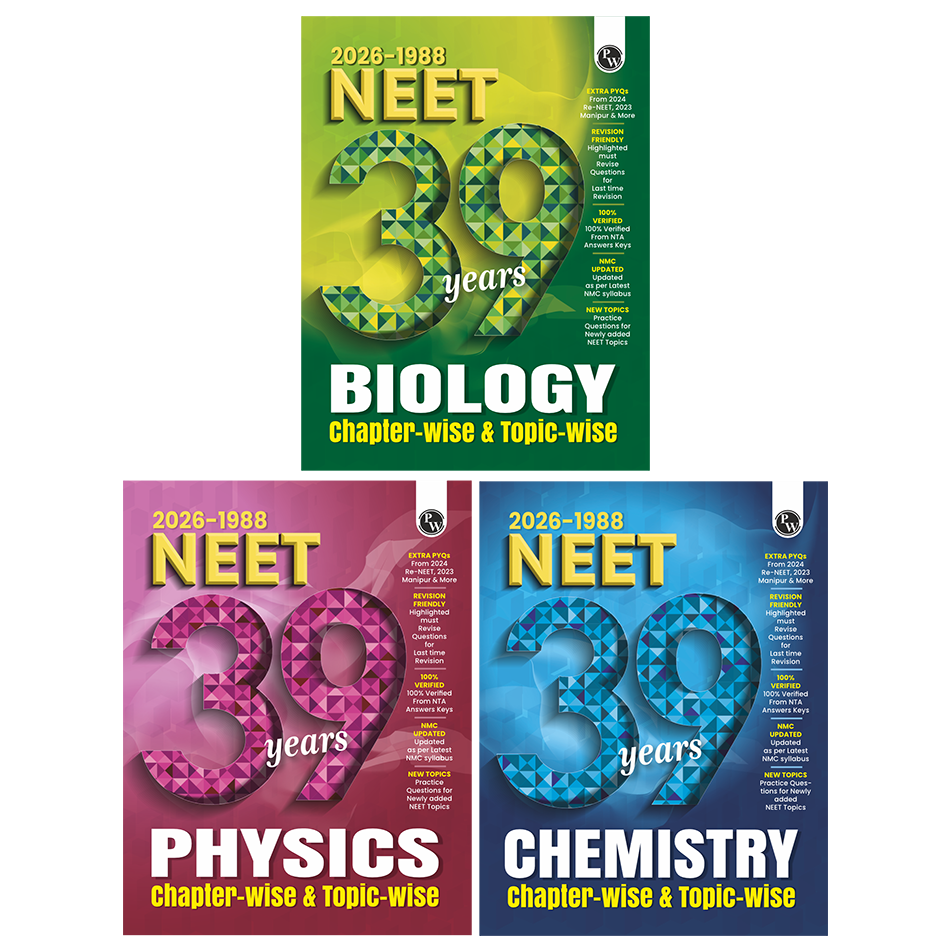
Once individual topics are solid, move directly to these integrated past-year papers. Use the workbook questions to learn the concepts, and then use the past year files to test your actual exam readiness. If you find gaps while solving a past paper, return to the specialized workbook drills to re-establish your baseline before moving forward.
When to Start Solving Objective NCERT Punch Chemistry
The optimal time to introduce intensive question banks depends entirely on your current stage of theoretical coverage. Initiating practice without an initial text review leads to frustration, while waiting until the entire syllabus is finished creates an unmanageable backlog.
The ideal approach is to introduce the workbook on a chapter-by-chapter basis. Never start solving questions without reading the corresponding lecture notes or textbook chapters first. However, do not leave a gap of more than twenty-four hours between finishing a chapter's theory and starting its respective objective problems.
For long-term retention, an initial practice session must occur immediately after learning a topic, followed by a secondary review phase roughly three to four weeks later. This dual-exposure timeline ensures that fundamental facts move from short-term memory into stable, long-term cognitive storage.
Check Out: PW NEET Revision Books
Study Strategy with Objective NCERT Punch Chemistry
To get the most out of your preparation, you need a disciplined, structured daily study process. Randomly browsing through questions will not produce the high-level analytical skills required for competitive entrance tests.
-
Phase 1: Visual Reinforcement (Time: 20-30 Mins): Start by reviewing the 'NCERT-Picks' section at the beginning of the workbook chapter. Use the colourful flowcharts and diagrams to quickly refresh your memory of key formulas and reactions.
-
Phase 2: Baseline Validation (Time: 30 Mins): Complete the Line-by-Line Fill-ups and True/False statements. This step ensures you understand the fundamental terminology before moving to complex options.
-
Phase 3: Topic-wise Execution (Time: 60 Mins): Solve the standard topic-wise multiple-choice questions. Keep a strict track of time, aiming to spend less than a minute on conceptual items and around ninety seconds on physical calculations.
-
Phase 4: Advanced Testing (Time: 45 Mins): Tackle the High-Order Time Intensive questions and the important NEET chemistry question segments. These problems require deep analytical thinking and will help you develop smart elimination strategies.
-
Phase 5: Error Isolation (Time: 20 Mins): Highlight every question you answered incorrectly or skipped. Write down the corrected steps or forgotten exceptions in a separate notebook for quick review later.
Common Mistakes to Avoid While Using Objective NCERT Punch Chemistry
Even with premium resources, inefficient study habits can slow down your academic progress. Being aware of these common pitfalls will help you maintain an efficient preparation routine.
-
Peeking at Solutions Early: Looking at the explanatory answers the moment you face a difficult problem ruins the learning process. Give every problem at least two honest attempts using different perspectives before consulting the solution key.
-
Neglecting the Baseline Questions: Skipping the Fill-ups and True/False sections to jump straight into complex questions leaves weak spots in your basic understanding. These basic drills are crucial for identifying minor conceptual errors.
-
Inconsistent Error Tracking: Failing to flag and periodically re-solve your incorrect answers means you are likely to repeat the same mistakes during real exams. Treat your error log as an essential, evolving study resource.
-
Overlooking Rationalised Syllabus Limits: Spending excessive time on deleted or outdated theoretical concepts takes valuable time away from high-yield topics. Always pay close attention to the built-in rationalisation markers.
Read More: NEET Toughest Chapters in Physics, Biology and Chemistry
Objective NCERT Punch Chemistry FAQs
Q1: Does the objective NCERT punch chemistry workbook contain explanations for difficult numerical problems?
Yes, the book provides detailed, step-by-step analytical explanations for complex problems, especially within the High-Order Time Intensive and NCERT Exemplar question sets. This ensures students understand the underlying logical approach behind every physical and organic solution.
Q2: Can I rely on this workbook for both board exams and medical entrance tests?
Absolutely. The inclusion of Line-by-Line Fill-Ups, True & False questions, and structural summaries helps build strong conceptual roots that are highly beneficial for descriptive school boards, while the extensive objective typologies provide complete preparation for competitive medical exams.
Q3: How many total questions are available for practice in this preparation guide?
The workbook contains a robust and highly diverse selection of over 1500+ question typologies. This comprehensive mix includes statement-based items, matching structures, assertion-reason challenges, and authentic past-year papers.
Q4: Are the latest curriculum deletions reflected in this workbook?
Yes, the guide features clearly marked rationalised content indicators. This deliberate design layout ensures that your daily study sessions remain fully aligned with the most recent official syllabus updates, protecting you from wasting time on non-examinable topics.