CBSE Class 10 Science Notes Chapter 1 Chemical Reaction and Equation
Class 10 chemistry chapter 1 notes provide a structured summary of how substances interact to form new products. These notes explain chemical equations, balancing techniques, and diverse reaction types like combination or decomposition. Students use these materials to understand how matter changes state, color, or temperature during reactions, ensuring a solid foundation for their board exam preparation.
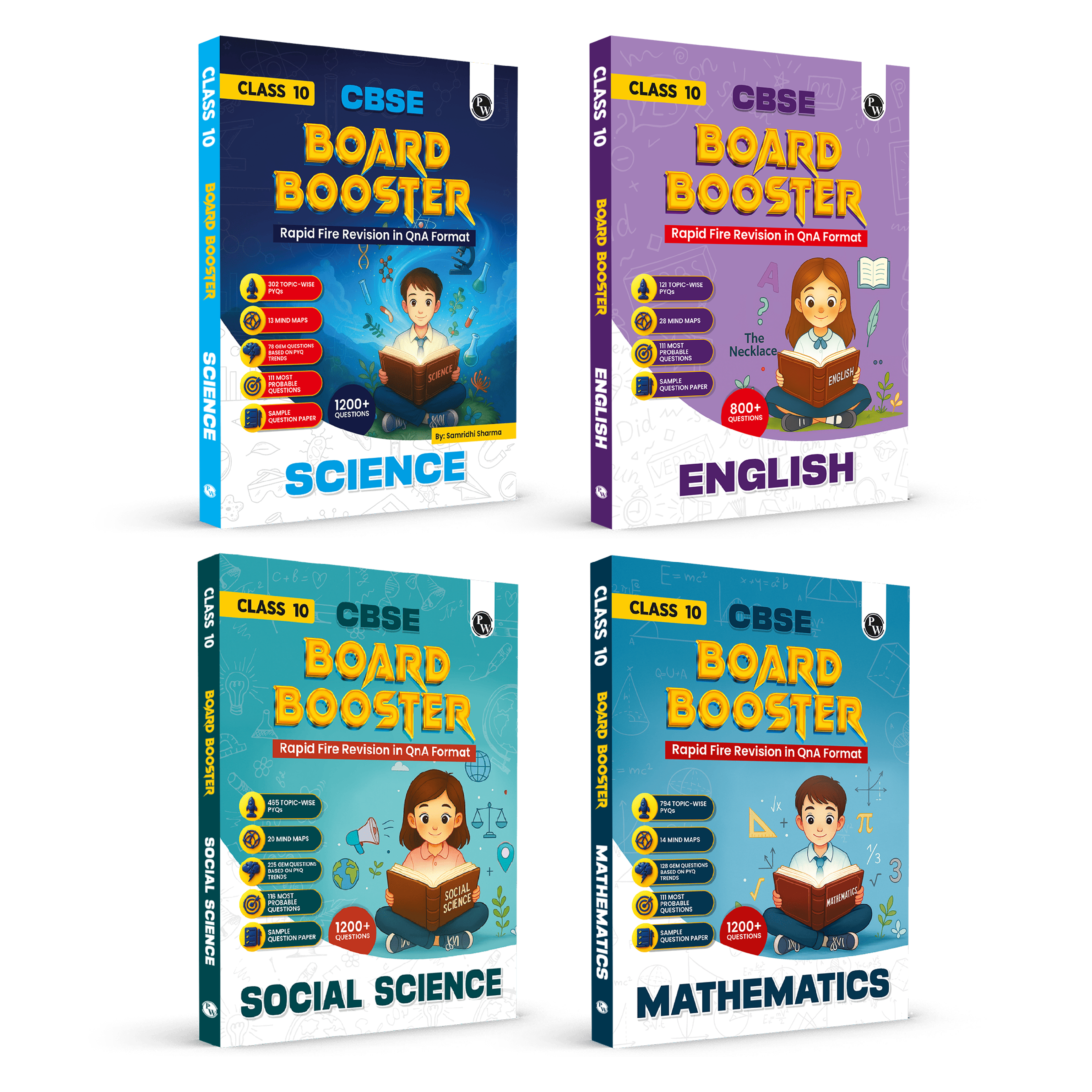
Check Out: CBSE Class 10 Books
Class 10 Chemical Reactions and Equations Notes
Class 10 Chemical Reactions and Equations Notes explain how chemical reactions occur and how they are represented using balanced chemical equations.Chemical changes are central to our world. They define how matter interacts and transforms. Understanding these changes starts with recognising chemical reactions and their representation.
Chemical Reactions
A chemical reaction is a process where one or more substances convert into different substances. Bonds break and form. This leads to new chemicals with new properties. For example, burning magnesium ribbon forms a new white powder.
Chemical Equations
Chemical equations are symbolic representations of chemical reactions. They use chemical formulas to show reactants and products. Reactants are on the left side, products on the right. An arrow indicates the direction of the reaction.
Writing Chemical Formulas
Writing correct chemical formulas is basic to equations. It relies on the valency of elements and ions. For instance, Sodium chloride is NaCl. Aluminium chloride is. Ferrous sulphate is. Lead nitrate is.
Balancing Chemical Equations
A balanced chemical equation has an equal number of atoms of each element on both sides. This respects the Law of Conservation of Mass. Mass can neither be created nor destroyed in a chemical reaction. Balancing ensures that the total mass of reactants equals the total mass of products.
CBSE Class 10 Chemical Reaction and Equation Notes PDF
Types of Chemical Reactions
Chemical reactions are categorised based on how atoms rearrange.
A. Combination Reaction
A combination reaction is a type of chemical reaction in which two or more reactants combine to form a single product.
Example 1: Burning of Magnesium Ribbon


Observation:
Magnesium ribbon burns with a bright, dazzling white flame and forms a white powder called magnesium oxide.
Example 2: Reaction of Quicklime with Water


Explanation:
Quicklime (calcium oxide) reacts vigorously with water to form slaked lime (calcium hydroxide). This reaction releases a large amount of heat, making it an exothermic combination reaction.
B. Decomposition
1. Decomposition of Ferrous Sulphate
Ferrous sulphate crystals are green in colour. When heated, they first lose water of crystallisation and turn white. On further heating, they decompose to form reddish-brown ferric oxide
 along with sulphur dioxide and sulphur trioxide gases.
2. Decomposition of Lead Nitrate
When lead nitrate , a white powder, is heated, it decomposes to form yellow lead oxide
 as a residue. During this reaction, brown fumes of nitrogen dioxide
 and
and are also released
C. Displacement Reaction
A displacement reaction is a chemical reaction in which a more reactive element displaces a less reactive element from its compound.
Example: Reaction between Iron and Copper Sulphate

Observation:
When an iron nail is placed in a blue copper sulphate solution, the blue colour fades and turns pale green due to the formation of iron sulphate. At the same time, a reddish-brown deposit of copper is seen on the iron nail.

D. Double Displacement Reaction
A double displacement reaction is a chemical reaction in which ions of two reactants are exchanged, resulting in the formation of two new compounds.
Precipitation Reaction
In many double displacement reactions, one of the products formed is an insoluble solid known as a precipitate.
Example: Reaction between Sodium Sulphate and Barium Chloride

Observation:
A white precipitate of barium sulphate is formed, indicating a precipitation reaction.
Oxidation and Reduction Reactions (Redox)
A redox reaction is a chemical reaction in which oxidation and reduction occur simultaneously due to a change in the oxidation states of the substances involved. In any redox reaction, one substance loses electrons while another gains electrons.
Oxidation
Oxidation refers to the process in which a substance:
-
Loses electrons, or
-
Gains oxygen, or
-
Loses hydrogen
Reduction
Reduction refers to the process in which a substance:
-
Gains electrons, or
-
Loses oxygen, or
-
Gains hydrogen
Effects of Oxidation in Daily Life
Oxidation reactions impact our daily lives significantly.
Corrosion
When a metal reacts with substances like moisture and acid, it corrodes. This process damages the metal. Rusting of iron is a common example. Tarnishing of silver and green coating on copper are also corrosion.

Rancidity
Fats and oils in food oxidise when exposed to air. This causes an unpleasant smell and taste, known as rancidity.
Prevention: Adding antioxidants, storing food in airtight containers, flushing with nitrogen gas (e.g., in chip bags).

Physical and Chemical Changes
Physical changes alter appearance but not composition (e.g., ice melting). Chemical changes form new substances with new properties (e.g., burning paper).
Key Rules of Chemical Reactions and Equations
Law of Conservation of Mass
According to the Law of Conservation of Mass, matter is neither created nor destroyed during a chemical reaction. This means that the total number of atoms of each element remains the same before and after the reaction. As a result, the total mass of the reactants is always equal to the total mass of the products formed in a chemical reaction.
Balanced Chemical Equation
A balanced chemical equation is one in which the number of atoms of each element on the reactants side is equal to the number of atoms on the products side. Balancing an equation ensures that it follows the Law of Conservation of Mass.
Balancing Chemical Equations
Chemical equations are used to represent the changes that occur during a chemical reaction.
\nReactants → Products
To maintain balance, the number of each type of atom must be equal on both sides of the equation.
Balancing is done by placing coefficients in front of chemical symbols or formulas. A coefficient is a numerical value that indicates the number of molecules or atoms participating in the reaction.
Steps for Balancing Chemical Equations
-
Write the unbalanced chemical equation.
-
Count the number of atoms of each element on both sides.
-
Adjust the coefficients (not subscripts) to make the number of atoms equal.
-
Recheck to ensure all atoms are balanced on both sides.
Example
Unbalanced equation:
Zn + HCl → ZnCl₂ + H₂
Balanced equation:
Zn + 2HCl → ZnCl₂ + H₂
Hit and Trial Method
The hit-and-trial method involves repeatedly adjusting the coefficients until the number of atoms of each element becomes equal on both sides of the chemical equation. This is the most commonly used method for balancing equations at the Class 10 level.
Reactivity Series
This series lists metals in order of decreasing reactivity. A metal higher in the series can displace a metal lower in the series from its salt solution.
Oxidation-Reduction Rules
-
Substance gaining oxygen or losing hydrogen is oxidised.
-
Substance losing oxygen or gaining hydrogen is reduced.
Check Out: CBSE Class 10 Sample Papers
1. Basic Ideas of Class 10 Chemistry Chapter 1 Notes
A chemical reaction is just a way of saying that some things changed into something new. It is like baking a cake where the flour and eggs turn into a fluffy treat. These class 10 chemistry chapter 1 notes help you spot when a change happens by looking for simple clues. When you see a fire burning or milk turning into curd, you are watching chemistry in real life. These notes teach you that every change has a reason.
Clues to Look For:
-
New Gas: You might see bubbles or smell something different.
-
Color Change: Like a green leaf turning brown in the fall.
-
Heat or Cold: The glass might feel hot or cold to your hand.
-
Solid Bits: Sometimes a solid powder shows up in a liquid.
-
State Change: Like a liquid turning into a gas.
2. Counting Atoms in Class 10 Chemistry Chapter 1 Notes
In science, you cannot lose any tiny bits of matter. Whatever goes in must come out on the other side. This is why we fix equations so both sides are equal. This lesson is a big part of class 10 chemistry chapter 1 notes by Prashant sir. Think of it like a see-saw; both sides must have the same weight to stay level. If you have two atoms of Oxygen on the left, you must find two on the right.
How to Balance Equations:
-
Make a List: Count the small bits (atoms) on the left and right side.
-
Find the Big Group: Start with the biggest group of bits first.
-
Add Numbers: Put a number in front of the chemical names to make them equal.
-
Check Your Work: Make sure the numbers match perfectly on both sides.
-
Be Careful: Don't change the tiny numbers at the bottom of the letters!
-
Final Touch: Add (s) for solid or (g) for gas to show what the chemical looks like.
3. How Chemicals Mix in Class 10 Chemistry Chapter 1 Notes
There are a few main ways that chemicals act when they meet each other. Some join together, and some break apart. Whether you use class 10 chemistry chapter 1 notes in Hindi or English, the way they move stays the same for everyone. It is like a dance where partners sometimes join hands or sometimes trade places with a new friend. Scientists use these rules to predict how a mix will turn out.
|
What Happens? |
Simple Explanation |
Easy Example |
|
Joining Up |
Two things become one |
Making water from gases |
|
Breaking Apart |
One thing splits into two |
Breaking water with electricity |
|
Taking a Seat |
A strong metal pushes a weak one out |
Iron in blue liquid |
|
Swapping Places |
Two things trade their partners |
Making a white powder in water |
Check Out: CBSE Class 10 Previous Year Papers
4. Energy and Oxygen in Class 10 Chemistry Chapter 1 Notes
Some reactions need a spark or heat to start, while others give off heat. Many students get a class 10 chemistry chapter 1 notes pdf to see how oxygen moves around. When oxygen attaches to something, we call it oxidation. A great example is burning a Magnesium ribbon. You must rub it with sandpaper first to clean it. Then, it grabs oxygen from the air and turns into a bright white light and a white powder.
Simple Rules for Oxygen:
-
Oxidation: This is when a chemical grabs oxygen.
-
Reduction: This is when a chemical loses oxygen.
-
Redox: This is just a short word for when both happen at once.
-
Agent: The chemical that gives away its oxygen is the helper or "agent."
-
Heat: Reactions that get hot are called exothermic.
-
Cooling: Reactions that soak up heat are called endothermic.
5. Real World Uses of Class 10 Chemistry Chapter 1 Notes
Chemistry is not just for the classroom; it happens in your house too! If you leave your bike in the rain, it gets rusty. This is a vital part of class 10 chemistry chapter 1 notes Prashant Kirad because it shows how science affects your life. We also see this when we white-wash walls. The "Slaked Lime" we put on walls reacts with the air for two or three days. This creates a hard layer of Calcium Carbonate that makes the walls look shiny.
Bad Changes to Watch For:
-
Rusty Metal: Iron gets a brown, crumbly coat when it gets wet and oily.
-
Stopping Rust: You can fix this by painting your tools or using grease.
-
Stinky Food: Old oil starts to smell bad because of the air. This is called rancidity.
-
Keeping Food Fresh: We put gas like Nitrogen in chip bags to keep the oxygen out.
-
Tight Jars: Keeping food in closed jars slows down the bad changes.
-
Antioxidants: These are special "helpers" added to food to stop them from rotting.
Check Out: CBSE Class 10 Question Banks
CBSE Class 10 Science Notes Chapter 1 FAQs
What is a chemical equation?
It is a short way to write down what happened in a reaction using letters and numbers instead of long words.
Can we make or destroy matter?
No. Science tells us that we cannot make new matter or make it disappear; we can only move it around.
What is a precipitate?
It is just a fancy word for a solid that suddenly appears inside a liquid during a reaction.
Why does my bike rust?
Your bike rusts because the iron in the metal joins with the oxygen and water in the air.
Why are chip bags so puffy?
They are full of Nitrogen gas. This gas keeps the food safe from oxygen so the chips stay crunchy and tasty.
I hope these class 10 chemistry chapter 1 notes help you feel confident and ready to tackle your science exams with ease. By breaking down big ideas into simple steps, you can see that chemistry is all around us, from the food we eat to the air we breathe.
At the end of the day, success comes from steady practice and a clear understanding of the basics. Would you like me to create a quick summary of the most important chemical formulas from this chapter for you to memorize?