Class 12 PCM Board Exam Preparation Daily Study Timetable with PYQ
Excelling at Class 12 PCM board exams requires a fine balance between understanding core theories and applying formulas under strict exam conditions. The secret to bridging this gap lies in combining a well-structured daily timetable with consistent, daily PYQ practice. Utilizing the CBSE Class 12 PCM PYQ papers effectively transforms your PCM preparation strategy from random reading into highly targeted revision.
Importance of CBSE Class 12 PCM PYQ Revision
Studying the complete syllabus gives you foundational knowledge, but solving the PYQ sets provides explicit insights into what the examiners expect. The Central Board of Secondary Education (CBSE) follows distinct structural trends, and identifying these patterns can give you a major competitive edge.
-
Identifies High-Yield Questions: Certain derivations in Physics, mechanisms in Chemistry, and calculus problems in Mathematics appear consistently. Reviewing 10 years of high-yield questions isolates these scoring areas perfectly.
-
Decodes the Exact Marking Scheme: Solving past papers helps you understand how marks are distributed for individual steps, helping you structure your answers to secure maximum marks.
-
Highlights Syllabus Weightage: You can quickly pinpoint which chapters carry the maximum marks, allowing you to allocate your study hours more efficiently.
-
Enhances Time Allocation: Working through actual past papers teaches you exactly how much time to spend on long-answer questions versus short MCQs.
CBSE Class 12 PCM PYQ Study Timetable
Balancing Physics, Chemistry, and Mathematics alongside English requires a realistic and disciplined routine. A rigid, overloaded plan usually leads to fatigue, whereas a balanced daily PCM study timetable keeps your energy levels high and ensures consistent progress across all subjects.
Below is an optimized daily plan designed to blend conceptual learning with active question practice:
|
Time Slot |
Scheduled Focus |
Strategic Activity |
|
06:00 AM – 07:30 AM |
Physics Core Concepts & Derivations |
Study complex theories and map core formulas while the mind is fresh. |
|
08:00 AM – 09:30 AM |
Chemistry Equations & Mechanisms |
Memorise organic mechanisms, functional reactions, and inorganic properties. |
|
10:30 AM – 12:30 PM |
Mathematics Practice Session |
Solve step-by-step calculus, vectors, and algebra problems. |
|
02:30 PM – 04:30 PM |
Dedicated PCM PYQ Slot |
Solve past papers under timed conditions to simulate real exam pressure. |
|
05:00 PM – 06:30 PM |
Error Tracking & Solution Analysis |
Review mistakes made during the past paper session and study correct blueprints. |
|
07:30 PM – 08:30 PM |
English & Language Practice |
Revise grammar rules, formal writing formats, and literature summaries. |
|
09:00 PM – 09:45 PM |
Fast Visual Revision |
Review chapter-wise concept maps and active formula sheets before sleep. |
CBSE Class 12 PCM PYQ Practice for Physics, Chemistry, and Maths
To extract maximum value from CBSE Class 12 PYQ sets, you must treat your practice sessions like the actual exam. Simply reading through solutions will not build your independent problem-solving capabilities.
Here is the ideal methodology to integrate daily practice into your Class 12 board schedule:
Step 1: Establish Real Exam Environments
Isolate yourself in a quiet room, set a precise timer, and remove all textbooks or notes. Attempting past year questions without external help develops the mental stamina required for the final board exam.
Step 2: Implement Chapter-Wise and Topic-Wise Sorting
Instead of jumping directly into full-length mock papers at the start, solve past questions sorted by specific topics. This method allows you to test your understanding immediately after finishing a chapter.
Step 3: Match Your Steps with Official Blueprints
After completing your practice session, compare your answers with detailed, competency-based blueprints. Note exactly where you skipped steps or missed crucial formula statements.
Step 4: Track Mistakes in a Dedicated Notebook
Maintain a clear log of recurring errors. Whether it is a misapplied integration formula in Mathematics or a forgotten catalyst in a Chemistry reaction, document it so you can review it during your weekly revision.
Features of CBSE Class 12 PCM PYQ
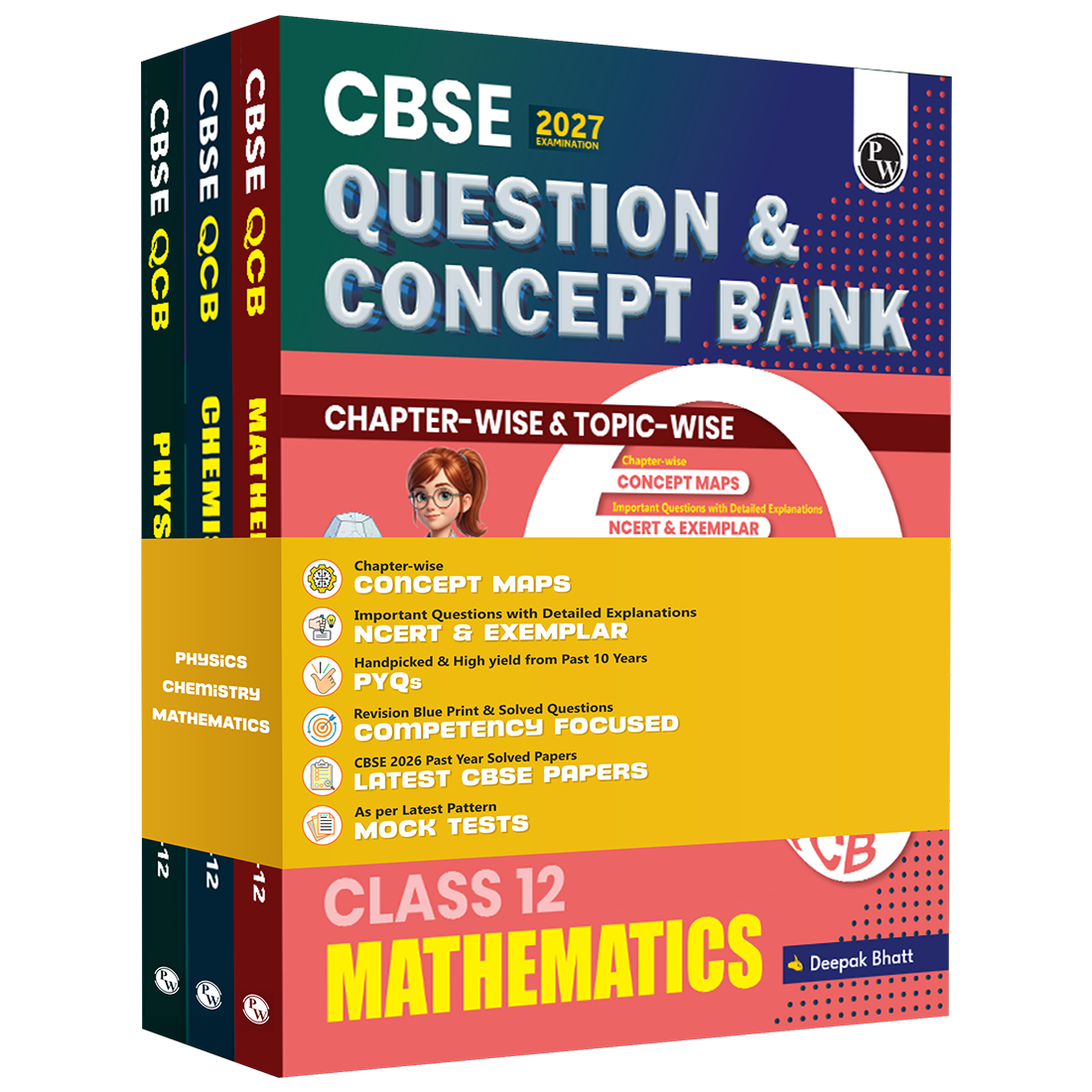
Organising your preparation becomes much simpler when you have access to structured, high-quality study materials. The CBSE Question & Concept Bank (QCB) Class 12 Physics, Chemistry, Mathematics and English COMBO Set of 4 Books is specifically designed to meet these exact requirements. Published in 2026 for upcoming board exams, this comprehensive combo eliminates all guesswork from your study routine.
Using this specialized tool streamlines your board revision plan in several key ways:
-
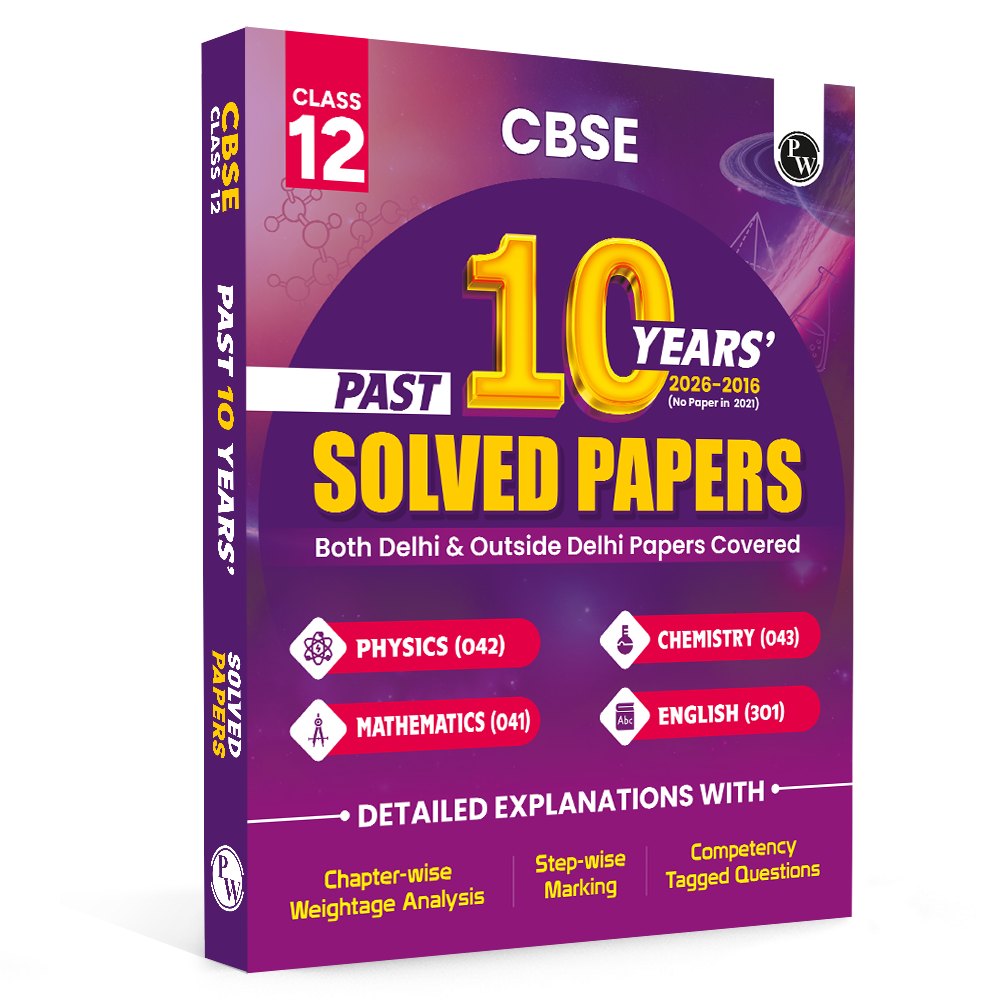
Fully Solved Past Year Papers: The combo includes completely solved CBSE 2026 PYQs and Sample Question Papers (SQPs). This ensures you practice with up-to-date questions that match the current marking schemes.
-
Time-Saving Concept Maps: Each chapter includes visual summaries and chapter-wise concept maps. These maps make it easy to review complicated derivations, equations, and grammar formats right before an exam.
-
All-Inclusive Practice Sets: It combines NCERT problems, important extra questions, and past year papers into a single resource. This gives you a balanced mix of basic concepts and advanced competency-based questions.
-
Focused High-Yield Questions: The set highlights 10 years of high-yield questions, allowing you to prioritize the most frequently asked topics.
-
Realistic Mock Exams: It provides mock tests built on the latest CBSE exam patterns, helping you check your speed, improve accuracy, and manage your time effectively.
CBSE Class 12 PCM PYQ Revision Plan for the Final Months
As your board exams approach, your main focus should shift from learning new topics to reinforcing what you have already covered. A structured revision plan prevents stress and ensures you enter the exam hall with confidence. Along with regular revision, CBSE Class 12 Books provide chapter-wise practice, competency-based questions, sample papers, and revision exercises that help strengthen concepts, improve answer-writing skills, and prepare effectively for the latest CBSE Board Examination pattern.
-
First Fortnight (Days 1–15): Dedicate this period to weak chapters. Use the chapter-wise concept maps from your combo to quickly review key theories, then complete targeted topic-wise practice.
-
Second Fortnight (Days 16–30): Shift your focus to full-length CBSE PCM PYQ sets. Complete at least two full papers for Physics, Chemistry, and Mathematics each week under timed conditions.
-
Final Week Countdowns: Stop introducing new topics entirely. Review your personal error log, memorize core formulas, practice high-weightage derivations, and read through English writing formats.
Subject-Wise CBSE Class 12 PCM PYQ Preparation Strategy
Every subject in the PCM stream requires a distinct analytical approach. Treating them all the same way can lead to uneven preparation and lower performance in specific areas.
Physics
Physics requires a strong grasp of conceptual theories and numerical problem-solving. Focus heavily on standard derivations, such as Gauss's Law, lens maker's formula, and Ampere's circuital law. Always write down the core formula and state the SI units explicitly before starting any calculations.
Chemistry
Organize your Chemistry studies into three clear areas:
-
Physical Chemistry: Focus on clear numerical formulas, graph interpretations, and direct laws like Raoult's Law or Faraday's Laws.
-
Organic Chemistry: Practice named reactions, step-by-step mechanisms (like nucleophilic substitution), and logical distinction tests daily.
-
Inorganic Chemistry: Pay close attention to periodic trends, anomalous behaviors, electronic configurations, and coordination compounds.
Mathematics
In Mathematics, the final answer is only worth a fraction of the total marks; the steps you take to get there are what matter most. Prioritize high-weightage topics like Calculus, Vectors, and Three-Dimensional Geometry. Practicing systematically ensures you present your integration and matrix calculations clearly, minimizing the risk of silly errors.
Read More: CBSE Previous Year Question Papers Class 12 Download PDF
CBSE Class 12 PCM PYQ FAQs
How many years of CBSE Class 12 PCM PYQ papers should I solve?
You should aim to solve at least the last 8 to 10 years of past papers. Focus on high-yield questions from these years to understand the main trends and frequent question types.
Can I clear the board exam by relying only on a PCM study timetable?
A timetable provides structure, but your success depends on how consistently you follow it. Combining your study schedule with active question practice and regular mock tests is essential for securing a high score.
How much time should I allocate to daily PYQ practice?
You should set aside at least 2 hours every day specifically for practicing past papers. Use this time to solve questions without looking at solutions, then spend another 30 minutes analyzing your mistakes.
When is the ideal time to start a full board revision plan?
The best time to start your full revision plan is around 6 to 8 weeks before your board exams. This gives you enough time to review your concept maps twice and complete multiple full-length practice tests.