How to Score 95+ in CBSE Class 12 PCB Board Exams with PYQs
Scoring above 95% in the science stream is a major milestone for many medical aspirants across the country. However, many students struggle to balance the massive syllabi of Physics, Chemistry, and Biology simultaneously, leading to anxiety during final revisions. Without a proper roadmap, identifying high-yield topics becomes an overwhelming chore. This is exactly where practicing with an authentic CBSE class 12 PCB PYQ collection becomes necessary. It bridges the gap between basic textbook reading and actual exam performance by familiarising you with genuine question typologies.
Importance of CBSE Class 12 PCB PYQ
Using a comprehensive CBSE class 12 PCB PYQ collection is not just about testing your knowledge; it is a fundamental pillar of a successful board exam strategy. When you solve papers from the last ten years, you gain an unmatched advantage over students who rely solely on reading theory. Board exams often follow specific patterns, and certain highly conceptual questions repeat across multiple years with minor adjustments.
Latest Exam Patterns
The Central Board of Secondary Education has shifted its focus towards evaluating deep conceptual understanding rather than simple rote memorisation. By analysing past papers, you can see exactly how the board incorporates modern testing elements into the traditional paper layout.
-
Competency-Based Questions: These include case-based studies and application-oriented problems that test your real-world understanding of scientific theories.
-
Assertion-Reason Tasks: Common in both Physics and Biology, these require an absolute clarity of facts and core principles to avoid silly errors.
-
Varying Weightage Trends: Trends reveal which chapters consistently command the highest marks every single year.
Improving Your Time Management
One of the biggest hurdles during the actual exam day is completing the long-form descriptive answers within the three-hour time limit. Practicing with real papers allows you to simulate the exact exam environment at home. You learn how to distribute your time wisely across multiple sections, ensuring that you do not rush through high-weightage five-mark questions at the very end of your paper.
How to Study a CBSE Class 12 PCB PYQ Subject-wise
Every science subject requires an individualised approach because the nature of the questions varies drastically between Physics, Chemistry, and Biology. To maximise the utility of your CBSE class 12 PYQ resources, you must categorise your practice according to the structural demands of each specific subject.
Physics Concepts and Numericals
Physics is traditionally considered the most challenging component of the PCB group due to its mix of derivation steps and complex numerical applications. When analyzing CBSE class 12 PYQs, divide your focus into three core areas:
-
Core Derivations: Mechanics, wave optics, and electromagnetic induction feature standard derivations that must be practiced step-by-step until they become second nature.
-
Numerical Accuracy: Board papers allocate a substantial portion of marks to numerical problems, particularly from chapters like Electrostatics, Current Electricity, and Alternating Current.
-
Graph-Based Questions: Pay careful attention to graphs representing electric fields, magnetic properties, and the photoelectric effect, as these are highly favoured by paper setters.
|
Physics High-Yield Chapter |
Core Focus Areas for Revision |
Expected Question Types |
|
Electrostatics |
Gauss's Law, Capacitance, Electric Potential |
Long Derivations & Numericals |
|
Current Electricity |
Kirchhoff's Laws, Potentiometer, Drift Velocity |
Application & Circuit Problems |
|
Optics |
Lens Maker's Formula, Interference, Diffraction |
Ray Diagrams & Wave Theory Case Studies |
|
Modern Physics |
Photoelectric Effect, Bohr's Model, Nuclear Fission |
Formula-Based Numericals & Short Theory |
Chemistry Equations and Mechanisms
Chemistry requires a balanced study method because it is cleanly split into Physical, Inorganic, and Organic branches. Using your previous year questions PCB repository helps you pinpoint exactly what kind of questions each branch generates.
-
Physical Chemistry: Focus heavily on formulas, unit conversions, and step-by-step calculations in chapters like Solutions, Electrochemistry, and Chemical Kinetics.
-
Inorganic Chemistry: Pay extreme attention to the d-block and f-block elements, specifically focus on reasoning questions regarding oxidation states, trends, and coordinate compound nomenclature.
-
Organic Chemistry: This is usually the deciding factor for a 95+ score. Use past papers to compile a dedicated list of named reactions, mechanism pathways (such as SN1 and SN2), and chemical distinction tests.
Biology Diagrams and Terminology
Biology is a high-scoring subject where you can secure a perfect century if your answer presentation is flawless. When studying past board papers, focus deeply on technical terminologies and clear labeling.
-
Diagram Flawlessness: Practice drawing neat, well-labelled diagrams for human reproduction, plant fertilization, and DNA structures. The board awards specific partial marks just for correct visual placement.
-
Process Flowcharts: For complex pathways like transcription, translation, or biotechnology processes, practice writing answers in chronological flowcharts to make them easy for examiners to read.
-
Keyword Association: Ensure that your definitions contain the precise scientific terms used in the official textbook curriculum, as examiners search specifically for these words during evaluation.
Features of CBSE Class 12 PCB PYQ
-
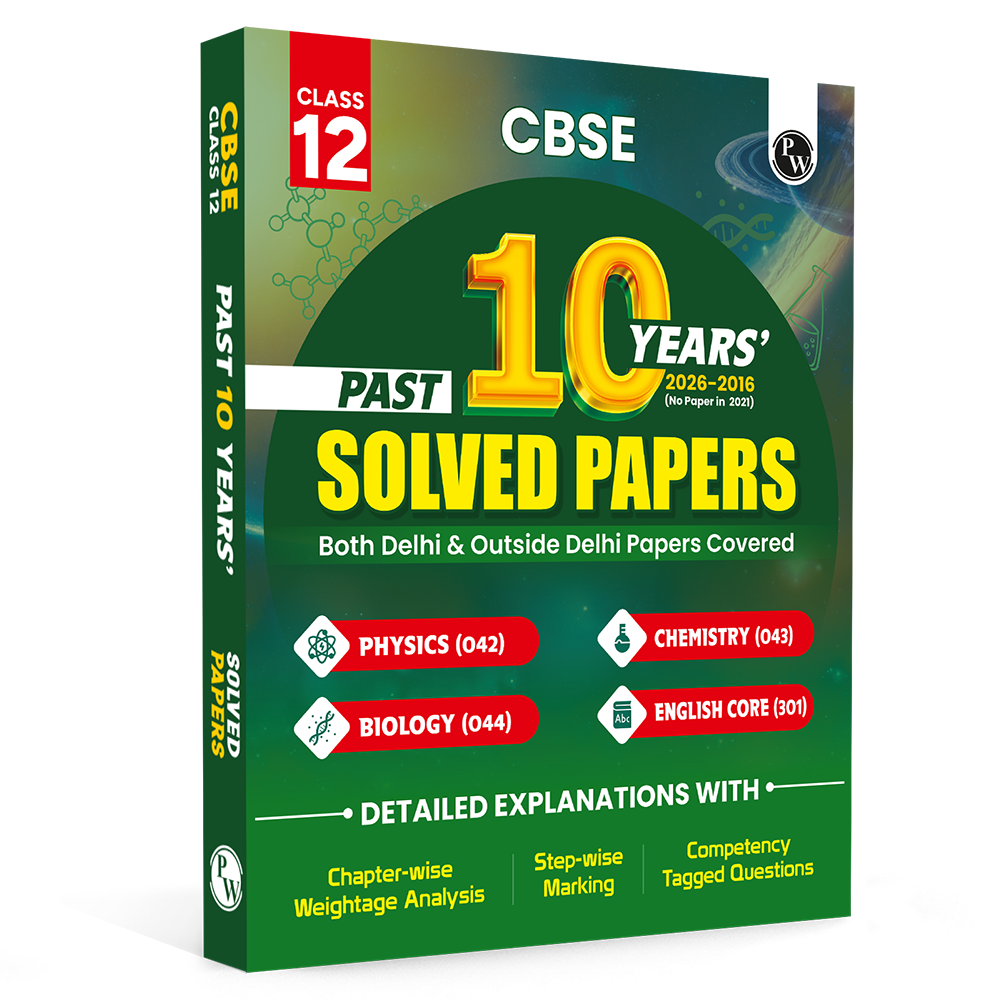
Exam Trend & Pattern Insights: Understand chapter-wise weightage, question types, and exam trends from the past 5 years of CBSE papers for better Class 12 board exam preparation.
-
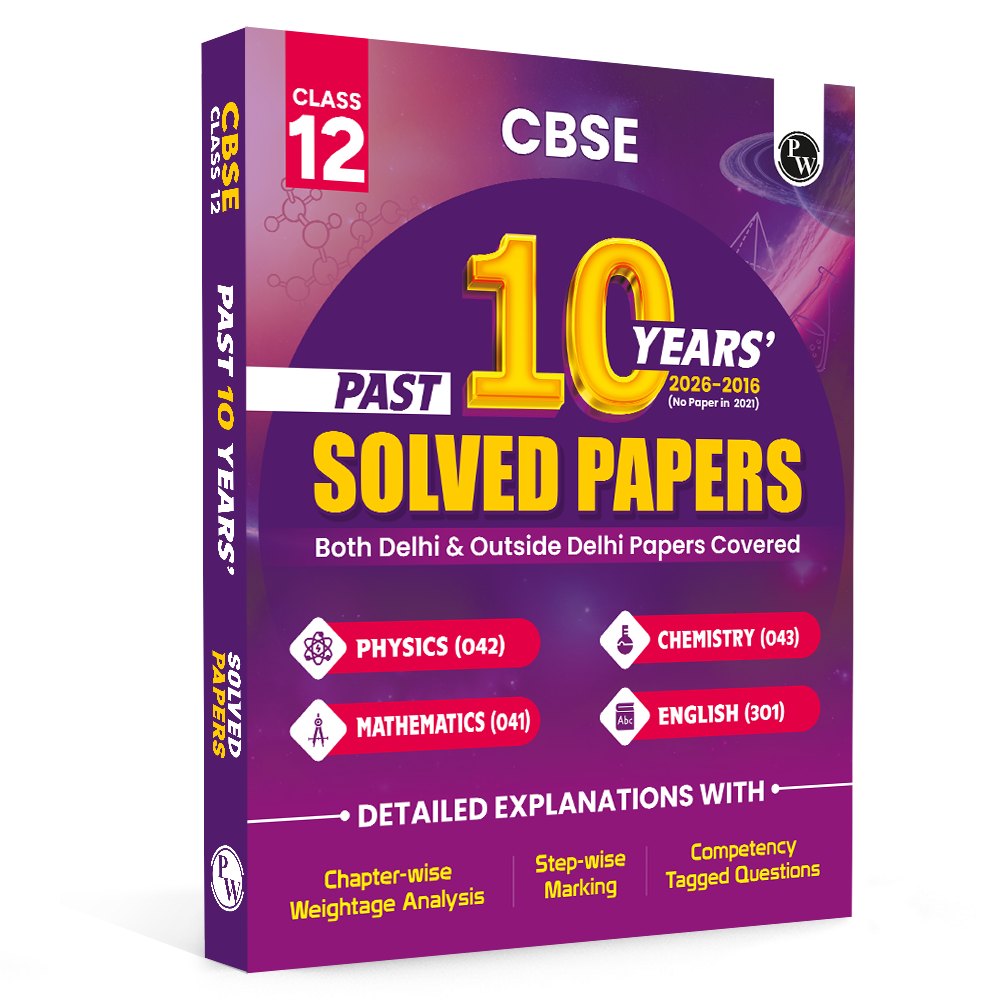
Authentic CBSE Papers Coverage: Practice with 20 original CBSE papers each from Delhi and Outside Delhi for Physics, Chemistry, Biology, and English.
-
Term-wise Paper Inclusion: Includes both Term-I and Term-II papers for complete subject-wise revision and exam practice.
-
Step-wise Solutions with Marking Scheme: Learn with detailed step-by-step solutions based on the latest CBSE marking scheme to improve answer writing and presentation.
-
Updated Syllabus Guidance: Easily identify topics marked as Out of the Syllabus (OS) according to the latest CBSE Class 12 syllabus and exam guidelines.
-
Competency-based Question Analysis: Prepare smarter with a detailed analysis of competency-based questions from the past 10 years, including case-based, assertion-reason, and application-based questions.
- Comprehensive CBSE Class 12 Books: Along with PYQs, CBSE Class 12 Books provide chapter-wise theory, competency-based questions, revision notes, sample papers, and ample practice exercises, helping students strengthen concepts and prepare systematically for the CBSE Class 12 PCB Board Examination.
CBSE Class 12 PCB PYQ Study Schedule
Integrating past papers into your daily routine requires a structured PCB revision plan. Simply solving a paper randomly right before the exam will not yield the desired results. You need a systematic blueprint that allows you to absorb the insights gained from past trends throughout your Class 12 PCB board preparation phase.
Phase 1: Practice PYQs Chapter-wise
Do not wait until the entire syllabus is finished to touch your past questions. As soon as you complete a chapter from your standard textbooks, open your PYQ book and solve every single question asked from that specific topic over the last decade. This reinforces the concepts you just studied and highlights your immediate weak spots before you move forward.
Phase 2: Solve Full-Length Mock Papers
Once your basic syllabus is wrapped up, transition into writing full-length, unassisted mock exams. Block out a quiet three-hour window during the exact time slot of the board exam to build physical endurance and mental stamina.
-
Set a countdown timer for exactly three hours to mimic real pressure.
-
Read the entire paper carefully during the initial fifteen-minute reading time to plan your choice of questions.
-
Write out every single answer fully without looking at the solutions halfway through the session.
-
Keep an extra ten minutes at the end of your test exclusively for checking your calculations and checking diagram labels.
Phase 3: Focus on Weak Topics
Use the final weeks leading up to the board exams to evaluate your mock performances. If you consistently lose marks in Organic Chemistry conversions or Physics optics numericals, dedicate your morning slots to re-studying those specific theory modules and solving related past questions again.
Mistakes to Avoid while Using a CBSE Class 12 PCB PYQ
Even with the right resources, many students fail to cross the 95% barrier because they approach past papers incorrectly. Being aware of these pitfalls will keep your preparation efficient and highly productive.
Ignoring the Official Marking Scheme
The biggest error students make is merely checking if their final answer matches the key, without looking at the step-by-step breakdown. The board utilizes a strict step-marking system. If a question is worth five marks, specific points are allocated to the initial formula, the intermediate values, the final numerical value, and the correct unit of measurement. Always cross-check your practice drafts with the official board solutions to align your writing style with what the evaluation system demands.
Ignoring the Latest CBSE Syllabus
Syllabi change over time, and certain topics from five or ten years ago might be rationalised or completely removed from your current curriculum. Spending hours mastering complex out-of-syllabus mechanisms wastes precious energy. Use a modern, updated preparation resource that clearly marks obsolete content as out of bounds, allowing you to focus your attention entirely on active topics.
Reading Instead of Writing Answers
Reading through solved papers like a storybook creates a false sense of confidence. You might feel that you understand a derivation while reading it, but reproducing it on a blank sheet of paper under exam pressure is a completely different challenge. Always practice actively by writing, drawing, and calculating manually.
Check Out: Class 12th Question Banks
How to Choose the Best CBSE Class 12 PCB PYQ Book
To execute your study plan smoothly, you must select an authentic, well-structured resource that simplifies your workflow. A disorganized question bank with incorrect answer keys can do more harm than good to your morale.
When selecting your primary study partner, ensure that it provides comprehensive coverage of both Delhi and Outside Delhi paper sets, as this doubles your high-quality question pool. The solutions provided must be descriptive, clear, and perfectly aligned with the latest guidelines issued by the board.
Read More: CBSE Topper Answer Sheet for Class 12 PDF Download
CBSE Class 12 PCB PYQ FAQs
Can I score above 95% by only studying the CBSE class 12 PCB PYQ collection?
While past papers are essential for understanding question trends and mastering answer presentation, you must use them alongside your regular textbooks. Building strong conceptual roots from your core syllabus first ensures you can solve brand-new competency-based problems easily.
How many past years should I cover for a solid board exam strategy?
Covering the past ten years of solved papers provides an excellent foundation for your preparation. It gives you deep exposure to all possible question types, long-term pattern shifts, and recurring high-yield topics across all three science subjects.
When is the ideal time to start working with the PCB PYQ book?
The ideal approach is to start using the book chapter-wise during your regular preparation phase. Once you complete a specific topic, solve its past questions immediately to build deep confidence before transitioning to full-length papers later in the year.
Are the step-wise answers in past papers helpful for final evaluation?
Yes, the board evaluates your answers using a strict step-marking pattern. Reviewing authentic solved papers helps you understand how marks are divided between formulas, diagrams, intermediate steps, and final units so you can structure your answers perfectly.
How does a previous year questions PCB revision plan prevent running out of time during the exam?
By practicing full-length past papers within a strict three-hour limit, you build the required writing speed and structural discipline. This regular practice teaches you exactly how much time to give to short questions versus long-form descriptive tasks.