Literature to Grammar: What PW Class 9 English Question Bank Covers

End-term school assessments bring a unique mix of academic pressure and tight deadlines. Balancing descriptive literature answers, unseen reading passages, formal writing structures, and intricate grammatical rules often leaves students overwhelmed.
Studying from multiple scattered textbooks and loose notebook sheets makes systematic revision difficult during the final weeks before school tests. Without a clear plan, identifying gaps in understanding becomes a frustrating process.
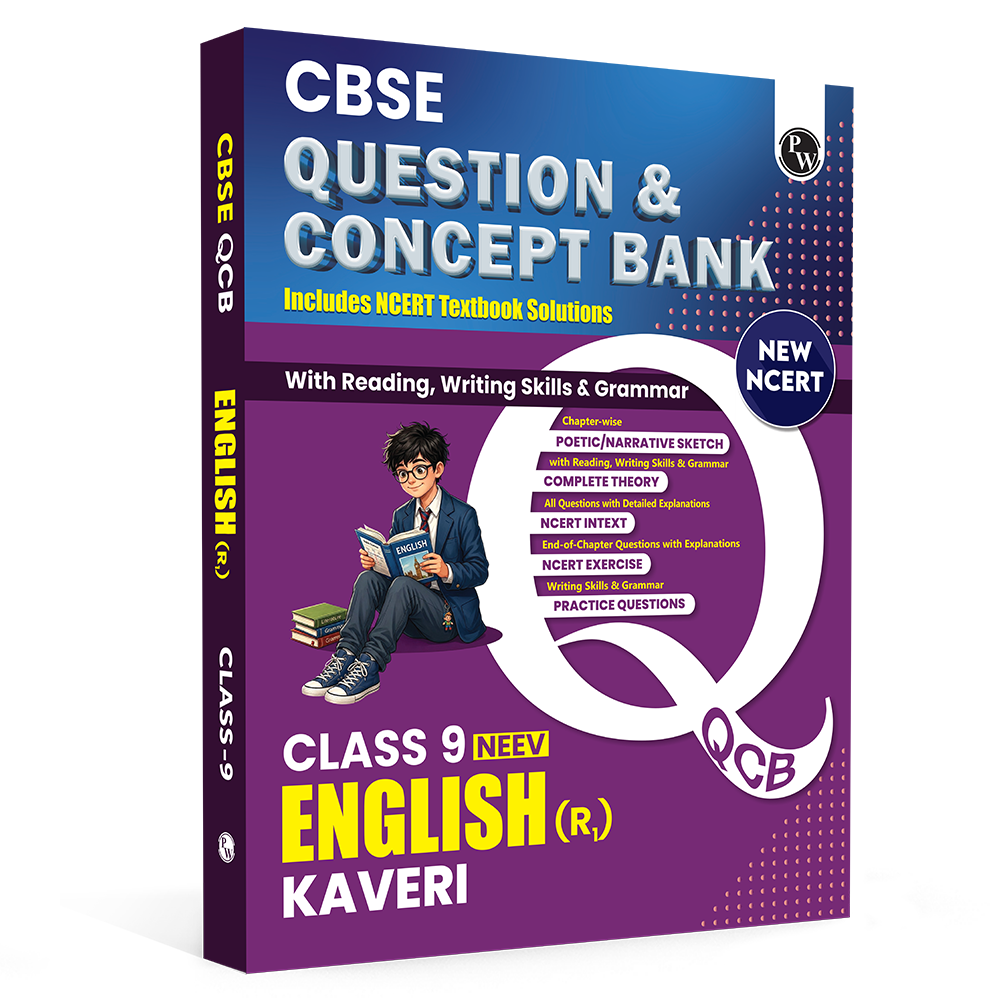
Using a dedicated CBSE class 9 English question bank solves this issue by bringing every critical section of the updated curriculum into a single, structured learning resource.
What Is CBSE Class 9 English Question Bank?
A CBSE class 9 English question bank is an all-inclusive academic guide designed to streamline learning, revision, and self-evaluation for school students. Aligned fully with the latest CBSE guidelines and modern NCERT curriculum requirements for the 2026–27 academic year, this book replaces disconnected study materials with an organised, practice-oriented approach.
Rather than focusing strictly on passive reading, a quality English question bank emphasizes active engagement with the subject material. It combines literature analysis, writing formats, and grammar exercises into structured modules.
Features of CBSE Class 9 English Question Bank
To maximize performance in final school tests, students require CBSE Class 9 books that support both immediate concept review and extensive self-assessment. The resource includes several tailored features designed to meet modern evaluation standards:
-
Chapterwise Concept Maps: Visual tools positioned at the start of topics to help learners quickly link central themes, character relationships, and grammar rules.
-
In-Depth Conceptual Theory: Clear, concise notes that explain foundational rules in grammar and key narrative arcs in prose and poetry.
-
Complete NCERT Solutions: Detailed, step-by-step answers for all in-text questions, chapter-end exercises, and textbook assignments.
-
Competency-Based Questions: Analytical exercises designed to test application, critical thinking, and contextual understanding in line with updated CBSE patterns.
-
Revision-Focused Practice Sets: Ample chapterwise practice questions tailored specifically for swift, targeted CBSE English revision prior to term exams.
-
Self-Assessment Frameworks: Comprehensive answer keys and step-by-step explanations that facilitate independent grading and targeted error correction.
Grammar Topics Covered in CBSE Class 9 English Question Bank
Gaining top marks in English assessments requires precision in language mechanics. Unlike literature, where interpretation plays a role, grammar and writing modules demand exact adherence to structural rules. Regular grammar practice class 9 routine helps prevent minor errors in sentence construction and verb agreement, safeguarding vital marks.
-
Fundamental Grammar Units
The CBSE Class 9 question bank covers all essential grammatical areas prescribed in the Class 9 syllabus:
-
Tenses: Understanding simple, continuous, perfect, and perfect continuous forms across past, present, and future timeframes. Practice drills focus on correct verb tense transformations within paragraph editing tasks.
-
Modals: Mastering auxiliary verbs that express obligation, necessity, possibility, permission, and ability (such as must, should, can, could, may, might).
-
Subject-Verb Concord: Ensuring agreement between subjects and main verbs in complex sentences containing compound subjects, collective nouns, or restrictive clauses.
-
Reported Speech: Transforming direct dialogue into indirect speech, with dedicated exercises on changing tenses, pronouns, time indicators, and reporting verbs for commands, requests, and questions.
-
Determiners & Prepositions: Developing accuracy in using articles, quantifiers, demonstratives, and prepositional phrases within cloze gap-filling exercises.
-
Applied English Writing Modules
Building strong English writing skills requires combining structured formats with clear expression. The practice exercises guide students through specific writing styles:
-
Descriptive Paragraphs: Structuring vivid descriptions of individuals, events, or places using concise vocabulary, logical progression, and relevant sensory details.
-
Diary Entries: Writing authentic personal reflections using the correct layout, date headers, informal yet reflective tone, and clear emotional expression.
-
Story Writing: Constructing well-paced narrative arcs based on visual or verbal prompts, incorporating plot outlines, dialogue, character interaction, and meaningful endings.
How to Use CBSE Class 9 English Question Bank?
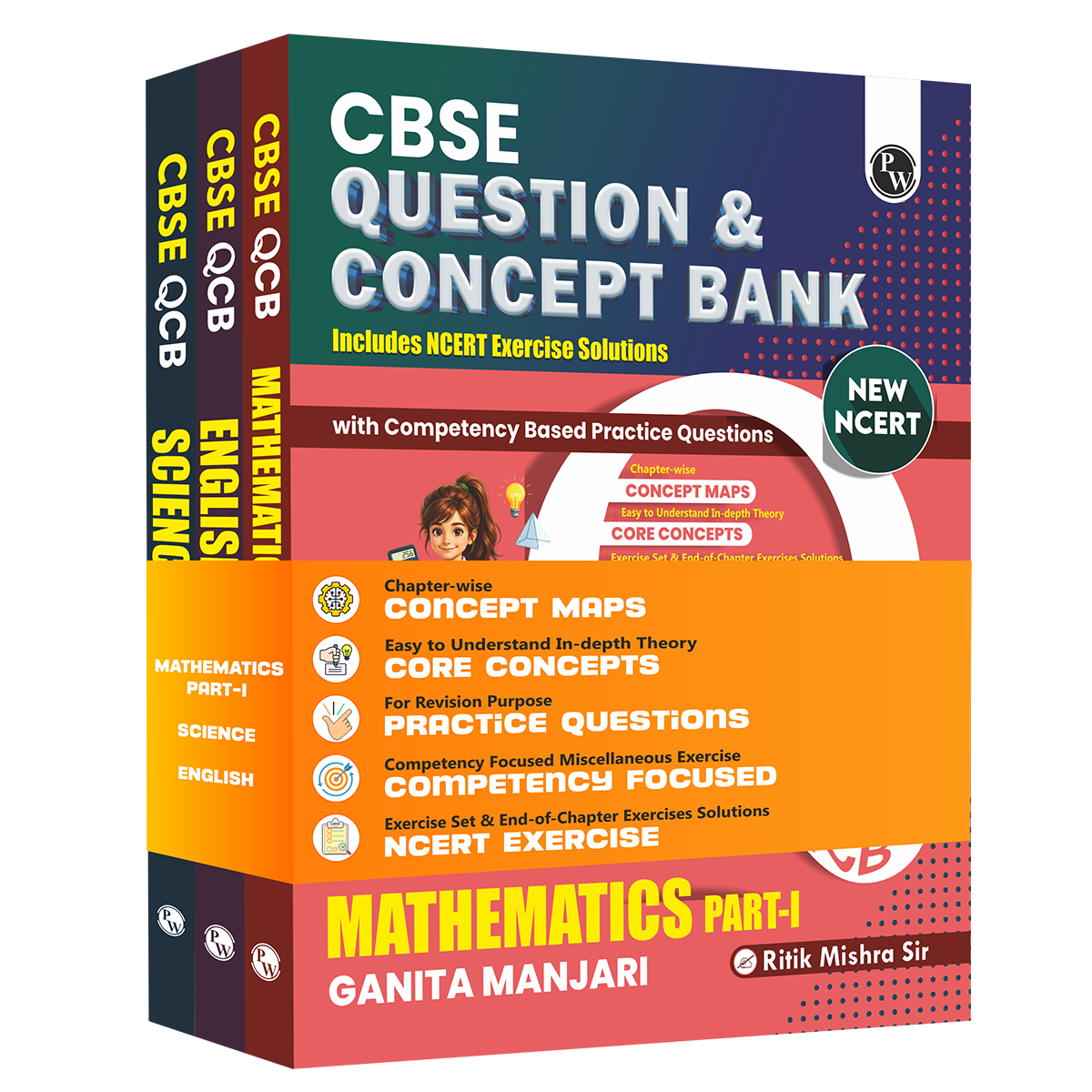
Having access to quality PW CBSE Class 9 Combo Set of 3 Books is only effective if paired with a practical study method. Implementing a step-by-step routine ensures that students get maximum value from every revision session as end-term exams approach.
Step 1: Start with Visual Concept Maps
Before attempting long practice sets, spend five to ten minutes reviewing the visual concept map at the beginning of the chapter. This provides an immediate summary of central themes, character interactions, or grammar rules, establishing a clear mental outline.
Step 2: Review In-Depth Theory & Rules
Read through the foundational explanations to clarify any lingering doubts. Focus on understanding structural rules for grammar or thematic elements for prose and poetry, ensuring your basic understanding is accurate before writing practice answers.
Step 3: Attempt Questions Independently
Solve textbook exercises, extract-based questions, and competency tasks without consulting answer keys first. Simulating actual exam conditions builds speed, improves focus, and highlights real skill level.
Step 4: Perform Honest Self-Assessment
Compare your completed answers against the detailed solutions provided in the book. Pay attention to missing key phrases in class 9 literature questions, structural missteps in writing tasks, or tense mismatches in grammar exercises.
Step 5: Conduct Targeted Error Correction
Maintain a dedicated error logbook for recurring mistakes. Re-attempt missed questions after 48 hours to confirm that the conceptual gap has been resolved effectively.
Study Strategy Plan with CBSE Class 9 English Question Bank
To manage time effectively during end-term revision, follow this structured four-week strategy. It balances reading comprehension, language mechanics, and literature analysis to ensure thorough board preparation readiness.
Phase 1: Foundation Review (Week 1)
Dedicate the first week to core theory and visual concept maps. Focus on grammar rules, subject-verb concord principles, and tense transformations. Establish a daily routine of 30 minutes of grammar practice to build consistent accuracy.
Phase 2: Literature Deep Dive (Week 2)
Shift focus toward literature chapters in Beehive and Moments. Work through extract-based multiple-choice questions, character sketches, and thematic long-answer questions. Ensure key quote references and chapter keywords are memorised accurately.
Phase 3: Writing & Reading Integration (Week 3)
Spend this phase perfecting formal writing formats and unseen reading passage techniques. Practice drafting descriptive paragraphs and story outlines within strict time limits to improve speed and layout accuracy.
Phase 4: Mock Tests & Refinement (Week 4)
Complete full-length practice tests under realistic exam conditions. Use the provided solutions for independent marking, verifying that time management, handwriting legibility, and answer presentation meet school standards.
Also Check: Class 9th Sample Papers
Common Mistakes to Avoid with CBSE Class 9 English Question Bank
Avoiding common study errors is just as crucial as studying the right content. Students frequently drop marks during end-term tests due to poor revision habits:
-
Reading Solutions Passively: Simply reading through step-by-step answers without writing them down creates a false sense of competence. Always write out answers manually to build muscle memory and test actual recall.
-
Ignoring Competency-Based Items: Focusing exclusively on simple factual recall leaves students unprepared for modern analytical questions. Allocate equal practice time to higher-order competency tasks.
-
Neglecting Writing Formats: Memorising story ideas while ignoring official structural layouts leads to unnecessary point deductions in writing sections.
-
Skipping Self-Evaluation: Failing to compare student drafts with model solutions prevents identification of spelling mistakes, grammatical slip-ups, and structural gaps.
Read More: CBSE Class 9 Question Bank PDF Download
CBSE Class 9 English Question Bank FAQs
What makes a CBSE class 9 English question bank necessary for end-term exams?
It combines literature summaries, grammar drills, writing formats, and complete NCERT solutions into one organised guide, helping students revise systematically without managing multiple loose notes.
How do competency-based questions assist with class 9 literature questions?
Competency-based questions test deep comprehension, character evaluation, and thematic analysis. Practicing them prepares students for analytical, extract-based questions in modern school exams.
Why is daily grammar practice class 9 important before school tests?
Regular grammar practice reinforces structural rules like tenses and reported speech, reducing careless mistakes and protecting marks in sentence editing and transformation tasks.
Can an English question bank be used for independent study?
Yes, detailed step-by-step solutions and self-assessment frameworks allow students to evaluate their own work, identify errors, and track revision progress independently.
When should students start their CBSE English revision for final assessments?
Starting structured revision four to six weeks prior to term examinations gives students ample time to review concept maps, practice writing tasks, and complete timed mock papers without last-minute stress.