NCERT Solutions for Class 7 Science Chapter 12 Reproduction in Plants
NCERT Solutions for Class 7 Science Chapter 12 Reproduction in Plants help students clearly understand how new plants are produced from parent plants. This chapter explains the importance of reproduction in maintaining the continuity of life on Earth. Plants reproduce in different ways, and each method plays a vital role in nature.
Through Class 7 Science Chapter 12 questions and answers, students learn about asexual reproduction methods such as vegetative propagation, budding, fragmentation, and spore formation. The chapter also introduces sexual reproduction in plants, explaining parts of a flower, pollination, fertilisation, seed formation, and germination in a simple manner.
These solutions explain how a seed grows into a new plant and how parts of plants like potatoes, ginger, and Bryophyllum can develop into complete plants. The step-by-step answers make learning easy and interesting for young learners. Practising these NCERT solutions improves concept clarity, helps in exam preparation, and builds curiosity about plant life and natural processes.
Check Out: Class 7 Books
Class 7 Science Chapter 12 Reproduction in Plants Questions Answers
Question 1: Fill in the blanks:
(a) Production of new individuals from the vegetative part of parent is called ________.
(b) A flower may have either male or female reproductive parts. Such a flower is called _________.
(c) The transfer of pollen grains from the anther to the stigma of the same or of another flower of the same kind is known as _________.
(d) The fusion of male and female gametes is termed as __________.
(e) Seed dispersal takes place by means of _________, _________ and _________.
Answer: (a) Production of new individuals from the vegetative part of parent is called vegetative propagation . (b) A flower may have either male or female reproductive parts. Such a flower is called unisexual . (c) The transfer of pollen grains from the anther to the stigma of the same or of another flower of the same kind is known as pollination . (d) The fusion of male and female gametes is termed as fertilisation . (e) Seed dispersal takes place by means of wind , water and animals .
Question 2: Describe the different methods of asexual reproduction. Give examples. Answer: The various modes of asexual reproduction in plants are as follows:
(i) Vegetative propagation: It is the ability of a plant to produce new plants from roots, stems, leaves, and buds. Vegetative propagation is divided into two types.
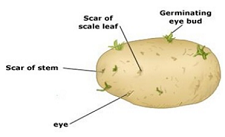
Natural vegetative propagation: This type of vegetative propagation occurs easily in nature and involves simple vegetative parts. Potato plant sprouting from an eye is a common example.
Artificial vegetative propagation: This type of vegetative propagation is performed manually and generally occurs in laboratory conditions. The formation of a complete plant from a stem cutting of rose is a common example of this method.
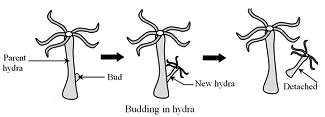
(ii) Budding: It involves the formation of a new individual from a bulb-like projection called a bud. The bud grows and gets detached from the parent to form a new individual. It is commonly observed in yeast.
(iii) Fragmentation: It is a form of asexual reproduction where a new organism is formed from the fragments of the parent body. It is the only mode of asexual reproduction in Spirogyra.
(iv) Spore formation: Many non-flowering plants reproduce through spore formation. Spores are tiny cells protected by a thick wall. Fungi such as bread moulds reproduce asexually using this method.
Question 3: Explain what you understand by sexual reproduction.
Answer: Sexual reproduction is a process which involves production of seeds. It requires two parents. Most plants reproduce sexually with the help of flowers. The main function of a flower is to reproduce and therefore develop new seeds that can grow into new plants.
Question 4: State the main difference between asexual and sexual reproduction.
Answer: Differences between sexual and asexual reproduction:
|
Asexual reproduction |
Sexual reproduction |
|
It requires only one parent. |
It requires two parents. |
|
In asexual reproduction, newlydeveloped plants are identical to the parent and to each other. |
In sexual reproduction, newly developed plantsare not identical to parents. |
|
Special reproductive parts are notrequired for asexual reproduction. |
Flower is the reproductive part of a plant whichcontains the sexual organs of a plant. These are important for sexual reproduction. |
|
Examples are yeast, rose, jasmine,potato, etc. |
Examples are flowering plants, such as Hibiscus,corn, papaya, etc. |
Answer:
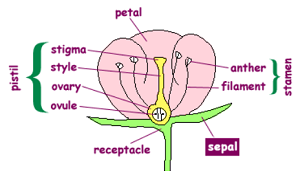
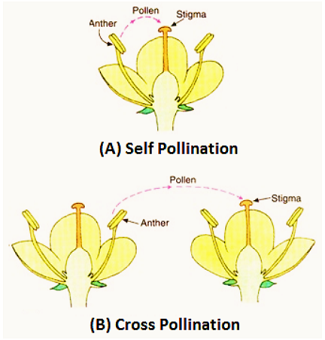
Question 6: Explain the difference between self-pollination and cross-pollination.
Answer: Differences between self-pollination and cross-pollination:
|
Self-pollination |
Cross-pollination |
|
It involves the transfer of pollen from the stamen to the pistil of the same flower. |
It involves the transfer of pollen from the stamen of one flower to the pistil of another flower of the same plant or that of a different plant of the same kind. |
|
It occurs only in bisexual flowers. |
It occurs in both unisexual and bisexual flowers. |
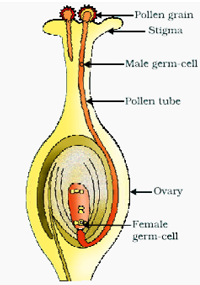
Answer: When pollen lands on stigma, it germinates and gives rise to a pollen tube that passes through the style and reaches the ovary of a pistil. When the pollen tube reaches an ovule, it releases the male gametes. A male gamete fuses with a female gamete in the ovule. This process is known as fertilisation. The cell which is formed after the fusion of a male and a female gamete is known as zygote. This zygote divides several times in order to form the embryo present inside the seed.
Read More: NCERT Solutions for Class 7 Science Chapter 2
Process of fertilisation
Question 8: Describe the various ways by which seeds are dispersed.
Answer: Seed dispersal occurs by the following agencies.
(a) Dispersal by animals − There are many ways by which birds and animals can disperse seeds. For example, birds and animals can eat the fruits and excrete the seeds away from the parent plant. Some seeds have barbs or other structures that get attached to the animal’s body and are carried to new sites. Some fruits have hooks on them which cling to fur or clothes.
(b) Dispersal by wind − Seeds that get dispersed by wind are usually smaller in size or they have wings or hair-like structures. For example, winged seeds of drumsticks, hairy fruit of sunflower, etc. are dispersed by wind.
(c) Dispersal by water − Many aquatic plants or plants that live near water has seeds that can float and are carried away by water. For example, coconuts can float and are dispersed by water.
(d) Dispersal by explosion − Sometimes the seeds are dispersed by the bursting of fruits with sudden jerks. The seeds get scattered or distributed far from the parent plant. Examples of such plants are castor and balsam.
Question 9: Match items in Column I with those in Column II:
|
Column I |
Column II |
|
(a) Bud |
(i) Maple |
|
(b) Eyes |
(ii) Spirogyra |
|
(c) Fragmentation |
(iii) Yeast |
|
(d) Wings |
(iv) Bread mould |
|
(e) Spores |
(v) Potato |
|
(vi) Rose |
Answer:
|
Column I |
Column II |
|
(a) Bud |
(iii) Yeast |
|
(b) Eyes |
(v) Potato |
|
(c) Fragmentation |
(ii) Spirogyra |
|
(d) Wings |
(i) Maple |
|
(e) Spores |
(iv) Bread mould |
(a) The reproductive part of a plant is the
(i) leaf
(ii) stem
(iii) root
(iv) flower
(b) The process of fusion of the male and female gametes is called
(i) fertilisation
(ii) pollination
(iii) reproduction
(iv) seed formation
(c) Mature ovary forms the
(i) seed
(ii) stamen
(iii) pistil
(iv) fruit
(d) A spore producing plant is
(i) rose
(ii) bread mould
(iii) potato
(iv) ginger
(e) Bryophyllum can reproduce by its
(i) stem
(ii) leaves
(iii) roots
(iv) flower
Answer: (i) d. flower, (ii) a. fertilization, (iii) d. fruit, (iv) b. bread mold, (v) b. leaves
Read More: NCERT Solutions for Class 7 Science Chapter 4
What is Reproduction in Plants?
Reproduction is the process by which parents produce new individuals of the same species. In plants, this happens in two main ways. The first is "Asexual Reproduction," where new plants are grown without using seeds. The second is "Sexual Reproduction," where seeds are needed to make new plants.
Understanding the class 7th science chapter 12 question answer helps us see that plants have different parts. Some parts, like roots and leaves, are for growing. The flowers are the "reproductive parts" because they help make seeds. Whether you are in class 4 or class 7, these ideas are simple because we see flowers and fruits every day in our gardens.
Types of Asexual Reproduction
In asexual reproduction, only one parent is involved. No seeds are used here. We see this often in our kitchens and parks.
1. Vegetative Propagation
This is when a new plant grows from a part of the old plant, like a root, stem, or leaf.
-
From Stems: If you cut a branch from a rose bush and plant it in the soil, it grows into a new rose. This is called a "cutting."
-
From Potatoes: Have you seen the small "eyes" on a potato? If you cut a piece with an eye and plant it, a new potato plant grows.
-
From Ginger: New ginger grows from the underground stem.
2. Budding
This happens in tiny organisms like yeast. A small bulb-like part called a "bud" grows on the body and then separates to become a new individual.

Shutterstock
3. Fragmentation
If you see green slimy patches in a pond, that is algae. When an alga breaks into two or more pieces, each piece grows into a new plant. This happens very quickly.
4. Spore Formation
Some plants like ferns and mosses use spores. Spores are tiny, light bodies floating in the air. When they land on moist ground, they grow into new plants.
Read More: NCERT Solutions for Class 7 Science Chapter 6
Sexual Reproduction: The Role of Flowers
Flowers are the most beautiful part of a plant. They are also very important for making seeds. A flower has male parts and female parts.
-
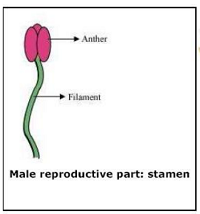
Stamen: This is the male part. It has a top called the "anther" which makes yellow powder called "pollen grains."
-
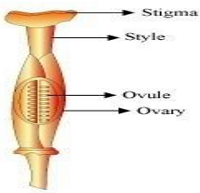
Pistil: This is the female part. It has a "stigma" on top and an "ovary" at the bottom where seeds are formed.
 Shutterstock
In the class 7th science chapter 12 question answer reproduction in plants, we learn that some flowers have both parts (bisexual), while others have only one (unisexual).
Pollination and Fertilization
For a seed to grow, pollen from the male part must reach the female part. This is called "Pollination."
-
Self-pollination: Pollen lands on the same flower.
-
Cross-pollination: Pollen travels from one flower to another by wind, water, or insects like bees.
After pollination, the pollen associates with the egg inside the ovary. This is called "Fertilization." This joined part becomes a "Zygote," which later grows into a seed. The ovary then turns into a delicious fruit!
Class 7th Science Chapter 12 Question Answer: Textbook Solutions
Q1: Describe the different methods of asexual reproduction. Give examples.
Asexual reproduction includes:
-
Vegetative Propagation: Growing from roots or stems (Example: Rose, Potato).
-
Budding: A small bud grows and detaches (Example: Yeast).
-
Fragmentation: Breaking into pieces (Example: Spirogyra algae).
-
Spore Formation: Small spores flying in the air (Example: Bread mould).
Q2: Explain what you understand by sexual reproduction.
Sexual reproduction is the process where two parents are involved. The male and female parts of flowers join together to make a seed. These seeds eventually grow into new plants.
Q3: State the main difference between asexual and sexual reproduction.
In asexual reproduction, only one parent is needed and no seeds are formed. In sexual reproduction, two parents (male and female) are needed and seeds are produced.
Q4: Sketch the reproductive parts of a flower.
(Students should draw the Stamen with its anther and filament, and the Pistil with its stigma, style, and ovary).
Q5: How does the fertilization process happen in flowers?
When a pollen grain lands on the stigma, it grows a tube down to the ovary. The male part travels through this tube and joins the female egg. This joining is called fertilization.
Seed Dispersal: How Seeds Travel
Plants cannot walk, but their seeds can travel far away! This is called "Seed Dispersal." If all seeds fell under the same tree, they wouldn't get enough sunlight or water.
-
By Wind: Some seeds are light or have "wings," like maple or drumstick seeds. They fly with the wind.
-
By Water: Coconut seeds have a spongy outer part so they can float in rivers and seas.
-
By Animals: Some seeds have "hooks" that stick to animal fur. Animals carry them to new places.
-
By Fruits Bursting: Some fruits, like balsam, burst open with a jerk and throw seeds far away.
Using class 7th science chapter 12 question answer pdf helps you remember these travel methods easily for your exams.
Why Study This Chapter?
Reproduction is the reason we have forests, fruits to eat, and oxygen to breathe. If plants stopped making more plants, life would end.
By reading the class 7th science chapter 12 question answer reproduction in plants, you become a friend to nature. You will know how to plant a rose cutting or how to help a seed grow in a pot at home.
class 7th science chapter 12 question answer extra - Practice Questions
Q1: Why are flowers colorful and sweet-smelling?
Flowers are colorful and have a nice smell to attract insects like bees and butterflies. These insects help in pollination by carrying pollen from one flower to another.
Q2: What is a Zygote?
A zygote is the cell formed after the male part (pollen) and the female part (egg) join together during fertilization.
Q3: Can a plant grow without seeds?
Yes, plants can grow without seeds through asexual reproduction like vegetative propagation (using stems or roots).
PW Benefits of Class 7 Study Material
1. Syllabus-Based Content
PW Class 7 study material is prepared strictly according to the latest NCERT syllabus. It ensures that students cover all important topics from Maths, Science, English, and Social Science without missing any concepts.
2. Simple and Student-Friendly Language
The content is written in easy and clear language, making learning stress-free for Class 7 students. Complex topics are explained with simple examples for better understanding.
3. Strong Concept Building
PW focuses on building strong fundamentals. Clear explanations help students understand concepts deeply instead of memorising answers, which is useful for higher classes.
4. Practice Questions and Examples
The study material includes chapter-wise practice questions, solved examples, and exercises. Regular practice improves accuracy and confidence in exams.
5. Exam-Oriented Preparation
Important questions, key points, and revision notes are provided to help students prepare effectively for school tests and assessments.
6. Expert Faculty Content
The material is designed by experienced PW teachers who understand students’ learning needs and exam patterns.
7. Improves Academic Performance
With structured lessons and regular practice, students perform better in exams and develop a positive learning attitude.
Check out: PW School Books
NCERT Solutions for Class 7 Science Chapter 12 FAQs
1. Where can I find the class 7th science chapter 12 question answer pdf?
You can download the PDF from the PW Store website. It is very helpful for reading before your school tests.
2. What is the difference between a fruit and a seed?
The ovary of the flower turns into the fruit, and the small eggs inside the ovary turn into seeds. We eat the fruit, and the seed can grow into a new plant.
3. Why do seeds need to be dispersed?
Seeds need to travel to new places so they don't have to fight for the same water, minerals, and sunlight as the parent plant.
4. What are the types of reproduction explained in Chapter 12?
Chapter 12 explains two main types: asexual reproduction and sexual reproduction in plants.