NCERT Solutions for Class 6 Maths Ganita Prakash Chapter 8 Playing with Constructions
Class 6 Maths Chapter 8 questions answers provide a clear guide for students learning how to draw shapes using a ruler and compass. This chapter, titled "Playing with Constructions," teaches you to make lines, circles, and angles accurately. By following these steps, you can solve every problem in your textbook while building strong drawing skills for geometry.
Check Out: Class 6th Books
Class 6 Maths Ganita Prakash Chapter 8 Playing with Constructions Question Answers

Solution -


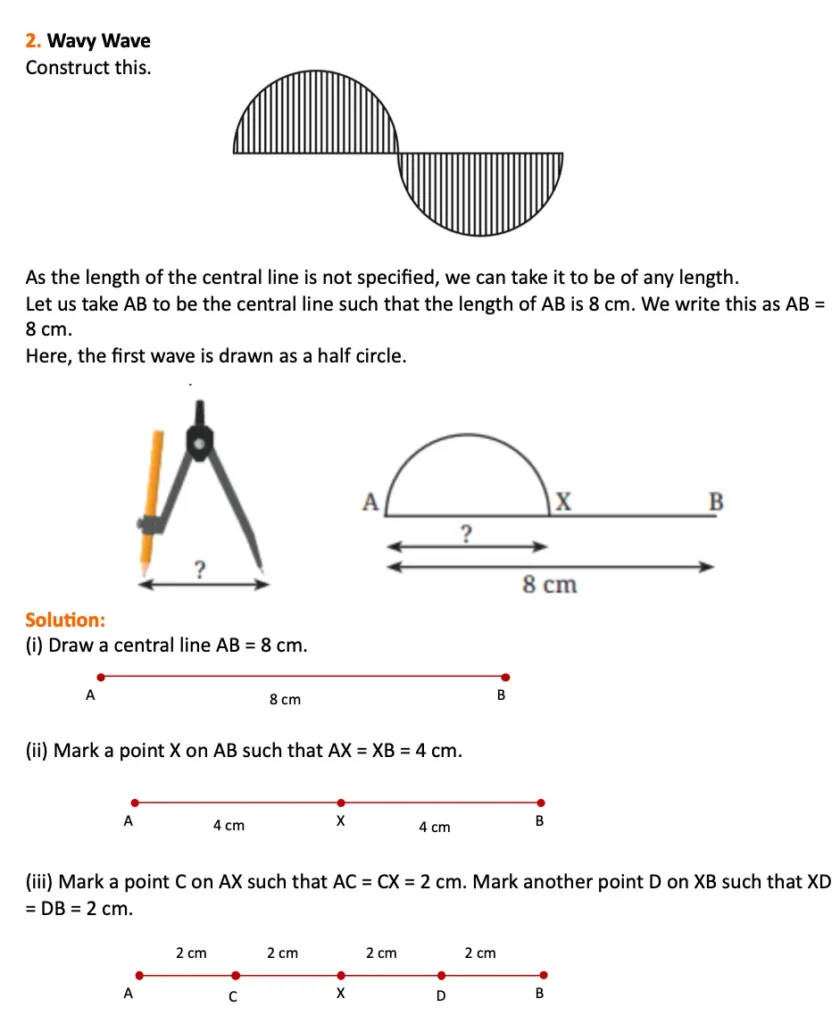

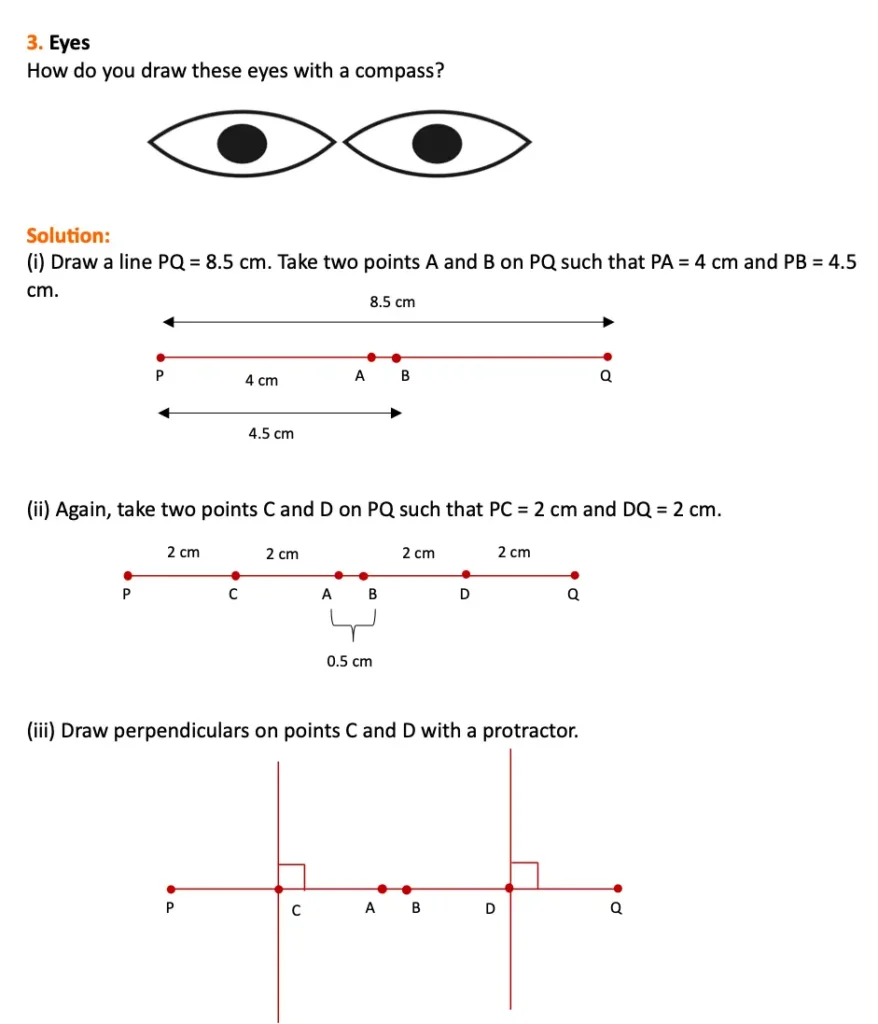

Figure it out (Page 191)
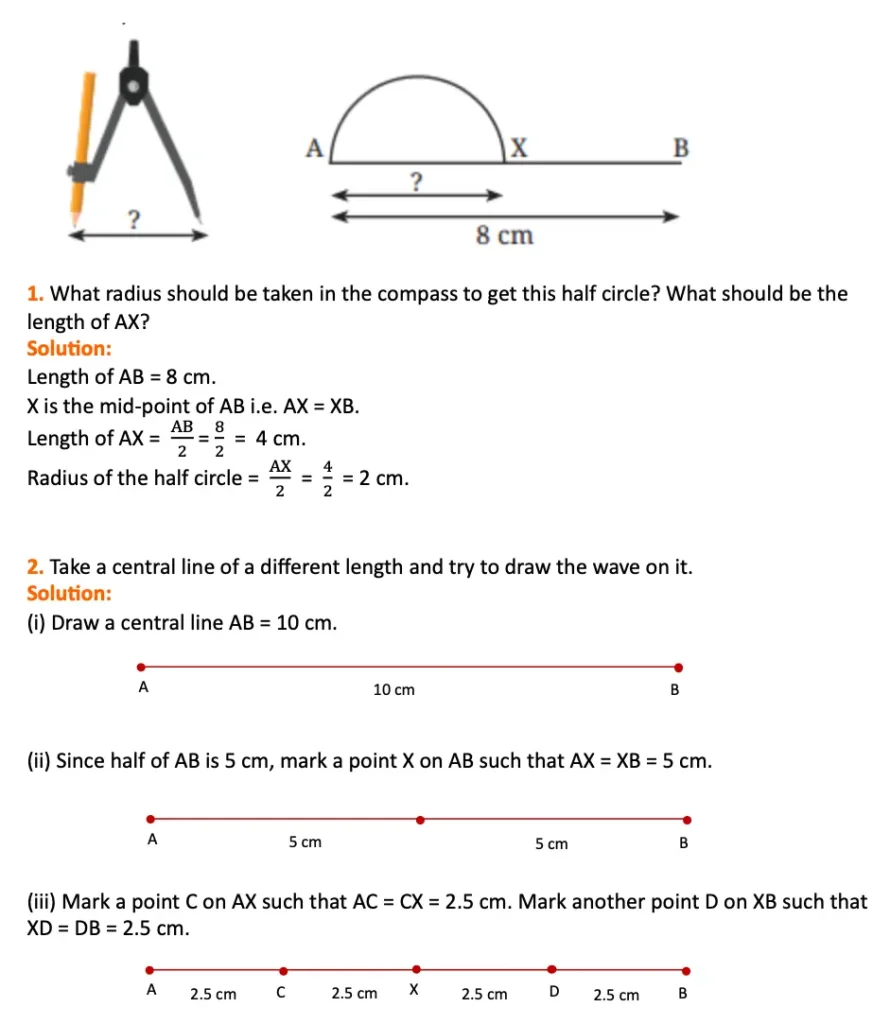

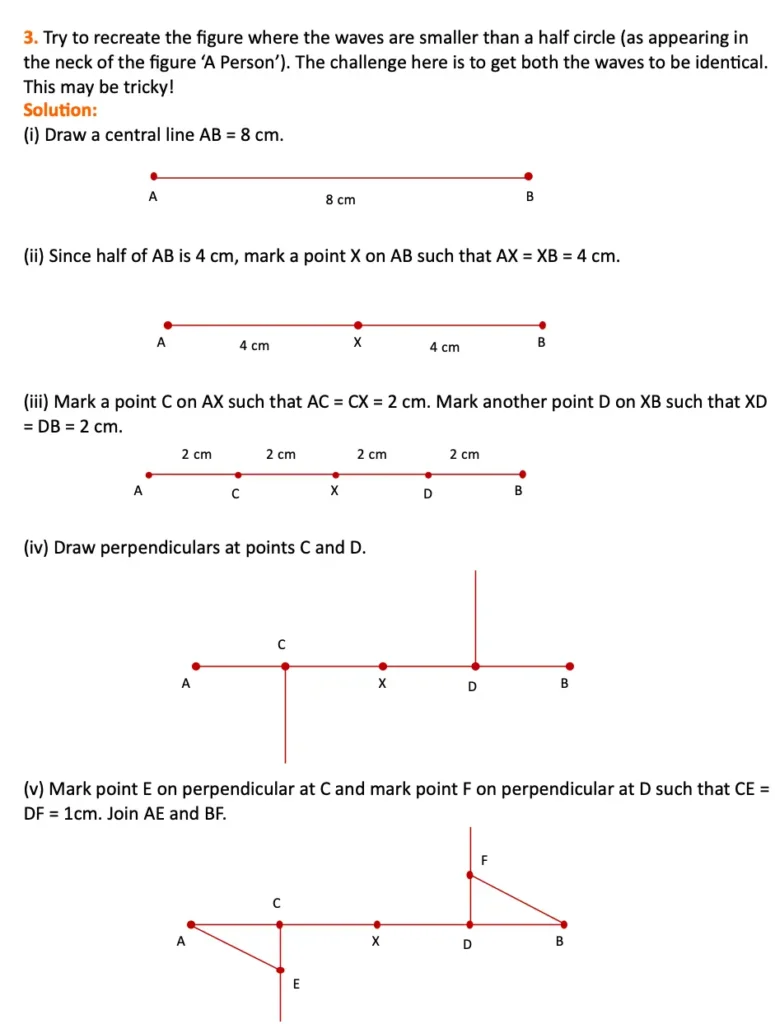
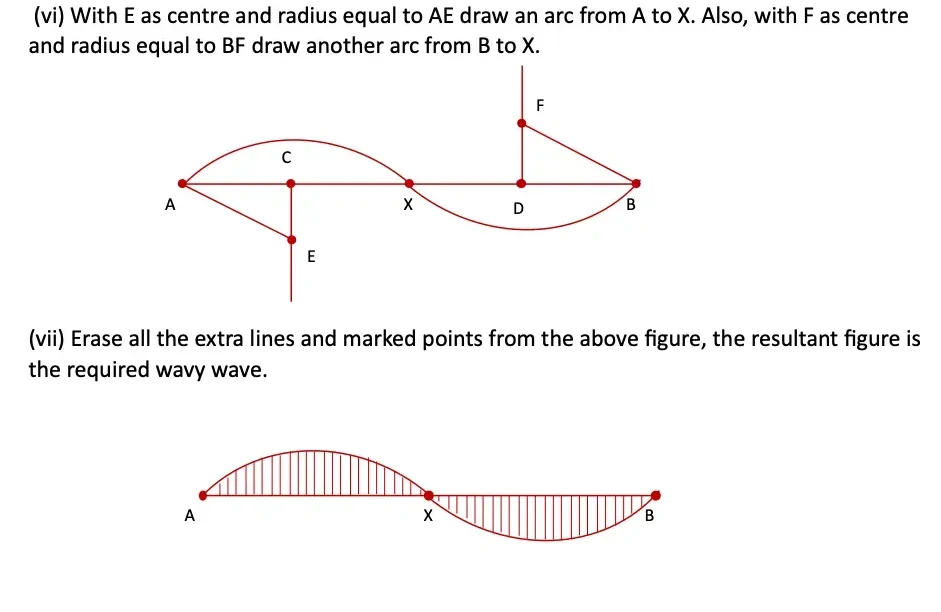
Read More: NCERT Solutions for Class 6 Maths Ganita Prakash Chapter 7
Figure it out (Page 194)
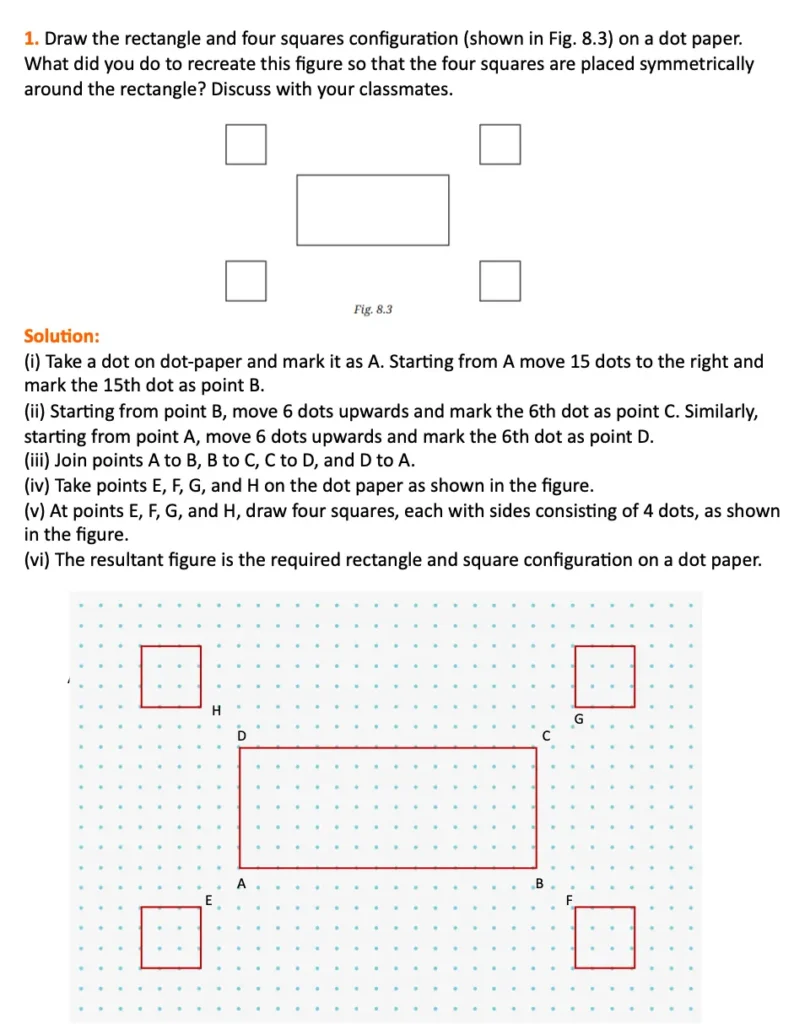
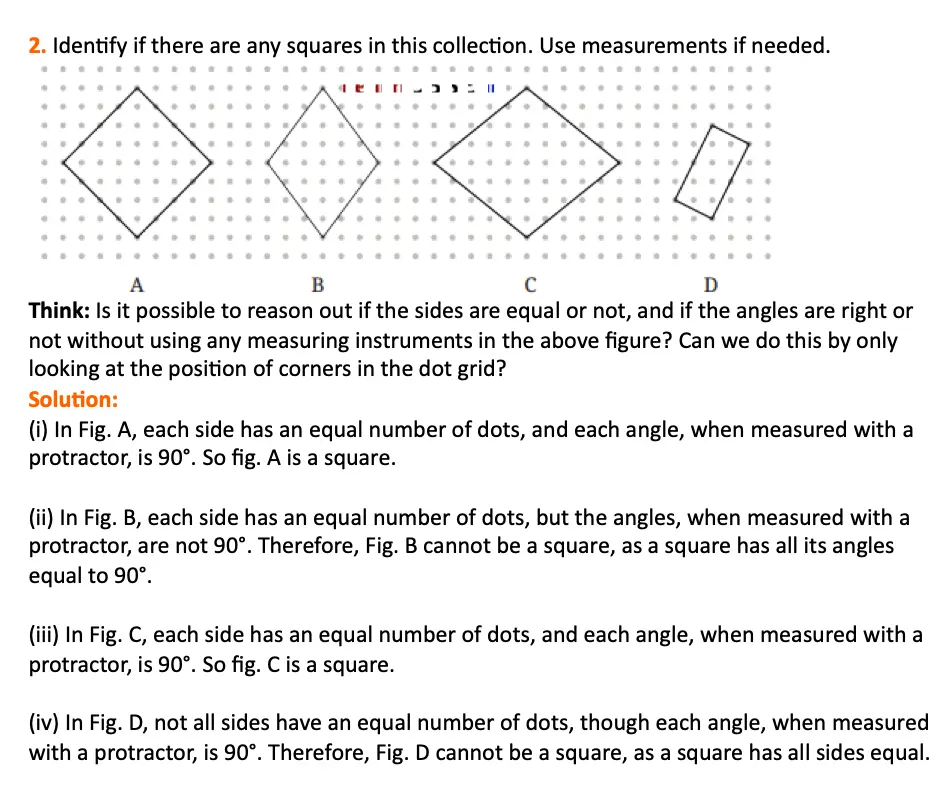
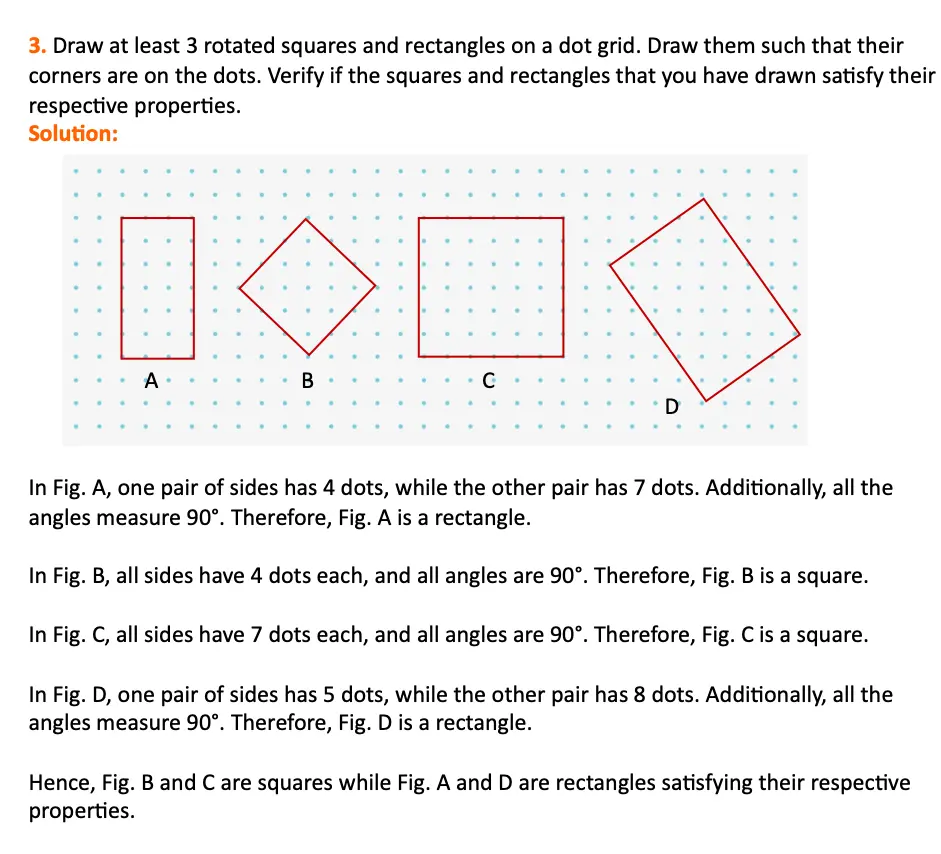
Construct (Page 197)
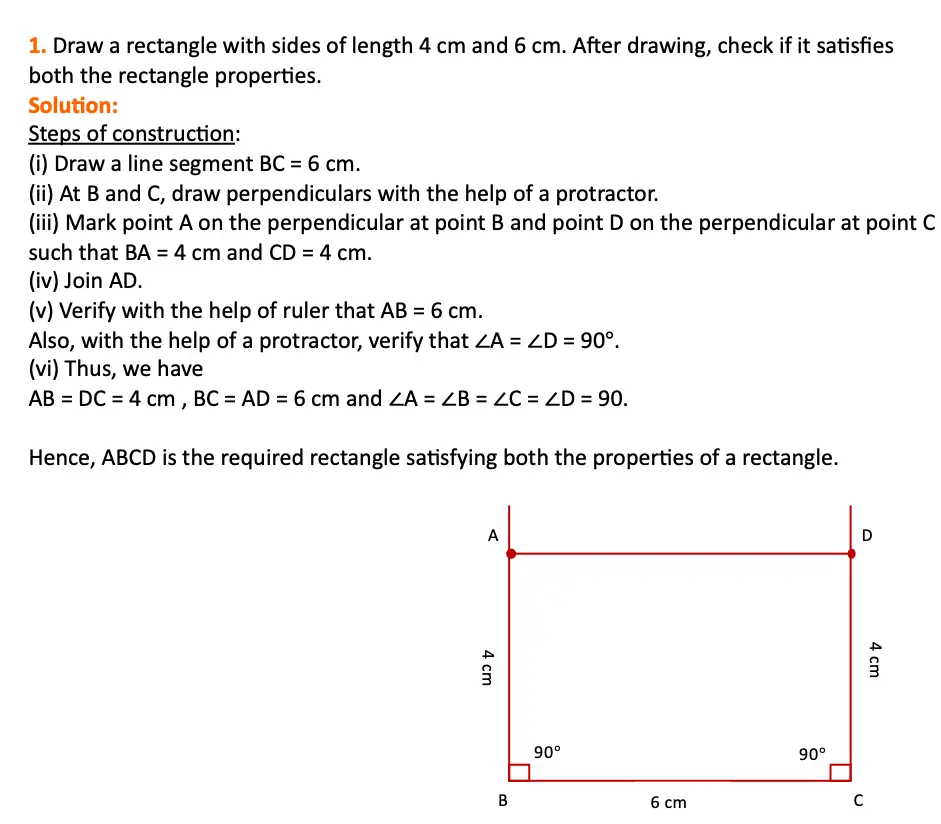
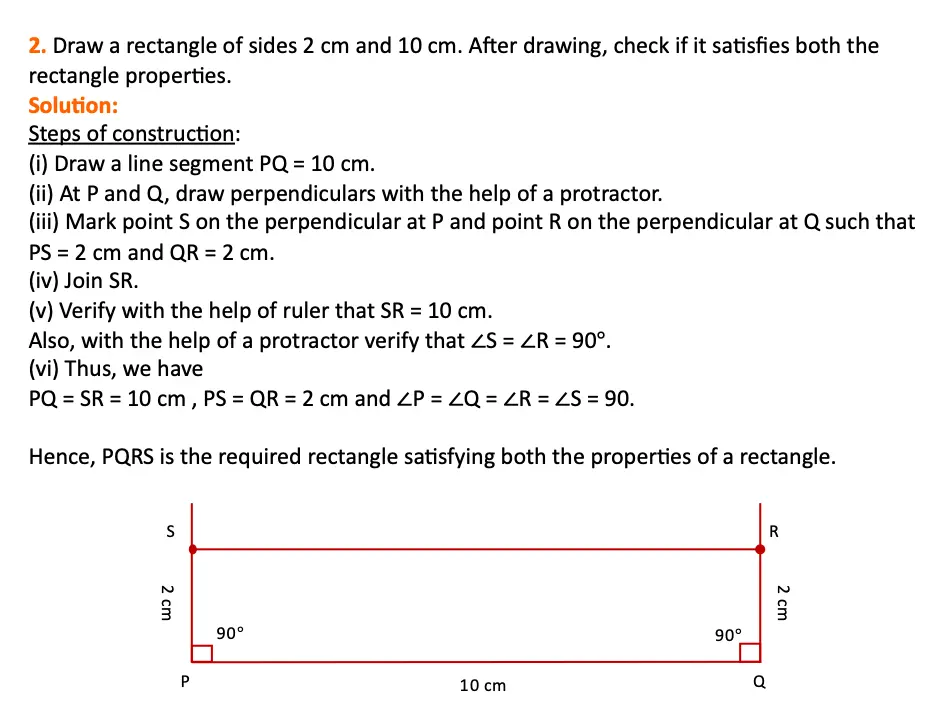

Construct (Page 199)

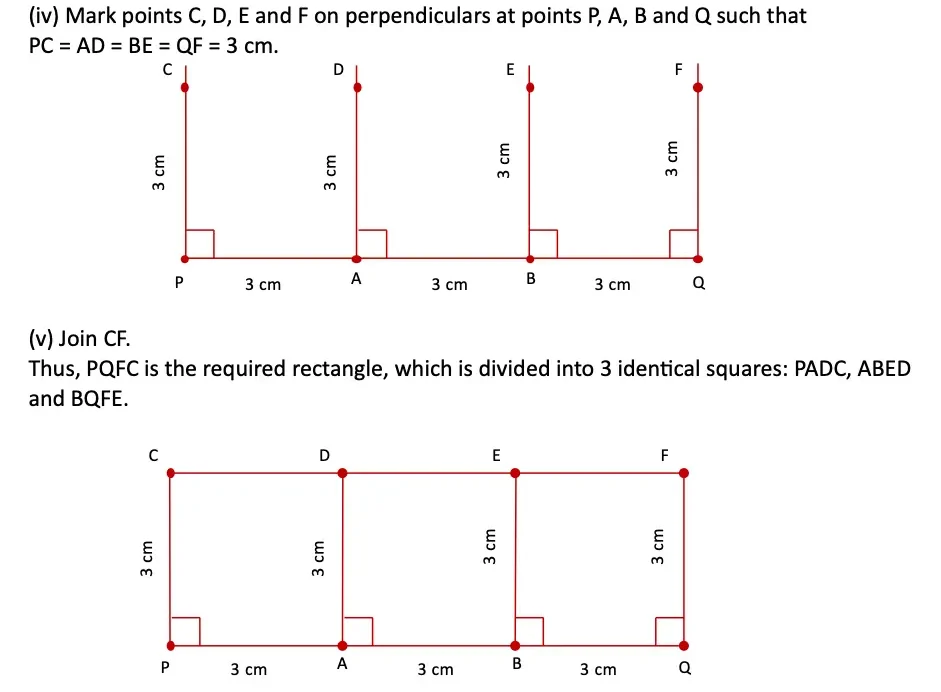
Construct (Page 201)
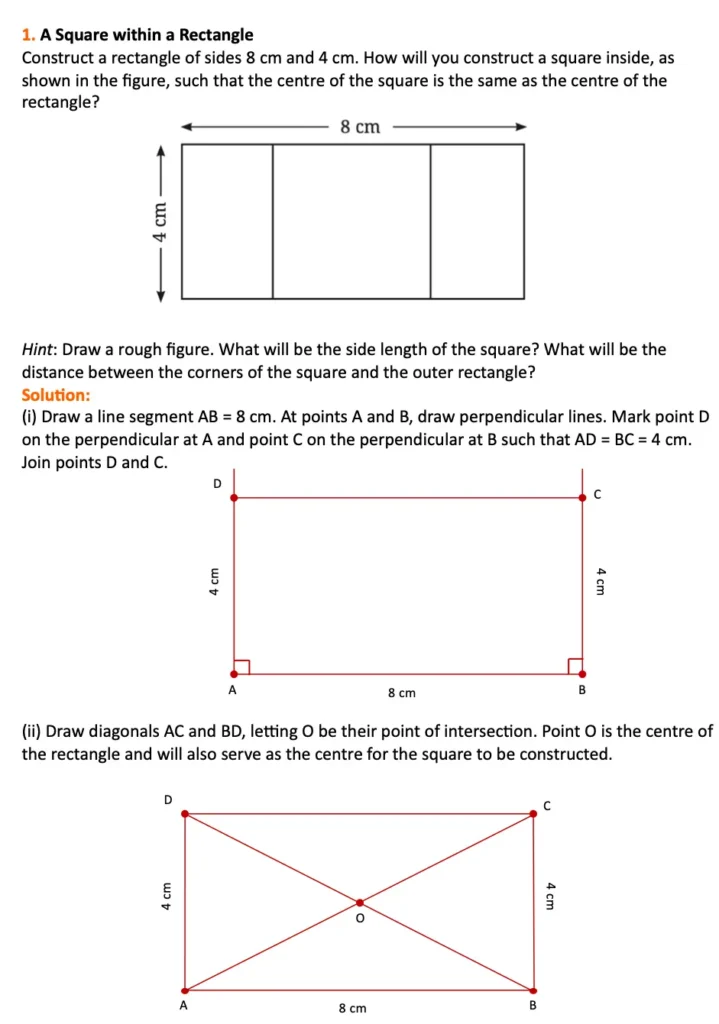
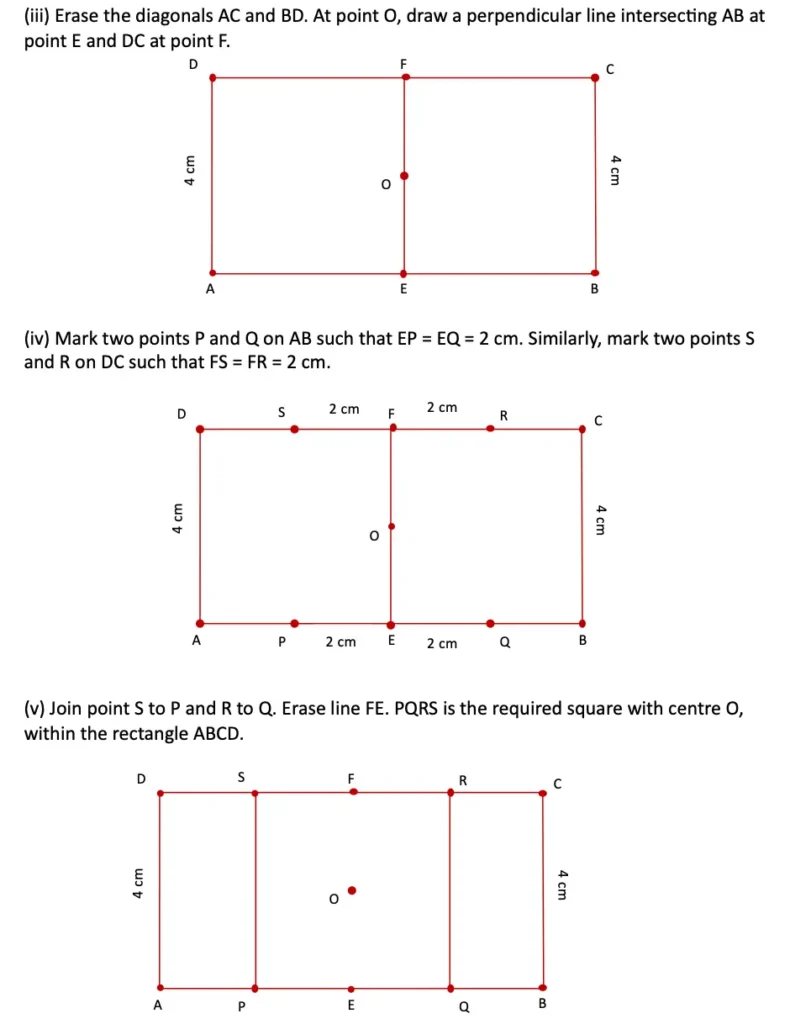
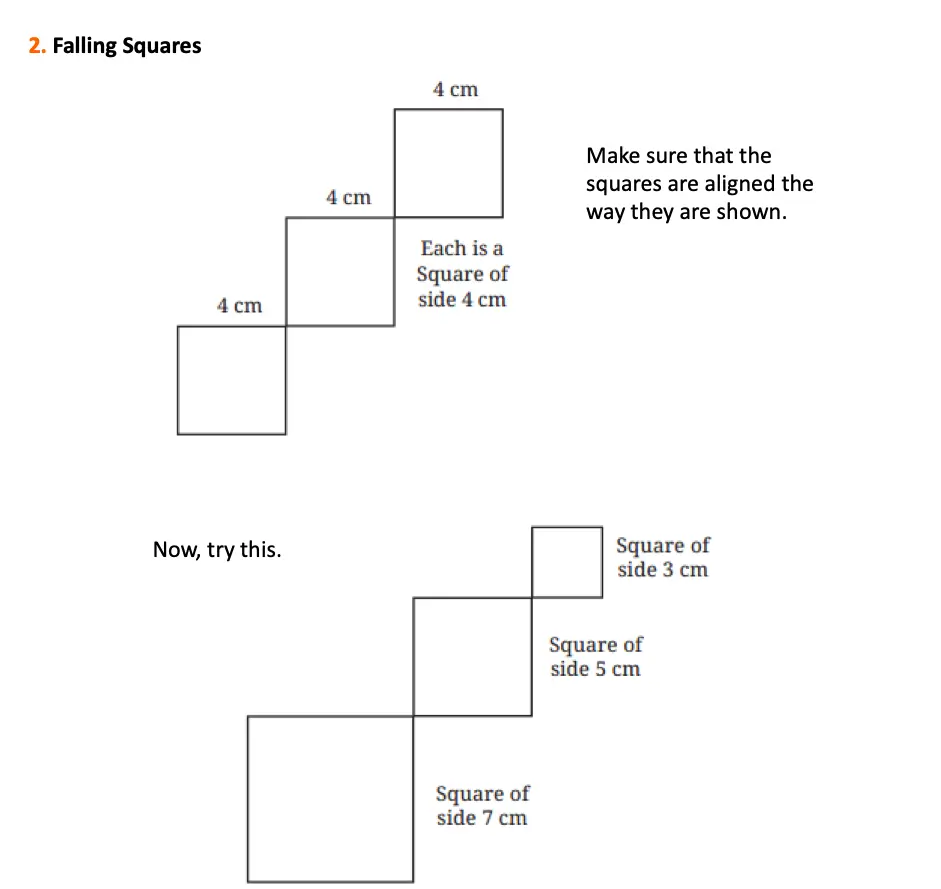
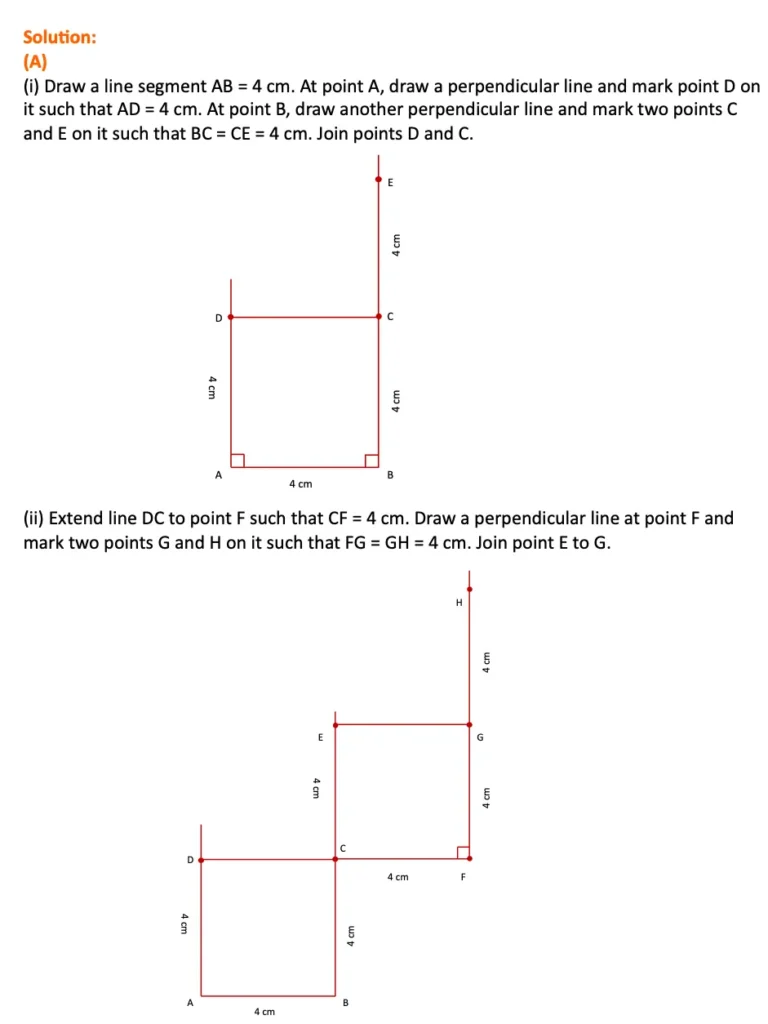
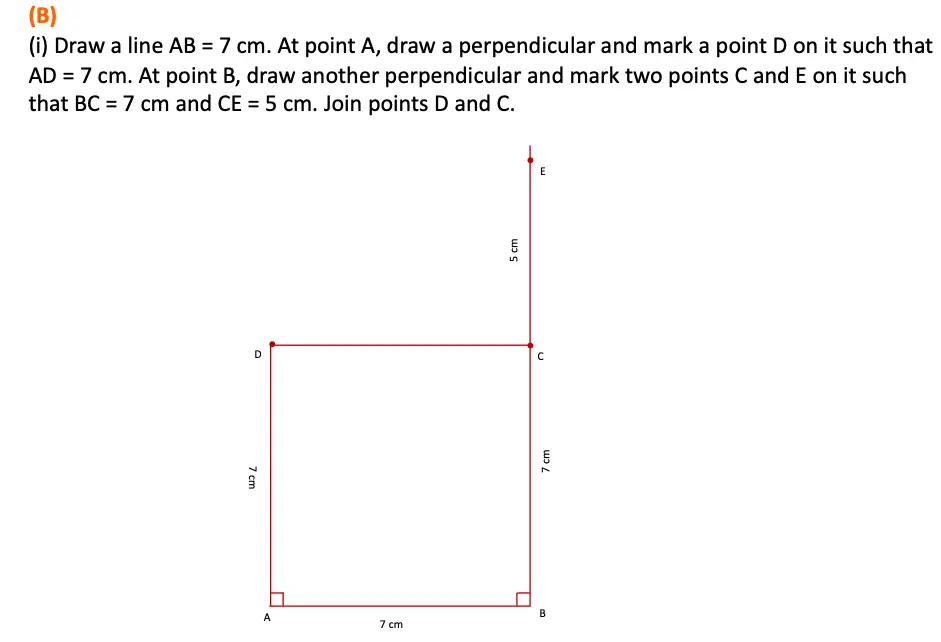
Check Out: PW School Books
1. Class 6 Maths Chapter 8 Questions Answers Basics
Geometry is all about shapes and how we draw them on paper. In this section, we look at the tools you need to succeed. You'll mainly use a ruler, a compass, and a pencil. These help you make perfect circles and straight lines. If you follow the class 6 maths chapter 8 questions answers, you'll see that precision is the most important part of the job.
Necessary Tools for Your Geometry Box
-
Ruler: Use this to draw straight lines and measure lengths.
-
Compass: This tool helps you draw circles or arcs of any size.
-
Divider: You can use this to compare the lengths of two lines.
-
Set Squares: These are used to draw lines that are perpendicular.
-
Protractor: This helps you measure and draw specific angles like $60^\circ$ or $90^\circ$.
How to Keep Your Work Neat
-
Use a very sharp pencil for thin lines.
-
Don't press too hard on the paper.
-
Keep your eraser clean so it doesn't leave marks.
-
Double-check your measurements before drawing the final line.
2. Drawing Circles with Class 6th Maths Chapter 8 Question Answer
A circle is a shape where every point on the edge is the same distance from the center. This distance is called the radius. When you look at the class 6th maths chapter 8 question answer, you'll find simple steps to draw circles of any given radius. It's like a game where you keep one point fixed and move the other around.
Steps to Draw a Circle
-
Open your compass to the length mentioned in the question (e.g., 3 cm).
-
Mark a point on your paper; this will be the center.
-
Place the sharp pointer of the compass on that center point.
-
Turn the compass slowly to draw a full loop.
-
Make sure the pointer doesn't move while you are turning it.
Understanding the Parts of a Circle
|
Term |
Simple Definition |
|
Center |
The middle point where the compass needle stays. |
|
Radius |
The gap between the center and the edge. |
|
Diameter |
A line going through the center from edge to edge. |
|
Chord |
Any line that touches two points on the circle edge. |
3. Class 6 Maths Chapter 8 Question Answer PDF Guide
Many students look for a class 6 maths chapter 8 question answer pdf to study offline. This guide helps you understand how to bisect lines and angles. Bisecting simply means cutting something into two equal halves. It's a very helpful trick in math. If you have a line that is 10 cm long, bisecting it gives you two 5 cm parts.
How to Bisect a Line Segment
-
Draw the line segment you want to cut in half.
-
Open your compass more than half the line length.
-
Draw an arc above and below the line from one end.
-
Do the same from the other end without changing the compass width.
-
Draw a line through the points where the arcs cross.
-
The point where this new line hits your original line is the middle.
Why Bisecting is Useful
-
It helps you find the exact middle of any shape.
-
You can create $90^\circ$ angles easily this way.
-
It's the first step in making more complex geometric patterns.
-
It ensures your drawings are perfectly balanced.
4. Class 6 Maths Chapter 8 Question Answer in Hindi Details
For students who prefer learning in their local language, the class 6 maths chapter 8 question answer in hindi explains these steps using simple Hindi terms. "Kendra" means center and "Trijya" means radius. Even if the words change, the way we use the compass stays the same. The logic of geometry is universal, making it easy to follow in any language.
Making a $60^\circ$ Angle Without a Protractor
-
Draw a straight line and mark a point O on it.
-
With O as the center, draw a wide arc that cuts the line.
-
Keep the compass opening the same and move the pointer to where the arc hit the line.
-
Draw a small arc that cuts the first big arc.
-
Draw a line from O through that crossing point.
-
You now have a perfect 60° angle.
Tips for Better Angles
-
Always keep the compass tight so it doesn't slip.
-
Label your points (like A, B, C) clearly.
-
Check your result with a protractor to see if you're right.
-
Practice making the same angle multiple times to get faster.
5. Class 6 Maths Chapter 8 Question Answer Assamese Medium Tips
Students using the class 6 maths chapter 8 question answer assamese medium version focus on drawing perpendicular lines. A perpendicular line is one that stands straight up like a pole on the ground. It creates a "T" shape or an "L" shape. Learning this is a big part of the Ganita Prakash syllabus.
How to Draw Perpendicular Lines
-
Place your ruler on the line where you want the vertical line to be.
-
Use a set square to draw a line straight up from a specific point.
-
Alternatively, use the bisecting method mentioned earlier.
-
The angle between the two lines must be exactly $90^\circ$.
Common Mistakes to Avoid
-
Moving the Compass: Don't change the width of the compass mid-step.
-
Dull Pencil: A thick pencil line makes your measurements wrong.
-
Wobbly Paper: Tape your paper down or hold it firmly so it doesn't slide.
-
Skipping Steps: Follow the order exactly as shown in the class 6 maths chapter 8 questions answers.
Check Out: School Stationery Items
Class 6 Maths Ganita Prakash Chapter 8 FAQs
1. What tools do I need for Chapter 8?
You need a ruler, a compass, a sharp pencil. A protractor helps too.
2. What is a radius?
It is the distance from the center of a circle to its outer edge.
3. Can I draw an angle without a protractor?
Yes, you can use a compass to draw 60° and 90° angles.
4. How do I find the middle of a line?
You use the perpendicular bisector method with a compass and ruler.
5. Is Ganita Prakash different from old NCERT?
It is the new syllabus, but the basic construction steps remain the same.