How to Prepare for CBSE Class 12 PCM Boards Without Coaching
Preparing for the Class 12 board exams without joining coaching may seem difficult at first. The syllabus is large, and subjects like Physics, Chemistry, and Mathematics need regular practice and a clear understanding of concepts. However, with the right study plan, regular self study for boards, and consistent practice using a CBSE Class 12 PCM PYQ book, you can prepare well and score excellent marks without any coaching.
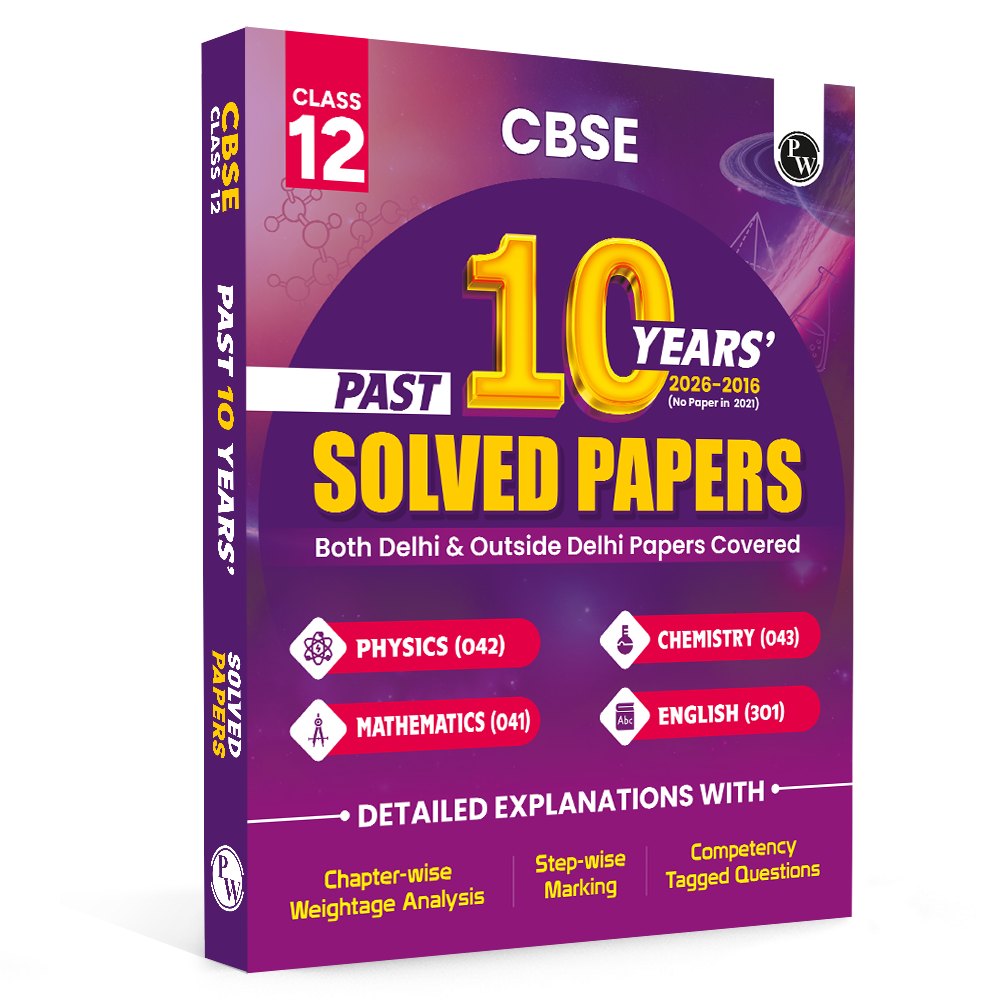
Importance of CBSE Class 12 PCM PYQ
Many students believe coaching is necessary to score high marks, but that is not always true. Self study gives you the freedom to learn at your own speed and spend more time on difficult topics. It also helps you become an independent learner and improves your problem-solving skills.
A well-planned board study plan combined with regular PCM PYQ practice can help you achieve excellent results without depending on coaching classes.
Customized Learning Pace
One of the biggest advantages of self-study for boards is that you can learn according to your own needs.
If a chapter like Electrochemistry or Three-Dimensional Geometry feels difficult, you can spend extra time understanding it. At the same time, you can quickly revise topics that you already know well. This flexibility makes learning easier and reduces unnecessary pressure.
Better Time Management
Joining coaching classes often means spending several hours travelling and attending lectures. With no coaching preparation, you can use that time for revision, solving questions, relaxing, or getting proper sleep.
Even saving two extra hours every day gives you enough time to complete additional practice and strengthen weak subjects.
Deep Conceptual Focus
When you study on your own, you learn to understand every concept instead of simply copying notes.
This habit is especially useful in Physics and Mathematics, where solving problems requires logical thinking. Regular practice with PCM PYQ helps you apply these concepts to real board exam questions.
Elimination of Fatigue
Long school hours followed by coaching classes can make students feel tired. This often reduces concentration and affects learning.
With self study for boards, you can create a balanced routine that includes study, breaks, exercise, and proper sleep. A fresh mind learns faster and remembers concepts for a longer time.
CBSE Class 12 PCM PYQ Study Plan
A good study plan is the foundation of successful Class 12 PCM preparation. Since you are preparing without coaching, your daily routine should clearly show what to study and when to study it.
Instead of studying randomly, divide your preparation into daily and weekly goals.
Balanced Daily Time Allocation
Try to give equal importance to Physics, Chemistry, and Mathematics.
A simple daily routine can include:
-
Physics: Around 2 hours for theory, derivations, and numerical problems.
-
Chemistry: Around 2 hours for Organic, Physical, and Inorganic Chemistry.
-
Mathematics: Around 2 hours for concepts, formulas, and problem-solving.
If one subject is weaker than the others, give it extra time without completely ignoring the remaining subjects.
Also include 30 to 45 minutes every day for PCM revision using short notes or formula sheets.
Weekly Target Tracking
Long monthly plans often become difficult to follow.
Instead, create weekly goals.
For example:
-
Complete one Physics chapter.
-
Finish one Chemistry chapter with reactions and numericals.
-
Practice one Mathematics chapter.
-
Solve related CBSE Class 12 PYQ questions.
At the end of every week, check whether you completed your targets. If not, adjust your schedule for the following week instead of falling behind.
Tracking your progress every week keeps your board study plan realistic and helps you stay motivated.
CBSE Class 12 PCM PYQ for Physics
Physics is one of the most challenging subjects for many PCM students because it combines theory, formulas, derivations, and numerical questions. The best way to improve is by studying one topic at a time and practicing regularly.
Maintain a Derivations Notebook
Keep one notebook only for important Physics derivations.
Write major derivations like:
-
Gauss's Law
-
Lens Maker's Formula
-
Wave Optics
-
Current Electricity
-
Electromagnetic Induction
Rewrite these derivations regularly instead of only reading them. Also practice drawing neat circuit diagrams and ray diagrams because presentation is important in the board exam.
Prepare Formula Sheets
Every Physics chapter contains important formulas.
Instead of searching through the textbook every time, prepare one-page formula sheets for chapters like:
-
Alternating Current
-
Electrostatics
-
Dual Nature of Matter
-
Magnetism
-
Moving Charges
These quick revision sheets make CBSE PCM revision much faster before tests and during the final month.
Practice Numerical Questions Every Day
Physics cannot be understood by reading theory alone.
Spend at least one hour every day solving numerical questions from different chapters.
Focus on:
-
Electricity
-
Electrostatics
-
Current Electricity
-
Electromagnetic Induction
-
Ray Optics
Write every calculation step clearly because CBSE awards step-wise marks.
Identify Question Trends
One of the biggest benefits of solving PCM PYQ papers is understanding which questions appear regularly.
You will notice that some concepts are tested every year in different ways.
Pay special attention to:
-
Transformer efficiency
-
Wave optics
-
Semiconductor devices
-
Ray optics
-
Current electricity
-
Electromagnetic induction
Regular PCM PYQ practice helps you identify these important topics, improve your confidence, and prepare according to the latest CBSE exam pattern. Along with previous year papers, using CBSE Class 12 Books provides chapter-wise theory, competency-based questions, revision notes, and structured practice that strengthen conceptual understanding across Physics, Chemistry, and Mathematics.
By combining concept learning, formula revision, daily numerical practice, CBSE Class 12 Books, and previous year questions, your Class 12 PCM preparation becomes much more effective, organized, and aligned with the latest CBSE Board Examination pattern.
CBSE Class 12 PCM PYQ for Chemistry
Chemistry is one of the highest-scoring subjects in PCM preparation if you study it with the right method. Since the subject has three different parts Organic, Inorganic, and Physical Chemistry—you should prepare each one differently. Along with regular PCM PYQ practice, this method will improve your understanding and help you score better.
Organic Chemistry
Organic Chemistry is based on concepts, not just memorization.
Instead of remembering only reactions, try to understand how each reaction works. Keep a separate notebook for important named reactions like Aldol Condensation, Reimer-Tiemann Reaction, Cannizzaro Reaction, and others.
Practice converting one compound into another because these questions are common in board exams. Solving PCM PYQ papers will also show you which reactions are asked most often.
Inorganic Chemistry
For Inorganic Chemistry, your NCERT textbook should be your first priority.
Read every chapter carefully and highlight important points, exceptions, and properties. Pay special attention to d-block and f-block elements, coordination compounds, and reasoning-based questions.
Revise these topics regularly because they carry good marks in the board exam.
Physical Chemistry
Physical Chemistry needs both formulas and calculations.
Prepare a formula sheet for chapters like:
-
Solutions
-
Electrochemistry
-
Chemical Kinetics
-
Surface Chemistry
Practice numerical questions every day and write each step properly. Regular PCM revision and solving previous year questions will improve both your speed and accuracy.
CBSE Class 12 PCM PYQ for Mathematics
Mathematics is a subject where regular practice brings the best results. You cannot improve by simply reading formulas. The more questions you solve, the better your confidence becomes.
A simple study method is:
Understand Concepts → Solve NCERT Questions → Practice PCM PYQ → Attempt Timed Mock Tests
Start by learning the concepts from NCERT. Complete all exercise questions before moving to extra practice.
Give more attention to high-weightage chapters like:
-
Calculus
-
Integration
-
Differential Equations
-
Matrices
-
Determinants
-
Vectors
-
Three-Dimensional Geometry
-
Probability
After finishing each chapter, solve related PCM PYQ questions. This helps you understand how CBSE changes simple textbook questions into board-level questions.
Mark difficult questions while practicing. Revise these questions every week so that you do not repeat the same mistakes.
Also solve at least one full Mathematics paper every week under a three-hour timer. This improves your speed and prepares you for the actual board exam.
Right CBSE Class 12 PCM PYQ Book
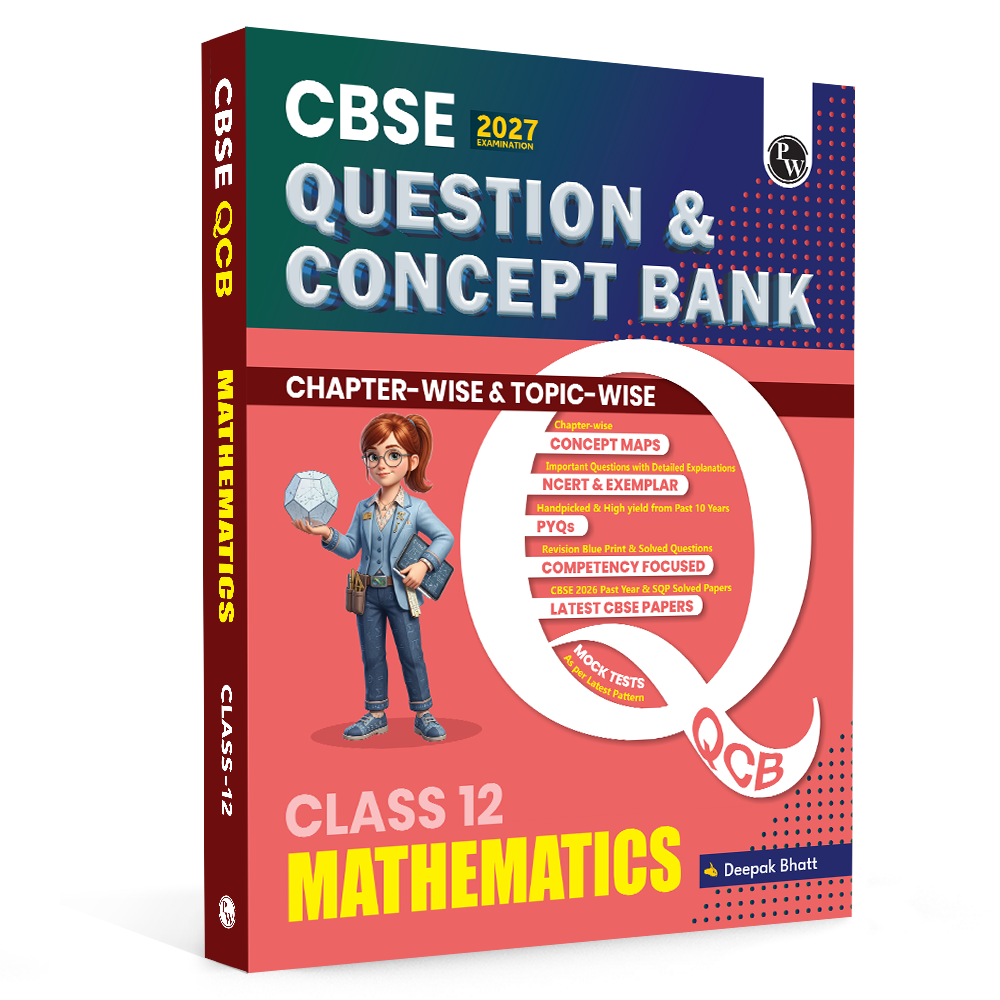
Preparing without coaching becomes much easier when you use the right study material. The CBSE Question and Concept Bank (QCB) Class 12 PCM serves as a complete guide for students who self-study for boards.
It combines important concepts, previous year questions, and practice papers in one place.
Some useful features include:
10 Years High-Yield Questions
The book includes important questions from the last ten years.
Practicing these questions helps you focus on chapters that are asked frequently in the board exam instead of wasting time on less important topics.
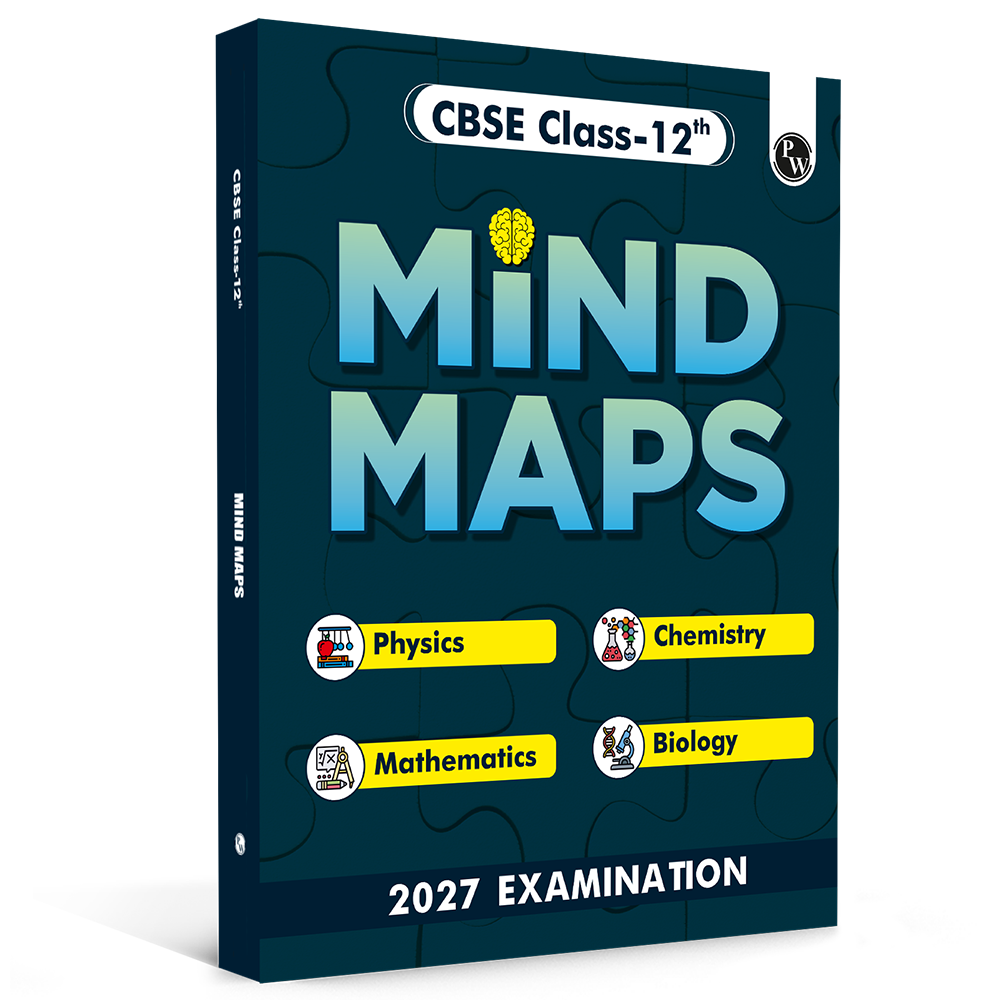
Chapter-wise Concept Maps
Every chapter contains simple concept maps that make revision easier.
These visual summaries help you remember formulas, important reactions, and key concepts during CBSE PCM revision.
Competency-Based Solutions
The latest CBSE papers include more competency-based and case-study questions.
The QCB explains how to answer these questions step by step. It also improves your answer writing and presentation skills.
Mock Tests Based on the Latest Pattern
Mock tests help you experience the real board exam before the actual day.
They improve your:
-
Time management
-
Question selection
-
Writing speed
-
Confidence
When combined with regular PCM PYQ practice, these mock tests make your preparation much stronger.
CBSE Class 12 PCM PYQ Exam Tips
Scoring high marks is not only about studying hard. You also need good writing skills, proper presentation, and smart exam strategies.
Follow these simple PCM board exam tips to improve your final score.
Write Neat and Well-Structured Answers
Write long answers in clear points whenever possible.
For numerical questions:
-
Write the given values.
-
Mention the correct formula.
-
Show every calculation step.
-
Write the final answer with the correct unit.
Even if your final answer is incorrect, you can still earn step-wise marks.
Underline Important Points
Use a pencil or ruler to underline:
-
Important keywords
-
Formula names
-
Final answers
-
Units
-
Chemical reactions
This makes your answers easier for the examiner to read.
Manage Your Time Properly
Do not spend too much time on one difficult question.
Divide your three-hour paper wisely.
-
Finish short questions first.
-
Attempt medium-length questions next.
-
Leave enough time for long-answer questions.
-
Keep the last 15–20 minutes for checking your paper.
Good time management is one of the easiest ways to improve your score.
Solve Previous Year Papers
One of the best PCM board exam tips is to solve PCM PYQ papers in a real exam environment.
Sit for three hours without any breaks and complete the paper honestly.
This practice helps you:
-
Improve writing speed.
-
Reduce exam fear.
-
Understand the marking pattern.
-
Build confidence before the actual exam.
Also Check, Class 12th Question Banks
CBSE Class 12 PCM PYQ FAQs
Can I score above 95 percent in Class 12 PCM using self-study for boards?
Yes. Many students score above 95% through self-study for boards by following a proper study plan, understanding NCERT concepts, revising regularly, and solving enough PCM PYQ papers.
How should I plan my weekly PCM revision without coaching?
Set weekly goals for every subject. Complete one or two chapters, revise important formulas and concepts, and solve related PCM PYQ questions before moving to the next chapter.
What is the best way to solve difficult numerical problems during no coaching preparation?
Start by writing the given values, identify the correct formula, solve the question step by step, and compare your answer with solved examples if needed. Daily practice will gradually improve your accuracy.
How many years of CBSE class 12 PCM PYQ should I solve?
You should practice at least the last 5 to 10 years of PCM PYQ papers. This helps you understand important topics, repeated questions, and the latest CBSE exam pattern.