How to Prepare Organic Chemistry for CBSE Board Exams 2027 ?
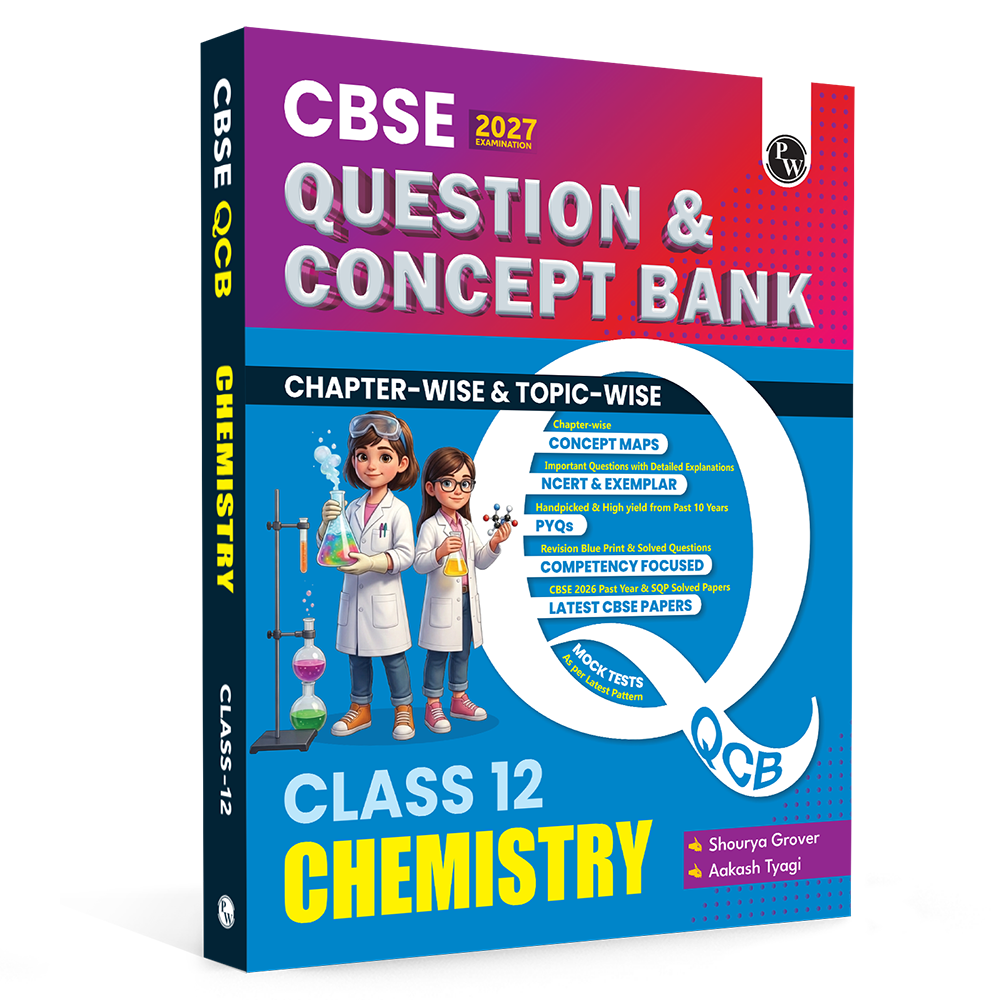
Preparing for Organic Chemistry often feels challenging for many Class 12 students. Most students struggle with conversions and identifying functional group shifts, which can lead to unnecessary stress during the final months. The right way to overcome this is by using a reliable CBSE Class 12 question bank Chemistry to practice diverse problem sets regularly. CBSE Class 12 Books are designed to strengthen concepts, support effective revision, and provide ample practice for achieving excellent scores in board exams.
CBSE Class 12 Chemistry Syllabus and Weightage
Before diving into the chapters, you need to know exactly what the CBSE syllabus requires. Organic Chemistry usually accounts for an important portion of the total marks in the Class 12 theory paper. By focusing on the chapters with higher weightage, you can plan your study schedule more effectively.
-
Haloalkanes and Haloarenes: Focus on nucleophilic substitution reactions (SN1 and SN2).
-
Alcohols, Phenols, and Ethers: Pay attention to acidic characters and dehydration mechanisms.
-
Aldehydes, Ketones, and Carboxylic Acids: This is one of the important units for conversions.
-
Amines: Understand the basicity and diazotization reactions.
-
Biomolecules: Focus on the structures of glucose, proteins, and vitamins.
CBSE Class 12 Question Bank Chemistry for General Organic Chemistry
You cannot build a house without a strong foundation. In Organic Chemistry, that foundation is GOC. Even if these topics were covered in Class 11, you must revisit them. Concepts like Inductive Effect, Resonance, and Hyperconjugation explain why certain reactions happen the way they do.
If you understand why a carbocation is stable, you won’t have to "guess" the major product in a reaction. Using a CBSE Class 12 Chemistry question bank helps you see how these foundational concepts are tested in board-level questions. It allows you to bridge the gap between theory and application.
CBSE Class 12 Question Bank Chemistry for Name Reactions
Name reactions are the backbone of the Organic Chemistry paper. Every year, several direct questions and conversions are based on these. Instead of searching through your thick textbook every time, maintain a separate thin notebook for these reactions.
-
Step 1: List the name of the reaction (e.g., Reimer-Tiemann, Kolbe’s, Wurtz-Fittig).
-
Step 2: Write the chemical equation clearly.
-
Step 3: Mention the specific reagents and catalysts used.
-
Step 4: Note any specific observations, like color changes or gas evolution.
Reviewing this notebook for ten minutes every morning can make these reactions second nature by the time you reach the 2027 exams.
CBSE Class 12 Question Bank Chemistry for Reaction Mechanisms
CBSE frequently asks for specific mechanisms in the theory paper. You don't need to learn every single mechanism, but the ones mentioned in the NCERT are vital. The most common ones include:
-
Dehydration of alcohols to form alkenes or ethers.
-
Hydration of alkenes to form alcohols.
-
Nucleophilic addition to the carbonyl group.
-
Esterification process.
Draw these mechanisms multiple times. Pay close attention to the movement of electrons, shown by curved arrows. Practicing from a bank of chemistry class 12 ensures you are familiar with the exact wording used in board marking schemes.
CBSE Class 12 Question Bank Chemistry for Conversions and Tests
Two major types of questions define the Organic section: "How will you convert A to B?" and "Distinguish between X and Y." For conversions, you must know the reagents that increase or decrease the carbon chain length. For instance, using KCN adds a carbon, while the Hoffmann bromamide reaction removes one.
Distinguishing tests are commonly asked and can help improve accuracy in exams. You should be ready with:
-
Lucas Test: To distinguish between primary, secondary, and tertiary alcohols.
-
Tollen’s and Fehling’s Test: For aldehydes and ketones.
-
Iodoform Test: For compounds with methyl keto groups.
-
Carbylamine Test: For primary amines.
CBSE Class 12 Question Bank Chemistry for Reagent Functions
A common hurdle for students is remembering what each reagent does. For example, knowing that LiAlH4 is a strong reducing agent while PCC is a mild oxidizing agent can simplify most conversion problems. When you study from a Class 12 question bank in chemistry, look for patterns in how reagents are used across different chapters. Understanding the "personality" of a reagent—whether it adds hydrogen, removes water, or replaces a halogen, makes the subject feel less like a list of random facts and more like a logical puzzle.
CBSE Class 12 Question Bank Chemistry for Exams
Reading the theory is only part of the challenge. The real test is applying that knowledge to the latest board patterns. A structured CBSE 12th chemistry question bank provides a variety of questions, including Case-Based, Assertion-Reason, and Very Short Answer types.
|
Study Phase |
Focus Area |
Resource Tool |
|
Early Prep |
NCERT Reading & Notes |
Textbook |
|
Mid Prep |
Name Reactions & Mechanisms |
Personal Notebook |
|
Final Prep |
Mock Tests & PYQs |
CBSE Question Bank Chemistry Class 12 |
Consistent practice helps in identifying commonly confusing questions where students may lose marks. It also helps in improving your speed, ensuring you don't leave the paper incomplete. CBSE Class 12 PYQs PCBE help students understand the latest exam pattern, practice real board-level questions, and improve confidence through targeted revision.
CBSE Class 12 Question Bank Chemistry for Revision
Because Organic Chemistry involves many facts, forgetting is common. You should follow a cyclic revision pattern. Review what you learned today after 24 hours, then again after a week, and finally after a month.
-
Daily: Revise 5 Name Reactions.
-
Weekly: Solve 10 conversions from a class 12 organic chemistry question bank.
-
Monthly: Take a full-length test of the Organic units.
This method moves information from your short-term memory to long-term memory, reducing the need for "cramming" right before the exam.
Avoiding Mistakes with CBSE Class 12 Question Bank Chemistry
Many students lose marks because of small errors that are easily preventable. Make sure you don't fall into these habits:
-
Ignoring Reagents: Writing "Heat" or a specific catalyst is often required for full marks.
-
Messy Structures: Ensure your benzene rings look like hexagons and bonds are clearly connected to the correct atoms.
-
Skipping IUPAC: Always check if the question asks for the common name or the IUPAC name.
-
Overlooking Biomolecules: Students often ignore this chapter, but it is considered a scoring unit that may require comparatively less effort than some other chapters.
By staying disciplined and using a dedicated Class 12 question bank for chemistry, you can turn Organic Chemistry from a dreaded subject into your strongest suit for the 2027 boards.
Read More: CBSE Class 12 Chemistry Weightage 2026 Exam
CBSE Class 12 Question Bank Chemistry FAQs
Which chapter is the most important in Organic Chemistry for Class 12?
While all chapters are significant, Aldehydes, Ketones, and Carboxylic Acids usually carry the highest marks and are central to many conversion-based questions in the board exam.
How can I remember all the name reactions?
The most effective way is to maintain a separate notebook and practice writing them daily. Using a CBSE Class 12 Chemistry question bank to see how these reactions are applied in different scenarios also help in retention.
Is NCERT enough for Organic Chemistry?
NCERT is the primary resource and is sufficient for the theory and mechanisms. However, for practicing a variety of question formats like Case-Based or Assertion-Reasoning, using a bank of chemistry class 12 is highly recommended.
How do I solve conversion questions easily?
To master conversions, create a "flowchart" of reactions that shows how to move from one functional group to another. Focus on reactions that change the carbon chain length and practice regularly from a CBSE 12th chemistry question bank.
Why is a question bank necessary for 2027 board prep?
A CBSE question bank chemistry class 12 provides updated practice material that aligns with the latest exam patterns, helping students get familiar with the difficulty level and the specific way answers should be framed for maximum marks.