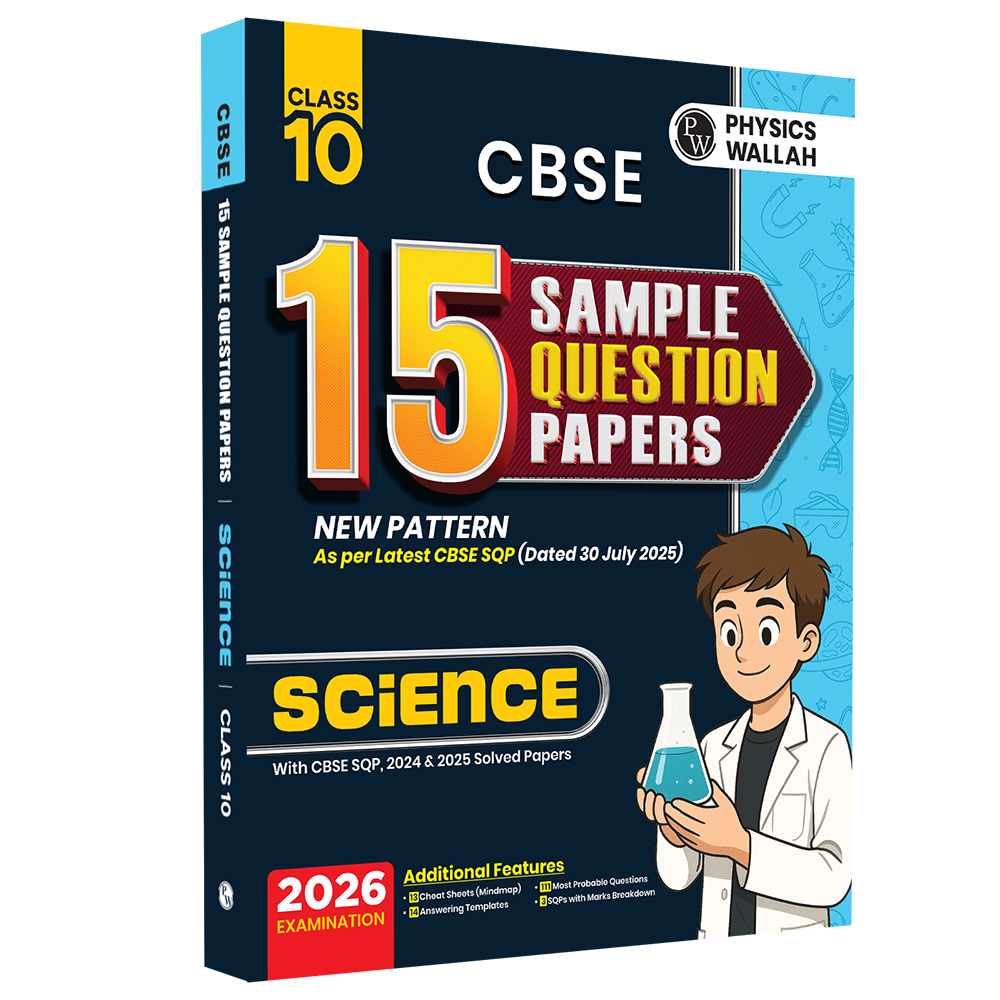
How to Score 95% in Class 10 Science CBSE Board Exam

How to Score 95% in Class 10 Science CBSE Board Exam?
Scoring 95% in Class 10 Science is a common goal among CBSE students and is possible with the right preparation. The subject includes Physics, Chemistry, and Biology, each part needing a clear understanding and proper revision. The CBSE 10th Science Syllabus is designed primarily with reference to the NCERT books; hence, it is important for students to go through all the concepts appearing in the textbook.
Solving CBSE Class 10 Science sample paper, question bank, and previous year question papers (PYQ) to improve speed and accuracy. Students also need to be able to manage their time effectively and revise regularly to get better results.
Whether aiming to boost Class 10 Science marks or achieve a full score, a smart and consistent study routine is essential. Candidates get detailed information about how to score full marks in class 10 science in the CBSE board exam, tips to score, and much more below.
Class 10 Science CBSE Board Exam Overview
The Class 10 Science CBSE Board Exam is a key subject that checks students’ understanding of Physics, Chemistry, and Biology. It is based on the NCERT Class 10 Science textbook, which is the main part of the CBSE curriculum. The exam tests both theoretical knowledge and practical application, helping students build a strong base for future science studies.
|
Class 10 Science CBSE Exam Overview |
|
|
Aspect |
Details |
|
Subject Name |
Science |
|
Exam Conducting Body |
Central Board of Secondary Education (CBSE) |
|
Total Marks |
100 (Theory: 80 + Internal Assessment: 20) |
|
Duration |
3 Hours |
|
Question Types |
MCQs, VSA, SA, LA, Case-based |
|
Syllabus source |
Class 10 NCERT Book for Science |
|
Exam Mode |
Offline (Pen and Paper) |
|
Assessment Areas |
Physics, Chemistry, Biology |
Tips to Score 95% in Class 10 Science CBSE Board Exam
The Class 10 Science CBSE Board Exam is a very important subject and needs both conceptual clarity and smart tricks to ace the exam. Whether you're aiming to improve your Class 10 Science marks or target a perfect score, following a structured study plan using the right resources like NCERT books, CBSE Class 10 sample papers, and question banks is essential. Here are some effective tips explained in a student-friendly manner:
1. Read the NCERT Textbook Thoroughly
The CBSE Class 10 Science syllabus is entirely based on the NCERT textbook; therefore, it's important that you study every chapter carefully. Concentrate on getting to know important concepts, definitions and formulae. Practice all in-text and exercise questions. Don’t skip NCERT Exemplar problems as they help in building a deeper understanding of the subject.
2. Focus on High-Weightage Chapters
Knowing the complete CBSE Class 10 Science syllabus and marks distribution helps in planning better. Focus more on high weightage/chapter such as Chemical Reactions and Equations, Light - Reflection and Refraction, and Life Processes. This makes things more efficient and saves time in revision.
3. Practice from Sample Papers and Previous Year Questions (PYQs)
Regularly solving CBSE Class 10 Science sample papers and previous year question papers helps you get used to the question pattern and marking scheme. Try solving at least 1 paper every week under timed conditions. It builds speed and confidence.
4. Improve Presentation and Answer Structure
In the board exam, how you write is as important as what you write.
-
Use bullet points or numbered lists for better readability
-
Underline important keywords and scientific terms
-
Write to-the-point answers and avoid unnecessary explanations
5. Learn and Practice Important Diagrams
Diagrams, especially in Biology and Physics, are highly scoring. Always draw them with a pencil and label them clearly. Repeatedly practice textbook diagrams and keep a separate notebook for them.
6. Make Short Notes for Revision
Creating your own notes is one of the best ways to revise. Use flashcards for Physics formulas and Chemistry reactions. For Biology, draw process maps or diagrams to remember functions and cycles quickly.
Also Check, CBSE Class 10 Previous Year Papers
7. Prepare for Case-Based and Application-Based Questions
The board now includes more competency-based questions. To handle them:
-
Practice HOTS (Higher Order Thinking Skills) questions
-
Use the CBSE Class 10 Science question bank
-
Refer to online platforms for practice modules
8. Clarify Doubts on Time
Never leave any topic unclear. Ask your teachers immediately or use reliable sources like NCERT solutions, CBSE discussion forums, or online videos. Regular doubt clearing helps prevent confusion during revision.
9. Manage Exam Time Wisely
Divide the 3-hour exam wisely across sections. Spend more time on long-answer questions but don’t rush through short ones. Leave 10–15 minutes at the end to check your answers and diagrams.
10. Stay Consistent and Positive
Consistency is the foundation of success. Stick to a daily study schedule, revise regularly, and take mock tests. Stay confident in your preparation and avoid last-minute stress.
Read More: CBSE Class 10 Science Chapter Wise Weightage
How to Score 95% in Class 10 Science CBSE Board Exam FAQs
Q1. How to get full marks in Class 10 Science?
To score full marks, study the NCERT textbook thoroughly, solve CBSE sample papers, and practice previous year question papers (PYQs). Focus on diagrams, keywords, and time-bound practice.
Q2. How can I score 100% in 10th CBSE?
Maintain a consistent study schedule, focus on conceptual clarity, revise regularly, and solve CBSE question banks. Use NCERT books for all subjects, especially for Class 10 Science full marks preparation.
Q3. Is 400 out of 500 good?
Yes, scoring 400/500 is considered a very good score. It shows strong subject knowledge and consistent performance across subjects, including Science.
Q4. What is the 80:20 rule in Class 10?
In Class 10 CBSE exams, the final marks are divided as 80 marks for theory and 20 marks for internal assessment. Internal marks include practicals, periodic tests, and portfolio work.