Why Solving Chapterwise PYQ is Smartest Way to Prepare for Class 12 PCB Boards
Preparing for the CBSE Class 12 board exams can feel incredibly overwhelming for science students. Balancing Physics, Chemistry, and Biology means dealing with massive syllabus books, intricate diagrams, and complex chemical equations all at once. Many students spend hours reading textbooks but still freeze when facing the actual exam paper. The primary challenge is not a lack of study material, but knowing how to apply that knowledge under exam conditions. This is where practicing the CBSE Class 12 PCB PYQ (Previous Year Questions) becomes an absolute game-changer. It shifts your preparation from passive reading to active, exam-oriented revision.
Importance of CBSE Class 12 PCB PYQ
Studying the entire syllabus is only the first step in your journey. The real test lies in understanding how CBSE frames questions from those chapters. When you analyze a PCB PYQ set, you immediately notice that the board tends to repeat certain core concepts year after year.
High-Weightage Chapters
Not all chapters carry the same weightage in the board exams. For instance, in Biology, topics like Genetics and Evolution regularly carry a massive chunk of marks. By reviewing a PCB PYQ database, you can map out exactly which chapters require deep study and which ones need superficial revision. This helps you allocate your limited revision time wisely.
Question Formats
The board exam does not just ask straightforward definitions. It includes case-based questions, assertion-reasoning problems, and long-form descriptive answers. Practicing the PCB PYQ format ensures that the structure of the exam paper feels entirely familiar on the big day, reducing anxiety and unexpected surprises.
Chapterwise CBSE Class 12 PCB PYQ
Many students make the mistake of solving complete three-hour mock papers early in their revision phase. While mock papers are useful later on, focusing on chapterwise CBSE Class 12 PYQs during the initial stages of revision provides a much stronger foundation.
Step-by-Step Learning of the Syllabus
When you finish studying a specific chapter—such as Electrostatics in Physics or Solutions in Chemistry—you should immediately solve the chapterwise PYQs for that specific unit. This practice reinforces what you just learned and highlights any gaps in your understanding before you move on to the next topic.
Targeted Error Correction
If you solve a full-length mock paper and score poorly, it can be difficult to pinpoint exactly where you went wrong. However, working through focused chapterwise PCB PYQs allows you to see precisely which topics need another look. If you consistently struggle with questions from a particular chapter, you know exactly where to direct your energy.
Features of CBSE Class 12 PCB PYQ
-
Exam Trend & Pattern Insights: Learn the latest exam pattern, chapter-wise weightage, and question trends from the past 5 years of CBSE Class 12 board papers.
-
Authentic CBSE Papers Coverage: Solve 20 original CBSE Delhi and 20 Outside Delhi papers for Physics, Chemistry, Biology, and English for complete exam practice.
-
Term-wise Paper Inclusion: Get both Term-I and Term-II papers for easy subject-wise revision and better board exam preparation.
-
Step-wise Solutions with Marking Scheme: Check easy step-by-step solutions based on the latest CBSE marking scheme to improve answer writing.
-
Updated Syllabus Guidance: Find all rationalised topics clearly marked as Out of the Syllabus (OS) as per the latest CBSE Class 12 syllabus.
-
Competency-based Question Analysis: Practice with a detailed analysis of competency-based questions from the last 10 years, including case-based, assertion-reason, and application-based questions.
Importance of Topicwise CBSE Class 12 PCB PYQ
Even within a single chapter, certain topics are highly favored by examiners. Utilizing topicwise practice allows you to dissect a chapter and learn its components individually.
Dissecting Complex Subjects
Physics and Chemistry often contain dense theoretical concepts mixed with numerical problems. For example, in Organic Chemistry, instead of trying to understand the entire Aldehydes and Ketones chapter at once, you can use topicwise practice to focus solely on named reactions first, then move on to mechanism-based questions.
Perfecting Diagram-Based Questions
In Biology, diagrams are essential for scoring high marks. Through structured topicwise PYQ practice, you can identify which diagrams—like the structure of a human blastocyst or a DNA double helix—are repeatedly asked. This allows you to practice drawing and labeling them accurately to secure easy marks.
Check Out: Class 12th Question Banks
CBSE Class 12 PCB PYQ Time Management Tips
Time management is often the deciding factor between an average score and a top tier percentage. Countless students lose out on marks simply because they run out of time to complete the paper. Working diligently through class 12 PCB previous year questions solves this issue directly.
Building a Natural Exam Rhythm
When you regularly solve class 12 previous year questions, you develop an intuitive sense of how much time to dedicate to a one-mark question versus a five-mark question. You learn to avoid the trap of writing two pages for a short answer, saving precious minutes for the long descriptive sections.
Improving Writing Speed and Precision
Board exams require neat, structured, and precise answers. By practicing with PCB PYQ under timed conditions, you train your hand and brain to work in perfect synchronization. This repetitive practice increases your writing speed while ensuring your handwriting remains legible to the examiner.
CBSE Class 12 PCB PYQ Marking Scheme
Knowing the correct answer is only half the battle; you must also present it the way the examiner expects. Reviewing the official answer keys attached to a PCB PYQ set provides invaluable insights into the evaluation process.
Step-Marking
CBSE evaluates papers based on step-marking. In Physics and Chemistry numerical problems, marks are allocated for writing the formula, substituting the values, and stating the final answer with correct units. Studying a PCB PYQ solution guide teaches you never to skip these crucial intermediate steps.
Using Keyword-Centric Answers
In Biology, examiners scan your answers for specific technical keywords. You can write a beautiful paragraph, but if the core biological terms are missing, you will lose marks. Analyzing Class 12 PCB previous year questions reveals the exact words that trigger full marks, allowing you to incorporate them into your own writing style.
CBSE Class 12 PCB PYQ Exam Strategy
To turn your study sessions into a high-scoring machine, you need a structured PCB exam strategy that maximizes the utility of your resources.
-
Start with Your Weakest Subject: Begin your daily session by tackling the subject you dread the most, using past papers to break down intimidating topics.
-
Maintain a Separate Formula and Diagram Book: As you solve questions, note down recurring formulas and rough sketches of important diagrams for quick glances before the exam.
-
Simulate Real Exam Environments: Sit in a quiet room, set a timer for three hours, and solve a complete past paper without looking at your notes to build mental stamina.
-
Analyze Your Mistakes Blindly: Never just look at the correct answer after making an error. Try solving the problem again from scratch to ensure the concept sticks.
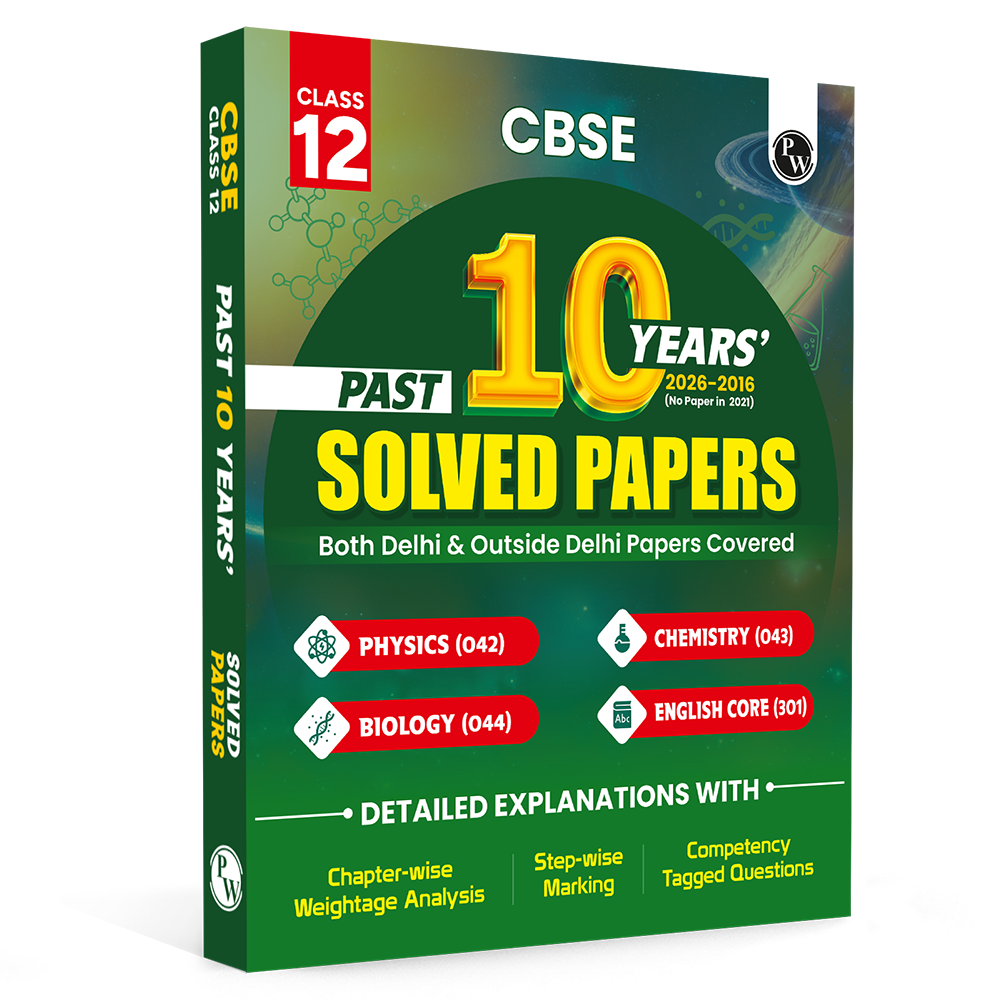
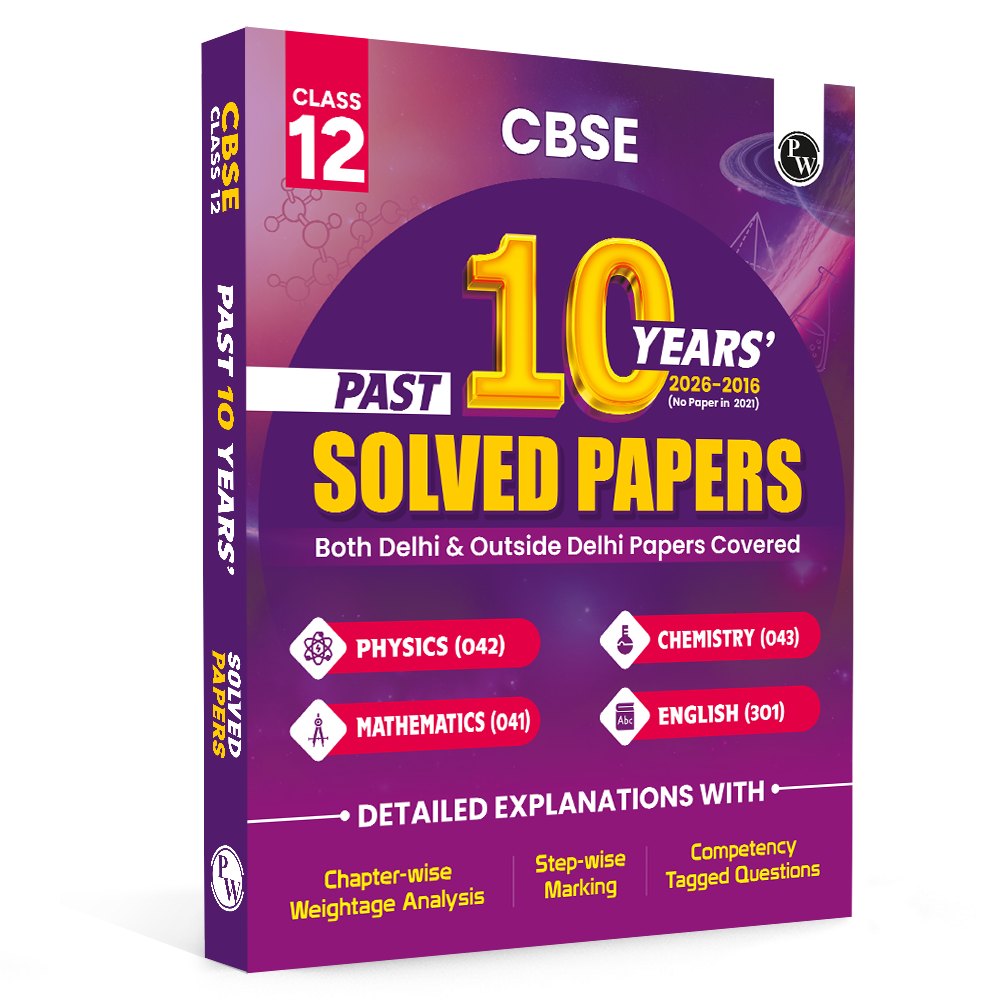
Using a comprehensive book like the PW Class 12 Last Years Solved Papers simplifies this entire process by providing authentic questions and clear, step-by-step solutions in one single place.
CBSE Class 12 PCB PYQ Board Revision Techniques
The final weeks before the boards should be reserved entirely for focused revision. You cannot afford to re-read entire CBSE class 12 books during this crucial window.
|
Subject |
Core Revision Focus Area |
Recommended PYQ Approach |
|
Physics |
Derivations, Core Concepts, and Numerical Application |
Practice 5-mark derivations repeatedly from past papers. |
|
Chemistry |
Named Reactions, Mechanisms, and Physical Formulae |
Solve reasoning questions on d-and-f block and organic conversions. |
|
Biology |
Precise Definitions, Labeled Diagrams, and Functions |
Focus heavily on high-weightage chapters via topicwise questions. |
Using past exam trends as the backbone of your revision ensures that your brain remains tuned to outputting high-quality answers rather than just absorbing random information passively.
Mistakes to Avoid with Class 12 PCB PYQ
Even the most hardworking students can fall short if their board preparation relies on flawed methods.
-
Relying on Memorization Alone: Physics and Chemistry require conceptual application. Rote learning will fail you when numbers change or when a question is twisted.
-
Ignoring the NCERT Textbook: Past papers show that CBSE rarely goes outside the boundary of the NCERT text. Use past questions to understand how NCERT lines are transformed into complex exam questions.
-
Neglecting Practical-Based Theory: A significant portion of the written exam evaluates your understanding of laboratory practicals and experimental setups.
Integrating past papers directly into your core CBSE board preparation automatically corrects these mistakes by keeping your focus strictly aligned with historical exam realities.
Read More: CBSE Previous Year Question Papers Class 12 Download PDF
Class 12 PCB PYQ FAQs
Q1: How many years of PCB PYQ should I ideally solve?
It is highly recommended to solve at least the last 5 to 10 years of past papers. This range covers various curriculum updates and exposes you to a wide spectrum of question difficulties, ensuring solid CBSE board preparation.
Q2: Is it better to practice chapterwise PCB PYQs or full length mock tests?
You should start with chapterwise PYQs during your regular study phase to understand individual chapters. Once your entire syllabus is complete, transition to full-length papers to learn your overall PCB exam strategy and timing.
Q3: Do questions repeat from class 12 PCB previous year questions?
While exact numerical values or phrasing might change, the core concepts, core derivations, and essential biology diagrams repeat very frequently from previous year questions.
Q4: How does topicwise PYQ practice help in chemistry organic conversions?
Using PYQ practice helps you see exactly how specific functional groups are converted year after year. It allows you to practice the same reaction mechanism multiple times until it becomes second nature.
Q5: Can I score above 90 percent by relying solely on board revision through past papers?
If your fundamental concepts are clear, heavy revision using structured past papers is the fastest way to refine your presentation, learn step-marking, and push your final score past the 90 percent mark.