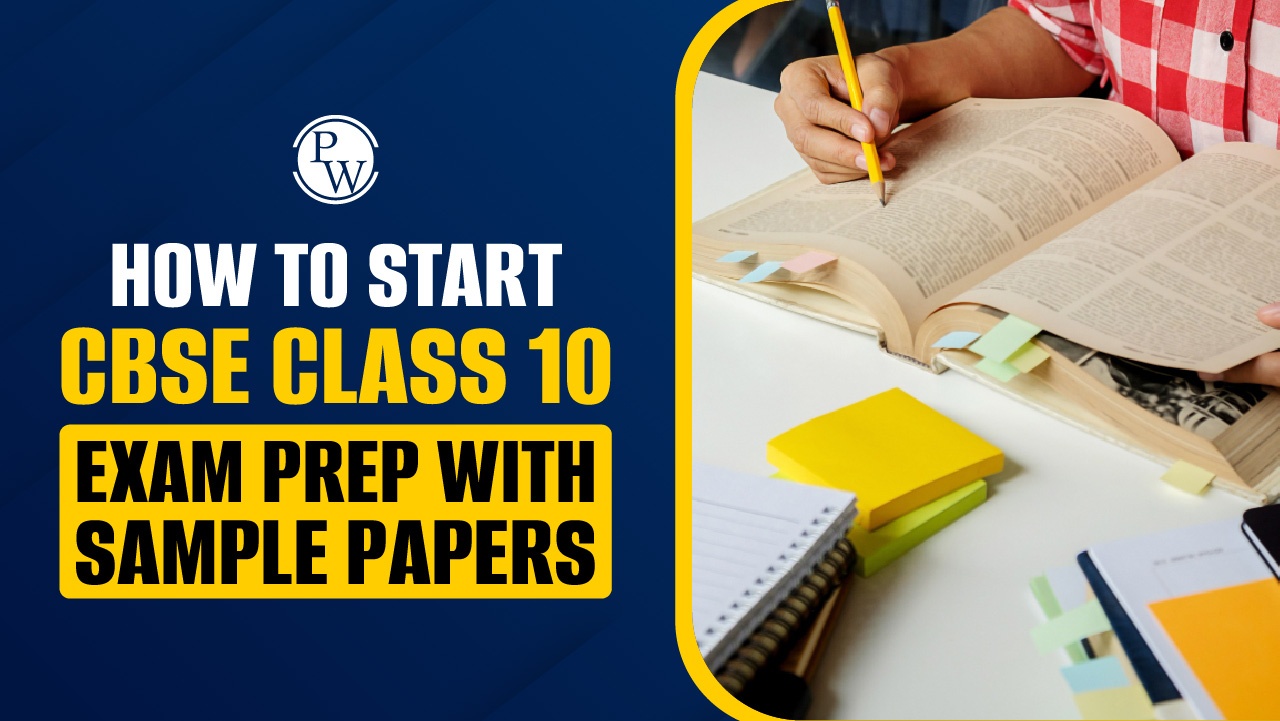
How to Start CBSE Class 10 Exam Prep with Sample Papers?
CBSE Class 10 Sample Paper
The CBSE Class 10 exams 2027 will be held in two phases, Phase 1 from February to March 2027, and Phase 2 from May to June, 2027. Each subject carries 80 marks for theory and 20 marks for internal assessment. To start your preparation, begin with NCERT books and then move to sample papers class 10 CBSE. Every year, teachers and toppers advise students to go through sample papers class 10 CBSE before and after completing their NCERT books class 10. But many students still wonder, why is solving sample papers so important?
The answer is simple. CBSE sample papers for Class 10 help you understand the exam pattern, question types, and marking scheme. You will find questions from important topics like Real Numbers, Trigonometry, Light, Life Processes, Nationalism in India, and Sectors of the Indian Economy.
Solving CBSE sample papers class 10 also helps you get used to the exam format and manage your time better. So, if you are preparing for the CBSE Class 10 2026 exams, start practising sample papers for all subjects early to make your study plan easier and more effective.
CBSE Class 10 2026 Subjects
Check out the CBSE Class 10 2026 Subjects details here:-
|
Sl. No. |
Main Subject |
Sub-Subjects / Sections |
Important Topics |
|
1 |
Mathematics |
– |
Real Numbers, Polynomials, Linear Equations, Quadratic Equations, Arithmetic Progressions, Triangles, Coordinate Geometry, Trigonometry, Statistics, Probability |
|
2 |
Science |
Physics, Chemistry, Biology |
Physics: Light – Reflection & Refraction, Electricity, Magnetic Effects of Current Chemistry: Chemical Reactions, Acids & Bases, Metals & Non-Metals, Carbon Compounds Biology: Life Processes, Control & Coordination, Reproduction, Heredity & Evolution |
|
3 |
Social Science |
History, Geography, Political Science, Economics |
History: Nationalism in India, Industrial Revolution, Print Culture Geography: Resources, Agriculture, Water Resources, Minerals, Manufacturing Industries Political Science: Power Sharing, Democracy, Political Parties Economics: Development, Sectors of Economy, Globalisation |
|
4 |
English |
Language & Literature, Writing, Grammar |
Reading Comprehension, Letter & Article Writing, Grammar, Prose and Poems from First Flight & Footprints Without Feet |
|
5 |
Hindi |
Course A / Course B |
Reading, Grammar, Writing (Essay, Letter), Prose and Poems from NCERT textbook |
Check Out: CBSE Class 10 Books
Why Choose PW Class 10 Sample Paper?
You must wonder why, out of all the options, PW Class 10 sample paper is recommended. There are many benefits of using sample papers class 10 CBSE for Class 10 preparation. Here’s why:
-
Aligned with Latest Syllabus: Every PW CBSE Class 10 sample paper follows the CBSE syllabus 2026–27, so all questions and tips are updated.
-
Exam Trend Insights: Past 5 years’ question analysis helps you understand patterns and prepare for likely questions.
-
Targeted Practice: Includes 111 most probable Science questions and a guide to all types of questions in CBSE sample papers for Class 10.
-
Comprehensive Practice Papers: 8 Science sample papers with step-by-step marking scheme, plus 4 topper-style handwritten solutions via QR code.
-
Level-Wise Preparation: Papers are divided into Easy, Medium, and Hard sets to practice gradually and confidently.
-
Smart Tools for Revision: 18 cheat sheets (mind maps), 11 answer templates, OMR sheet instructions, and solved CBSE papers from 2024 & 2025 give a real exam feel.
Check Out: CBSE Class 10 Previous Year Papers
CBSE Sample Papers for Class 10
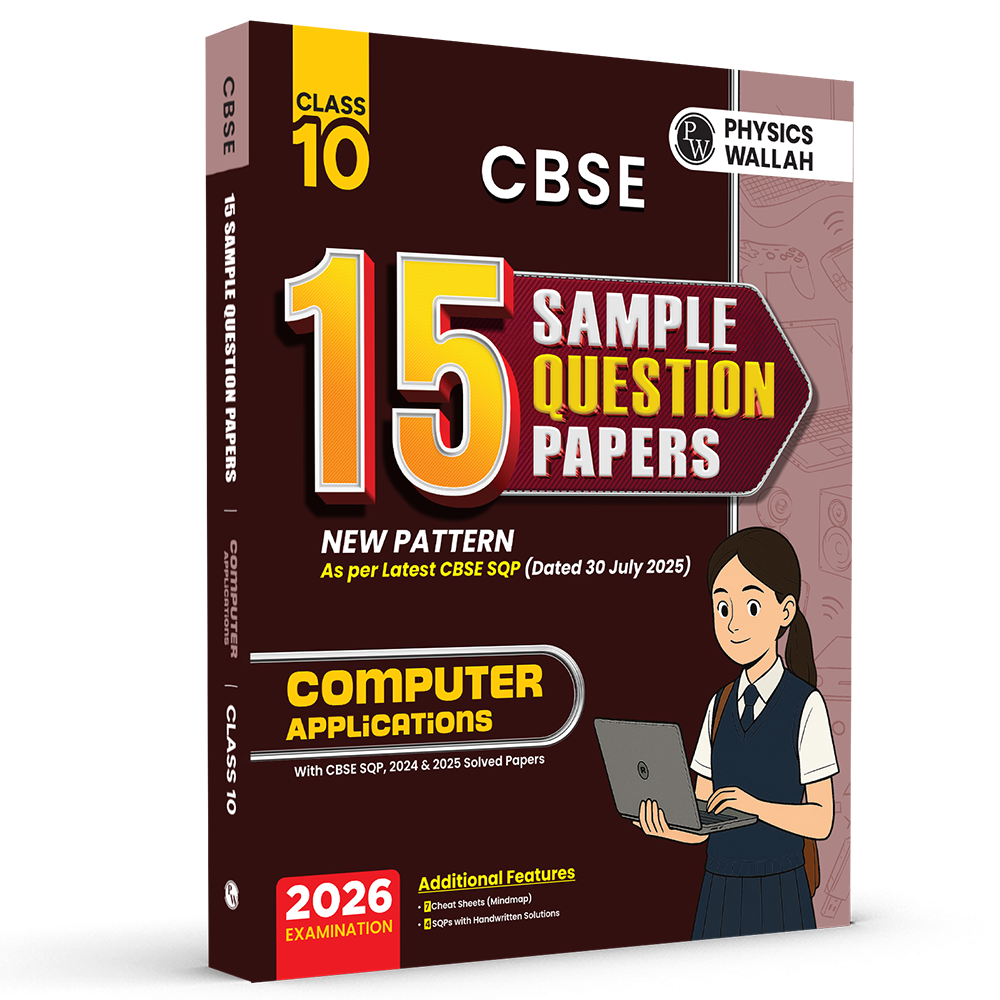
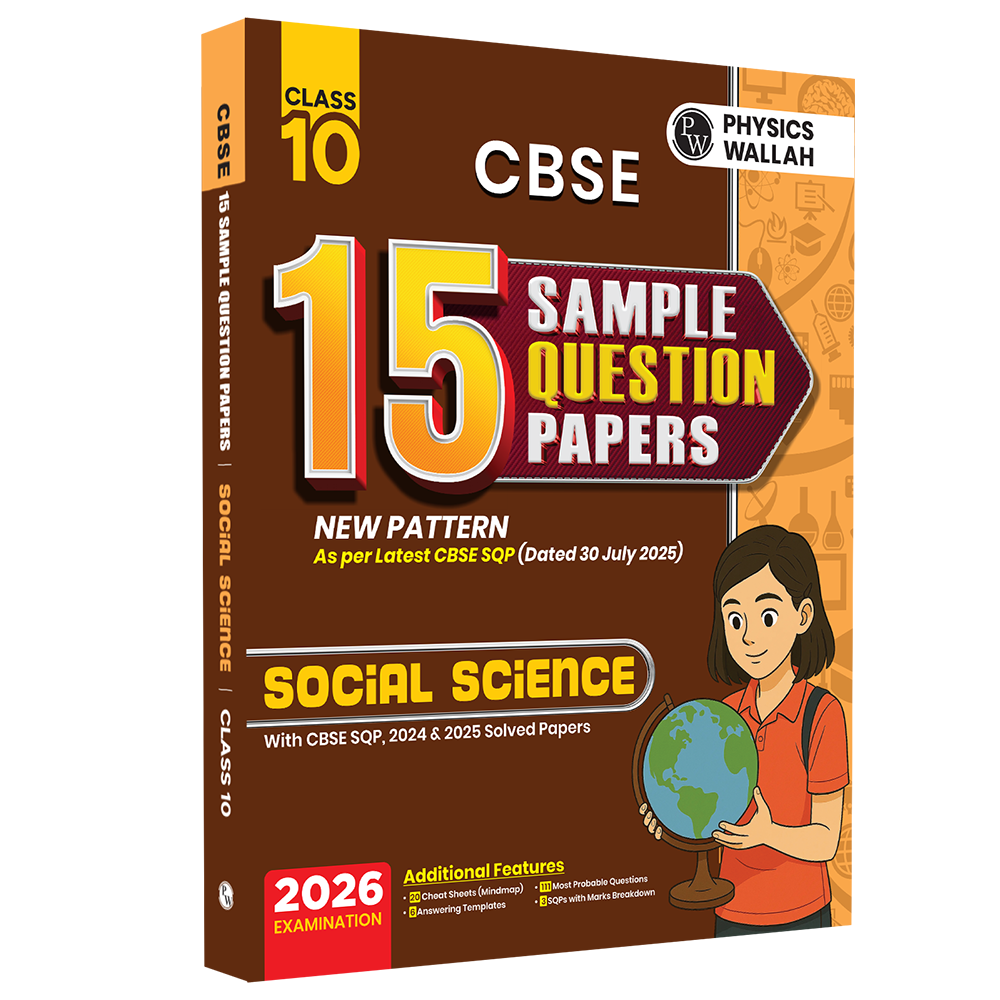
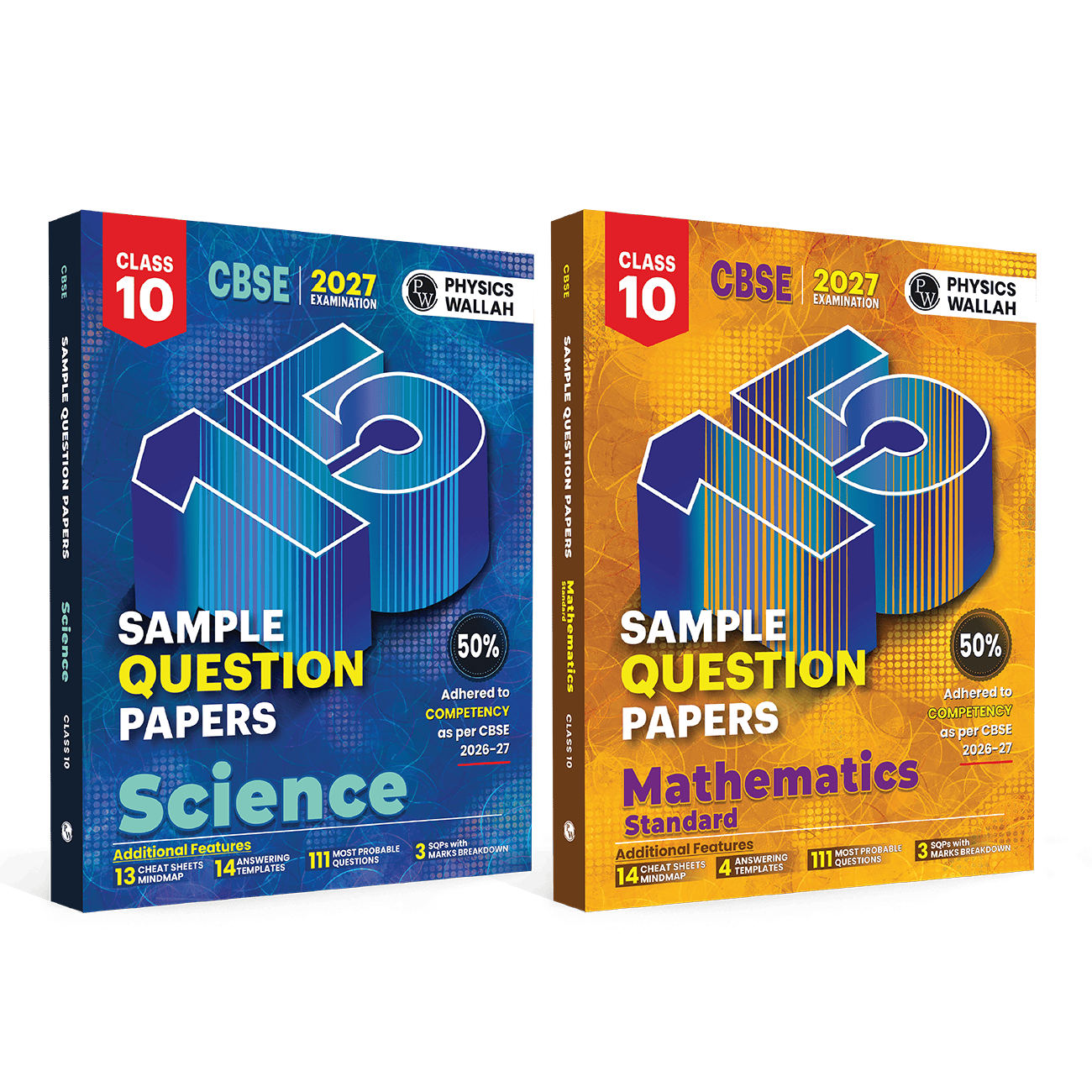
Check out the PW CBSE Sample Papers for Class 10 here:-
How to Start CBSE Class 10 Exam Prep with Sample Papers?
Check how to use the PW sample paper for CBSE class 10 exam preparations:-
1. Go Through Sample Papers of Each Subject
Before starting your exam preparation, it is important to look at the sample papers for each subject carefully. This will help you understand the types of questions and how they are framed. You can consider subject-wise sample papers or PW Class 10 sample papers for practice.
-
Check all types of questions like objective, short answer, long answer, and case-based questions.
-
Look at how marks are distributed among chapters and question types.
-
Identify topics that appear frequently so you can focus on them while studying.
2. Understand the Exam Pattern and Important Topics
Knowing the CBSE 10 board exam pattern and which chapters carry more weight is very useful. This helps in planning your preparation and focusing on the important areas.
-
See which chapters are repeated in previous years and which carry more marks.
-
Notice the mix of theory, application, and competency-based questions in each subject.
-
Understand the timing and how many questions you need to attempt in a given period.
3. Complete the NCERT Books Properly
Most questions in CBSE sample papers class 10 come from NCERT books class 10, sometimes slightly twisted. So it is important to finish the NCERT books properly before solving sample papers.
-
Read every chapter carefully and make sure you understand all concepts.
-
Highlight important points, definitions, dates, formulas, and diagrams while reading.
-
Do not skip any topic because even small parts can appear in the exam.
4. Make Your Own Notes
While studying or solving sample papers, making your own notes is very helpful for revision. Notes make it easy to recall information quickly.
-
Write down important points, formulas, and key dates from each chapter.
-
Highlight topics that are difficult or appear frequently in exams.
-
Use your notes to revise quickly before the exam instead of reading the whole book again.
Also Check, CBSE Class 10 Question Banks
5. Practice Subject-Wise Sample Papers
After completing your syllabus and notes, solving CBSE sample papers class 10 is very useful. You can also consider PW sample paper class 10 for subject-wise practice.
-
Solve as many sample papers as possible to get used to the exam format.
-
Time yourself to practice completing papers within the given duration.
-
Check your answers and compare with solutions to understand mistakes.
6. Consider Previous Year Questions (PYQs)
Going through previous year question papers helps you understand trends and frequently asked questions. This adds direction to your preparation.
-
Solve PYQs after finishing the syllabus and sample papers to practice real exam questions.
-
Compare PYQs with CBSE sample papers for class 10 to see which topics are repeated.
-
Use PYQs for quick revision and to build confidence before the exams.
Read More: How CBSE Class 10 Sample Papers Help After Half-Yearly Exams
CBSE Class 10 Sample Papers FAQs
1. Why should I solve CBSE sample papers for Class 10?
Solving CBSE sample papers for Class 10 helps you understand the exam pattern, marking scheme, and question types.
2. When will the CBSE Class 10 exams 2027 be conducted?
The CBSE Class 10 exams 2027 will be held in two phases, Phase 1 from February to March 2027, and Phase 2 from May to June, 2027.
3. Are CBSE sample papers based on the NCERT Class 10 syllabus?
Yes, all sample papers class 10 CBSE are based on the NCERT books class 10 syllabus. Most questions in the exam come directly or indirectly from NCERT chapters.
4. How many CBSE sample papers should I solve before the exam?
Try solving at least 8 to 10 sample papers for each subject. This helps you cover different question types and strengthens your time management skills.
5. Can I use PW Class 10 sample papers for my preparation?
Yes, you can consider using PW Class 10 sample papers as they are aligned with the latest CBSE 2026–27 syllabus and include step-by-step solutions for practice.