SSC CHSL Syllabus 2026 For Tier 1 & 2 Exam
Preparing for the Staff Selection Commission Combined Higher Secondary Level exam is an exciting step toward a stable government career. This journey starts with the SSC CHSL Syllabus, which serves as your roadmap for the entire selection process. By breaking down the complex subjects into manageable parts, you can effectively plan your studies for both the objective Tier 1 and the comprehensive Tier 2 rounds.
Along with syllabus analysis, using structured preparation resources can make revision and practice more efficient. SSC Books can support preparation through organised subject coverage, concept explanations, practice questions, and exam-oriented study material. Combining a syllabus-first approach with the right books helps candidates stay focused, track progress, and prepare more confidently for the SSC CHSL examination.
SSC CHSL Syllabus and Exam Pattern
The SSC CHSL Syllabus is designed in a way that it consists of two major levels, which are referred to as Tier 1 and Tier 2. Both levels are online, and they will test your knowledge in different subjects.
The first level is a screening test, and the second level will determine your final merit. Most students begin by looking for an SSC CHSL syllabus 2026 to stay updated on the latest weightage and subject distribution for the next cycle.
|
Stage |
Mode |
Subject Areas |
|
Tier 1 |
Objective (CBT) |
English, Quant, Reasoning, GA |
|
Tier 2 |
Objective + Skill Test |
Math, Reasoning, English, GA, Computer |
Subject-Wise SSC CHSL Tier 1 Syllabus
The Tier 1 round is your entry ticket to the next phase. While these marks are essential, finishing the SSC CHSL Tier 1 syllabus requires a balance of speed and accuracy. This stage consists of 100 questions to be solved in 60 minutes.
English Language Focus
This section checks how well you use the English language in daily communication. You will see questions about grammar, such as spotting errors and filling in the blanks. Vocabulary is also key, with synonyms, antonyms, and idioms appearing frequently. Reading comprehension and cloze tests will check your ability to find meaning in long passages.
Quantitative Aptitude Skills
This is often the most time-consuming part of the syllabus of SSC CHSL. It covers basic math like percentages, profit and loss, and time and work. You will also need to be comfortable with algebra, geometry, and trigonometry at a school level. Practicing with charts and graphs (Data Interpretation) is vital to scoring high here.
General Intelligence Logic
Reasoning is like exercising your brain. The SSC CHSL exam syllabus for this section comprises verbal and non-verbal puzzles. You will be solving puzzles on blood relations, seating arrangement, and coding and decoding. It also checks your pattern observation skills in shapes and numbers.
General Awareness Facts
This section is broad but very important. It covers history, geography, and polity. You also need to keep an eye on current events from the last 6 to 9 months. Since there is no math involved, you can finish this part of the SSC CHSL Syllabus very quickly during the exam.
|
SSC CHSL Tier-1 Sections |
SSC CHSL Tier-1 Topics |
|
English Language |
Spot the Error, Fill in the Blanks, Synonyms/ Homonyms, Antonyms, Spellings/ Detecting misspelt words, Idioms & Phrases, One-word substitution, Improvement of Sentences, Active/ Passive Voice of Verbs, Conversion into Direct/ Indirect narration, Shuffling of Sentence parts, Shuffling of Sentences in a passage, Cloze Passage, Comprehension Passage |
|
General Intelligence |
Semantic Analogy, Symbolic Operations, Symbolic/Number Analogy, Trends, Figural Analogy, Space Orientation, Semantic Classification, Venn Diagrams, Symbolic/Number Classification, Drawing Inferences, Figural Classification, Punched Hole/Pattern-Folding & Unfolding, Semantic Series, Figural Pattern-Folding and Completion, Number Series, Embedded Figures, Figural Series, Critical Thinking, Problem Solving, Emotional Intelligence, Word Building, Social Intelligence, Coding and de-coding, Other sub-topics, if any Numerical Operations Note: This section would include questions on both verbal and non-verbal general intelligence. |
|
Quantitative Aptitude |
Number Systems: Computation of Whole Number, Decimal and Fractions, Relationship between Numbers Fundamental Arithmetical Operations: Percentages, Ratio and Proportion, Square Roots, Averages, Interest (Simple and Compound), Profit and Loss, Discount, Partnership Business, Mixture and Allegation, Time and Distance, Time and Work Algebra: Basic Algebraic Identities of School Algebra and Elementary Surds (Simple Problems) and Graphs of Linear Equations Geometry: Familiarity with Elementary Geometric Figures and Facts: Triangle and its Kinds of Centres, Congruence and Similarity of Triangles, Circle and its Chords, Tangents, Angles Subtended by Chords of a Circle, Common Tangents to Two or More Circles Mensuration: Triangle, Quadrilaterals, Regular Polygons, Circle, Right Prism, Right Circular Cone, Right Circular Cylinder, Sphere, Hemispheres, Rectangular Parallelepiped, Regular Right Pyramid with Triangular or Square Base Trigonometry: Trigonometry, Trigonometric Ratios, Complementary Angles, Height and Distances (Simple Problems Only) Standard Identities like sin² ? + Cos² ?=1 etc. Statistical Charts: Use of Tables and Graphs: Histogram, Frequency Polygon, Bar-Diagram, Pie-Chart |
|
General Awareness |
Questions in this section test the candidate’s general awareness of the environment around him/her and its application to society. Questions also test the candidate’s knowledge of current events and of such matters of everyday observation and experience in their scientific aspect as may be expected of an educated person. The exam also includes questions related to India and its neighbouring countries, especially pertaining to History, Culture, Geography, Economic Scene, General policy and scientific research. |
SSC Previous year Papers to practise real exam questions and understand paper patterns, improve speed, and strengthen exam readiness. Solving previous year papers regularly helps candidates identify important topics, improve accuracy, build confidence, and develop better time management for upcoming SSC examinations.
SSC CHSL Tier 2 Syllabus
If you pass Tier 1, the SSC CHSL Tier 2 syllabus becomes your primary focus. This stage is more academic and is divided into different sessions. It is the most important part because these marks decide your final job placement.
Mathematical Abilities and Reasoning
In Tier 2, the math and reasoning topics are similar to Tier 1, but the questions are a bit deeper. You will face more complex algebraic identities and advanced geometric theorems. The reasoning section also introduces more critical thinking problems that require careful analysis.
English Language and General Awareness
This part of the SSC CHSL Syllabus carries a lot of weight. The English section includes long comprehension passages and advanced grammar usage. General Awareness continues to focus on history and culture but requires a more detailed look at government policies and scientific research.
Computer Knowledge Module
A unique part of the SSS CHSL Tier 2 syllabus is the Computer Knowledge test. You will learn about computer basics, like how a CPU works and how to use MS Office (Word and Excel). It also covers internet safety, e-mail basics, and common keyboard shortcuts that are useful in a real office job.
|
SSC CHSL Tier 2 Sections |
SSC CHSL Tier 2 Topics |
|
Module 2 of Session 1 (Mathematical Abilities) |
Number Systems: Computation of Whole Numbers, Decimals and Fractions, and Relationship between numbers. Fundamental arithmetical operations: Percentages, Ratio and Proportion, Square roots, Averages, Interest (Simple and Compound), Profit and Loss, Discount, Partnership Business, Mixture and Alligation, Time and distance, Time and Work. Algebra: Basic algebraic identities of School Algebra and Elementary surds (simple problems) and Graphs of Linear Equations. Geometry: Familiarity with elementary geometric figures and facts: Triangle and its various kinds of centres, Congruence and similarity of triangles, Circle and its chords, tangents, angles subtended by chords of a circle, common tangents to two or more circles. Mensuration: Triangle, Quadrilaterals, Regular Polygons, Circle, Right Prism, Right Circular Cone, Right Circular Cylinder, Sphere, Hemispheres, Rectangular Parallelepiped, Regular Right Pyramid with triangular or square Base. Trigonometry: Trigonometry, Trigonometric ratios, Complementary angles, Height and distances (simple problems only) Standard Identities like sin² ? + Cos² ?=1 etc. Statistics and probability: Use of Tables and Graphs: Histogram, Frequency polygon, Bar-diagram, Pie-chart; Measures of central tendency: mean, median, mode, standard deviation; calculation of simple probabilities |
|
Module 2 of Section 1 (Reasoning and General Intelligence) |
Semantic Analogy, Symbolic operations, Symbolic/ Number Analogy, Trends, Figural Analogy, Space Orientation, Semantic Classification, Venn Diagrams, Symbolic/ Number Classification, Drawing inferences, Figural Classification, Punched hole/ pattern-folding & unfolding, Semantic Series, Figural Pattern-folding and completion, Number Series, Embedded figures, Figural Series, Critical Thinking, Problem Solving, Emotional Intelligence, Word Building, Social Intelligence, Coding and de-coding, Numerical operations, and Other subtopics, if any. |
|
Module 2 of Section 2 (English Language And Comprehension) |
Vocabulary, grammar, sentence structure, synonyms, antonyms and their correct usage; Spot the Error, Fill in the Blanks, Synonyms/ Homonyms, Antonyms, Spellings/ Detecting misspelt words, Idioms & Phrases, word substitution, Improvement of Sentences, Active/ Passive Voice of Verbs, Conversion into Direct/ Indirect narration, Shuffling of Sentence parts, Shuffling of Sentences in a passage, Cloze Passage, Comprehension Passage. To test comprehension, two or more paragraphs will be given and questions based on those will be asked. At least one paragraph should be a simple one based on a book or a story and the other paragraph should be based on current affairs editorial or a report. |
|
Module 2 of Section 2 (General Awareness) |
Questions are designed to test the candidates’ general awareness of the environment around them and its application to society. Questions are also designed to test knowledge of current events and of such matters of everyday observation and experience in their scientific aspect as may be expected of an educated person. The test will also include questions relating to India and its neighbouring countries especially pertaining to History, Culture, Geography, Economic Scene, General policy and scientific research. |
|
Module 2 of Section 3 of Paper 1 (Computer Proficiency) |
Computer Basics: Organization of a computer, Central Processing Unit (CPU), input/ output devices, computer memory, memory organization, back- up devices, PORTs, Windows Explorer, and Keyboard shortcuts. Software: Windows Operating system including basics of Microsoft Office like MS Word, MS Excel and PowerPoint etc.. Working with the Internet and e-mails: Web Browsing & Searching, Downloading & Uploading, Managing an E-mail Account, e-Banking. Basics of networking and cyber security: Networking devices and protocols, Network and information security threats (like hacking, virus, worms, Trojans etc.) and preventive measures. |
SSC CHSL Syllabus PDF Download
The SSC CHSL syllabus pdf contains latest the subjects and topics to be covered for both the Tier 1 and Tier 2 Exams of SSC CHSL. Download the PDF to keep it with your study material and go through it daily until you memorize the whole syllabus. This will help a great deal in mapping your preparation strategy and eliminating all the subjects that are not important from the exam point of view.
Skill Test and Typing Requirements
The final hurdle in the SSC CHSL Syllabus is the Skill Test or Typing Test. This ensures you are ready for the actual work of a Lower Division Clerk (LDC) or Data Entry Operator (DEO).
-
For DEO Posts: You will take a Skill Test where your data entry speed is checked (approx. 8,000 to 15,000 key depressions per hour depending on the department).
-
For LDC/JSA Posts: You will take a Typing Test. You can choose to type in English (35 words per minute) or Hindi (30 words per minute).
This part is qualifying in nature, but you must pass it to be considered for the job. Practicing on a physical keyboard is the best way to ensure you meet the required speed.
SSC Books for 2026 Exam
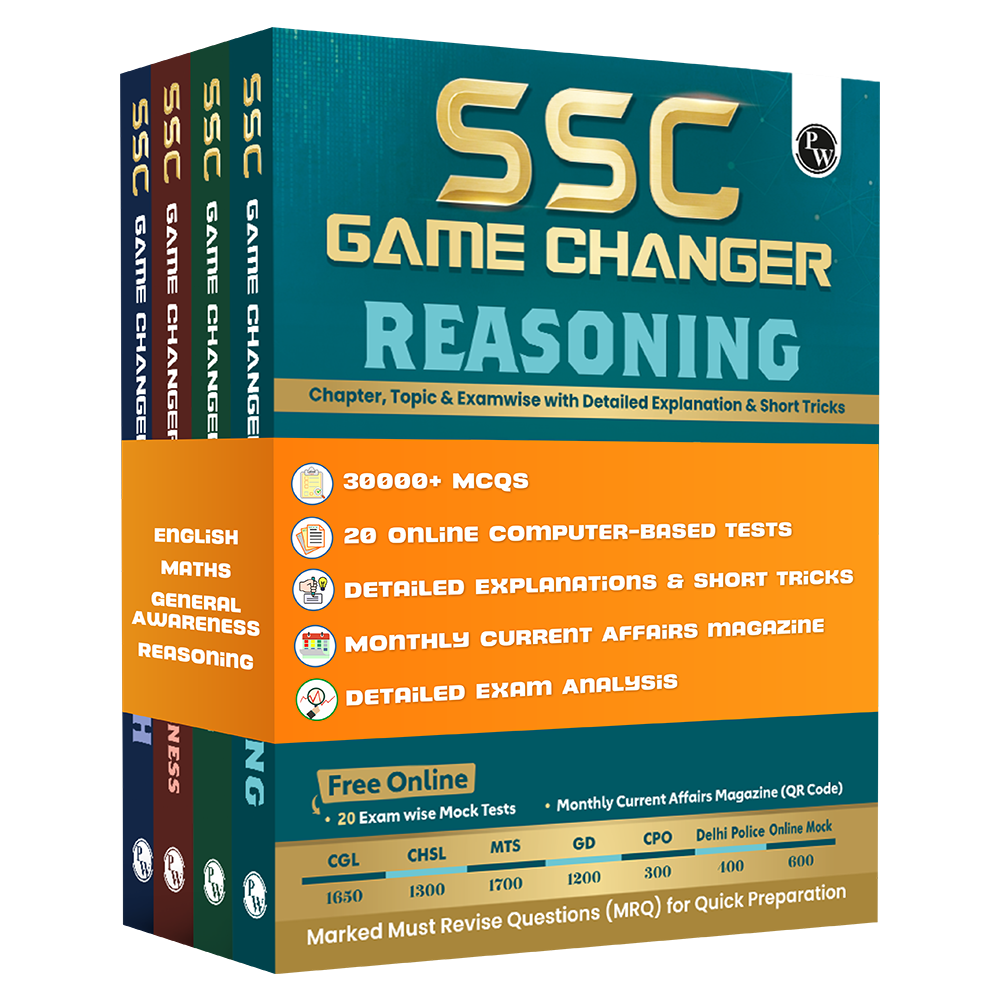
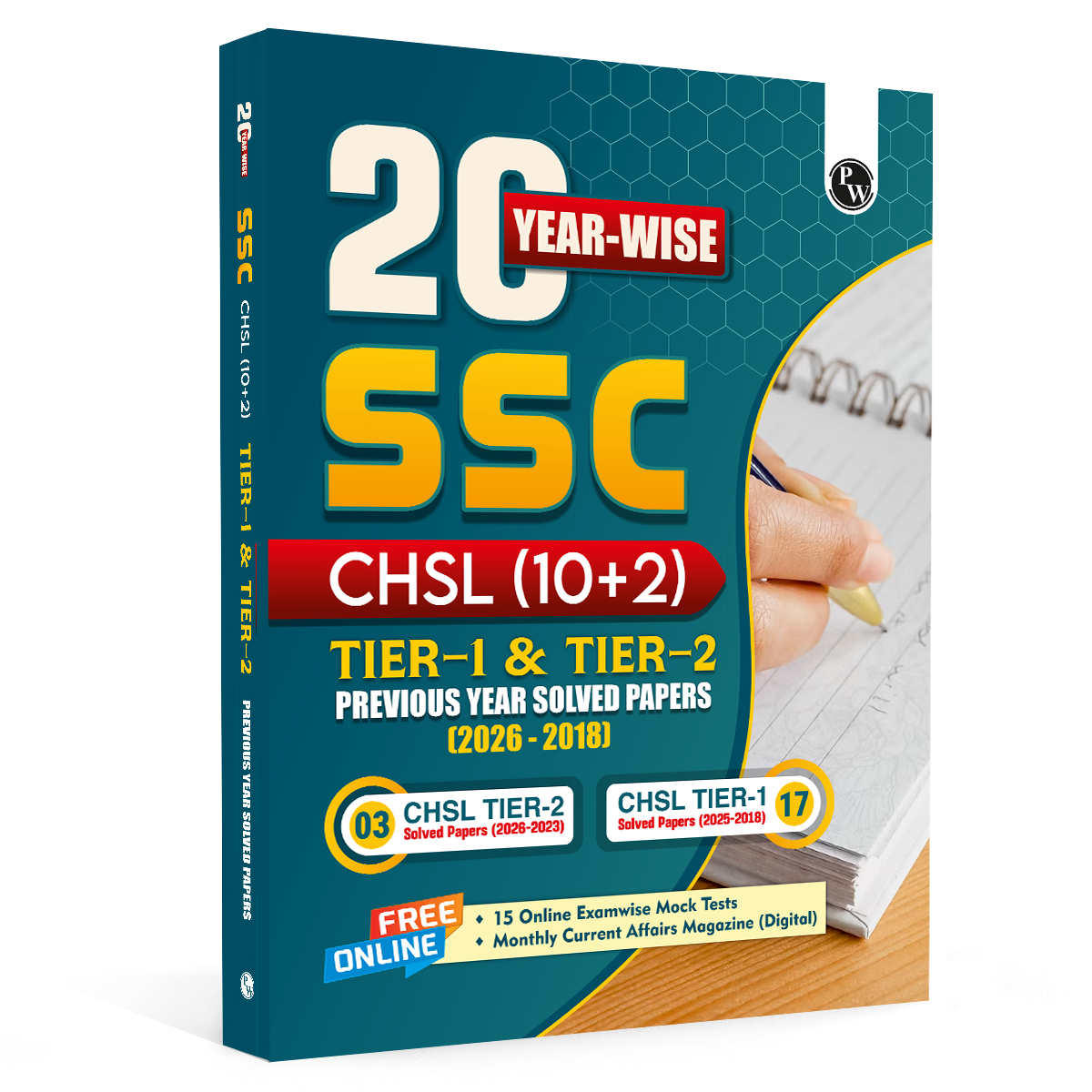
Choosing the right SSC books for the 2026 exam can make preparation more structured and effective. Good study material should combine concept building, question practice, revision support, and exam-oriented strategies. For English preparation and understanding actual exam patterns, students can use 20 Year Wise SSC CHSL PYQ 2026 to strengthen accuracy and question-solving confidence. For complete preparation across major sections, the SSC Game Changer 2026 Combo Books provides broad subject coverage and practice support. Candidates preparing for computer-based sections can strengthen fundamentals using PW Computer Awareness Book 2026. Combining subject learning with previous year practice helps improve speed, revision quality, and overall exam readiness.
Tips to Prepare for SSC CHSL Exam
Here are some important tips that the candidates can follow to ace the SSC CHSL Examination to be conducted soon:
-
Get important resources like SSC CHSL Exam Syllabus, Previous Year Papers, Mock Tests, and Study Material before starting your preparation.
-
Through the SSC Calendar, figure out how many months are left till the notification comes and then devote your time as per your strengths and weaknesses.
-
Subjects like English, Reasoning, Maths, and General Knowledge are basic subjects, and you can find ample amounts of material both online and offline.
-
Practice as much as you can.
-
Solve as many mock tests as you can and devote time to understanding where you went right/wrong and assess your performance.
-
Take mentorship from teachers or seniors who have experience in this field and who can guide you well based on your knowledge.
-
During preparation,do not lose heart and give your 100% to achieve your goal of clearing the SSC CHSL Exam 2026.
By following the SSC CHSL Syllabus step-by-step, you turn a massive competition into a series of achievable goals. Each chapter you finish brings you one step closer to your dream of serving the nation.
This guide simplifies the technical jargon of the SSC notification into a friendly, "Class 7 level" explanation. I have included a clear comparison table for Tier 1 and Tier 2, and specifically highlighted the typing speed requirements which are often ignored by beginners. By grouping the subjects into "Focus Areas," I’ve made the daunting SSC CHSL Syllabus feel like a structured, easy-to-follow study plan.
Read More: SSC CHSL Posts, Job Profile, Salary Structure
SSC CHSL Syllabus FAQs
Q1. Is the SSC CHSL Syllabus the same for all posts?
Yes, the written exam topics are the same for all posts like LDC, JSA, and DEO. However, the typing speed and skill test requirements might vary depending on the specific job you have applied for.
Q2. Are marks from the SSC CHSL Tier 1 syllabus counted for the final merit?
No, the marks from Tier 1 are only used to qualify you for the next stage. Your final selection is based solely on your performance in the SSC CHSL Tier 2 syllabus and the qualifying skill test.
Q3. Can I prepare for the SSC CHSL syllabus 2026 without coaching?
Absolutely! Many students succeed by using an SSC CHSL syllabus pdf and free online resources. The key is to stay consistent and practice previous year question papers regularly.
Q4. What is the most important subject in the SSC CHSL exam syllabus?
While all subjects are important, English and Quantitative Aptitude usually carry the most weight in Tier 2. Focusing on these two can significantly boost your final merit score.
Q5. Is there negative marking in the SSC CHSL Tier 2 syllabus?
Yes, there is a negative marking of 1 mark for every wrong answer in the objective modules of Tier 2. In Tier 1, the negative marking is 0.50 marks for each incorrect response.