How to Crack UPSC GS Paper 1: Toppers Proven Strategy
A key component of the Civil Services Mains Examination, the 250- marks UPSC GS Paper 1 covers History, Geography, Society, and Art & Culture. Success in this paper necessitates a shift from basic factual memory to a nuanced, analytical approach that uses organized answer writing to link historical context with current challenges.
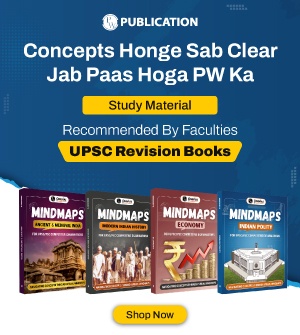
Check Out - UPSC Books
Mastering UPSC GS Paper 1: Syllabus and Preparation for 2025
Aspirants must first thoroughly understand the syllabus for UPSC GS Paper 1, which covers Indian Heritage and Culture, History and Geography of the World, and Society, in order to ace the 2025 try. Understanding the UPSC GS Paper 1 curriculum guarantees that no thematic subtlety is overlooked during the foundation-building phase for individuals preparing in the vernacular.
Toppers stress that there was a noticeable change toward analytical questions in the upsc gs paper 1 2024 trends. For instance, the committee can inquire as to how Gandhi's philosophy of satyagraha converted the fight for independence into a mass movement that spanned India, as opposed to merely requesting a list of Gandhian movements.
Check Out: UPSC Revision Books
Toppers’ Proven 5-Step Strategy for GS Paper 1
1. The Power of Answer Structure
Toppers adhere to the traditional formula: Content + Structure = Marks. Generally speaking, a well-structured response includes:
Start with a pertinent fact or quotation, define a term, or present a thesis based on context (10–15%).
For instance, rather than stating that "Gandhi was a great leader," state "Mahatma Gandhi's doctrine of Satyagraha (1920s–1940s) transformed India’s freedom struggle into a pan-Indian mass movement."
Body: Make use of three to five word headings and subheadings. To make the solution visually appealing, include flowcharts, maps, and diagrams.
Conclusion: Conclude with a good statement. Add a government plan, a "way forward," or a pertinent quotation.
2. Strategic Integration of Current Affairs
Current events are no longer isolated. Candidates can refer PW Current affairs books to static subjects like geography or sociology. For example, bringing up recent GST issues could enhance a static inquiry about federalism.
3. Smart Use of Visual Aids
In Geography and History, maps and flowcharts are "game changers." Toppers recommend:
-
Representing trade routes or the spread of culture on basic India/World maps.
-
Using pencils for diagrams to avoid ink smudging.
-
Adding 1–2 relevant diagrams for 12-mark questions.
4. Analyzing Previous Year Questions (PYQs):
Finding recurrent themes and useful topics is made easier by analyzing the UPSC GS Paper 1 PYQs. Toppers advise organizing related subjects into "thematic clusters" (such as ethics or agriculture) and honing your response writing skills in these high-yield domains.
5. Time Management and Mock Tests
Time management is essential because there are twenty questions to complete in three hours:
Ten brief questions (8 marks, 125 words) in Section A should take about seven minutes apiece.
Section B: Ten 200-word, 12-mark questions, each lasting around ten minutes.
Take lengthy practice exams on a regular basis to help you develop muscle memory instead of exam anxiety.
Check Out: UPSC Previous Year Papers
PW UPSC Study Material for 2026 Exam Preparation
PW UPSC Study Material for the 2026 exam provides well-organised notes, updated syllabus coverage, NCERT-based content, and plenty of practice questions. It helps aspirants build strong fundamentals and prepare with confidence for both UPSC Prelims and Mains.
Read More: UPSC GS Syllabus and Exam Pattern
UPSC GS Paper 1 Preparation FAQs
1. What are the primary topics covered in the syllabus for UPSC GS Paper 1?
Indian heritage and culture, ancient, medieval, modern, and world history, physical and human geography, and Indian society—including socioeconomic issues and demography—are the main topics of the paper.
2. Where can I locate the Hindi curriculum for UPSC GS Paper 1?
The UPSC announcement and educational websites like PW, which offer a decoded version of the curriculum in Hindi for simpler understanding, both offer the official syllabus in Hindi.
3. Does the UPSC GS Paper 1 2025 require reading every NCERT?
Indeed, NCERTs from Classes 6 through 12 are continuously cited by top students as the most essential source for geography, history, and society. They offer the conceptual clarity required to address challenging, analytical issues.
4. How should I approach current affairs for GS Paper 1?
Link static content with current events. For example, when studying Secularism or Communalism in Society, read editorials to understand contemporary debates. Use reports from PIB and Yojana to add data to your answers.
5. What is the word limit for the questions, in the UPSC General Studies Paper 1?
Ten short-answer questions with a word restriction of 125 and ten long-answer questions with a word limit of 200 typically make up the paper. Quality matters more than quantity, therefore don't go over the word limit to avoid being penalized.