How to Read UPSC Monthly Current Affairs for Maximum Prelims and Mains Yield

Mastering dynamic events remains a major obstacle for civil services exam aspirants. UPSC current affairs preparation often becomes challenging because students have to sift through multiple newspapers and countless online sources, leading to information overload and wasted hours.
By aligning your preparation with the official exam structure, you can convert vast news updates into precise, high-scoring points. Discover how to streamline your study routine using targeted techniques that turn daily news into an effective tool for clear conceptual clarity.
Importance of UPSC Current Affairs
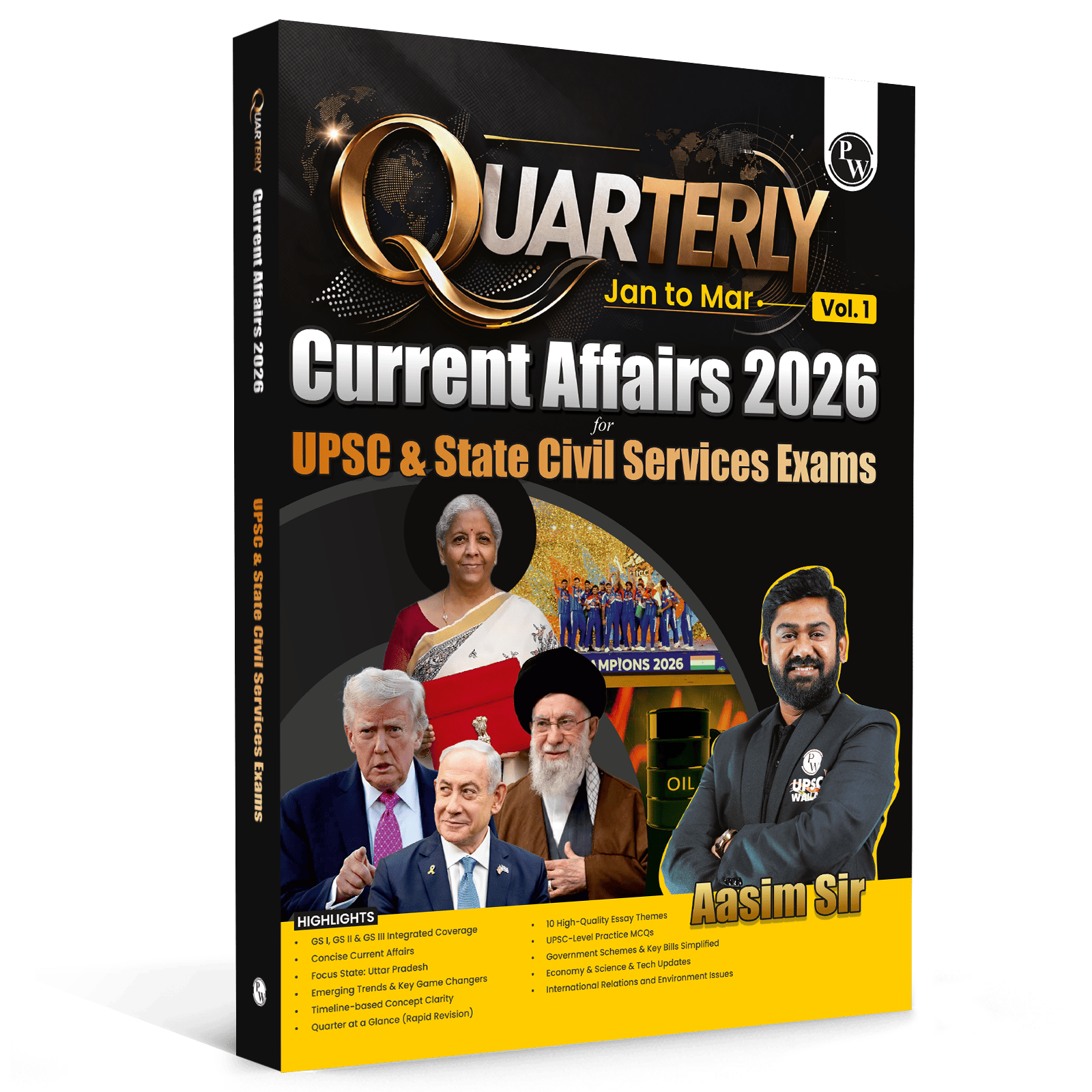
A systematic study resource helps candidates avoid the common mistake of gathering disjointed facts from random web pages. Relying on a dedicated current affairs book simplifies the learning path by grouping relevant themes under explicit GS papers.
-
Centralised Knowledge: Access all important updates within a single monthly volume instead of maintaining messy folders of daily news cuttings.
-
Time Conservation: Eliminate the need to browse multiple media outlets or government websites every morning.
-
Curated Content: Read only the stories that matter for the syllabus, filtering out political noise and sensational headlines.
The content is designed to present complex legislative issues, financial mechanisms, and scientific advancements in a readable, non-academic style.
-
Simple Language: Complex judicial cases or economic indicators are explained in a clear, neutral manner for easy comprehension.
-
Visual Elements: Simple tables, flowcharts, and clear headings separate data into consumable sections.
-
Fact Separation: Core definitions and chronological timelines are isolated from lengthy explanations, enabling faster data retrieval.
How to Read the UPSC Current Affairs Book?
The objective stage demands sharp identification skills, an eye for technical details, and accurate data retention. Scoring high in General Studies Paper 1 requires a candidate to extract hard facts, institutional roles, and geographic locations systematically from their monthly reading material.
Tracking Specific Topic Categories
To secure the 20 to 30 marks available for recent developments in the preliminary exam, focus your attention on these specific areas when reading the UPSC current affairs book 2026:
-
National Affairs: Read carefully through administrative notices, newly launched welfare schemes, and structural policy updates.
-
International Affairs: Highlight United Nations resolutions, bilateral trade agreements, global environmental treaties, and international summits.
-
Economy & Budget: Track the major findings of the Economic Survey, Union Budget proposals, banking policy changes, and GST updates.
-
Science & Technology: Focus on space launch vehicles, satellite missions, defense defense machinery, and advancements in Artificial Intelligence.
-
Environment & Ecology: Monitor international climate change summits, national wildlife protection initiatives, and domestic green energy policies.
-
Awards & Recognitions: Note down the winners and significance of major national decorations, global cultural awards, and Nobel prizes.
Implementing Active Recall and Testing
Do not treat the publication like a fictional novel. Active engagement with the text prevents passive reading and boosts memory retention.
-
Solve Integrated MCQs: Complete the multiple-choice questions provided at the end of each section immediately after reading.
-
Take a Regular UPSC Current Affairs Quiz: Evaluate your factual memory weekly by attempting online tests or quiz modules based on the magazine.
-
Cross-Reference Static Material: When reading about an ordinance or a constitutional amendment, open your standard Polity textbook to refresh your foundational knowledge.
How to Use the UPSC Current Affairs PDF for Mains?
The descriptive stage tests your analytical depth, structural presentation, and ability to link current events to static theoretical concepts. Candidates must learn to transform basic news bullet points into persuasive components of a formal civil services essay or answer sheet.
Structuring Core Syllabus Themes
When studying with the UPSC current affairs PDF version, organize your digital highlights and notes around the distinct requirements of the four core General Studies papers:
-
GS Paper 1 (Society and Geography): Extract data on demographic changes, urbanization issues, tribal welfare challenges, and geographic phenomena like erratic monsoons or natural disasters.
-
GS Paper 2 (Governance and Constitution): Look for Supreme Court judgments, federal disputes, statutory body performances, and institutional reforms.
-
GS Paper 3 (Economy, Security, and Environment): Pay attention to industrial growth figures, internal security threats, cyber defense strategies, and environmental conservation challenges.
-
GS Paper 4 (Ethics and Case Studies): Note down real-world administrative achievements, ethical dilemmas faced by public servants, and systemic anti-corruption measures.
Building an Analytical Framework
Every core essay question requires a balanced perspective that addresses all dimensions of a national or international problem.
|
Dimension |
Key Elements to Extract |
Purpose in Mains Answer |
|
Historical Background |
Origin of the issue, past committee reports |
Introduces the topic with solid context |
|
The Core Conflict |
Pros versus cons, constitutional challenges |
Demonstrates balanced, objective analytical skills |
|
Statistical Evidence |
Government data, NITI Aayog indices |
Validates claims with authentic verification |
|
Way Forward |
Expert committee suggestions, international models |
Concludes the answer with realistic solutions |
Study Plan for UPSC Current Affairs
Achieving a high rank requires balancing your static foundation courses with dynamic daily updates. Managing your study hours effectively prevents current affairs preparation from overwhelming your optional subjects or core textbooks.
Daily and Monthly Resources
-
Daily Consistency: Spend no more than thirty to forty-five minutes daily reading a reputable national newspaper to maintain a basic awareness of ongoing events.
-
Monthly Consolidation: Use your book on the weekend to structure, verify, and fill gaps in your daily notes.
-
Static Integration: Always dedicate at least seventy percent of your study day to core static subjects, treating dynamic updates as an extension of those foundational concepts.
Exam-Oriented Mindset
Avoid deep academic research on random internet topics. Keep your preparation strictly aligned with past paper trends by asking yourself how a topic can be converted into a preliminary multiple-choice question or a ten-mark Mains question.
-
Syllabus Mapping: Before opening a new chapter, read the precise UPSC syllabus lines to ensure you do not waste energy on irrelevant details.
-
Trend Tracking: Review previous years' question papers to discover which macro-themes are preferred by the examiners.
-
Data Minimisation: Commit only three or four high-impact statistics or authoritative reports to memory for each major topic rather than memorizing extensive data tables.
UPSC Current Affairs Revision Tips
Information grows obsolete quickly, and human memory fades without systematic repetition. Developing a rigid revision timeline ensures that the vast amount of knowledge gathered over twelve months remains fresh during the high-pressure examination period. Along with current affairs revision, practising UPSC Previous Year Papers helps aspirants identify recurring themes, understand how current events are linked with static subjects, and improve their ability to apply knowledge in the actual examination.
Multi-Phase Review System
-
First Read (Immediate): Read through the monthly edition within the first week of its release. Highlight primary keywords and understand the underlying concepts without attempting to memorize everything.
-
Second Read (Mid-Month): Revisit the highlighted portions after a fortnight. Focus on the data blocks, charts, and policy names.
-
Third Read (End of Month): Go through the brief summaries and short notes before picking up the next month's volume.
Notes for Quick Retrieval
A smart candidate avoids rewriting the entire text into a secondary notebook. Instead, optimize your revision by utilizing the built-in aids within the current affairs book for IAS:
-
Utilise Built-in Summaries: Rely heavily on the quick-revision summaries and short notes provided at the end of chapters for rapid memory refreshment.
-
Create Keyword Maps: Link major topics to single-word triggers on the margins of your book to speed up your visual review.
-
Consolidate Multi-Month Trends: Compare economic growth rates or seasonal environmental data across consecutive months to identify macro trends.
Read More: UPSC Test Series 2026: How to Choose the Right One?
UPSC Current Affairs FAQs
Which topic categories carry the maximum marks weightage in the preliminary examination?
National affairs, covering government welfare schemes and policy updates, along with economy and budget highlights, carry the highest weightage, often accounting for 5 to 10 marks each in the Prelims paper.
How does using a dedicated UPSC current affairs book save study time compared to newspapers?
A dedicated book consolidates scattered information from multiple national newspapers and official government portals into a single organized volume, eliminating the need for manual clipping or extensive daily research.
Can I rely entirely on the monthly UPSC current affairs PDF for my Mains answer writing preparation?
The monthly PDF provides excellent analytical frameworks, data points, and expert committee recommendations, but it must be combined with standard static textbooks to construct comprehensive, well-rounded answers.
What is the ideal frequency for revising the current affairs book for IAS before the final exam?
An aspirant should revise the consolidated monthly material at least 2 to 3 times before the actual examination to ensure strong factual recall and smooth analytical expression under strict time constraints.
How should I integrate the current affairs for IAS modules with my daily static subject schedule?
You should allocate approximately seventy percent of your daily study routine to foundational static subjects, utilizing the monthly current affairs modules during scheduled weekly review sessions to update those static themes with recent examples.