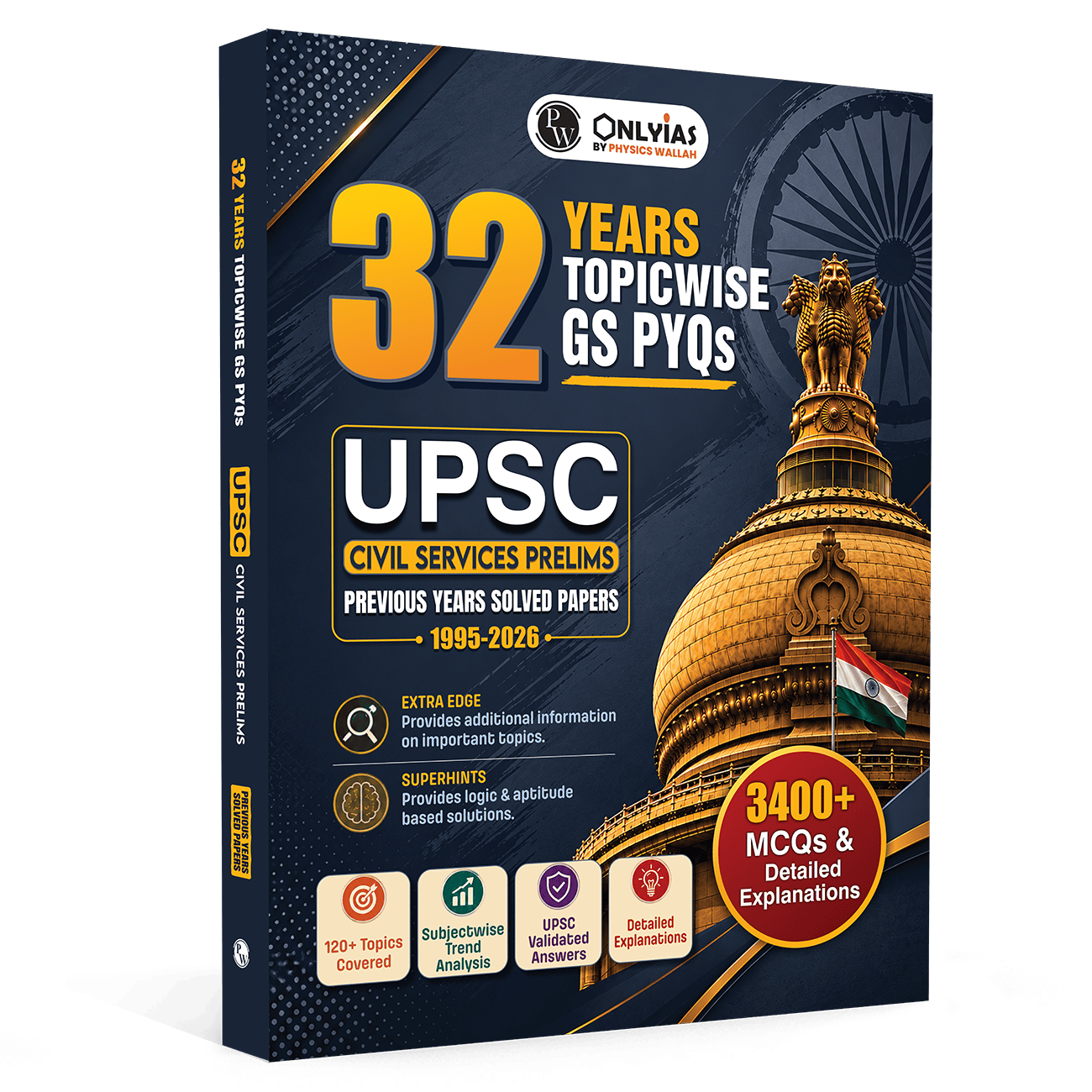
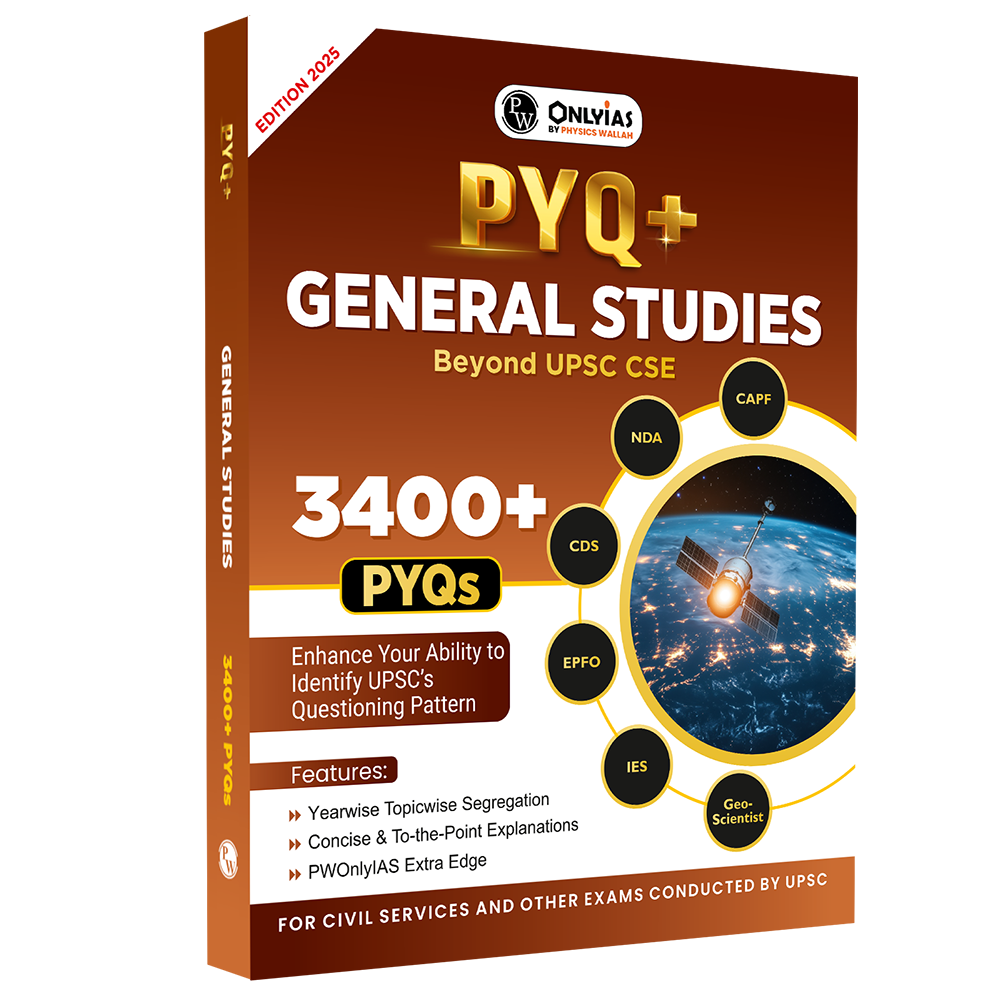
Top 5 Repeated UPSC Prelims Previous Year Questions

Preparing for the Civil Services Examination may sometimes seem like an unending maze in the absence of a map. Now this stage is where analysing UPSC Prelims previous year questions becomes your best bet. Instead of perceiving the syllabus as an indivisible block, successful candidates are able to analyse patterns in between.
In this article, we examine the five most commonly asked questions and topics to show how past question papers can help you succeed in the examination.
Importance of UPSC Prelims Previous Year Questions
One of the most common mistakes civil service aspirants make is not analysing previous exam trends. Studying from textbooks without actually doing exam questions is like training for a marathon on a treadmill in that you have no idea of the actual ground. Going through the UPSC Prelims previous year question papers keeps you aligned with the exact specifications of what the commission expects from your study plan.
Identifying High-Yield Themes
Everyone knows how vast the civil services syllabus is, but marks are never allocated in a completely arbitrary manner. Others direct certain subjects and constitutional elements with much greater weight. With systematic data analysis of historical trends, you can track these high-yield zones:
-
Polity and Governance: Historically, this section has consistently included 12 to 15 questions, primarily focusing on the Preamble, Fundamental Rights, and Directive Principles of State Policy (DPSP), as well as the practicalities within Parliament, which acts as a kingmaker.
-
Economic Development: Mostly comprises 10–12 questions (which includes basic things like inflation indices, RBI monetary policy instruments and banking systems)
-
Environment and Ecology: 10-15 questions with a major thrust on international conventions, climate change agreements, and national parks.
-
History and Culture: Compiles 10 to 12 enquiries, persistently advancing Buddhist and Jainist ideologies with a focus on the Indian national movement.
For stronger exam-oriented preparation, aspirants should also practise UPSC PYQs, as previous year questions help improve pattern recognition, conceptual application, and answer selection accuracy.
Common UPSC Prelims Previous Year Questions
To ensure your preparation is on point and with a practical edge, let us discuss five key concepts that are repeated through various years along with specific PYQ of UPSC Prelims and examples very clearly explaining how the commission comes back to these core ideas again after some time.
1. The History of Buddhism and Jainism
Using questions is one way to get ready for UPSC preliminary exams, which frequently ask about Buddhism and Jainism.
Focus Areas:
-
Teachings of Buddhism and Jainism
-
Nirvana and Bodhisattva
-
Rejection of Vedic rituals
-
Middle Path and asceticism
Sample Question:
Which of the following are common to both Buddhism and Jainism?
-
Indifference to Vedas
-
Denial of rituals
-
Avoidance of extreme penance
Answer:
Statements 1 and 2 are correct.
Statement 3 applies mainly to Buddhism.
2. Fundamental Rights and DPSPs (Polity)
Conceptual questions from Fundamental Rights and Directive Principles are often asked by the UPSC.
Focus Areas:
-
Article 14 and Article 21
-
Welfare State concept
-
Difference between Fundamental Rights and DPSPs
Sample Question:
Which part of the Constitution declares the ideal of a welfare state?
(A) DPSPs
(B) Fundamental Rights
(C) Preamble
(D) Seventh Schedule
Answer:
(A) Directive Principles of State Policy
3. RBI Monetary Policy and Inflation (Economy)
Inflation and RBI tool-based questions are common in UPSC.
Focus Areas:
-
Repo Rate
-
CRR and SLR
-
Inflation control
-
Rupee depreciation
Sample Question:
If inflation is high, the RBI is likely to buy government securities.
Answer:
Incorrect. Buying securities increases money supply and may increase inflation further.
4. International Environmental Conventions (Environment)
Environment and climate agreements are highly important in Prelims.
Focus Areas:
-
UNFCCC
-
Paris Agreement
-
CBD
-
REDD+
-
CBDR principle
Sample Question:
The CBDR principle recognises the historical responsibility of developed countries.
Answer:
Correct. It was adopted during the 1992 Rio Earth Summit.
5. Important National Movements and Congress Sessions (Modern History)
Questions from INC sessions and freedom movements are repeatedly asked.
Focus Areas:
-
Non-Cooperation Movement
-
Civil Disobedience Movement
-
Home Rule League
-
Nagpur Session 1920
Sample Question:
The Non-Cooperation Movement was approved during the Nagpur Session.
Answer:
Correct. The session officially accepted the movement and the Swaraj goal.
Benefits of Solving UPSC Prelims Previous Year Questions
The distinct advantages of incorporating a meticulous review system with past exam papers into your study routine far surpass what most standard textbooks have to offer.
-
Comprehensive Trend Analysis: To identify patterns of ongoing primary themes to avoid squandering energy on non-valuable subjects
-
Option-Wise Explanations: Gives the rationale behind each wrong option, thereby quadrupling your understanding from a question.
-
Authentic Difficulty Markers: Tells you whether the subject is easy, moderate or hard. to learn which questions to solve and not to.
-
Active Practice Drills: Prepares your mind for under-pressure scenarios through identifying subtle traps, extreme modifiers and confusing double negatives.
-
Strengthened Elimination Techniques: This section explains how to eliminate incorrect responses after making your best guess using deduction, basic logic, contextual clues, and foundational knowledge, even if you are not 100 per cent certain, so that the answer makes sense on an examination.
-
Maximised Revision Efficiency: Save hundreds of hours by highlighting your specific knowledge gaps in real time so that you have laser-focused productivity during the final preparation rounds.
For more structured preparation and faster revision cycles, aspirants can combine PYQ practice with UPSC Revision Books, which support concept consolidation, organised revision, and exam-focused preparation.
Read More: PW UPSC Prelims PYQ for 2026 Exam Preparation
UPSC Prelims Previous Year Questions FAQs
1. How many years of UPSC Prelims previous year questions should I practise?
You must try solving at least the last 10 to 15 years of papers in exam conditions as far as possible to keep yourself updated with the recent trend.
2. Can solving last year UPSC Prelims question paper help with the CSAT paper?
A systematic study of previous trends will equip you to solve the same pattern-based questions in reading comprehension, basic maths, and analytical reasoning.
3. Why should I review the explanations for incorrect options in UPSC previous year question papers with answers?
It helps to go through the detailed solutions for all the incorrect options of a question, as any option from the UPSC previous years' question paper can serve as a main question in later years.
4. What is the right strategy to balance studying a PYQ of UPSC Prelims with regular mock tests?
The best approach is to make past questions your main resource for mastering core concepts and spotting common themes.