UPSC Economy Revision Tips and Strategy for Exam

Every UPSC aspirant wants strong marks in the subject of economics, but many struggle during revision time. Notes feel long, topics seem mixed, and confidence starts dropping.
That is where UPSC economy revision helps the most. With simple revision tips and the right strategy, students can break complex topics into smaller parts, revise faster, and improve retention before the exam.
Check Out: UPSC CSE Books
Importance of UPSC Economy Revision
The economy is an important section of the Civil Services Examination. Unlike static subjects, it demands a blend of conceptual clarity and current affairs integration.
A structured UPSC economy revision helps you bridge the gap between theoretical definitions and real-world applications. Without a plan, you risk wasting weeks on low-yield topics while missing the interconnected nature of the banking sector, international trade, and national income.
Effective revision ensures:
-
Rapid Recall: Being able to visualise the flow of money or the impact of a repo rate cut instantly.
-
Time Management: Helps reduce time spent on repeated revision.
-
Confidence: Helps ensure better coverage of important topics.
Features of UPSC Economy Revision Notes
To combat the density of the subject, the latest resources have shifted toward a visual-first approach. These features are designed to transform how you absorb information:
-
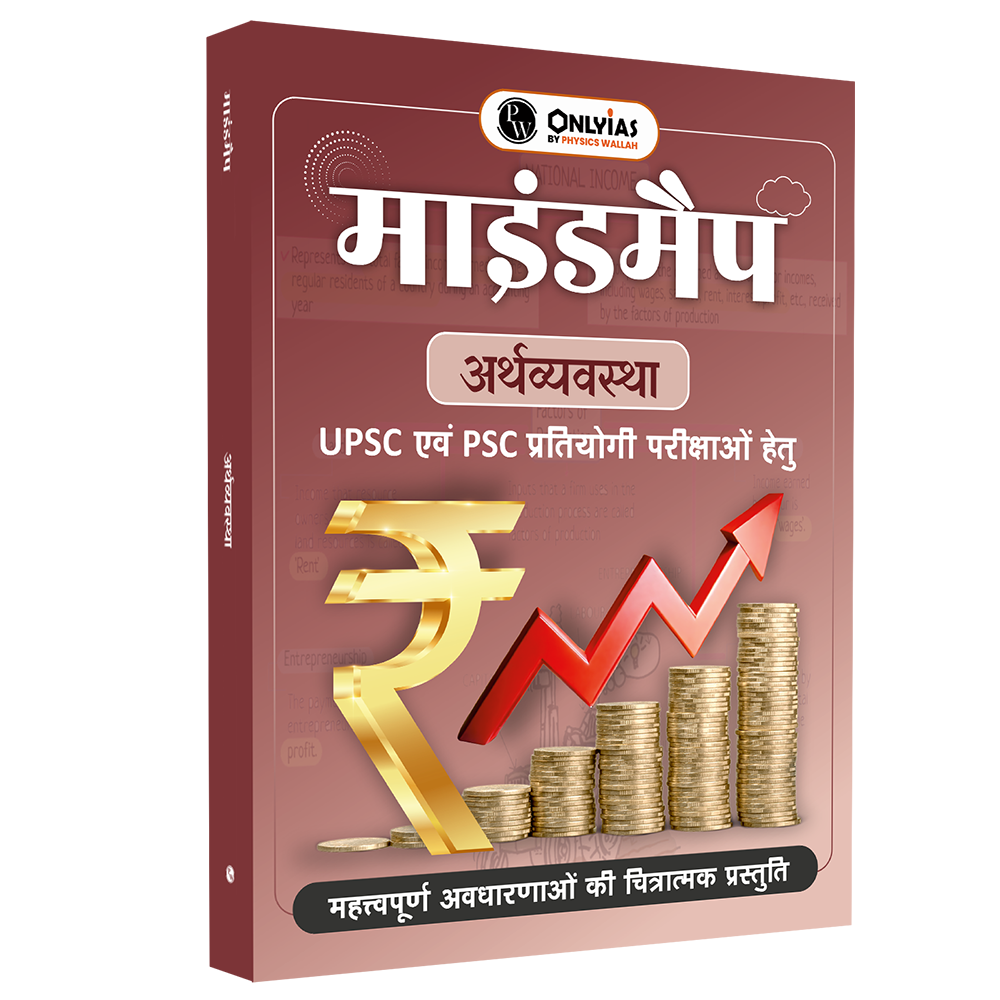
Simplified Visuals for Complex Concepts: Every mind map and infographic takes a heavy topic, like the Balance of Payments or the GST framework, and breaks it into a visually structured format.
-
Holistic Coverage: These tools help in understanding the broader context while diving into the necessary specific details of the UPSC syllabus.
-
Comprehensive Snapshot: Each map provides a thorough visual approach to all key areas, helping cover key areas of the economy.
-
Engagement: Using flowcharts instead of long paragraphs keeps your brain active and prevents the "passive reading" trap that many students fall into.
Benefits of Mind Maps for UPSC Economy Revision
Why should you switch from traditional underlining to a mind-map-based UPSC economy revision? The benefits are grounded in cognitive science and exam requirements.
|
Benefit Category |
Impact on Aspirant |
|
Retention |
Visual cues and flowcharts can improve memory retention compared to plain text. |
|
Clarity |
Complex inter-linkages (e.g., how inflation affects exchange rates) become clear through arrows and nodes. |
|
Speed |
Allows quicker revision compared to reading full chapters. |
|
Note-Making |
It provides a ready-made structure for your own notes, saving hundreds of hours of manual labour. |
How to Revise UPSC Economy?
Simply looking at a chart isn't enough; you must interact with it. Here is an effective way to utilise these visual resources:
-
The First Scan: Before reading a detailed chapter in your UPSC economy book, look at the corresponding mind map to understand the "skeleton" of the topic.
-
Active Recall: After studying a concept, close the book and try to redraw the mind map from memory.
-
Current Affairs Layering: Use the white space around infographics to jot down recent data, such as the latest GDP growth figures or new RBI schemes.
-
The "Last Mile" Review: Use these maps specifically in the final 15 days before the Prelims or Mains to keep the structures fresh in your mind.
Check Out: UPSC Revision Books
Who Should Use These UPSC Economy Revision Tips?
This visual approach can be especially helpful for certain groups of students, even though it will help all of them:
-
Visual Learners: If you remember images better than sentences, this is your primary tool.
-
Working Professionals: Those with limited time need to maximise every minute of their UPSC preparation tips application.
-
Repeat Takers: If you have mastered the basics but struggle to score in the "application-based" questions, visual maps help connect the dots.
-
Beginners: If a standard basic economics book for UPSC seems too hard for you, mind maps can make it easier to begin learning the subject.
When to Start UPSC Economy Revision?
Timing is everything in the UPSC journey. You should integrate these strategies at specific milestones:
-
During Phase 1 (Foundation): Use mind maps to understand the hierarchy of topics.
-
Post-Mock Tests: When you get a question wrong, revisit the specific visual map to see where your logic failed.
-
The Revision Cycles: Schedule three distinct cycles. The first focuses on understanding, the second on speed, and the third on instant recall.
Also Check, UPSC Previous Year Papers
Study Plan for UPSC Economy Revision
You need a great plan, more than just tools, to do well. You may follow this plan:
-
Lay the Groundwork: To get your definitions right, start with a good UPSC economy book. Don't forget the basics of microeconomics and macroeconomics.
-
Moving to Visuals: After you learn what "Fiscal Deficit" means, make a mind map to show its causes, effects, and the different committees that deal with it.
-
Cross-Linking: The economy doesn't work by itself. When you study for the UPSC, you should connect mind maps about the economy with mind maps about geography (resources) and international relations (trade agreements).
-
Practice and Improve: Solve questions from previous years (PYQs) and see if you can "locate" the answer within the mind maps.
By moving away from lengthy reading and toward a structured, visual-heavy UPSC economy revision, you can make a difficult subject easier to handle and more manageable to study. The ultimate goal is clarity, and with the right mind maps, you can get there.
Read More: UPSC Economy Important Questions for Prelims and Mains Exams
UPSC Economy Revision FAQs
-
What is the best way to start UPSC economy revision for a beginner?
Beginners should start by making sure they understand the concepts clearly by using NCERTs or a basic economics book for UPSC. When you know the terms, use mind maps to see how these ideas work together in real life.
-
How many times should I look over my UPSC revision book?
You should try to do at least three or four rounds of revision. The first round is for really understanding the material, and the next rounds should be about speed and using visual aids to remember facts.
-
Can mind maps take the place of a regular UPSC economy book?
Mind maps are great tools for reviewing and remembering information, but they work best when you already know the main ideas from a full textbook.
-
Are these UPSC revision tips applicable to both Prelims and Mains?
Yes. For Prelims, mind maps help with factual recall and logic. For Mains, they provide a ready-made structure for writing multi-dimensional answers quickly.
-
How do I handle current affairs during my UPSC economy revision?
Always keep your mind maps updated. When you read the newspaper, identify which "branch" of your economy map the news belongs to and add a small note there. This keeps your static and dynamic knowledge integrated.