UPSC Prelims Previous Year Question Papers with Downloaded PDF

UPSC Prelims Previous Year Question Papers
The UPSC Civil Services Exam is one of the most competitive exams in the country, especially the Prelims stage, where lakhs of aspirants appear every year. The Prelims is the first and most crucial step in the selection process, as it decides who moves forward to the Mains. It tests your understanding of current affairs, history, polity, geography, economy, and analytical skills through two objective papers. With the UPSC Prelims 2026 date officially announced for 24 May 2026, aspirants now have a clear timeline to begin their preparation in a structured way. As per the UPSC calendar, the notification will be released on 14 January 2026, and the application window will remain open from 14 January to 3 February 2026.
With the dates out, this is the right time to start planning your preparation, and one of the most effective ways to do that is by solving UPSC Prelims previous year question papers. Going through UPSC previous year questions helps you understand the exam pattern, question style, difficulty level, and important topics that repeatedly appear. Download the UPSC Prelims Previous Year Question Papers from the article here.
UPSC Prelims 2026
The UPSC Civil Services Exam follows a three-stage selection process: Prelims, Mains, and Interview (Personality Test). The Prelims is the first stage and acts as a screening exam. It includes two objective-type papers, General Studies Paper I and CSAT (General Studies Paper II). Check out the details here:-
|
Particulars |
Details |
|
Conducting Body |
Union Public Service Commission (UPSC) |
|
Name of Exam |
UPSC Civil Services Examination (CSE) |
|
Stages of Selection |
1. Prelims (Objective) 2. Mains (Descriptive) 3. Interview (Personality Test) |
|
UPSC Notification 2026 Release Date |
14 January 2026 |
|
Application Window |
14 January to 3 February 2026 |
|
UPSC Prelims 2026 Exam Date |
24 May 2026 |
|
Number of Papers in Prelims |
Two – General Studies Paper I and CSAT (Paper II) |
|
Type of Papers |
Objective (MCQ) |
|
Total Marks |
GS Paper I – 200 marks CSAT – 200 marks (qualifying) |
|
Negative Marking |
Yes, 1/3rd deduction for every wrong answer |
|
Duration |
2 hours for each paper |
|
Minimum Qualifying Marks |
CSAT requires 33% marks; GS Paper I cut-off varies each year |
|
Language of Question Paper |
English and Hindi |
Check Out: UPSC Books
UPSC Prelims Important Topics
When you start solving UPSC previous year questions, you will quickly notice a clear pattern, certain topics keep appearing again and again. Whether it is Polity, Environment, Economy, or basic Science, some areas are repeatedly tested in UPSC Prelims previous year questions, which makes them more important than the rest. These recurring topics help you understand what the exam truly demands and where you should focus most of your time.
Since the Prelims exam checks both conceptual clarity and awareness of current events, covering these high-weightage topics becomes essential for scoring well. To make your preparation easier, here is a simple and structured list of the most important topics you should revise thoroughly for UPSC Prelims:-
|
Subject / Area |
Important Topics |
|
Polity |
Constitution, Fundamental Rights, DPSPs, Parliament, President, PM & Council of Ministers, Supreme Court, Constitutional Bodies |
|
History |
Ancient India, Medieval India (limited), Modern Indian History, Freedom Struggle, Important Movements & Leaders |
|
Geography |
Indian Geography, Climate, Soil, Rivers, Agriculture, Mapping, World Geography Basics |
|
Economy |
Inflation, GDP, Banking, Budget, Economic Survey basics, Fiscal Policy, Monetary Policy, Unemployment |
|
Environment & Ecology |
Biodiversity, National Parks, Species, Climate Change, Environment Treaties, Pollution |
|
Science & Technology |
Space missions, Defence tech, Biotechnology, AI, Robotics, Basic physics/chemistry/biology concepts |
|
Current Affairs |
Government schemes, International organisations, Agreements, Important bills, Global events |
UPSC Previous Year Questions
Download the UPSC Prelims Previous Year Question Papers from the table here:-
|
UPSC Prelims Previous Year Questions |
|
|
UPSC Prelims Previous Year Question Papers for Ancient History |
|
|
UPSC Prelims Previous Year Question Papers for Modern History |
|
|
UPSC Prelims Previous Year Question Papers for Polity |
|
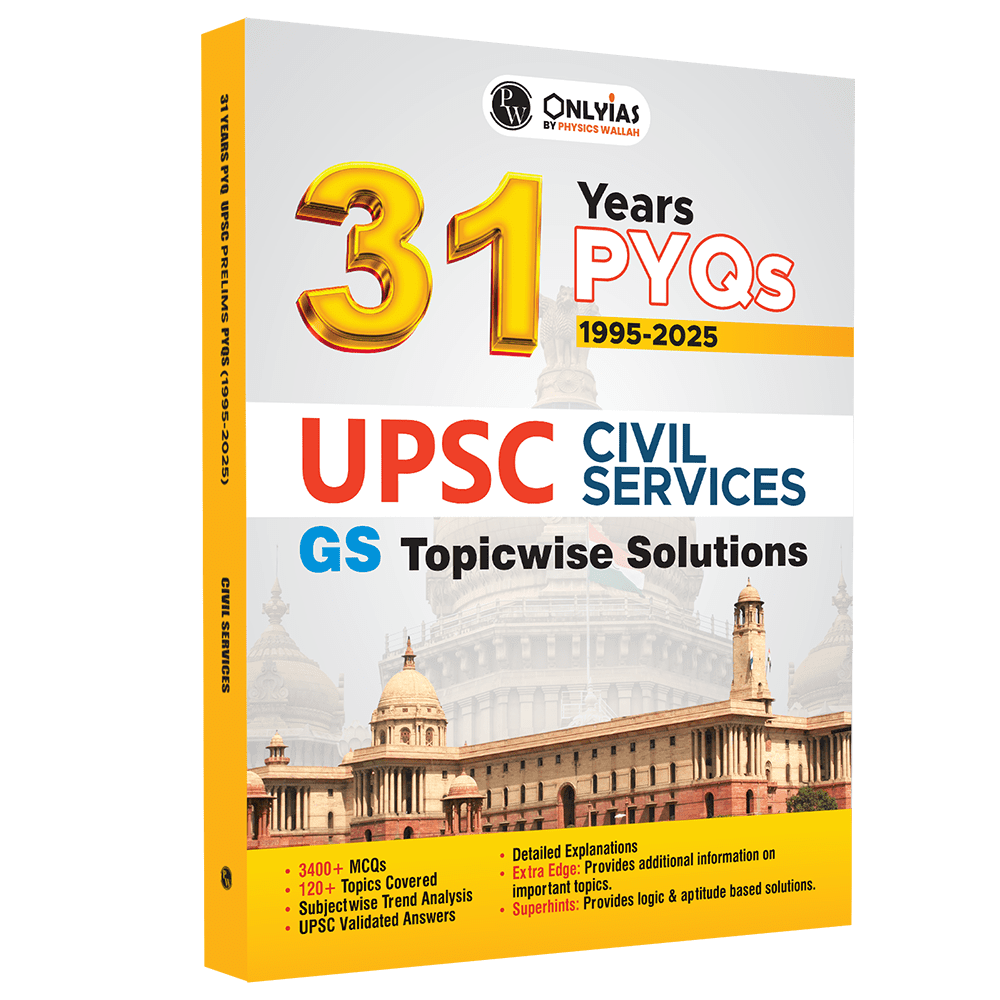
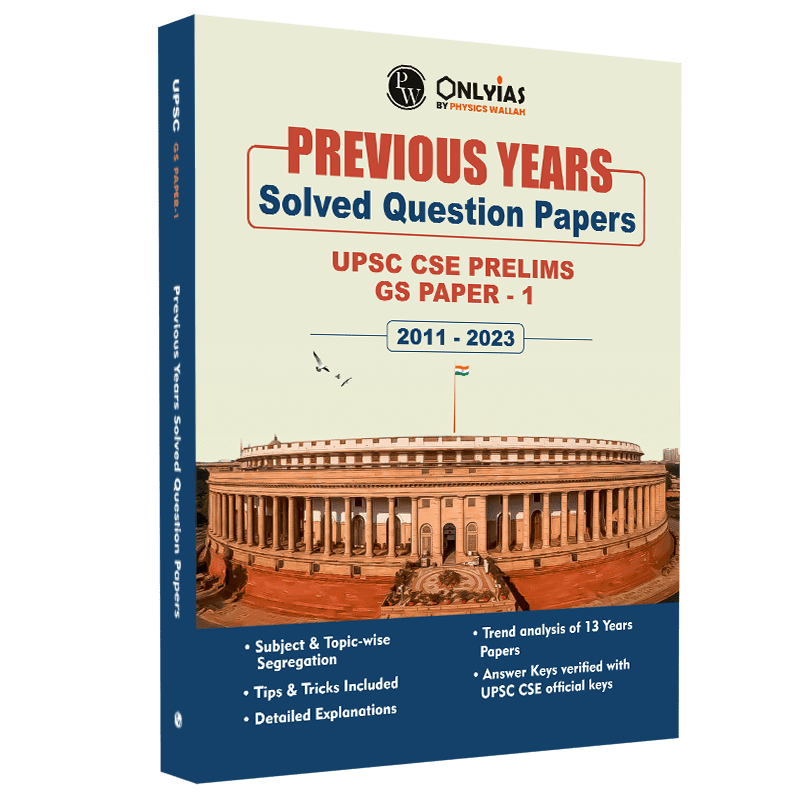
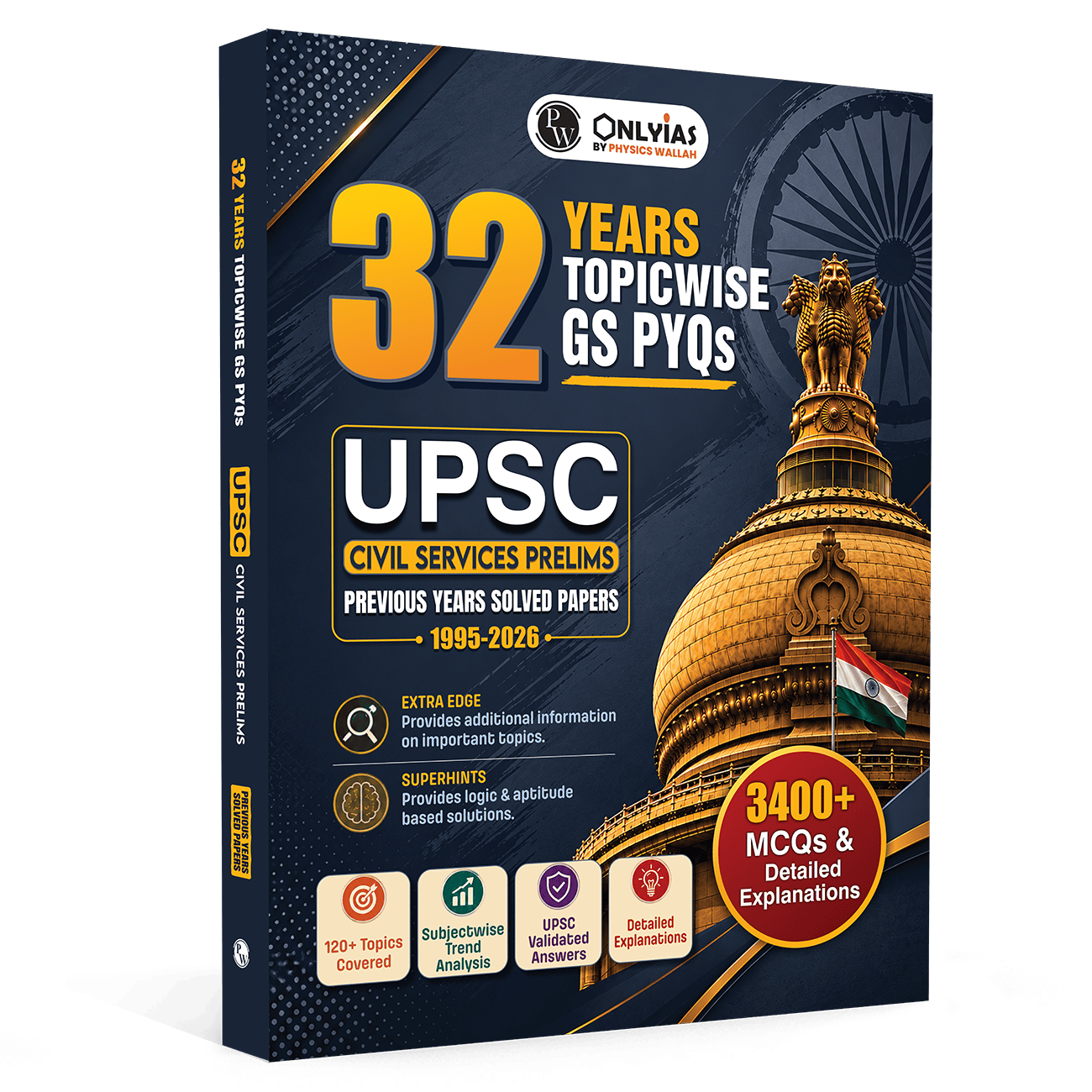
Want more such UPSC Prelims Previous Year Question Papers? Check out the UPSC PYQ Book, which contains a comprehensive collection of previous year General Studies questions to help you understand exam trends, important topics, and the evolving UPSC question pattern.
How To Use UPSC Prelims Previous Year Question Papers?
Preparing for the UPSC Prelims becomes much easier when you know how to use UPSC Prelims Previous Year Question Papers properly. The Prelims has two papers, General Studies Paper I for 200 marks and CSAT for 200 marks, each of two hours. Since the exam is objective and has negative marking, it is important to practise questions that match the real difficulty level. PYQs help you understand which topics are asked repeatedly, how UPSC frames statements, and what areas you need to strengthen. Below is a simple and clear guide on how to use UPSC previous year questions effectively during your preparation:-
1. Complete the Syllabus First
Before you begin solving UPSC Prelims previous year questions, you must complete the basic syllabus of all subjects. The syllabus for Prelims covers areas like History, Geography, Polity, Economy, Environment, Science and Technology, and Current Affairs. A clear understanding of each subject will help you attempt PYQs with confidence.
-
Start by finishing NCERT books from Classes 6 to 12 because many questions connect directly with NCERT concepts, especially in subjects like History and Geography.
-
Take help from standard UPSC books for Polity, Modern History, NCERT Geography, and basic economy books so that your foundation becomes strong.
-
While reading these books, highlight important topics such as biodiversity hotspots, constitutional articles, economic indicators, and major historical events because these areas often appear in PYQs.
2. Make Clear and Organised Notes
Before using the UPSC Prelims previous year questions, it is important to have your own notes ready. Good notes help you revise faster and remember facts for longer. Notes also save time during revision because the UPSC syllabus is vast and keeps connecting with current events.
-
Create short notes for every subject where you list important facts like national parks, fundamental rights, economic terms, important acts, environmental treaties, and basic science concepts.
-
Keep a separate notebook for current affairs where you write down schemes, policies, budget terms, international organisations, significant reports, and important government initiatives.
3. Download and Start Solving UPSC Prelims PYQs
Once UPSC Prelims syllabus and notes are ready, you can start solving the last year UPSC Prelims question paper. Solving at least the past ten years helps you clearly understand the pattern. It also shows you which subjects carry more weight and how the difficulty level changes every year.
-
Begin by solving one paper at a time without looking at the answers so that you understand your natural strengths and weaknesses.
-
After completing the test, compare your answers with a reliable UPSC prelims question paper with answers and check how many marks you scored out of 200.
-
Maintain a separate notebook where you write down questions that you got wrong and topics you need to revise again because these areas require more time and attention.
4. Analyse Your Weak Areas and Improve Them
PYQs help you recognise where you are repeatedly making mistakes. This stage is important because the UPSC Prelims cut off can be around 85 to 100 marks for general category candidates depending on the year. Analysing your weak areas early prevents you from losing marks in the real exam.
-
After solving each paper, check which subjects gave you the lowest marks, such as Polity, Economy, or Environment, and revise those chapters again with fresh notes.
-
Identify question types that confuse you, such as statement type questions, map-based questions, or factual questions related to wildlife or science and technology.
-
Revisit these topics in your books and notes and practise more questions from topic-wise PYQ compilations so that your accuracy improves over time.
5. Do Not Neglect Current Affairs
Current affairs play a major role in UPSC Prelims and can influence almost every subject. Several questions in General Studies Paper I are directly or indirectly linked with national and international events. Since UPSC expects candidates to be updated with recent developments, PYQs help you see how current affairs are framed.
-
Revise UPSC current affairs from the past 12 to 18 months and focus on government schemes, international summits, budget highlights, and environment reports.
-
Keep reading monthly magazines or compilations along with daily news so that topics remain easy to recall during the exam.
-
Compare the previous year UPSC Prelims question paper with current events and notice how questions on environment, science and technology, and economy often come from recent updates.
7. Mock Tests Along with PYQs
After solving enough UPSC prelims previous year questions, you need to practise mock tests to simulate the real exam environment. This helps with time management because both the papers have a limited duration of two hours each, and speed matters in the actual exam.
-
Set a timer for two hours and attempt the General Studies Paper I just like UPSC conducts the exam and note down how many questions you attempted and how many you got correct.
-
Calculate your score after applying negative marking so that you know whether you are crossing the expected cut off range and what needs improvement.
-
Do the same with the CSAT paper because it is qualifying and you must score at least 33 percent to pass, so practising comprehension, reasoning, and maths skills regularly is important.
Also Read: Important Topics of Geography for Government Exams
UPSC Prelims Previous Yar Paper FAQs
1. What is the UPSC Prelims exam?
The UPSC Prelims is the first stage of the Civil Services Examination. It includes two papers: General Studies Paper I and CSAT Paper II. Both are objective-type papers conducted on the same day.
2. Is the UPSC Prelims qualifying in nature?
CSAT (Paper II) is qualifying, but General Studies Paper I decides your selection for the Mains. You must score at least 33% in CSAT and clear the cutoff of Paper I.
3. How many questions are asked in the Prelims?
Paper I has 100 questions, and Paper II has 80 questions. Each paper is of 200 marks, with a duration of 2 hours.
4. Is there negative marking in UPSC Prelims?
Yes. For both papers, 1/3rd of the marks for each question are deducted for every incorrect answer.
5. Where can I get PW UPSC PYQs?
You can access PW UPSC PYQs through PW’s dedicated UPSC preparation platform. These include topic-wise and year-wise PYQ sets for both GS and CSAT.