How to Use 31 Years of UPSC PYQs to Crack Prelims 2026
Cracking the Civil Services Examination requires more than just reading textbooks; it demands a deep understanding of the examiner's mindset. Utilising the UPSC PYQs is the most effective way to decode the patterns of the Preliminary exam. By analyzing three decades of questions, aspirants can identify recurring themes and the subtle logic used in option elimination.
A UPSC PYQ-based preparation strategy 2026 involves shifting from mere solving to deep analysis. With the competition getting tougher, relying on recent papers alone is insufficient. This guide explores how to leverage 31 years of historical data to build a roadmap for your success in the 2026 attempt.
Check out: UPSC CSE Books
The Role of UPSC PYQs in Decoding Exam Patterns
The primary reason to study UPSC PYQs is to understand the "language" of the commission. While the syllabus remains static, the way questions are framed evolves. By looking at 31 years of data, you can see how a simple topic like "Buddhism" has transitioned from basic facts to complex philosophical inquiries.
A well-structured UPSC prelims 2026 preparation using PYQs helps in separating "must-read" topics from the "good-to-read" ones. UPSC often revisits themes every 3 to 4 years. Identifying these cycles allows you to prioritize high-yield areas, ensuring that your limited revision time is spent on subjects that actually appear on the OMR sheet.
Step-by-Step UPSC PYQ Analysis Plan for Prelims
To maximize your results, you need a systematic UPSC PYQ analysis plan for prelims. Simply glancing at the correct answer is a wasted opportunity. You must investigate why the other three options were provided. Often, an incorrect option in one year becomes the subject of a full question in a subsequent year.
1. The Reverse Engineering Method
Start with a topic, such as Fundamental Rights, and solve all related UPSC PYQs from the last 31 years. This "reverse engineering" helps you see the boundaries of the topic. It prevents you from over-studying irrelevant details and focuses your attention on the nuances that UPSC cares about.
2. Identifying "Option Traps"
UPSC is famous for using "extreme words" like all, only, or strictly. By reviewing UPSC PYQs, you can practice spotting these traps in a low-stakes environment. Over time, you will develop an intuitive sense of which statements are likely to be incorrect based on their linguistic structure.
UPSC PYQ based preparation strategy 2026
Analyzing UPSC PYQs reveals that different subjects require different approaches. For instance, in History, the focus has shifted toward terms and ancient locations. In Environment, the questions are now more focused on specific species and international treaties. Understanding these shifts is the core of a modern UPSC PYQ based preparation strategy 2026.
-
Polity: Trends show a move toward constitutional morality and judicial interpretations.
-
Economy: Concepts like Inflation and Banking remain evergreen, but with more focus on real-world application.
-
Geography: Map-based questions are increasingly linked to geopolitical conflicts discussed in current affairs.
-
Science & Tech: Over 31 years, the focus has moved from basic biology to emerging tech like AI and Space Research.
By using UPSC PYQs to map these trends, you can create a high-probability list of topics for 2026. This allows you to stay ahead of the curve and reduces the "element of surprise" on the actual exam day.
How to Use 31 Years UPSC PYQs for Prelims 2026
When learning how to use 31 years UPSC PYQs for prelims 2026, the focus should be on consistency. Integrating these questions into your daily routine helps keep the "UPSC frequency" fresh in your mind throughout the year. The UPSC prelims previous year questions strategy involves more than just reading; it requires active engagement with the following features of the 31-year compilation:
-
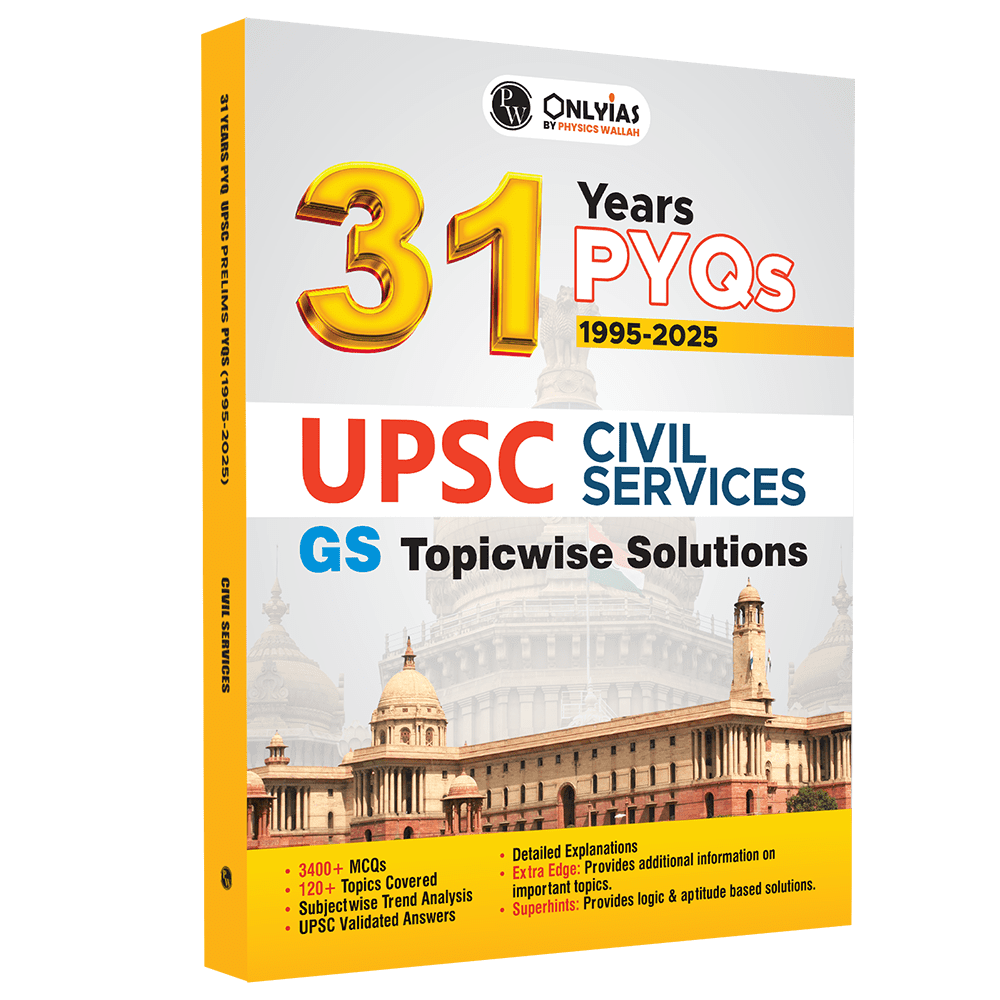
31 Years PYQs (2025-1995): A compilation of over 3400 solved questions from the past 31 years, offering an in-depth understanding of question patterns and trends across decades.
-
Topic-Wise Segregation: The questions are organized into key topics such as Analytical Reasoning, Decision Making, Quantitative Aptitude, and General Mental Ability, making revision more focused and effective.
-
Option-Wise Explanations: Each question is followed by a clear, option-wise explanation, ensuring that candidates understand the reasoning behind the correct answer and the elimination process for other choices.
-
Trend Analysis: A detailed analysis of the last 7 years’ papers, helping candidates identify recurring themes and topics that are frequently asked, enabling smart preparation.
-
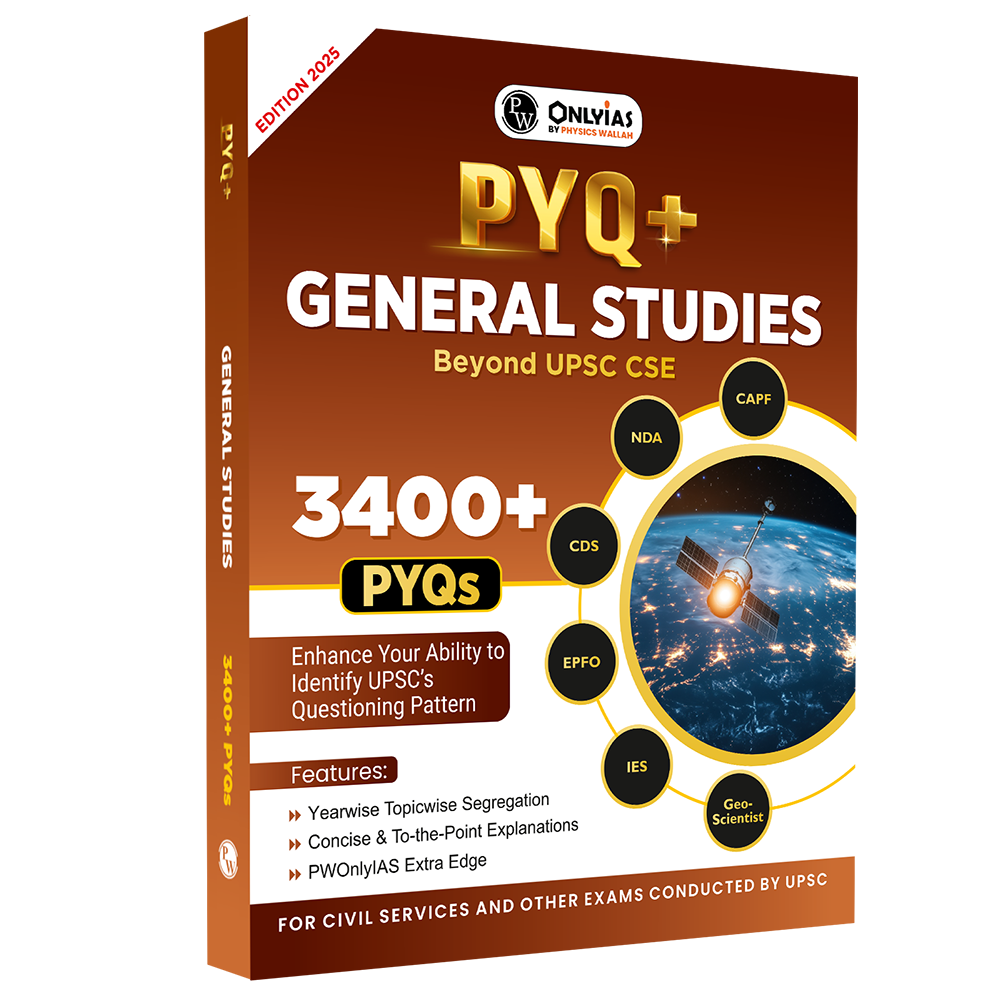
Concise & To-the-Point Explanations: Focused, easy-to-understand solutions designed to strengthen your analytical and reasoning skills.
-
Visual Aids: Includes maps, diagrams, and infographics to help with better retention and conceptual clarity of complex geographical and historical data.
-
PWOnlyIAS Extra Edge: Offers additional insights and context to help decode frequently tested concepts and recurrent themes in the exam.
-
PWOnlyIAS Super Hint: An exclusive section guiding aspirants on intelligent guessing techniques and common-sense strategies to crack MCQs, even when unsure.
Benefits of an Integrated UPSC Prelims Previous Year Questions
An integrated UPSC prelims previous year questions strategy bridges the gap between static knowledge and dynamic application. It teaches you that "Current Affairs" are often just "Static Topics in the news." If a specific national park is in the headlines, solving previous UPSC PYQs on that park will tell you exactly what details to memorize.
Furthermore, this builds psychological resilience. When you have successfully solved 31 years of challenging questions, you enter the exam hall with the confidence that you have seen it all. This mental edge is often what distinguishes successful candidates from those who miss the cutoff by just a few marks.
Read More: UPSC Prelims Previous Year Question Papers with Downloaded PDF
UPSC PYQs FAQs
1. Is solving 31 years of UPSC PYQs really necessary for the 2026 attempt?
While the last 10 years are the most critical, looking at 31 years of UPSC PYQs provides a deeper conceptual foundation. It helps you understand how certain core topics have been explored from every possible angle, leaving no room for surprise.
2. Can I rely solely on UPSC PYQs to clear the Prelims?
No, UPSC PYQs should be used as a supplement to standard textbooks and current affairs. They are a tool for guidance and practice, but you still need a solid understanding of the base concepts from NCERTs and standard references.
3. When should I start my UPSC PYQ analysis plan for prelims?
You should start as soon as you finish the first reading of a subject. Integrating UPSC PYQs early helps you read your textbooks with a "UPSC perspective," making your initial study much more efficient and result-oriented.
4. How do I handle outdated current affairs questions in 31 years of UPSC PYQs?
Ignore the specific news items but analyze the type of news UPSC asked about. For example, if they asked about a 1995 summit, note the parameters (location, purpose, participants) because they will use those same parameters for a 2026 summit.
5. Should I memorize the answers to UPSC PYQs?
Memorization is useless. The goal of an UPSC prelims previous year questions strategy is to understand the logical derivation of the answer. UPSC rarely repeats a question verbatim, but they repeat the logic and the underlying concepts constantly.
6. How many times should I revise 31 years of UPSC PYQs?
Ideally, you should go through the high-priority topics at least three times. The first time is for understanding, the second for testing your memory, and the third for mastering the elimination logic required for the 2026 exam.