What Are UPSC PYQs and Why Are They Important?
Preparation for the UPSC Civil Services Examination 2026 requires planning, study, and a clear idea about many subjects. UPSC PYQs, i.e., Previous Year Questions, is one of the most important resources for the preparation. UPSC PYQs is not just the question papers from the past; it is the blueprint for the exam. By going through the question papers, you will be able to shift from memorizing the study material to a more strategic way of preparation. Whether you are a beginner or a seasoned aspirant, it is important to understand the importance of UPSC PYQs first.
What Are UPSC PYQs?
UPSC PYQs are official question papers from previous years of the Civil Services Examination. This includes the Preliminary, Mains, and Interview stages.
-
The Prelims PYQs exam requires students to complete multiple-choice questions which assess their ability to answer factual questions and demonstrate their understanding of concepts and their skills to manage exam time.
-
The Mains PYQs exam requires students to answer descriptive and essay questions from General Studies and Optional subjects and language papers which evaluate their analytical abilities and capacity to express their ideas clearly.
In short, PYQs show not just what to study but how questions are framed, helping you approach the exam with confidence.
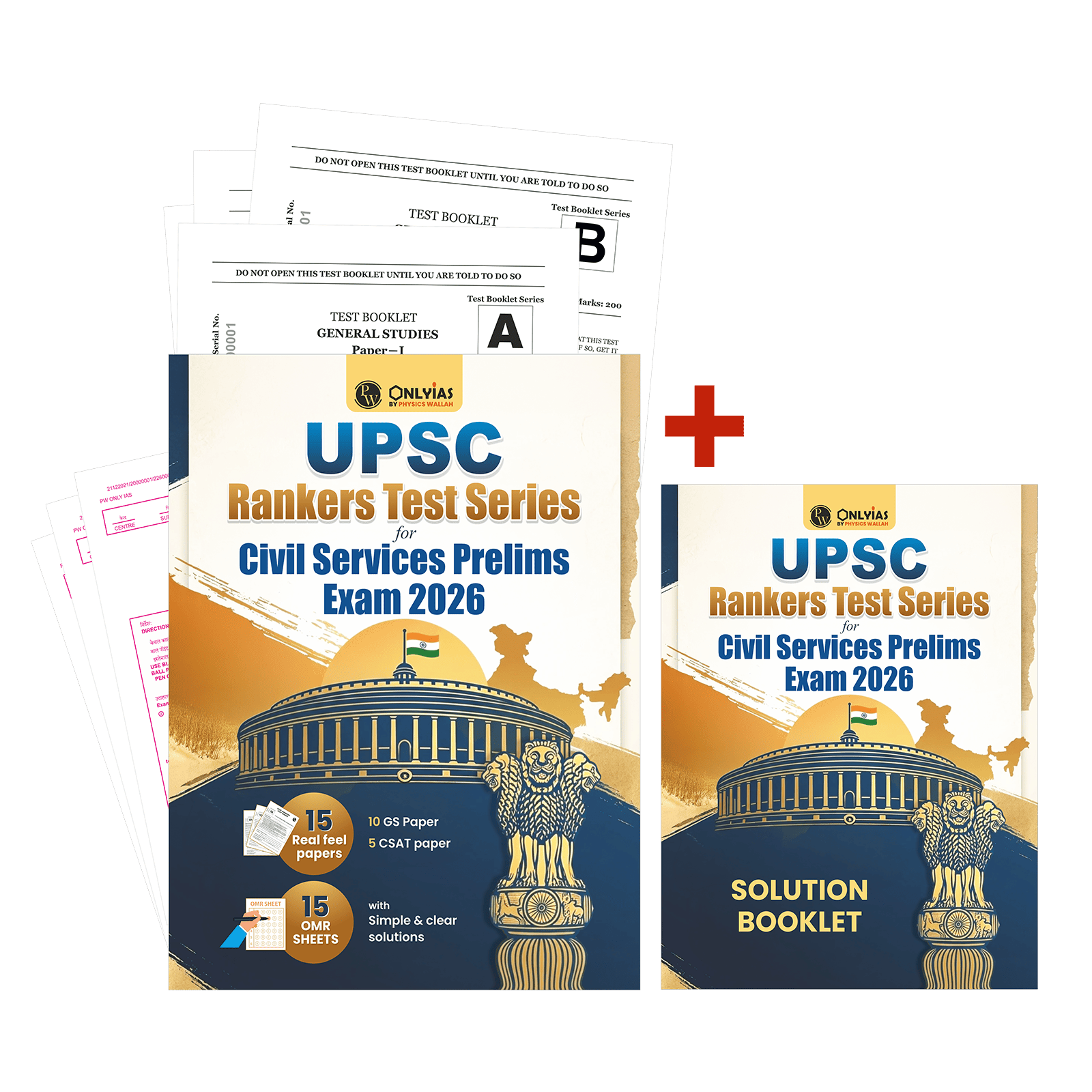
Check Out - PW UPSC PYQ Book
Importance of Solving UPSC PYQs
If the syllabus is the skeleton of your preparation, PYQs are the muscle that gives it strength.
-
Understand Examiner’s Mind: Textbooks tell you the “what.” PYQs show you the “how.” For example, topics like the Preamble or the Rowlatt Act can appear as simple fact-based questions or analytical case studies.
-
Improve Accuracy and Speed: For Prelims, solving the PYQ of UPSC Prelims regularly helps you decide which questions to attempt and which to skip. This directly reduces negative marking.
-
For Mains, PYQs help candidates create answers which fulfill both word count requirements and correct response standards.
-
Boost Confidence: Over time, patterns begin to emerge. Solving the PYQ of UPSC Prelims regularly makes the exam feel more familiar and easier to handle under pressure.
Check Out - UPSC Books
Understanding Exam Pattern Through UPSC PYQs
-
Trend Analysis: PYQs reveal which subjects are currently in focus (e.g., Environment, Science & Technology) and which topics require conceptual clarity.
-
Question Types: Learn to identify direct questions, statement-based questions, and formats like “only one pair/two pairs.”
-
Syllabus Interpretation: Official syllabi contain ambiguous elements which require clarification to achieve proper understanding. The depth required for "Economic and Social Development" studies can be observed through the examination of UPSC preliminary PYQ material.
Check Out - PW 31 Years UPSC PYQ
How to Use UPSC Previous Year Questions Effectively
When to Solve UPSC PYQs
Timing is important, and the right time will improve your retention and understanding.
-
At the Start:Read 5 years of PYQs before NCERTs. It conditions your brain to pick important points from NCERTs.
-
After Completing a Subject:Solving all the PYQs for a particular subject, say Polity, will give you more clarity.
-
During Revision:Use PYQs as a diagnostic tool.
UPSC PYQ Solving Strategy
-
Four-Option Analysis: For Prelims MCQs, analyze all four options. UPSC often repeats themes from previous years.
-
Theme Mapping: Create a notebook grouping PYQs by topic (e.g., “Climate Change,” “Governor’s Powers”).
-
Reverse Engineering: For Mains, connect questions to current events that may have inspired them. This builds predictive skills.
UPSC PYQ Preparation Tips
-
NCERTs should be used to create a system that enables students to compare actual examination questions with our textbook content.
-
The method of using PYQs needs to be implemented because it allows students to concentrate on essential study materials while spending less time on uncommon content.
-
The evaluation of mock tests should be conducted through a comparison between their level of difficulty and actual PYQ questions. Students need to change their study methods when their mock test results show excessive difficulty.
Read More - UPSC Syllabus 2026, IAS Prelims & Mains Syllabus
Benefits of PW UPSC PYQ
These resources are useful because they support preparation in a more structured and practical way.
-
Wide coverage across exam needs with separate resources for Prelims, Mains, and CSAT
-
Long-year practice range through 31-year previous year paper sets
-
Language support through Hindi and English offerings
-
Combo sets available for students who want broader coverage in one place
-
Solved-paper format helps in understanding question trends, answer approach, and topic focus
-
Topicwise practice makes revision more organised and targeted
Common Mistakes While Using UPSC PYQs
-
Rote Memorization: Don’t memorize answers; focus on understanding concepts.
-
Ignoring Analysis: Scoring is only 10% of practice. Analyze why you got a question wrong to prevent repeated mistakes.
-
Over-relying on Recent Years: Old PYQs (10–15 years) are valuable for History, Geography, and other static subjects.
Check Out - UPSC Current Affairs
UPSC PYQ FAQs
1. What are UPSC PYQs and why are they important?
UPSC PYQs are previous year question papers. They provide insights into the exam pattern, difficulty level, and high-yield topics.
2. How many years of PYQs should I solve?
Solve at least the last 10–15 years of Prelims. For Mains, focus on 7–10 years post-2013 syllabus revision.
3. When is the right time to start solving PYQs?
Start at the beginning of your preparation to understand the exam’s “language.” Later, use them actively after completing each subject.
4. What is the best PYQ solving strategy for beginners?
Begin with subject-wise PYQs rather than full papers. This helps connect concepts immediately after studying a topic.
5. Can solving UPSC PYQs improve my exam score?
Yes. They enhance time management, develop intelligent guessing skills, and help you focus on high-probability themes.