How to Balance Physics, Chemistry and Maths with JEE Modules
Preparing for JEE is not just about studying hard — it’s about studying smart. One of the biggest struggles JEE aspirants face is balancing:
-
Physics numericals
-
Chemistry theory + reactions
-
Maths problem-solving
Many students say:
-
“If I focus on Maths, Physics gets left behind.”
-
“Chemistry revision keeps piling up.”
-
“I don’t know how to manage all three subjects daily.”
If you’re feeling this, you’re not alone.
Balancing Physics, Chemistry and Maths (PCM) during JEE Main preparation and JEE Advanced preparation requires a PW JEE books.
Let’s understand why students struggle and how to fix it step by step using a disciplined module-based system.
Why Balancing PCM for JEE Feels Difficult
Different Nature of Subjects
Each subject demands a different mindset:
-
Physics → Concept + numerical application
-
Chemistry → Theory + memory + application
-
Maths → Continuous problem-solving practice
Without proper time distribution, one subject dominates the schedule.
No Structured Daily Practice
Many aspirants rely on random PDFs or scattered Daily Practice Problems (DPP).
But without proper tracking:
-
Weak chapters remain unidentified
-
Revision becomes irregular
-
Mock scores fluctuate
Lack of Chapter-Wise Testing
Solving questions is not enough.
You must measure:
-
Accuracy
-
Speed
-
Concept clarity
Without structured chapter wise tests, you never truly know your level.
If you are struggling with balancing PCM effectively, there is one structured academic solution available PW JEE Module designed to bring progressive, exam-aligned preparation.
How PW Module 2.0 Helps You Balance Physics, Chemistry and Maths
Questions Booklet – Strong Foundation for All Three Subjects
Each chapter includes:
-
100–150 high-probability questions
-
PYQ based practice patterns
-
One-page formula sheet + short notes
How It Helps in Balancing PCM
Instead of using different sources:
-
Solve selected questions daily from each subject.
-
Use formula sheets for quick revision.
-
Track which chapters take more time.
For example:
-
Physics taking too long? Improve numerical speed.
-
Maths accuracy low? Practice more structured problems.
-
Chemistry conceptual errors? Revisit theory.
This becomes your core exam oriented JEE study material.
Check Your Understanding (CYU) – Daily Control System
CYU provides:
-
Topic-wise practice sets
-
10–15 questions per topic
-
Similar to structured DPP
Why It’s Important
After every lecture:
-
Solve CYU the same day.
-
Clear doubts immediately.
-
Prevent backlog.
This builds consistent concept clarity for JEE across all subjects.
Daily small practice > weekend overload.
QR – Make Your Own Test (Major Highlight)
This feature transforms preparation.
-
Pick any 3 chapters (mix PCM)
-
120 questions
-
180 minutes
-
Based on JEE Main pattern
Smart PCM Balancing Strategy
Example QR test:
-
Current Electricity (Physics)
-
Chemical Bonding (Chemistry)
-
Probability (Maths)
You simulate real JEE mock tests while targeting current weak chapters.
This improves:
-
Time management
-
Subject switching ability
-
Real exam stamina
Instead of random mocks, you get focused evaluation.
Chapter-End Tests – Weekly Subject Check
Each chapter includes:
-
40 questions
-
1-hour test
-
Single chapter evaluation
Weekly Plan
-
Week 1 → Physics test
-
Week 2 → Chemistry test
-
Week 3 → Maths test
Analyze mistakes properly.
If score < 60–65%:
-
That chapter needs revision.
This structured system stabilizes your JEE Main preparation.
Check Out: JEE Test series
SETU / Conceptual Exercise – Building Depth
For JEE students:
-
30–50 medium-level questions
-
Bridges Main → Advanced
Many students prepare only at Main level.
When Advanced questions appear, they struggle.
SETU ensures:
-
Gradual difficulty progression
-
Deeper understanding
-
Strong base for JEE Advanced preparation
Challenger 2.0 (JEE Only) – Advanced Level Exposure
-
Pure JEE Advanced replica questions
-
Exam-aligned difficulty
Attempt after mastering basics.
It reveals:
-
Real conceptual gaps
-
Multi-concept weaknesses
-
Problem-solving maturity level
This prevents overconfidence.
|
JEE Arjuna Class 11 Physics Modules |
|
|
JEE Arjuna Class 11 Chemistry Modules |
|
|
JEE Arjuna Class 11 Maths Modules |
|
|
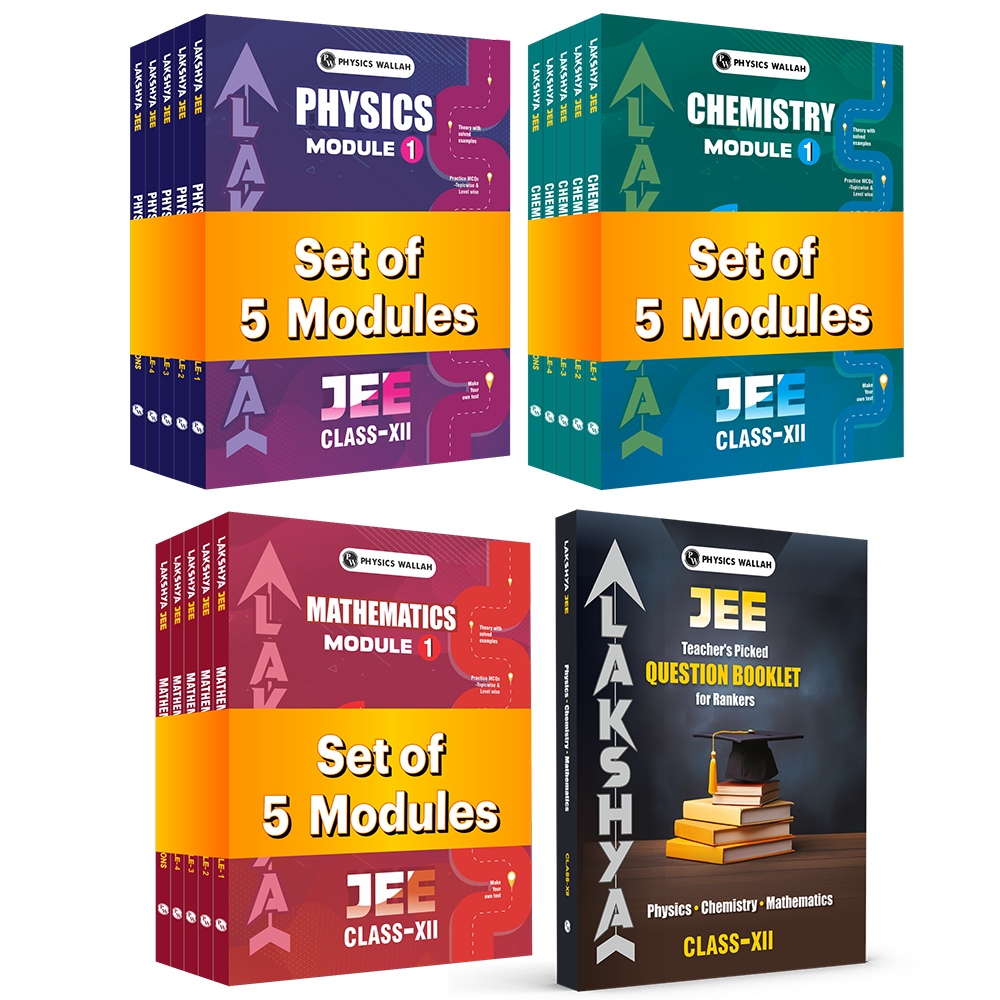
Lakshya JEE Class 12 Physics Modules |
|
|
Lakshya JEE Class 12 Chemistry Modules |
|
|
Lakshya JEE Class 12 Maths Modules |
Ideal Daily Time Distribution for PCM
Here’s a balanced structure:
4–5 Hours Self-Study Model
-
90 mins Physics
-
90 mins Maths
-
60 mins Chemistry
-
30 mins formula + error revision
Rotate subject priority weekly if needed. Consistency matters more than long hours.
Read More: How to Identify Weak Maths Topics Using JEE Lakshya Modules
Balance Physics, Chemistry and Maths with JEE Modules FAQs
How to Balance Physics, Chemistry and Maths with JEE Modules effectively?
Divide daily time smartly, solve topic-wise practice after lectures, attempt weekly chapter tests, and simulate mixed-subject tests using custom mock options. Balance comes from discipline, not motivation.
How many hours should I give to each subject daily?
It depends on your weak areas. Ideally:
-
1.5 hours Physics
-
1.5 hours Maths
-
1 hour Chemistry
Adjust weekly based on performance.
Should I focus more on Maths for JEE?
Maths requires continuous practice, but neglecting Physics or Chemistry will affect overall percentile. Maintain subject balance.
When should I start full JEE mock tests?
After completing 70–80% syllabus. Before that, use chapter wise tests and structured custom tests.
Is Module 2.0 enough for JEE preparation?
When used consistently with lectures and revision, it provides:
-
Study material for JEE
-
PYQ based practice
-
Daily Practice Problems structure
-
Chapter wise tests
-
Progressive difficulty
-
JEE mock tests simulation
The key is disciplined usage and proper error analysis.