How to Start JEE Main Maths Preparation from Zero Using PYQs
If you are starting your JEE Main Maths preparation from scratch, the vast syllabus can feel overwhelming. Many students struggle to decide which chapters to prioritise or how to bridge the gap between basic concepts and complex problems. Using a JEE main maths pyq strategy is the most effective way to understand the exam pattern, identify recurring themes, and build problem-solving speed without wasting time on irrelevant topics.
Check Out - JEE Books
Importance of JEE Main Maths PYQ
Starting from zero means you need a roadmap that leads directly to scoring marks. Previous Year Questions (PYQs) act as a diagnostic tool. They show you exactly how the National Testing Agency (NTA) frames questions. Instead of reading endless theory, focusing on maths pyq JEE mains allows you to see the application of formulas in real-time.
When you analyse maths JEE mains pyq, you notice that certain sections, like Coordinate Geometry or Calculus, follow specific patterns. Mastering these patterns early on gives you a competitive edge. Using pyq of maths JEE mains ensures that your practice remains relevant to the current difficulty level of the exam, which has become increasingly calculation-heavy in recent years.
Guide to Start JEE Main Maths Preparation Using JEE Main Maths PYQ
Phase 1: Categorising the Syllabus Based on Weightage
You cannot cover every chapter with the same intensity if you are starting late. Divide the syllabus into high-yield and low-effort categories using JEE math pyq trends from the last 8 to 10 years.
High Priority Chapters for Quick Gains
-
Matrices and Determinants: These are relatively easier to grasp and almost always yield two questions. Practice math JEE pyq for properties of adjoints and Cramer's Rule.
-
Sequence and Series: Focus on Arithmetic and Geometric Progressions. Look at how maths JEE main pyq often combine these with other topics.
-
Vector Algebra and 3D Geometry: These chapters carry significant weight. Solving JEE main maths pyq from these sections helps you visualisze spatial concepts.
Foundation Building Chapters
-
Sets, Relations, and Functions: These form the base for Calculus.
-
Quadratic Equations: A recurring theme in maths pyq JEE mains where roots are linked to trigonometry or calculus.
Phase 2: The Step-by-Step Execution Plan
To move from zero to a respectable score, follow this structured approach:
Step 1: Concept Consolidation
Pick a chapter and spend no more than two hours on the basic theory. Use concise notes that list all essential formulas. Do not get stuck in deep derivations at this stage.
Step 2: Topic-wise PYQ Solving
Immediately after the theory, open your JEE main maths pyq book. Solve the last 5 years of questions for that specific topic. This helps you identify if you have actually understood the application of the theory.
Step 3: Identification of Patterns
While solving maths JEE main pyq, keep a "Logic Ledger." Note down the specific trick used in a difficult question. Often, NTA repeats the logic while changing the numerical values.
Step 4: Time-Bound Practice
Once you are comfortable, solve JEE mains pyq in a timed environment. This builds the stamina needed for the three-hour exam window.
How to Use of 8 Years JEE Main Maths PYQ
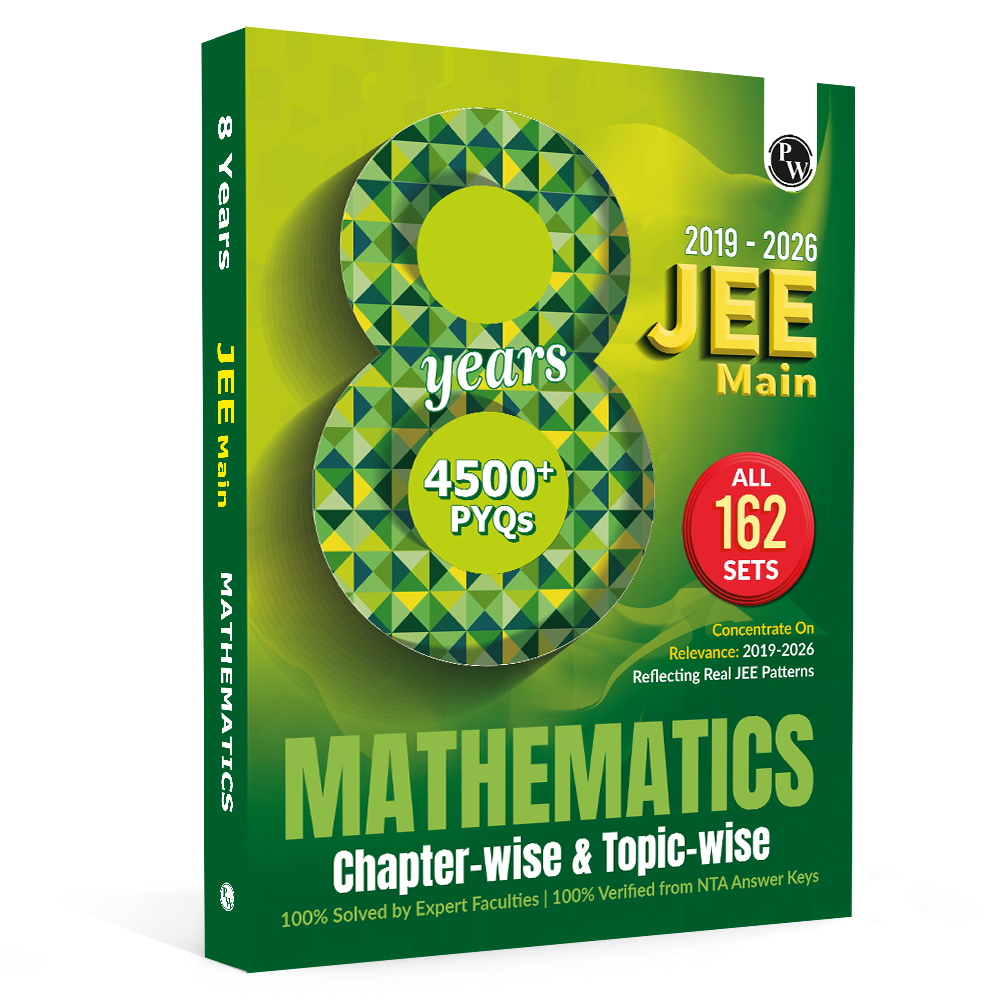
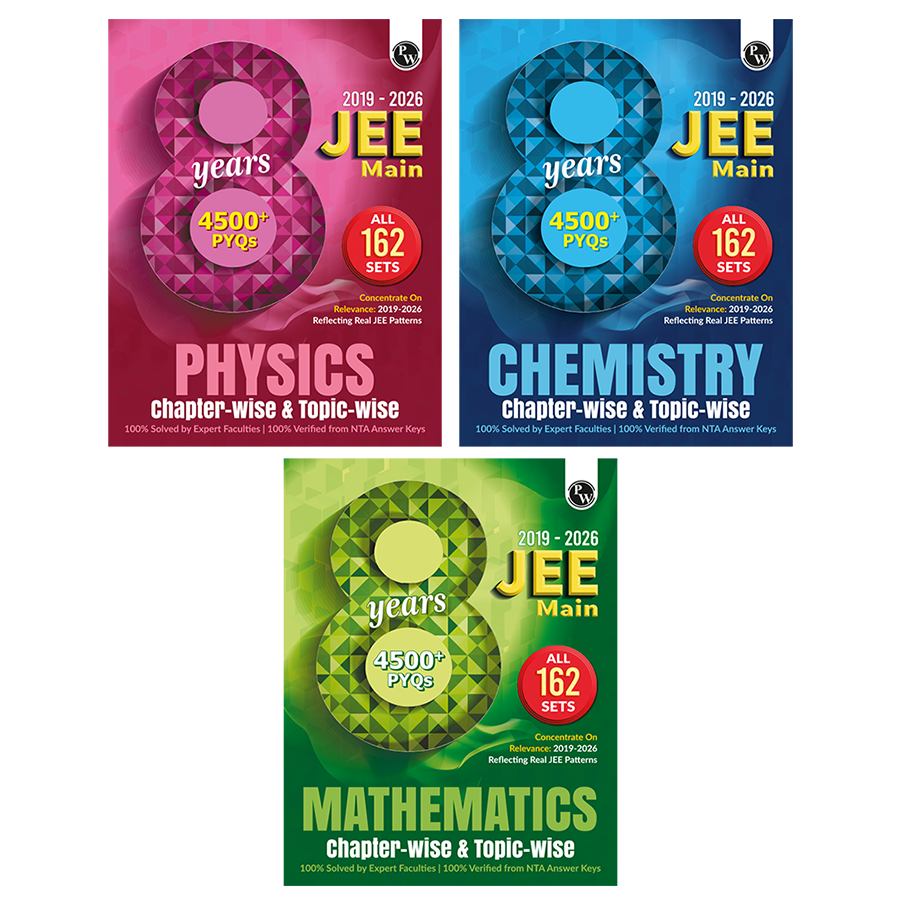
Using a structured resource like the Physics Wallah 8 Years JEE Maths PYQ guide can streamline your preparation. This resource organises questions in a way that helps students starting from zero.
|
Feature of 8 Years PYQ Book |
Benefit for Students |
|
Year-wise distribution |
Helps track the evolving difficulty of the exam. |
|
Topic-wise segregation |
Allows you to focus on one strength at a time. |
|
Detailed Explanations |
Clarifies the "why" behind every step, not just the "how." |
|
Verified Answers |
Reduces confusion caused by errors in unofficial keys. |
By focusing on JEE math pyq from the last eight years, you cover the period where the exam transitioned to a computer-based format, making your practice highly relevant.
Why Quality Over Quantity Matters in JEE Main Maths
It is better to solve 30 questions of math JEE pyq with full understanding than 100 questions blindly. Maths is about muscle memory and logical flow. When you tackle maths pyq JEE mains, pay attention to the calculation steps. Many students lose marks not because they didn't know the formula, but because they made a manual error in the final stages.
Regularly revisiting pyq of maths JEE mains that you found difficult during your first attempt is crucial. This "reverse-engineering" of solutions ensures that the concepts are hardwired into your brain.
Mistakes to Avoid with JEE Main Maths PYQ
-
Ignoring the Syllabus: Do not dive into JEE main maths pyq without knowing what is excluded from the current year's syllabus.
-
Skipping Basics: Even if you are in a rush, do not skip Trigonometry basics, as they appear as sub-parts in almost every maths JEE main pyq in Calculus.
-
Over-reliance on Solutions: Try to solve the math JEE pyq yourself for at least 10 minutes before looking at the answer key.
-
Neglecting Mock Tests: JEE PYQs are great, but you also need to sit for full-length tests to manage the pressure of all three subjects together.
Balancing Theory and Practice with JEE Main Maths PYQ
A common pitfall for beginners is reading theory books for weeks without solving a single maths JEE mains pyq. In mathematics, the theory is only 20% of the battle. The remaining 80% is the application found in JEE main maths pyq.
If you find a particular concept like Integration too tough, look at the pyq of maths JEE mains for that chapter. You might find that certain types of integrals are asked more frequently than others. Focus your energy on those specific types to maximise your score in a limited timeframe.
Track Your Progress with JEE Main Maths PYQ
Keep a checklist of chapters. Mark them as "Done" only when you have solved at least 40-50 JEE main maths pyq for that section. This gives you a psychological boost and a clear picture of how much of the syllabus you have truly mastered.
Using maths pyq JEE mains as a benchmark allows you to see your improvement. If you could only solve 2 out of 10 questions initially but can now solve 7, you are on the right track to cracking the JEE Main.
Resources for JEE Main Maths Preparation
To succeed, you need the right tools. The Physics Wallah store offers dedicated books that focus on maths JEE main pyq. These books are designed by experts who understand the nuances of the exam. Having a physical copy of JEE math pyq allows you to highlight important steps and make notes in the margins, which is more effective for long-term retention than digital PDFs.
By strictly adhering to a schedule built around maths JEE mains pyq, you remove the guesswork from your study sessions. You move from a state of confusion to a state of directed action, which is the only way to succeed when starting from zero.
Read More: JEE Important Question Maths With Solutions
JEE Main Maths PYQ FAQs
How many years of JEE main maths pyq should I solve?
It is highly recommended to solve at least the last 8 to 10 years of JEE main maths pyq. This period covers the most recent changes in exam patterns and provides a sufficient variety of question types.
Can I clear the cutoff by only solving maths pyq JEE mains?
While theory is important, solving maths pyq JEE mains is the most effective way to understand the application. If you master the logic behind the PYQs, you have a very high chance of clearing the cutoff.
Where can I find reliable pyq of maths JEE mains with solutions?
You can find comprehensive collections of pyq of maths JEE mains on the Physics Wallah store. These resources provide step-by-step solutions that are easy for beginners to follow.
Is math JEE pyq enough for the advanced level as well?
The math JEE pyq for Mains provides a strong foundation, but JEE Advanced requires a deeper understanding and multi-concept questions. However, starting with Mains PYQs is essential for every aspirant.
Why is maths JEE main pyq considered harder than Physics or Chemistry?
In recent years, maths JEE main pyq have been noted for being lengthy and calculation-intensive. Practising these questions regularly helps you build the speed and accuracy needed to handle the difficulty level.