When to start JEE PYQ practice — before or after completing modules
Preparing for the engineering entrance exam requires a clear method, especially when managing your daily study resources. Many students face a common dilemma midway through their preparation session: should you dive into a JEE PYQ collection immediately, or should you wait until you finish your entire coaching module?
Finding the right balance alters how well you retain complex engineering concepts. This article breaks down the ideal timeline to introduce past paper practice so you can pick the most effective strategy for your routine.
Importance of JEE PYQ Practice
The mid-term phase of your preparation is the most critical period to integrate a JEE PYQ routine. At this point, you have covered a substantial portion of the syllabus, meaning you possess the foundational knowledge needed to decode actual exam questions without feeling completely overwhelmed.
Starting past papers too early can destroy your confidence if you run into concepts you have not yet learned. Conversely, leaving them until the final month creates intense pressure and leaves zero time to fix recurring conceptual errors.
The ideal approach is to begin focused past paper practice as soon as you achieve a comfortable familiarity with major chapters. This allows you to:
-
Assess real exam difficulty while the topics are fresh in your mind.
-
Identify highly repeated question types before your final revisions begin.
-
Acclimatize to the exact framing used in a standard JEE previous year question paper.
Should You Solve JEE PYQ Before or After Completing Modules?
The straightforward answer is that you should practice past papers after completing your primary study modules. Modules are designed to build your foundational understanding from the ground up, moving systematically from basic definitions to advanced application problems.
Trying to solve actual exam papers before finishing these modules is like trying to build a roof without setting up the supporting walls. Coaching modules offer a curated learning curve. They contain foundational exercises that train your brain to think analytically. Jumping into a JEE mains previous year question paper without this foundational work will lead to unnecessary frustration. You will likely struggle with the multi-concept problems that are characteristic of national-level engineering papers.
To get the most out of your study materials, adopt a strict three-step sequence for every chapter:
-
Complete the core theory and basic illustrations from your primary module.
-
Solve the graded exercises inside the module to cement your formula application skills.
-
Open a dedicated JEE Mains PYQ book or resource to validate your preparation against actual exam standards.
How to Use JEE PYQ?
Simply solving questions line by line is not enough; you need a strategic approach to get the full value from a JEE previous year paper. The way you interact with past questions determines how fast your accuracy improves.
1. Utilize Chapter-Wise Compilations
When practicing during the mid-term phase, avoid mixed full-length papers. Instead, use resources that sort questions by specific topics. For example, if you just finished learning Quadratic Equations, you should look specifically for past questions from that exact topic.
This targeted practice reinforces what you just learned and highlights any specific gaps in that chapter.
2. Analyze Your Answers Carefully
Do not just look at the answer key to see if you were right or wrong. Spend time checking the detailed step-by-step explanations provided in your prep books. This habit helps you:
-
Discover shorter, more efficient ways to solve the problem.
-
Understand the hidden traps or common errors built into the question options.
-
Learn how to combine multiple formulas smoothly to solve complex problems.
3. Use Digital Files for Quick ReviewsUsing a JEE previous year papers PDF on your tablet or laptop gives you an easy way to run quick revision sessions anywhere. You can quickly scroll through different question types to check your conceptual readiness without needing to carry heavy physical books everywhere.
How to Balance Modules and JEE PYQ Practice?
Balancing your daily module assignments with past paper practice requires a structured schedule. If you focus only on your modules, you might miss out on learning the actual exam trends. But if you focus only on past papers, your foundational knowledge might end up full of gaps.
|
Study Resource |
Main Purpose |
Weekly Time Allocation |
|
Coaching Modules |
Building foundational theory, learning basic formulas, and practicing step-by-step methods. |
65% of your study time |
|
JEE PYQ Resources |
Getting used to the actual exam layout, improving your speed, and testing your real accuracy. |
35% of your study time |
A practical way to balance this is to separate your learning days from your testing days. Use your weekdays to focus entirely on finishing your module lectures, taking notes, and solving basic problem sets.
Then, dedicate your weekend sessions to tackling a JEE Advanced PYQ workbook or a chapter-focused test paper. This clear boundary keeps you from feeling overwhelmed by too many different resources at once.
Strategic Study Plan for JEE PYQ
To help you stay on track during the mid-term season, use this structured action plan to combine your modules and past exam questions smoothly.
Phase 1: Topic Completion (Days 1 to 5)
-
Spend your initial study blocks reading the module theory thoroughly.
-
Solve every single introductory example without looking at the solutions first.
-
Complete the basic level-1 exercises in the module to build up your calculation speed.
Phase 2: The Past Paper Check (Days 6 and 7)
-
Open your chapter-wise archive to find questions from the last eight years.
-
Solve these questions under a strict time limit to simulate real exam pressure.
-
Use a notebook to write down any formulas or unique problem-solving tricks you missed during your first read-through.
Phase 3: Advanced Level Up (Bi-Weekly)
-
Once every two weeks, pick out a selection of tougher problems from a JEE Advanced previous year question paper.
-
Work through these deeper, paragraph-style or multiple-correct questions to build up your stamina for the tougher stages of the exam.
Common Mistakes to Avoid with JEE PYQ Practice
Even hard-working students can lose out on progress by picking up bad habits during their past paper practice. Combining previous year questions with well-structured JEE Modules helps students revise concepts systematically, strengthen application skills, and avoid random preparation patterns. Staying aware of these common traps will save you time and keep your preparation on track.
-
Memorising Solutions Instead of Concepts: Memorising the answer to a specific past question will not help you on exam day. The actual exam will change the numbers and mix different concepts together. Always focus on understanding the core principles behind the steps.
-
Skipping the Time Limit: Solving an old exam question over thirty minutes will not help you build the speed you need for the real test. Always use a stopwatch to make sure you are answering questions within a realistic exam time frame.
-
Ignoring the Harder Questions: It is easy to stick to basic question formats and completely ignore the multi-layered problems found in a JEE Advanced previous year question paper. Facing these tougher questions early on helps you build the advanced analytical skills you will need later.
-
Leaving Old Papers for the Very End: Treating past exam papers like ordinary mock tests that you only look at during your final month is a major mistake. Use them as active learning tools throughout the year to shape your study habits.
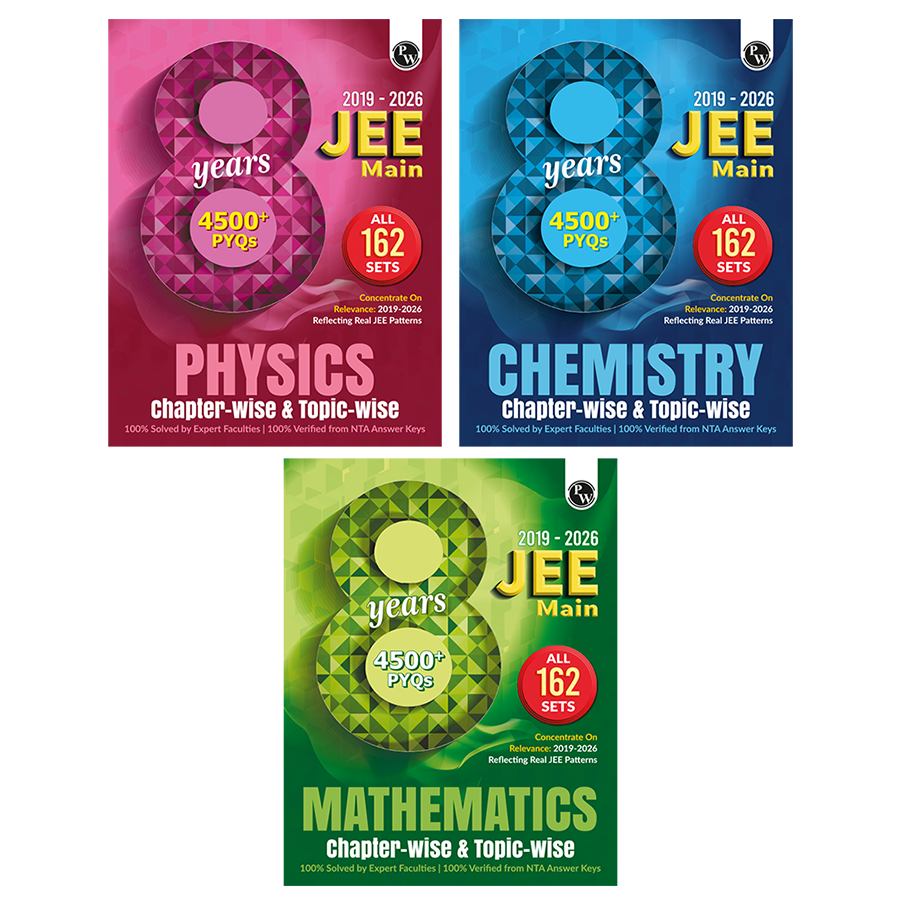
Check Out: JEE Previous Year Question Paper Combo - Mains with Advanced
JEE PYQ FAQs
Should I solve the entire module before looking at a JEE PYQ?
Yes, you should complete the theory and basic exercises of a specific chapter in your module first. This ensures you understand the underlying formulas and concepts before testing your skills against actual exam questions.
How many past years should I cover in a JEE previous year paper workbook?
It is ideal to focus deeply on the past 8 years of papers to understand the most recent exam trends and question styles. Once you are comfortable with those, you can expand your practice to older archives for extra question variety.
Can a JEE previous year question paper completely replace regular mock tests?
Past papers are excellent for understanding question trends, but they should not completely replace new mock tests. You need a mix of both: past papers to verify your topic foundations, and fresh mock exams to practice managing your time with completely unseen questions.