Tips to Reduce Kid's Screen Time
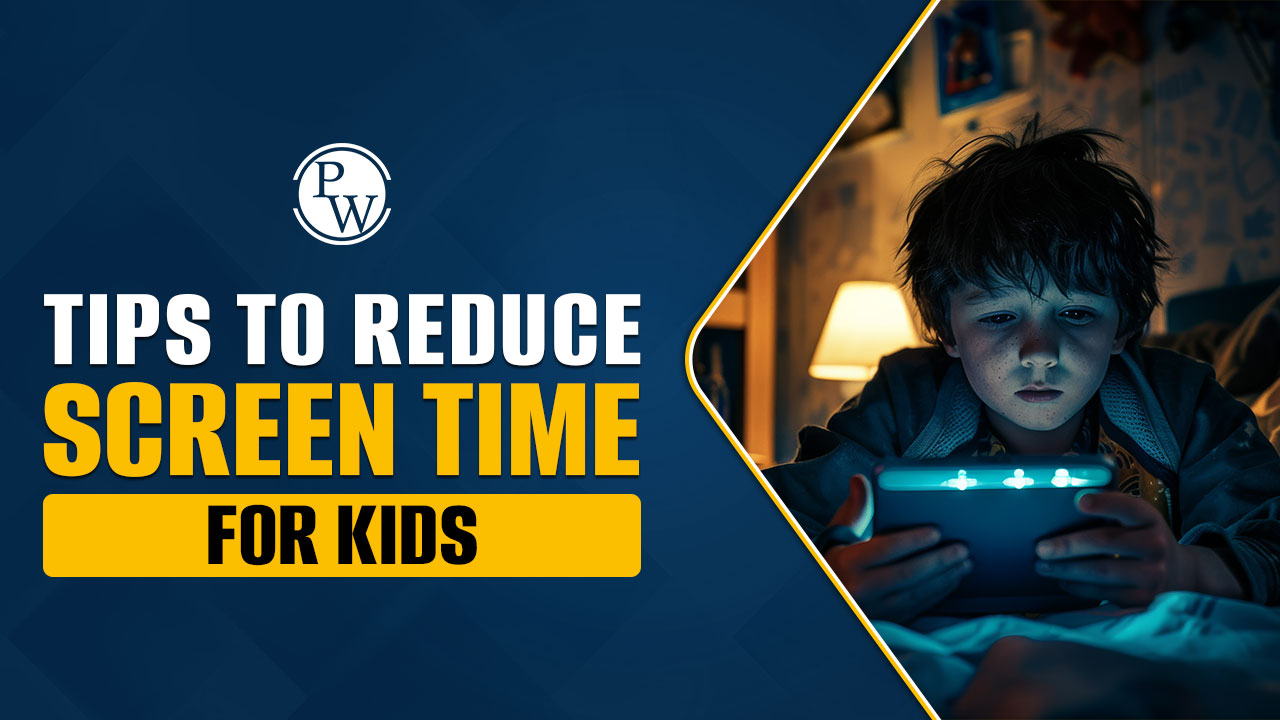
In today's digital world, screen time for kids has become a common concern for parents and teachers. With the increasing use of phones, tablets, and computers, it’s essential to find ways to manage and limit screen time for kids. Too much screen time can have negative effects on children's health, behavior, and academic performance. Here are some helpful tips for students and parents on how to reduce screen time for kids effectively.
Check out: PW Activity Kits
How to Reduce Screen Time for Kids
Some of the right ways to reduce screen time for kids are mentioned below
Set Time Limits
One of the right ways to control screen time for kids is to set time limits. Parents can decide how much time kids can spend on their devices each day. For example, students can have one hour of screen time for games or videos and spend the rest of the time doing other activities like reading or playing outside.
Engage in Experiments Kits
Physics Wallah’s experiment kits such as the Counting Wizard Math kit, Light & Shadow, Mingle Board, Family Trees, etc help reduce screen time for kids by providing hands-on, interactive learning experiences. Instead of relying on digital devices for learning, these kits allow children to engage in practical experiments, fostering curiosity and problem-solving skills. By actively participating in experiments, kids develop a deeper understanding of scientific concepts in a fun, offline environment. This physical interaction with the kits encourages critical thinking and creativity while limiting their exposure to screens. As a result, children can learn and explore science in a more engaging and screen-free way.
Focus on Books: Physics Wallah’s small kids' books, color drawing books, and writing exercise books help reduce screen time by encouraging offline activities that promote creativity and learning. These PW Kid's books engage children in activities like drawing, writing, and solving puzzles, which help to grow their imagination and cognitive development without the need for screens. By providing hands-on learning experiences, these books keep kids busy in a productive way, allowing them to explore subjects, enhance fine motor skills, and improve concentration. This helps shift their focus from digital devices to more screen-free activities.
Create Screen-Free Zones
Creating areas in the house where screens are not allowed can help reduce screen time for kids. For example, the dining room or kids' bedrooms can be kept screen-free, encouraging children to focus on meals, family time, or sleep without digital distractions. This helps children create a healthy routine and minimizes the temptation of screens during important activities like eating or resting.
Be a Good Role Model
Parents should also be careful with their own screen time. If students see their parents constantly using their phones, they may imitate that behavior, thinking it’s acceptable, but parents can demonstrate responsible screen use by limiting their own phone time. Children often learn by observing their parents, so showing moderation with technology teaches them to use it wisely.
Limit Screen Time on Phones
To help students manage their phone screen time, parents can set restrictions on app usage. Many phones offer tools to limit time on specific apps, helping kids control their screen time and avoid excessive use of games or social media. By setting these limits, children will develop self-control and understand that there are boundaries to their screen use.
Encourage Hobbies
Instead of spending all day on screens, students can engage in activities like drawing, cooking, or playing a musical instrument. Parents should help their kids find hobbies that keep them engaged and entertained without the use of technology. Encouraging hobbies gives children a creative outlet and provides them with skills that don’t rely on screens for enjoyment.
Set Tech-Free Times
Setting specific times during the day as tech-free zones can greatly reduce screen time for kids. For example, family meals or the hour before bedtime can be designated as times to relax, talk, or read without using screens. These breaks from screens help children develop better social skills and improve their quality of sleep.
Make Screen Time a Reward
Screen time can be used as a reward for completing tasks like homework or chores. This helps students understand that screen time should be earned and not freely available throughout the day. By using screen time as an incentive, children will be motivated to complete their responsibilities and better manage their time.
Talk About the Risks of Too Much Screen Time
Students should be made aware of the risks of excessive screen time, such as eye strain, poor sleep, and lack of physical activity. Educating them on these effects can encourage them to choose healthier, non-screen-based activities. Open discussions about screen time can help students make informed decisions about their daily routines.
Balance Screen Time with Other Activities
Students need to have a balanced schedule that includes both screen time and other engaging activities like sports, hobbies, and reading. A well-rounded routine allows kids to enjoy technology while also benefiting from other enriching experiences. Encouraging a mix of activities helps students become more well-rounded individuals and reduces over-dependence on screens.
Also Check: STEM Kits
Experiment Kits for Kids
To avoid screen time for kids, parents should engage them in educational experiment kits. Physics Wallah develops various experiment kits that provide excitement as well as knowledge. Check the Experiment Kits for Kids below.
|
Experiment Kits for Kids |
|
|
Kit Name |
Link |
|
Counting Wizard Math kit |
|
|
Light and Shadow Science Project Kit |
|
|
Family Tree Kit |
|
|
Electricity & Magnetism Science Project Kit |
|
|
Mingle Board Game White Math Kit |
|
|
Mingle Board Game Purple Math Kit |
|
|
Mingle Board Game Yellow Math Kit |
|
|
150 Science Kit |
|
Small Kids Books by Physics Wallah
Check the small kids book developed by Physics Wallah in the table below. Parents should involve their kids in these books so that they don’t ask for phones or any devices.
|
Kids Books for Reading |
|
|
Book Name |
Link |
|
Library Box Set |
|
|
4 in 1 Padded Board |
|
|
Kids First Library Box Set of 20 Board Books |
|
|
Kids First 1000 Words Book |
|
|
Kids First Nursery Rhymes Padded Board book |
|
|
Kids Color Drawing Book |
|
|
Kids Color Time Coloring Books Set of 12 Books |
|
|
Kids 100+ Copy Coloring Activity Book |
|
|
Kids Writing Exercise Books |
|
|
Kids Writing Time Pencil |
|
|
Kids Hindi Sulekh Varnamala |
|
|
Kids First Patterns Activity Book |
|
Reduce Screen Time FAQs
Q1. Why is it important to reduce kids' screen time?
Ans. Reducing screen time is important for kids' health, as too much screen exposure can lead to eye strain, poor sleep, and lack of physical activity.
Q2. How can I set limits on my child’s screen time?
Ans. You can set time limits using the built-in features on phones and tablets. Many devices have settings to limit the time spent on apps or screen usage each day.
Q3. What are screen-free zones in the home?
Ans. Screen-free zones are areas where phones, tablets, or TVs are not allowed, such as the dining room or kids' bedrooms. These areas encourage family interaction and better sleep.
Q4. How can outdoor activities help reduce screen time?
Ans. Outdoor activities like playing sports, walking, or cycling can reduce screen time by offering an alternative to sitting in front of screens while keeping kids active.