NEET Physics Chapter Wise Weightage 2026
NEET Physics Chapter Wise Weightage 2026: The NEET exam is one of the most important entrance tests for students who want to study medical courses in India. It has three main subjects: Physics, Chemistry, and Biology. Physics is often considered the toughest for many students, but with the right plan, it can become one of the easiest-scoring parts of the paper. The exam follows a fixed syllabus taken mostly from the NCERT for Class 11 and Class 12. Questions can come from any chapter, but not all chapters have the same number of questions.
That is why knowing the NEET physics chapter wise weightage is very helpful. The chapter wise weightage for NEET Physics tells you which topics have been asked more often in previous years and which topics carry the most marks. While it is important to study all chapters in the NEET syllabus, there are some most weightage chapters for NEET Physics that you should give extra attention to. These chapters have a higher chance of appearing in the exam and can help you score better. Skipping low-weightage chapters is fine if you are short on time, but you should never skip the high-weightage ones because they will almost always have questions in the paper. Check out the NEET Physics Chapter wise Weightage 2026 below.
Check Out: NEET Books
Most Weightage Chapters for NEET Physics
In NEET Physics, some topics are asked more often and carry higher marks than others. These are called the most weightage chapters for NEET Physics. By focusing more on these chapters, students can score better with less effort. The weightage of Physics in NEET is important because even though Biology has more marks, Physics can help you boost your overall rank if prepared well. Chapters from Modern Physics NEET, like Dual Nature of Radiation, Atoms, and Nuclei, are often seen in the paper and should not be skipped.
|
Chapter Name |
Weightage (%) |
Important Topics |
|
Current Electricity |
10% |
Ohm’s Law, Kirchhoff’s Laws, Wheatstone Bridge, Meter Bridge, Potentiometer |
|
Rotational Motion |
6% |
Moment of Inertia, Torque, Angular Momentum, Rolling Motion |
|
Ray Optics and Optical Instruments |
6% |
Reflection, Refraction, Lenses, Mirrors, Optical Instruments |
|
Units and Measurements |
5% |
Significant Figures, Dimensional Analysis, Measurement Errors |
|
Electrostatic Potential and Capacitance |
5% |
Electric Potential, Capacitance, Combination of Capacitors |
|
Moving Charges and Magnetism |
5% |
Biot–Savart Law, Ampere’s Law, Force on a Current-Carrying Conductor |
|
Semiconductor Electronics |
5% |
Diodes, Transistors, Logic Gates |
|
Nuclei |
4% |
Nuclear Structure, Radioactivity, Nuclear Reactions |
|
Alternating Current |
4% |
AC Circuits, Resonance, Power in AC |
|
Modern Physics (Dual Nature of Radiation and Matter + Atoms) |
6% |
Photoelectric Effect, de Broglie Wavelength, Bohr’s Model |
Check Out: NEET Previous Year Papers
NEET Physics Chapter wise Weightage 2026
The table below gives a clear idea of the NEET Physics chapter wise weightage for the 2026 exam. It includes both high-weightage and low-weightage topics so that you can plan your preparation in a balanced way.
When you prepare for NEET Physics, it is important to keep the chapter wise weightage for NEET Physics in mind. High-weightage chapters should be given extra time for deep study and practice, but low-weightage topics should not be skipped because even one or two questions can make a difference in your final score.
|
NEET Chapter Wise Weightage for Physics |
||
|
Physics Chapters/Topics |
Average No. of Questions |
Weightage (%) |
|
Mechanical Properties of Solids |
1 |
2% |
|
Moving Charges and Magnetism |
2 |
5% |
|
Center of Mass & System of Particles |
1 |
2% |
|
Wave Optics |
1 |
2% |
|
Electromagnetic Induction |
1 |
3% |
|
Mechanical Properties of Fluids |
2 |
3% |
|
Electromagnetic Waves |
2 |
3% |
|
Rotational Motion |
3 |
6% |
|
Oscillations |
1 |
3% |
|
Ray Optics and Optical Instruments |
3 |
6% |
|
Kinetic Theory of Gases |
1 |
3% |
|
Dual Nature of Radiation and Matter |
2 |
3% |
|
Gravitation |
2 |
3% |
|
Current Electricity |
5 |
10% |
|
Semiconductor Electronics: Materials, Devices and Simple Circuits |
3 |
5% |
|
Units and Measurements |
3 |
5% |
|
Work Energy and Power |
2 |
3% |
|
Electric Charges and Fields |
2 |
3% |
|
Magnetism and Matter |
1 |
1% |
|
Atoms |
1 |
3% |
|
Nuclei |
2 |
4% |
|
Motion in a Plane |
1 |
3% |
|
Mathematical Tools & Vectors |
1 |
1% |
|
Laws of Motion |
1 |
2% |
|
Thermodynamics |
1 |
2% |
|
Waves |
1 |
1% |
|
Electrostatic Potential and Capacitance |
3 |
5% |
|
Alternating Current |
2 |
4% |
|
Thermal Properties of Matter |
0 |
1% |
Check Out: NEET Question Banks
How to Use NEET Physics Chapter Wise Weightage in Your Study Plan?
Preparing for NEET Physics can feel like a big challenge because the syllabus is long and covers many different topics. But if you study smartly, you can make it easier. One of the best ways to prepare is by using the NEET Physics chapter wise weightage as your guide. This tells you how many marks each chapter is likely to carry based on past years. It helps you decide which topics need more time and which can be revised quickly.
1. Understand the Weightage and Its Importance
Before you start making a study plan, you should understand what the weightage of Physics in NEET means. Each Physics chapter in NEET is not equally important in terms of marks. Some topics, like Current Electricity, Ray Optics, and parts of Modern Physics NEET, have more questions in the exam, while others have fewer.
-
Always keep a printed list of the chapter wise weightage for NEET Physics.
-
Mark the high-weightage chapters with a star in your study notes.
-
Review the list every week to stay on track.
2. Start With High-Weightage Chapters
High-weightage chapters are the backbone of your NEET Physics preparation. These are the chapters from which more questions are likely to appear in the paper. For example: Current Electricity, Electrostatics, Ray Optics, Rotational Motion, and Modern Physics NEET topics like Atoms and Nuclei.
-
Keep a special notebook only for high-weightage chapters.
-
Write all formulas from these chapters on one page for quick revision.
-
Solve at least 20–30 practice questions for each high-weightage chapter.
3. Don’t Ignore Low-Weightage Chapters
It’s easy to think you should skip low-weightage topics, but that’s risky. Even chapters with 1% or 2% weightage can give you 1–2 easy questions in the exam. Those marks can make a big difference in your rank.
-
If you find a question from a low-weightage topic while solving a mock test, note it down.
-
Do not leave these chapters for the last minute.
-
Group similar small topics and revise them together.
4. Make Notes According to Weightage
Note-making is very important in Physics. But instead of making random notes, use the chapter wise weightage for NEET Physics to guide what you write down.
-
Use different colours for formulas, definitions, and examples.
-
Write the weightage percentage next to each chapter title in your notes.
-
Review and update your notes after every mock test.
5. Solve Previous Year Questions Using the Weightage
Previous year NEET papers are one of the best tools for preparation. When you solve them, pay attention to which chapters the questions are coming from. Compare it with the NEET Physics chapter wise weightage list.
-
Keep a chart where you tick the chapters after finishing their previous year questions.
-
If you find a repeated question type, note the method to solve it.
-
Try to solve questions in a timed manner to build speed.
6. Revise With Weightage in Mind
Revision is not just about reading everything again; it’s about making sure you remember the most important things for the exam. The weightage of Physics in NEET should guide your revision plan.
-
Use the 80/20 rule: spend 80% of your revision time on high-weightage chapters and 20% on low-weightage ones.
-
Do quick 10-minute reviews of formulas daily.
-
Attempt 1–2 mock tests during revision days to keep your brain active.
7. Use Mock Tests and Weightage Together
Mock tests are the best way to check your preparation. But you can also use them to see if your study based on weightage is working.
-
Give at least one mock test every week in the early stage of preparation.
-
Increase to 3–4 mock tests per week in the last two months before NEET.
-
Review every mistake and link it to the chapter weightage list.
NEET Study Materials
To prepare well for the NEET exam, it is important to have the right study resources. PW has brought the latest NEET study materials that are made according to the updated syllabus and exam pattern. These materials are designed to help students understand concepts easily and practice in a structured way. From detailed theory notes to solved examples and chapter-wise questions, everything is included so that students can study without confusion.
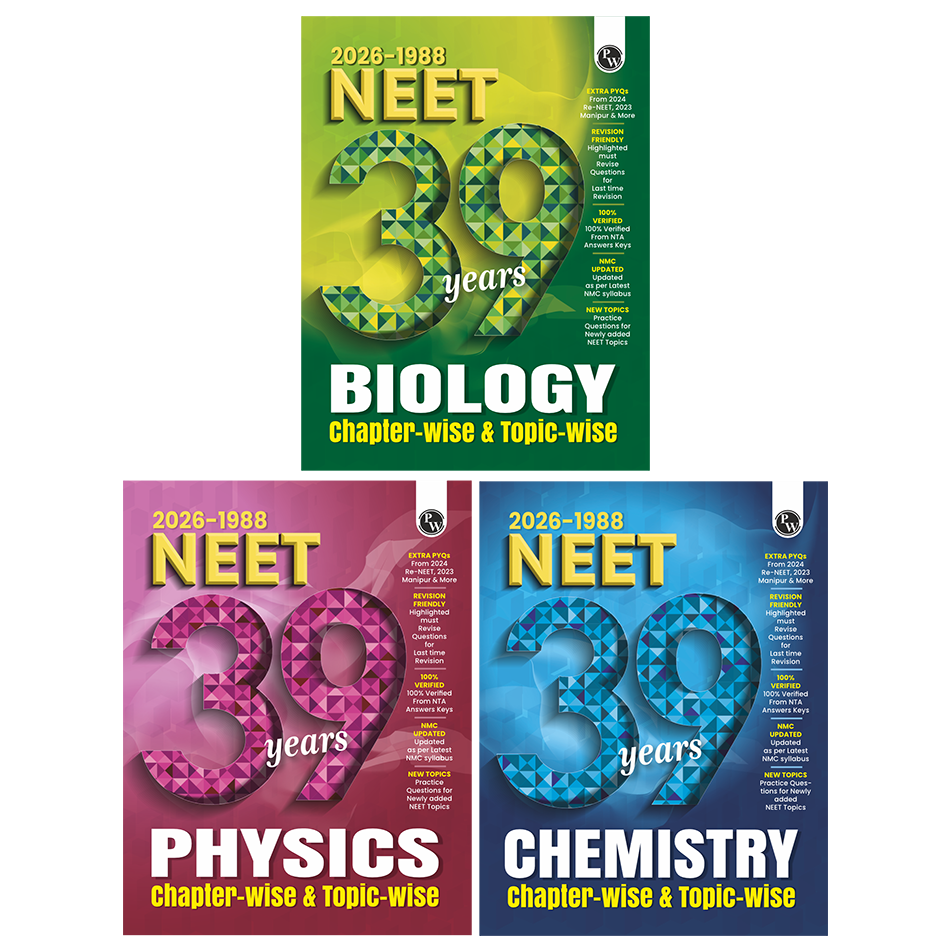
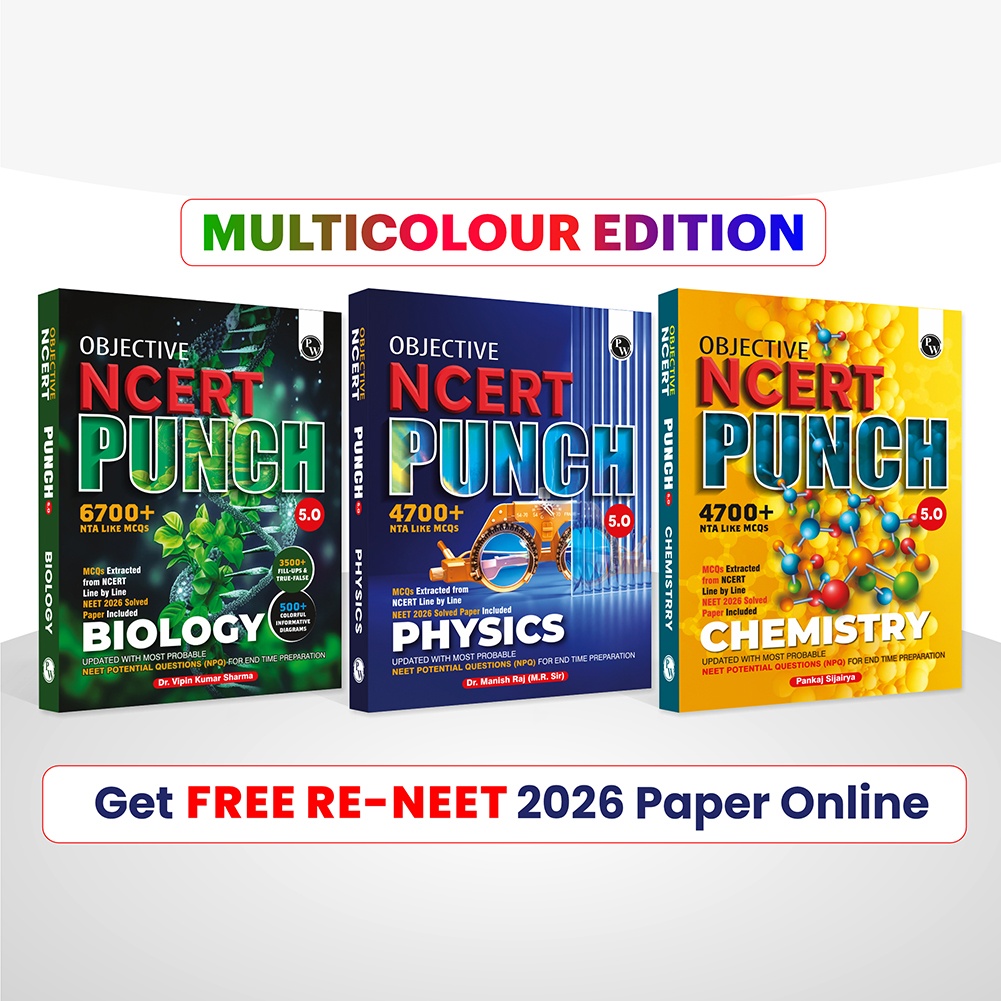
For Physics preparation, students can practice with the 39 Years NEET PYQ Physics book to gain experience with previous year questions and exam trends. The NEET Objective NCERT Punch Physics book helps reinforce NCERT concepts through targeted practice questions. For concept clarity and revision, the Class 11th Physics Med Easy 2026 book provides easy-to-understand explanations and solved examples. Students looking to build a strong foundation in Physics and Chemistry can also explore the Arjuna NEET Class 11 Physics, Chemistry & Maths 2026 study material for additional conceptual learning and practice.
Also Read: NEET Chemistry Chapter Wise Weightage
NEET Physics Chapter wise Weightag FAQs
1. Which are the most weightage chapters for NEET Physics?
Current Electricity, Rotational Motion, Ray Optics, Electrostatics, Modern Physics (Dual Nature, Atoms, Nuclei), and Semiconductor Electronics have the highest weightage.
2. Should I skip low-weightage chapters for NEET Physics?
No. Even low-weightage chapters can have 1–2 easy questions that can boost your score.
3. How can I use chapter wise weightage in my NEET Physics study plan?
Prioritise high-weightage chapters first, then cover medium and low-weightage topics, and revise them in the same order.
4. Is Modern Physics important for NEET?
Yes. Modern Physics NEET topics like Dual Nature of Radiation, Atoms, and Nuclei appear almost every year and are usually scoring.
5. How many questions come from Physics in NEET?
Physics usually has 45 questions out of the total 180 NEET questions, carrying 180 marks.