Time Management Tips for SSC Aspirants
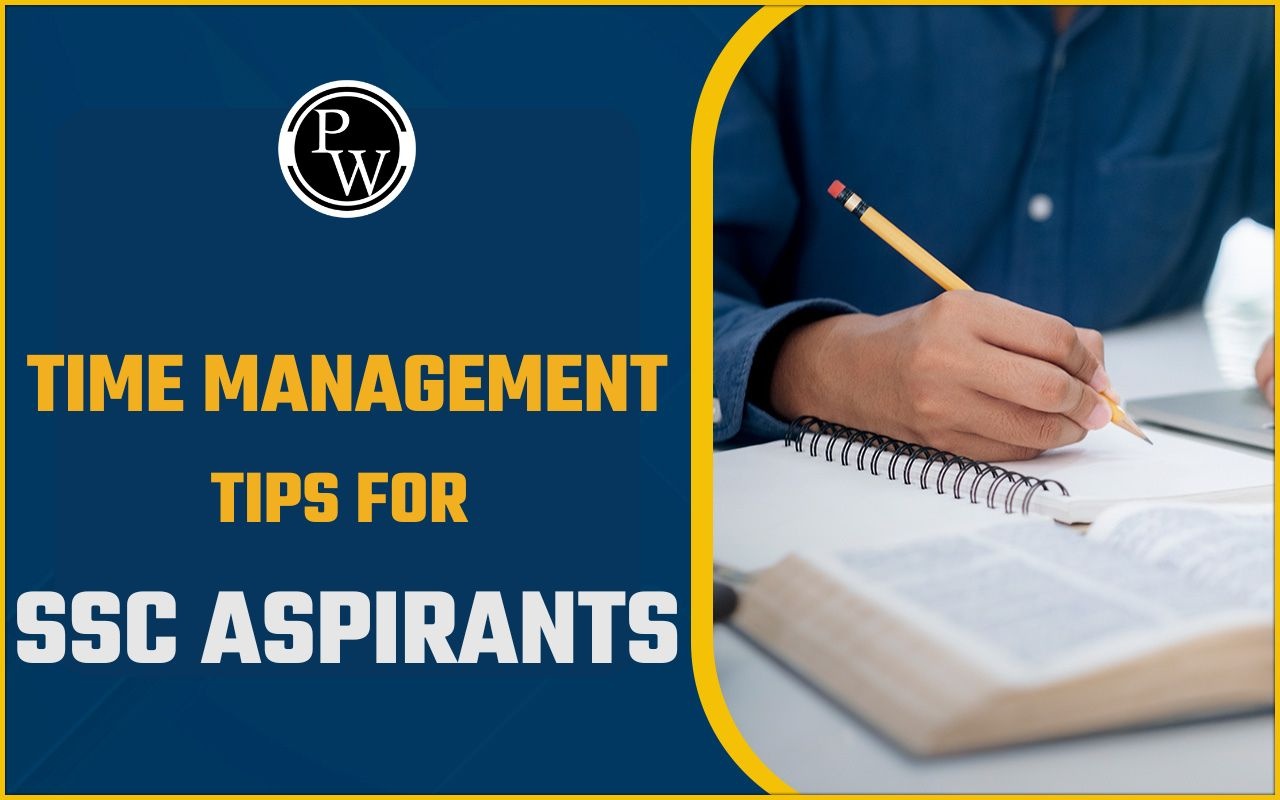
Time Management Tips for SSC Aspirants:- SSC is one of the most popular government exam boards in India that conducts several competitive exams, such as SSC CGL, CHSL, MTS, GD Constable, and Stenographer exams. Every year, lakhs of aspirants appear for these exams to secure a government job, but the vast syllabus and tough competition often make it challenging to manage time effectively. Balancing study hours for different subjects like General Awareness, Reasoning, Quantitative Aptitude, and English while also revising regularly can be quite stressful for many students.
That’s why learning proper time management during exams becomes extremely important for success. With the right strategy, planning, and discipline, candidates can complete their syllabus on time and stay confident during revision and practice sessions. This article will guide you through some of the most effective time management tips for exams, especially for those preparing for SSC CGL, CHSL, and other related exams. Check out the tips here to make your SSC preparation more organised, productive, and stress-free.
Check Out: SSC Previous year Papers
SSC Calendar 2026
The SSC Calendar 2026 has not been officially released yet by the Staff Selection Commission. However, based on the previous year’s schedule and expected exam cycle, here are the tentative dates for the SSC 2026 exams:-
|
Exam Name |
Exam Date (Tentative) |
Main Subjects |
|
SSC CGL (Combined Graduate Level) |
September 2026 (Tier-I) |
Quantitative Aptitude, Reasoning, General Awareness, English |
|
SSC CHSL (10+2 Level) |
October 2026 (Tier-I) |
Intelligence, Quantitative Aptitude, General Awareness, English/Hindi |
|
SSC MTS & Havaldar |
September–October 2026 |
Quantitative Aptitude, General Intelligence, General Awareness, English/Hindi |
|
SSC Stenographer Grade ‘C’ & ‘D’ |
August 2026 |
Reasoning, English Language, General Awareness |
|
SSC GD Constable (CAPFs, NIA, SSF) |
January–February 2026 |
General Intelligence & Reasoning, General Awareness, Elementary Maths & English/Hindi |
SSC Books
Whether you are preparing for SSC CHSL, SSC MTS, SSC CGL, or SSC GD Constable, choosing the right books will be very important for success. The PW Store offers some of the quality books for SSC 2025-26, which follow the latest syllabus and exam pattern. These books include clear explanations, practice questions, and previous year papers that can help students study better and feel more confident during their exams.
Time Management Tips for SSC Aspirants
The Staff Selection Commission (SSC) conducts several important exams in India, like SSC CGL, CHSL, MTS, GD Constable, and Stenographer exams. These exams have a huge syllabus covering Quantitative Aptitude, Reasoning, English, and General Awareness.
Because of the vast syllabus, managing time effectively can be a big challenge for aspirants. Without proper planning, it becomes difficult to complete the syllabus, revise important topics, and practice enough questions before the exam. Learning time management during exams is as important as studying hard. Check out some of the tips here:-
1. SSC Syllabus
Before starting your preparation, it is very important to know the SSC syllabus completely. Knowing the syllabus will help you plan and divide your time properly.
-
Make a list of all subjects and chapters for SSC CGL, CHSL, MTS, or GD Constable exams. This will help you know which areas need more attention.
-
Highlight chapters that carry more weight or are asked more often in previous exams. You can focus on these first to save time and improve your score.
-
Keep a small notebook of topics you find difficult so you can revisit them regularly.
2.Daily Study Schedule
Having a daily schedule can make your study time more organized and help you cover all subjects without feeling stressed.
-
Try dividing your day into small blocks for each subject and include short breaks to relax and refresh your mind.
-
Spend more time on subjects or topics you find difficult, and less on the ones you are already good at.
-
Stick to your schedule as much as possible. Even short, regular study sessions every day are better than long, irregular hours.
3. Previous Year Questions and Mock Tests
Solving past exam papers and taking mock tests is one of the best ways to prepare for SSC exams. When you practice these papers, you understand the types of questions that appear on the exam, how many marks each section is worth, and the typical difficulty of the questions.
-
It’s helpful to set a timer while solving the papers so you get used to finishing questions within the time limit. This improves your speed and reduces careless mistakes.
-
Mock tests also reveal which areas you need to improve, allowing you to focus on them.
-
While practising, start with easy questions, then move on to medium ones, and finally tackle the hard ones.
4. Prioritise Important Topics
There are several topics in SSC exams that usually keep repeating, so it becomes important to focus on these first. Spending more time on such high-priority topics can save time and help you score better.
-
In Quantitative Aptitude, give more importance to the topics like Arithmetic, Algebra, and Geometry as these topics appear frequently in SSC CGL.
-
In General Awareness, focus on current affairs, important events, history, geography, and government schemes. Practising these topics will save time in the exam.
-
For Reasoning, give extra attention to topics like puzzles, seating arrangements, and syllogisms as they are common in SSC exams.
Check Out: SSC Textbooks
5. Making Short Notes for Revision
Writing short notes while studying can save you a lot of time during revision before the exam. Notes help you quickly recall formulas, key points, and facts without needing to flip through the entire book.
-
For Reasoning and Quantitative Aptitude, note down formulas, shortcuts, and tricks that help you solve questions faster.
-
In General Awareness, keep a small notebook for important dates, events, and facts. You can review these anytime without opening your main books.
-
Using sticky notes or flashcards for crucial points can also be useful. You can go over these notes while travelling, waiting, or during short breaks.
6. Take Breaks
Studying for long hours without breaks can make you tired and less focused. It’s important to balance study time with short breaks to keep your mind fresh.
-
You can follow the 50-10 rule: study for 50 minutes and take a 10-minute break.
-
During the break, do something light like walking, stretching, or drinking water.
-
Try to avoid scrolling on your phone for too long, as it can waste time. A short nap of 15 to 20 minutes can also help recharge your energy and boost focus.
7. Plan Your Revision Carefully
Revision is very important when preparing for the SSC exam. Without proper revision, you will easily forget formulas, concepts, and important facts.
-
Set aside time each week to review what you have studied. Include practice questions, diagrams, tables, and maps, especially for subjects like General Science and Social Science.
-
These topics often contain easier questions and can help you score well.
-
Aim for at least two to three full revisions before the exam. This will build your confidence and ensure you remember everything.
8. Improve Your Speed
In SSC exams, both speed and accuracy are required. Managing your time well means not only finishing all the questions but also avoiding careless mistakes.
-
Practising shortcuts and tricks, especially in Quantitative Aptitude and Reasoning, can help you solve questions more quickly.
-
During mock tests, check how many questions you answered correctly and identify where you are spending too much time.
-
Don’t linger on one question; focus on answering as many questions correctly as you can.
9. Don’t Waste Time on Hard Questions
Sometimes, students spend too long on a difficult question and end up not finishing the other questions.
-
If a question is taking too long, move on and come back to it later if time allows.
-
Focus on attempting all easy and medium-level questions first to secure maximum marks.
-
Practising previous year papers will help you identify which questions are usually time-consuming and can be skipped initially.
Read More: SSC Full Form
Time Management Tips for SSC Exams FAQs
1. How to manage time in SSC exams?
To manage time in SSC exams, you should make a daily timetable and divide your time equally between all the subjects.
2. How many hours should I study for SSC daily?
You can study around 5 to 7 hours every day with short breaks. This also depends on how quickly you understand the topics.
3. How to pass SSC exams easily?
You should follow a proper study plan and revise important topics regularly. Practising regularly will help you do better.
4. What is the best way to prepare for SSC CGL?
You should first understand the syllabus and focus on important topics. Solving previous year papers can also help you.
5. How can I improve speed during SSC exams?
You should practise shortcuts and tricks in Quantitative Aptitude and Reasoning. Solve questions with a timer to improve your speed.